Super excited to announce our partnership with @BlueWaterShips.
Restoring maritime dominance requires us to rethink how we build in America.
Our robotics & physical AI platform will be a critical part of that story.
Teaming up with Blue Water Autonomy and Conrad Shipyard - a great American shipbuilder - will allow us to pioneer a new model for distributed shipbuilding.
"...two workers controlling 20 robots are capable of matching the labor output of 1,000 personnel."
Hanwha's Geoje shipyard cuts and weld *a million tons of steel a year* at a single shipyard, more than the entire US maritime industry, with 67% of those welds automated.
Here's the catch, though: the Korean model presupposes purpose-built, high-volume yards producing standardized commercial hulls. Industrial robots on a clean production line are a solved problem.
But that's not what US shipbuilding looks like.
Outside of the inland fleet, the market is low-volume and high-mix. Traditional industrial robots have limited utility when it takes more time to program the robots than it takes to just build it manually.
This is why Physical AI is so critical for reviving shipbuilding in America. We need automation - the labor force needed to scale the traditional way just doesn't exist - but it won't match the Korean model. It has to be flexible.
Going from CAD model -> automated production planning -> AI-enabled robotic assembly & welding is the way we get this done.
https://t.co/20sHpO4z2C
We've never published this entire video before, but... what the hell.
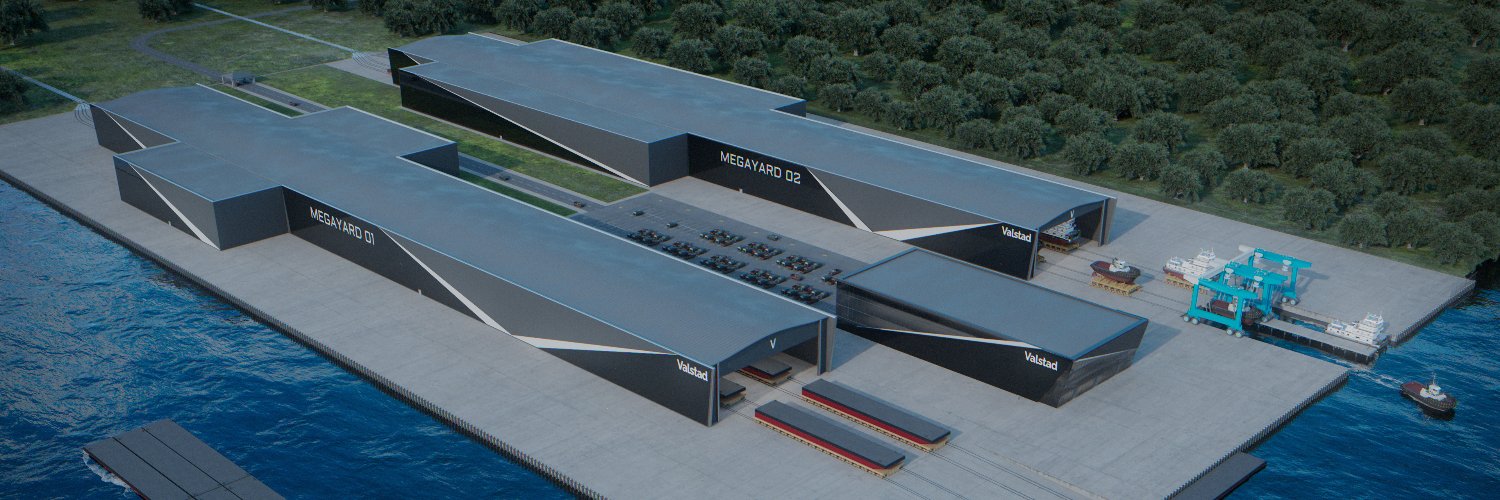
This is our vision for the shipyard of the future.
This is how we fight back against China's shipbuilding dominance.
This is how we produce 10x more in a single shipyard.
From raw steel in to a full set of panels out, ready for erection. All autonomous.
Every crane move, every assembly step, every weld... controlled by software we're building from the ground up.
Our roadmap will see us build every part of this as modular, inexpensive cells that stretch standard industrial robots to their payload & reach limits. Cells we can build in months instead of years.
We're starting in Austin, shipping out panel kits that accelerate the shipbuilding process for America's over-stretched and labor-starved shipyards.
Then we'll deploy systems like this all over the country to accelerate production of everything from tank barges to tankers to unmanned surface vessels.
It's possible to do this in America. I know because we're doing it. And because it must be done.
Time to Accelerate American Shipbuilding.
I submitted a statement for today's senate hearing on the SHIPS act co-sponsored by @SenMarkKelly and @SenToddYoung
Introduction
My name is Dustin Walper, and I’m the CEO and founder of Valstad Shipworks. We are a venture-backed startup focused on the application of AI, robotics, and advanced manufacturing to the problem of American shipbuilding.
Our goal is to build a dual-use “Gigafactory for Ships”, applying technologies from the automotive and aerospace industries to rethink the way America builds ships for both commercial and military use.
Our position
Our organization strongly supports the SHIPS for America Act because it recognizes the existential threat to US maritime interests posed by China.
We believe that strengthening the maritime industrial base is one the most important challenges we face in an era of renewed great power competition, impacting not only US shipbuilding and workers but also our ability to conduct commerce and project power in waters near and far.
Analysis
I will be blunt: China poses the most serious maritime threat we have ever faced as a nation.
The evidence for this is overwhelming:
• Measured by deadweight tonnage (DWT), China’s share of global shipbuilding in 2024 was estimated at 53.3%. It also holds 67.3% of the orderbook for new orders, suggesting increasing global dominance at the expense of allies like Japan and South Korea.
• China’s shipbuilding capacity is estimated to be 232 times that of the United States, with a merchant fleet of 7,838 vessels vs. 185 US-flagged vessels. The Chinese merchant fleet can be repurposed to provide sealift capacity in the event of a conflict over Taiwan.
• China has been rapidly expanding both shipbuilding capacity and capability, with new shipyards like Xinneng Shipbuilding demonstrating integration of industrial robots, computer vision, AI planning, and autonomous mobile robots like those used in Amazon warehouses. Xinneng’s website claims they can produce 400+ inland vessels per year at their new 1,757 acre facility.
On these and other measures, China is far ahead on ships.
If we do not act now – and act decisively – we believe we could see a reorienting of alliances in the Asia-Pacific region away from “Pax Americana” towards a sinister new “Pax Sinica”.
Recommendations
We applaud the administration’s efforts to attract allied nations like South Korea and Japan to invest in the US maritime industrial base.
We also believe that American innovators like Tesla and SpaceX prove that domestic companies – including startups like ours – are capable of truly astounding feats of reindustrialization.
Our recommendations are as follows:
• Expand funding to explicitly include new shipyard development. The US has not built any major new shipyards in decades, and in our view this must change – yards designed specifically to make use of modern manufacturing automation are the fastest, best way to significantly increase shipbuilding capacity.
• Invest heavily in automation & new technology. Ships made in US yards are significantly less labor-efficient than comparable ships built in South Korea. To increase our total output without placing unrealistic demands on the labor supply, we must embrace automation and reduce labor hours required per compensated gross ton (CGT).
• Provide dedicated funding and/or supports for new domestic entrants. We should incentivize private capital to invest in the future “SpaceX” or “Tesla” of American shipbuilding. Solutions that only focus on existing shipyards or foreign shipbuilders risk neglecting the world-beating power of our entrepreneurial ecosystem.
• Accelerate the development of autonomy guidelines for US-flagged ships. The future of America’s maritime industry need not look like the past. A clear mandate for commercial vessel autonomy would drive rapid adoption of innovative technologies and create new export opportunities for US companies.
Conclusion
We urge the committee to pass the SHIPS for America Act without delay. China is continuing to advance rapidly, and that capabilities gap will only widen if we do not act immediately.
American dynamism is one of the most powerful forces for good the world has ever seen. We have every confidence that, with the right incentives and supports, the American people can rise to the occasion and address the threat from China head-on.
One small step for shipbuilding, one giant leap for Valstad.
Our custom software stack is now controlling the robots.
Ingest CAD model, generate robot instructions. Zero manual programming.
We'll be open-sourcing the FANUC drivers we wrote to do this shortly.
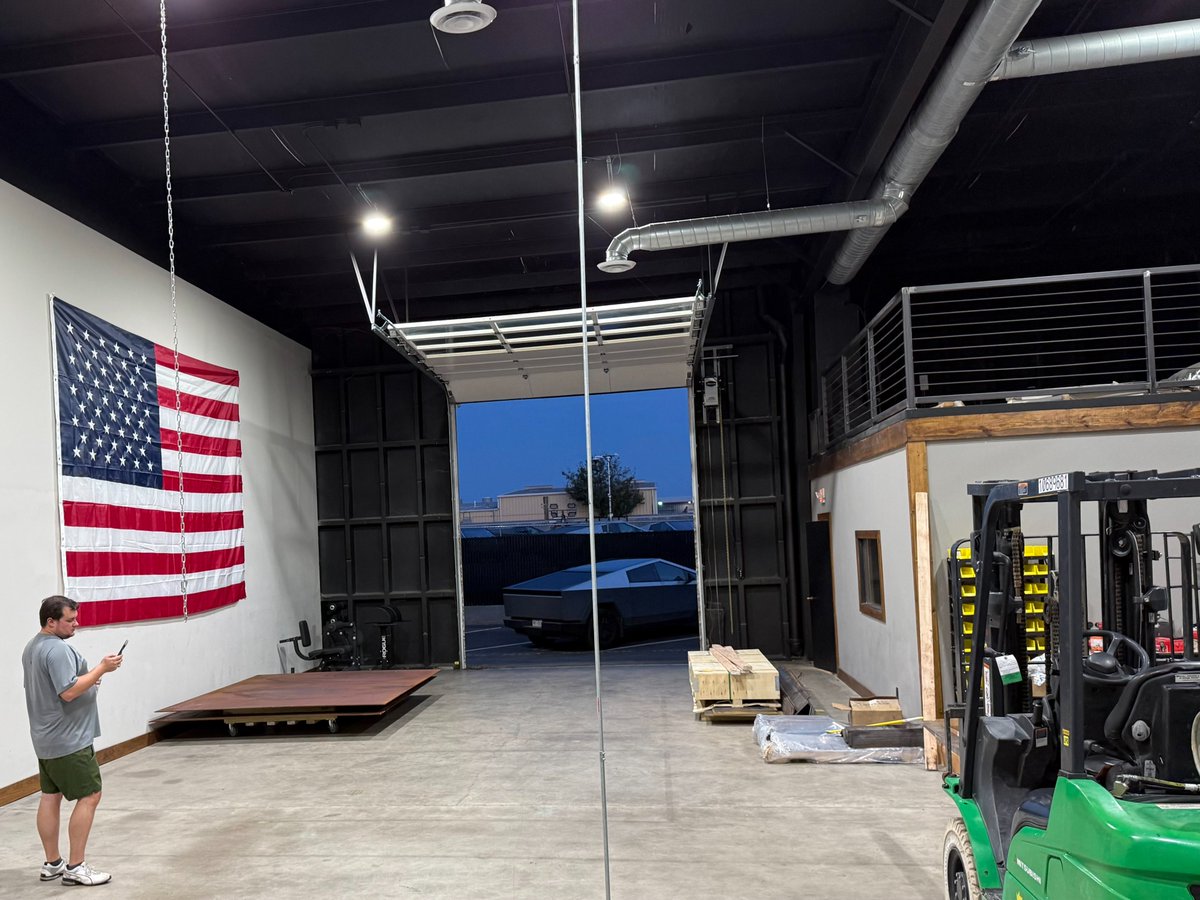
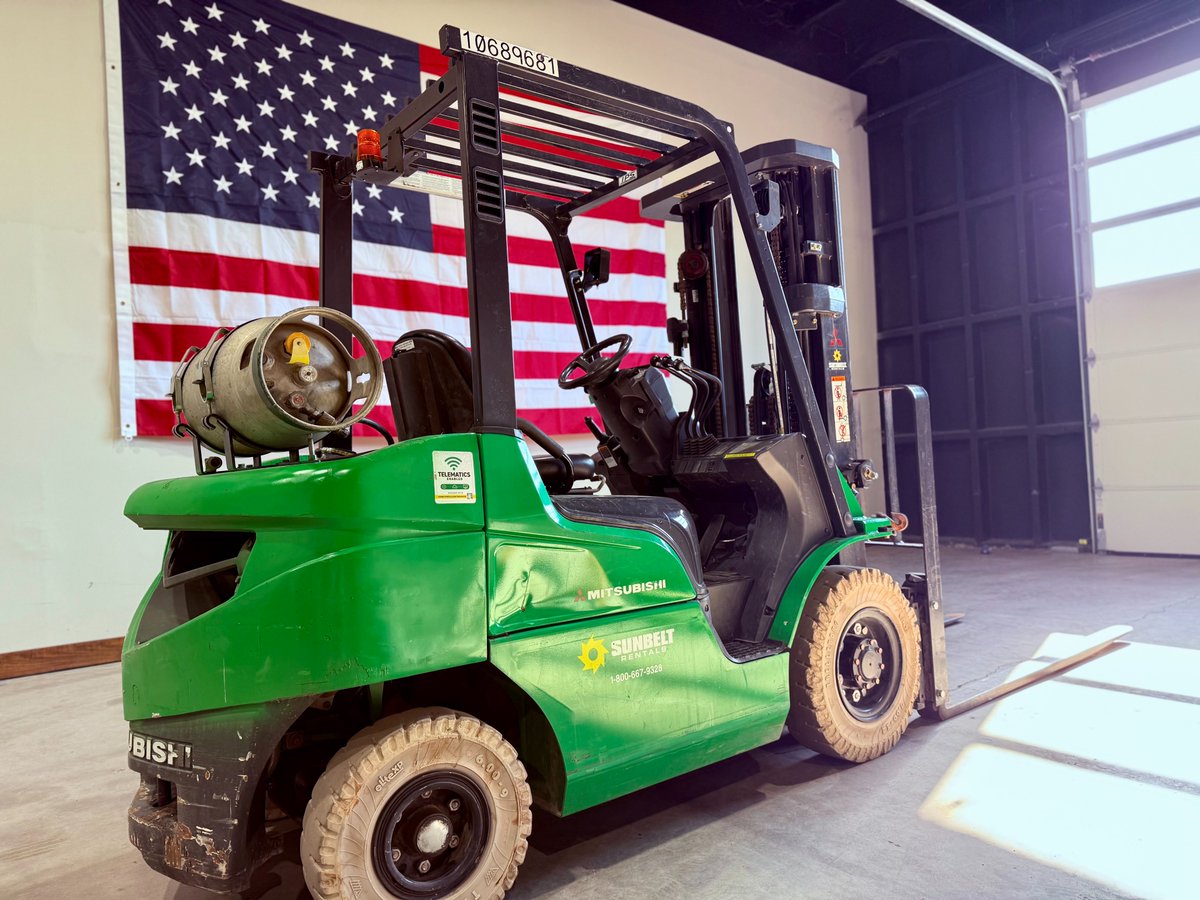
Space prepped. Steel delivered. Tomorrow the robots arrive.
It doesn't look like much, but in this humble space lies the nascent seed of revival.
It's time for America to build ships again.
We're hiring a Lead Mechatronics Engineer to build the machine that builds the ships at @ValstadShip.
$200k base + 1.5% equity + $20k relocation bonus + benefits.
On-site in Austin, TX.
$10k referral bonus if you refer me to someone we ultimately hire!