The future of maritime autonomy is being built in America.
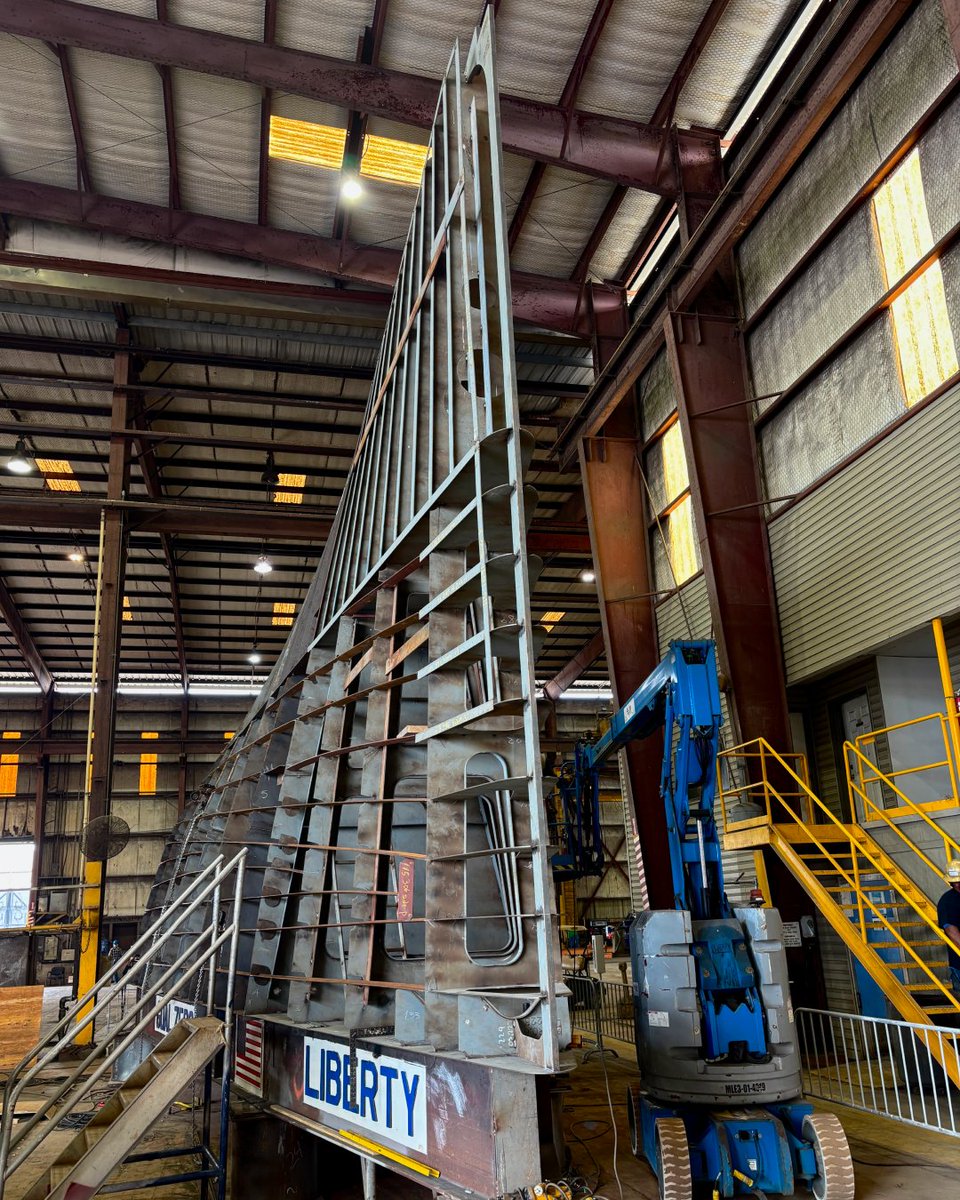
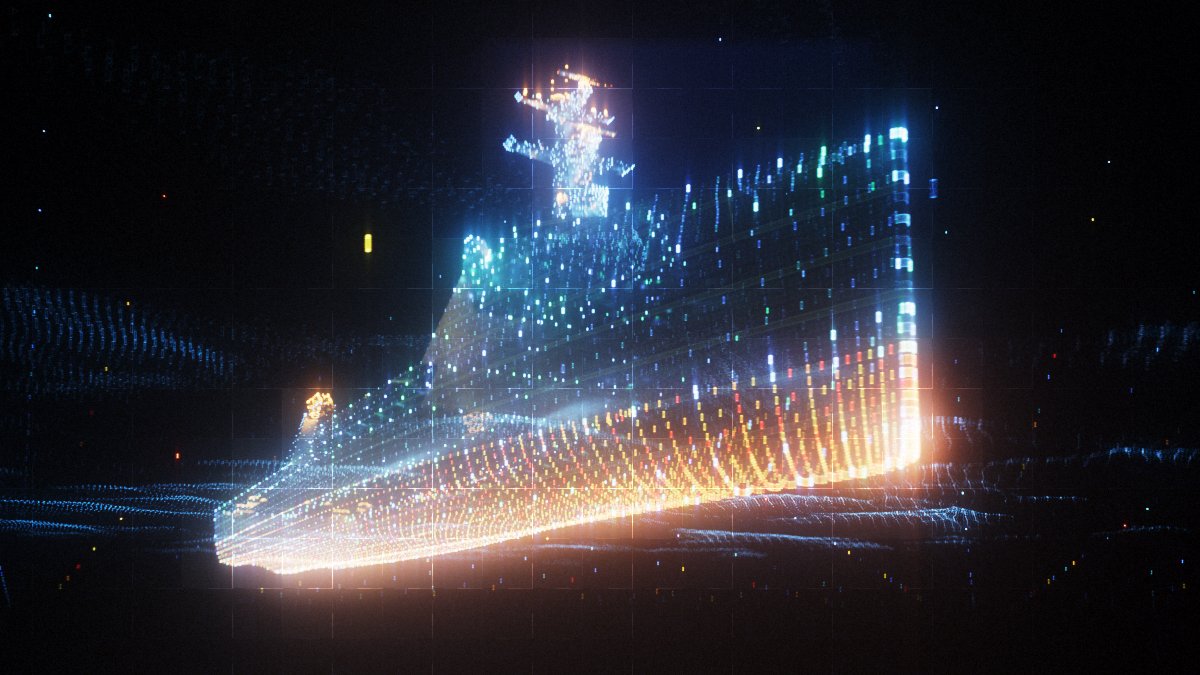
Ahead of next week's #Sail250 New Orleans events hosted by the New American Industrial Alliance, including a tour of Conrad Shipyard, we're excited to share a preview of Blue Water's Liberty Class MUSV (Medium Unmanned Surface Vessel). With a proven steel @damen Axe Bow, and strong shipyard momentum behind us, our hull is quickly taking shape at Conrad.
See you on the water.
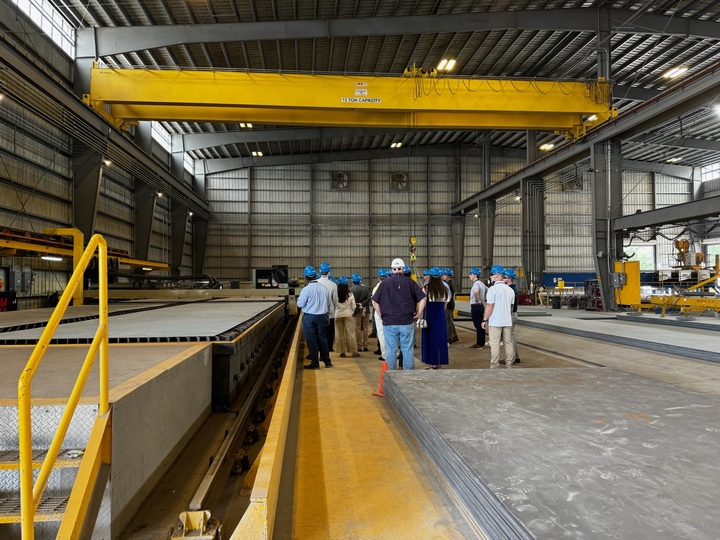
Last week, we convened leaders from industry and government to showcase something special in South Louisiana.
At Conrad Shipyard, @newindustrials and Blue Water Autonomy Inc. showed off everything from the serial production of the Navy's Yard Repair Berthing and Messing Barges (YRBMs) to innovative programs like our Liberty Class. ogether, these efforts demonstrate how America's next generation of maritime capability is being built with the support of legacy shipyards like Conrad.
These facilities represent not only our maritime heritage, but also the foundation of our maritime future.
As we approach America’s 250th anniversary, it’s encouraging to see renewed investment and focus on strengthening the nation’s shipbuilding industrial base. Building the future fleet will require more capacity, more innovation, and stronger collaboration across the entire ecosystem.
A key part of that future is autonomy—not as a replacement for the workforce, but as a force multiplier.
Technologies like @ValstadShip can weld ship sections at speeds that exceed traditional methods, helping create a steady flow of fabricated components. The result is greater efficiency, less downtime, and more productive shipbuilders who can focus on the high-value work that only people can do.
At the same time, platforms like @tulipinterfaces are helping connect shipyard operations in real time—linking teams, suppliers, inventory, and manufacturing processes into a unified digital ecosystem. Better visibility and communication mean faster decisions and more efficient production.
When these technologies work alongside the expertise of the shipyard workforce, they accelerate the construction of the vessels our nation needs.
Thank you to everyone who joined us. It was an honor to showcase what this means for the future of American shipbuilding and to collaborate with NAIA, Conrad Shipyard, and all of the partners who helped make the event possible.
#Sail250
#Louisiana
On National Maritime Day, we’re highlighting @BlueWaterShips and its game-changing, American-built Liberty Class unmanned ships. We can’t wait to get a firsthand look at them next week as part of our Louisiana Shipbuilding trek! Let’s build!
https://t.co/HlIJj0DNJw
Modern shipbuilding breaks when information gets trapped between suppliers, shipyards, and disconnected systems. Distributed manufacturing only works when every team is operating from the same real-time picture.
That’s why partnering with @tulipinterfaces was an easy decision.
We weren’t looking for another software vendor. We were looking for infrastructure that could connect our vendors, facilities, and production teams into a single operational layer. Tulip gives us the visibility and coordination needed to move faster across a highly distributed manufacturing environment—from suppliers to shipyard execution. This is bigger than a partnership announcement. It’s part of a broader effort to modernize how American ships get built.
This week, Blue Water, Tulip, and several partners will be at Conrad Shipyard for the #Sail250 celebrations and demonstrating what the next generation of American shipbuilding looks like. We’re looking forward to sharing more in the weeks and months ahead as this collaboration continues to take shape.
“Build a little. Test a little. Learn a lot.”
One of the most effective approaches to building complex systems is shortening the loop between development and real-world learning, and it’s core to how we build at Blue Water Autonomy.
Traditional shipbuilding programs can take years before integrated systems are tested in realistic operating conditions. We did not want to wait until launch to validate core autonomy technologies.
Build fast. Test early. Adapt continuously.
👉 Read more about the mindset driving our approach to autonomy:
https://t.co/W4NXP9HOfC
There are two types of shipbuilding partnership announcement:
1️⃣ The whispy vapor of a software layer that will “save shipbuilding” without getting dirt on your loafers
2️⃣ The union of tried and true partners - each specializing in distinct parts of a ship’s stack
🇺🇸🚀 Then there is what we are announcing today.
Today, we reveal first how we’re moving metal differently. “Distributed shipbuilding” will remain a valid buzzword for as long as we don’t have enough shipbuilders. With workforce stretched thin around yards, Blue Water has distributed some of our most complex build activity.
In Georgia, at @CaterpillarInc engine factory, we build our marine diesel engines. Nothing special to see here - almost all our competitors use Cat too - but what comes next will get your attention.
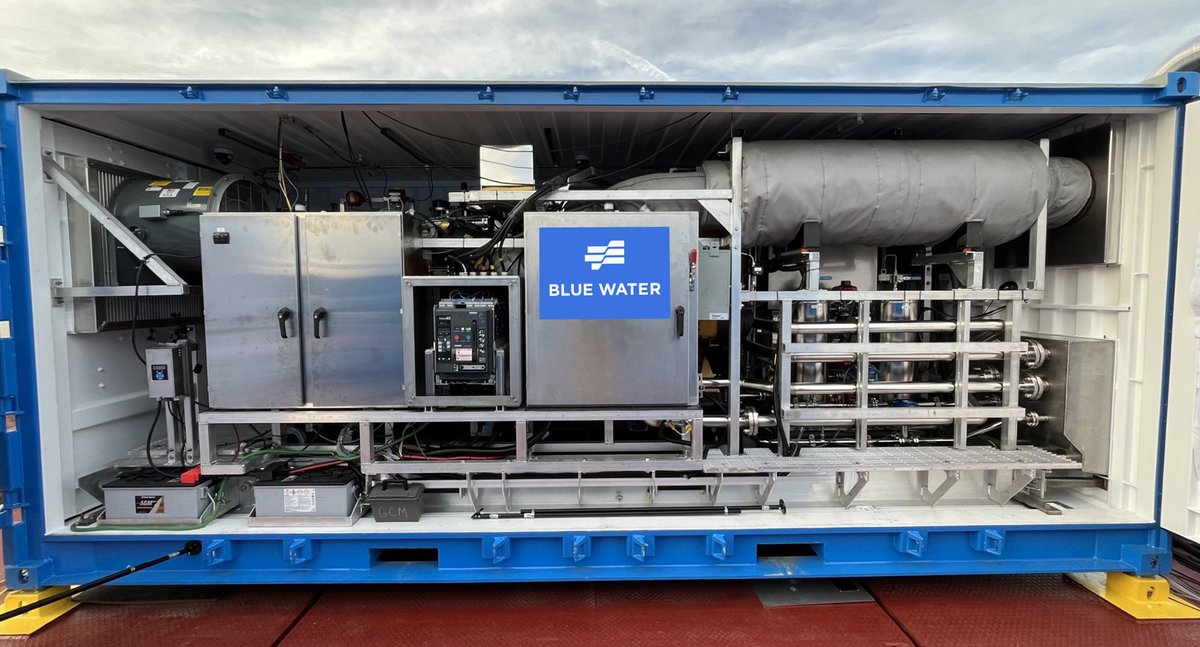
In Michigan, at Precise Power Systems, we assemble mini ship engine rooms in 20’ containerized engine modules.
That’s what you’re looking at in this picture.
Blue Water has been partnered with Cat and Precise since day 1 - because the first problem we attacked is ship engine room autonomy.
Architecting our unmanned ships around a micro-grid of containerized engine modules brought the HM&E reliability the Navy has long sought, but it accidentally unlocked a distributed shipbuilding hack too. Now, we can assemble the engine rooms - with all the cooling, cabling, and sensors this is the most complex part of the ship, requiring the most labor per square foot - far from the shipyard.
Instead of taxing overstretched shipyard workforce, we tapped Michigan’s power systems expertise just outside Detroit to assemble our engine rooms.
Next, we took a bet on @ValstadShip, who has been working with Conrad to automate micro panel assemblies and other welding tasks. Conrad has a fully automated steel panel line, and a robust network of local suppliers, cutters, and integrators - Valstad adds another arrow to that quiver.
Last, and most importantly in today’s announcement, we introduce @tulipinterfaces. Tulip is a commercially scaled Manufacturing Execution System (MES), today running hundreds of factories around the world.
“Commercial MES” may sound generic - let’s put it in context.
Many of the “my software saves shipbuilding” announcements you’ve seen in your feed are from companies who know software and know the customer. But they have only recently started identifying as manufacturing companies.
Tulip started as a manufacturing software play before it was cool, forged first at MIT, and then on factory floors around the world.
We use Tulip to run the whole show. From Massachusetts and Michigan to the dirt of the yard in Louisiana where Liberty is under construction.
Oh and all this flows into Conrad, with 5 yards and 1,100 workers who built a few dozen vessels last year.
Let’s build the future fleet.
American shipbuilding needs a revolution. A catalyst to bring maritime dominance back to our shores.
That catalyst has arrived with the growing demand for autonomous ships.
“We’re creating a production system that can move at the pace required for a modern maritime industrial base,” says CEO & Co-Founder @rylanhamilton.
We can leverage shipyard capacity that exists today across many commercial yards to build this class of ship, allowing us to distribute shipbuilding and manufacturing across leading partners without opening new yards. Today, we’re proud to announce the companies joining us to help make that vision possible.
The engine module shown here is one example of this strategy in practice. @CaterpillarInc provides the proven marine power systems, while Precise Power assembles and tests fully integrated engine modules before shipyard integration. @tulipinterfaces connects manufacturing operations with real-time production data. @ValstadShip advances robotic fabrication and modular structural production.
Together, these partnerships are transforming shipbuilding from a linear, yard-centric process into a coordinated production system capable of building autonomous vessels faster, more efficiently, and at greater scale.
This is the future of shipbuilding.
And this is what Blue Water is building toward, starting with Liberty Class.
Learn More 👉 https://t.co/mwfLwOpZEn
Massachusetts is a great place to build tech for autonomous ships - we have the best robotics engineers, the best universities, and a coastal, pro-business state.
Build with us.
Congrats to our Co-Founder @AustinEGray for his appointment by @maura_healey to help strengthen Massachusetts defense tech ecosystem.
🇺🇸 🛡️ Are Massachusetts’ political leaders finally taking defense tech seriously?
This morning I was sworn in as a member of Gov. @maura_healey SHIELD commission - this working group is part of her effort to re-focus Massachusetts on leading America’s defense industrial base.
The commission has assembled key leaders from across MA - under the stewardship of Ben Linville-Engler - and has real $$ from the legislature for key projects.
This effort is real, not just policy marketing.
When I arrived at MIT in 2021, weary from a long year at sea but eager to pivot my national security career into the private sector, I knew of MIT and Harvard’s long history building our nation’s military technology, from RADAR to napalm.
But to our state’s politicians, the defense tech ecosystem seemed like an afterthought. As a grad student, I could get cabinet secretaries or west coast congressional leaders to fly into Boston to speak, but not our own local leaders.
How the tables have turned.
I got to meet LG @KimDriscollMA at that same conference at MIT last month, where we once struggled to find local leaders. And over the last year building @BlueWaterShips I’ve worked with all levels of Massachusetts political leadership - and seen their commitment to harnessing Massachusetts powerful tech ecosystem for our nation’s defense.
@WilliamKeating@JakeAuch@sethmoulton@WhipKClark@KimDriscollMA and @epaley are just some of the key leaders who are making Massachusetts an ecosystem where a company like Blue Water can thrive.
America needs Boston’s tech talent much more than her sports teams. Let’s build and deliver.
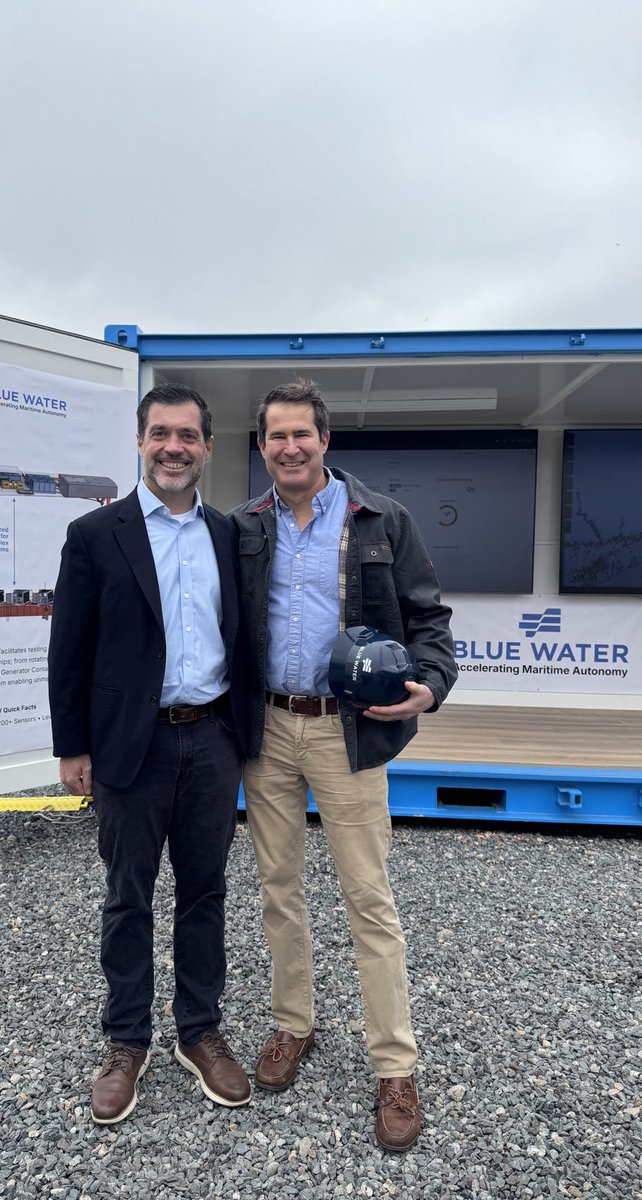
Today, we hosted @RepMoulton to our test site in New Bedford, MA.
Seth checked out our 170 ton autonomous test vessel, inspected an unmanned ship engine room, and talked about his Navy modernization priorities.
Massachusetts’ ecosystem - from robotics engineers in Boston and Cambridge to marine operators and technicians in New Bedford - has let Blue Water move with incredible speed.
We’re proud to work with leaders like @sethmoulton focused on modernization to support the warfighter.
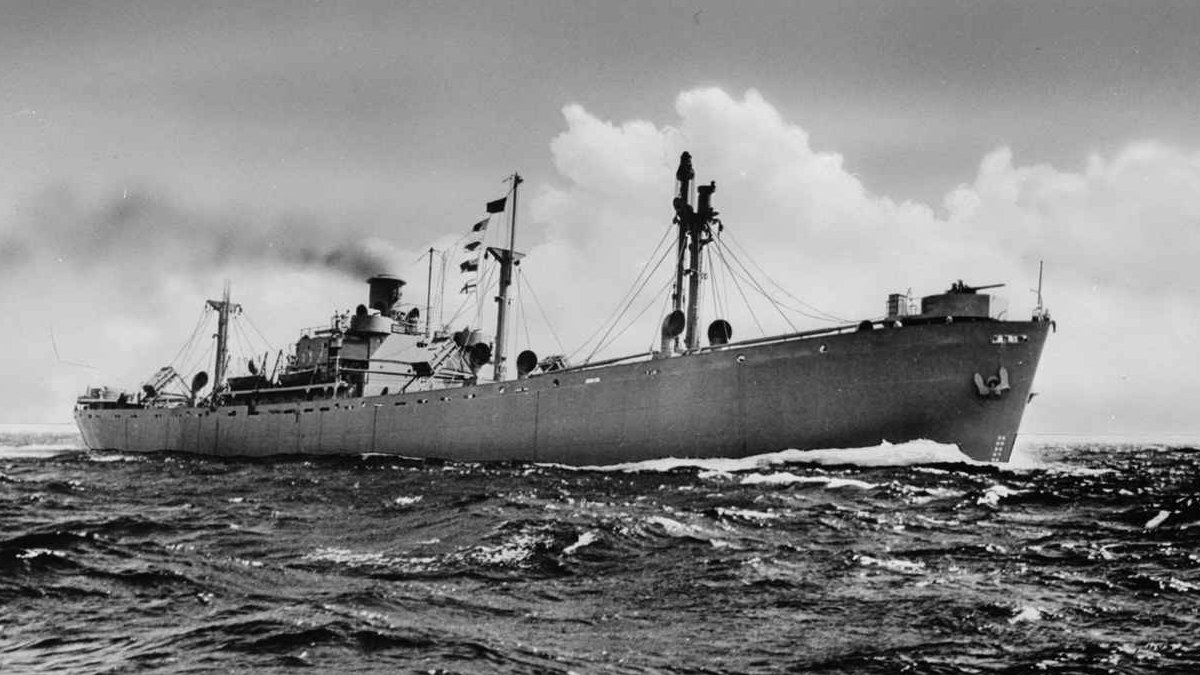
There’s a lesson in shipbuilding history that feels especially relevant right now.
The Liberty Ships of World War II weren’t born from endless prototyping. They were built from a proven hull design—a British cargo vessel—adapted to meet urgent needs and taken straight into production. Speed and scale mattered more than starting from scratch or designing a perfect ship.
We’re seeing a similar shift emerge today with programs like MUSV. The need isn’t for more prototypes. It’s for mature, capable platforms that can be produced and deployed now.
In periods of urgency, proven designs outperform new ones because they can be built and scaled immediately.
Across the industry, more teams are moving in that direction—prioritizing what’s already working and building from there. That same line of thinking shaped how we approached our Liberty Class: start with a proven @damen hull (with 300+ Sea Axe hulls in service), partner with experienced builders such as Conrad Shipyard—who have delivered over 800 vessels in the last 20 years—and focus on delivering capability quickly.
What’s notable is how closely that approach now aligns with the Navy’s evolving procurement model, including efforts like the PAE RAS Marketplace.
Sometimes “leaning forward” isn’t about taking bigger risks. It’s about recognizing patterns early and acting on them with confidence.
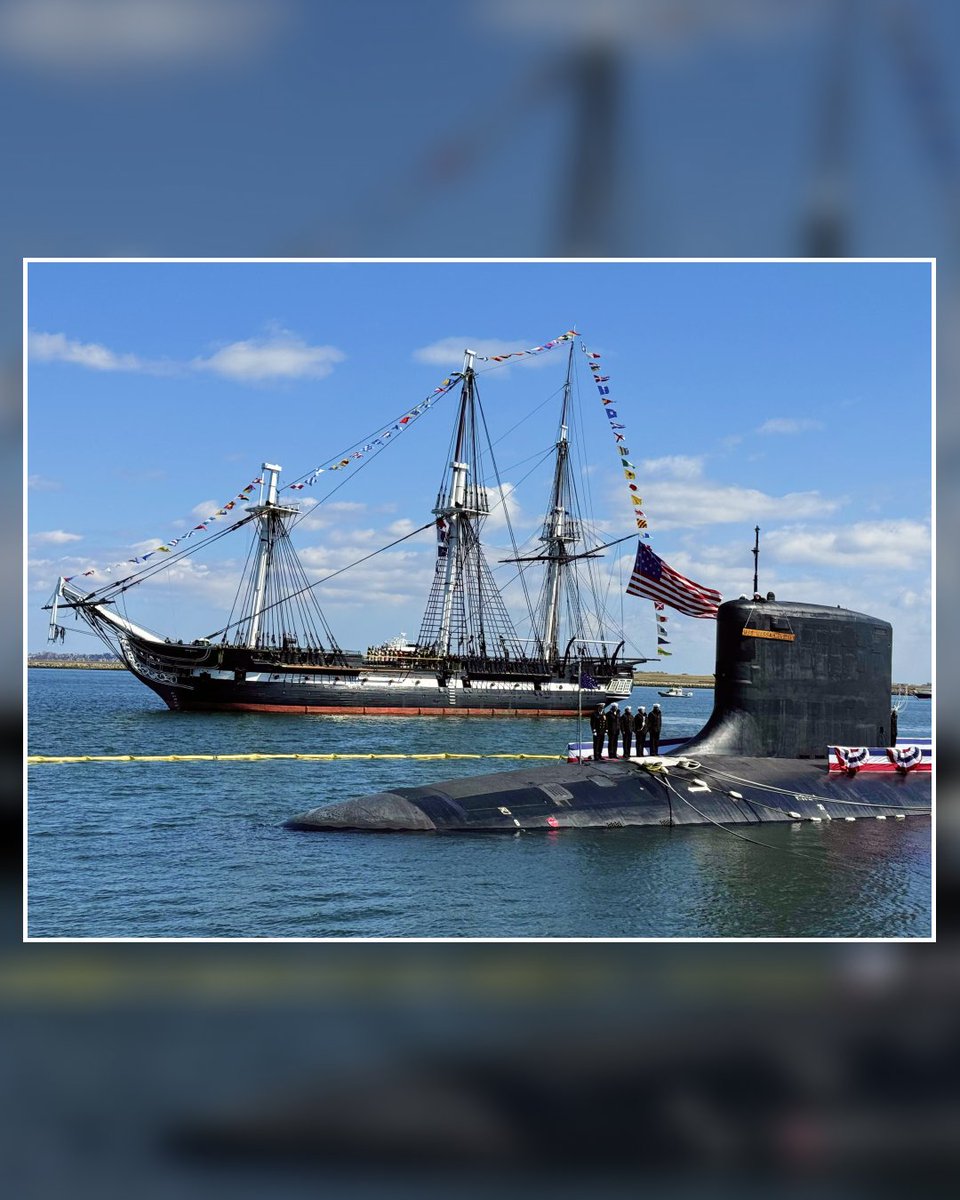
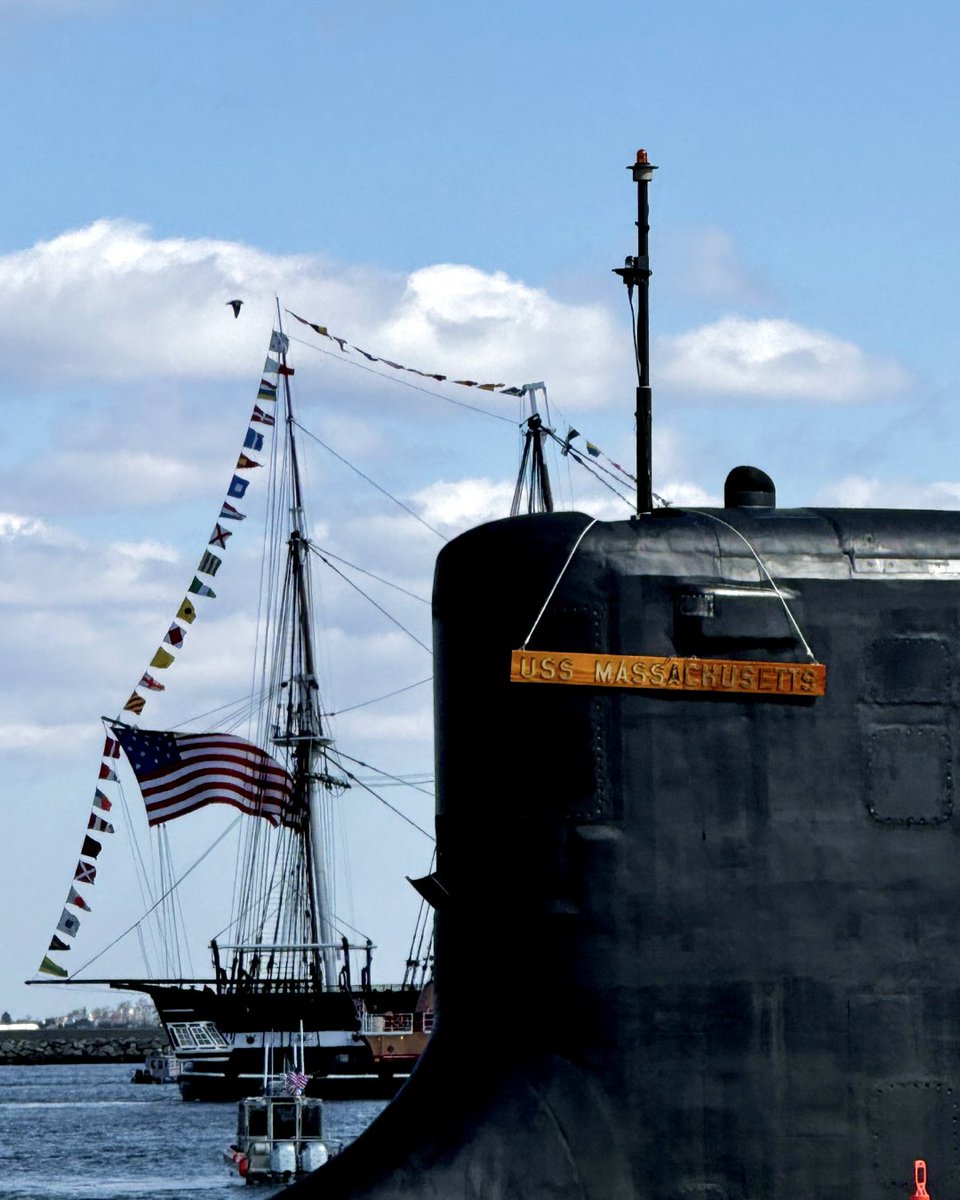
On Saturday, the Blue Water team had the honor of witnessing the commissioning of the newest Virginia-class fast attack submarine, USS Massachusetts (SSN 798), in Boston Harbor.
One moment that stood out: the USS Constitution—the Navy’s oldest commissioned warship—passing behind the submarine and rendering honors with a cannon salute. A powerful reminder of the depth of our naval tradition, especially in a year celebrating the 250th anniversary of our nation.
Being part of this legacy was humbling. Touring one of the most advanced submarines in the world made it even more unforgettable.
Proud to support this milestone—and the “Wicked Stealth” of our Navy’s submarine force.
Hooyah!
#Massachusetts #Navy #Shipbuilding