If you are interested in leveraged finance, restructuring banking or credit investing, this thread is for you
A few gems from an old Bear Stearns Leveraged Finance handbook (part 3)
🧵
1/ How to calculate RCF balance and interest expense
TRAITS OF A GOOD ANALYST (1/2)
Over the past several years I’ve had 6 analysts who at some point reported me, and have interacted with countless more. These are the traits I’ve found to be most correlated with long term success. They probably aren’t what you think. A 🧵
What I don’t care about:
Where you went to school, what banking program you did (or didn’t do), your test scores, your stock picking ability (initially). These are markers traditionally associated with success that IMO have little bearing on being a good analyst.
What I do care about:
An analyst’s job is to do excellent research in an intellectually honest, time efficient manner, and to communicate their findings clearly, succinctly, and accurately. Ideally they do this with as little oversight and friction as possible, allowing the fund to make more and better investments than they could without them.
1. Passion
Some people love investing and researching companies - they just find it fun. If you find something fun, you tend to work harder at it and be better at it. Passion is also easy to screen for in a resume / interview. As a PM, it’s also energizing to work with passionate people who love the work.
2. Curiosity
A lot of investing is asking the right questions. Curious people ask more and better questions. They go the extra distance vs. checking a box. It’s often very small or incremental insights that make an idea or research better than another.
3. Humility / Open-mindedness - arrogance is a killer in this business. On balance, smart people with “good” resumes tend to be more arrogant. Confirmation bias sinks analysts and sinks funds. Any hint of arrogance / confirmation bias is an automatic pass for us.
4. Attention to detail - careless mistakes in modeling erode trust and offset a lot of good and thoughtful work. They also require much more managerial oversight. It’s hard to be a good analyst if you frequently make mistakes or miss things.
5. Trust / honesty - PMs hire analysts to get leverage on their time - if your PM can’t trust you or your work, there is nowhere to go. Admit your mistakes and make sure what you show the PM is accurate, even if it takes longer. Once trust is eroded it’s hard to get it back.
@theBuoyantMan Hi Shravan. Can’t DM you so commenting here. You ran a back testing course a couple of years back which I wanted to be a part of but could not. Is it possible to get its videos/code base/material for now? Of course I’ll be willing to pay.
Struggling to ramp up on new sectors? 🔍
Here’s how top investors build conviction fast—by reading the right things.
A thread on how my investing & sector reading list helps you speed up sector mastery and build your own stock-picking process 🧵👇
Stanley Druckenmiller — one of the macro GOATs, with perhaps the greatest investment track record of our time — states that what he learned from Soros (his mentor) was that position sizing is three-quarters of the game.
Yes, the edge is important, but more crucial is the way you press the edge: position sizing of the bet. Pushing it hard when you hold a variant perception.
It is no surprise that Druckenmiller thinks that the efficient frontier and the modern portfolio theory are nonsense. And so does Soros.
They both fall into the second camp of portfolio construction: maximising wealth (focusing on the geometric mean returns) as opposed to balancing mean/variance (optimising for risk vs reward), despite the latter winning the Nobel Prize in economics (that must be a red flag 😂).
Additional notes here. 👇
Startups can approach an industry in a way that requires fundamentally new system, putting the startup and incumbents on the same footing. Most established companies prefer to compete by exploiting their competencies while new systems make old competencies useless.
I’m going to play the devil’s advocate for the sake of education. The answer is because valuation multiples don’t mean anything if you don’t understand why the multiple is what it is. You have to do the work.
1) The E in the P/E could be understated due to high level of investment in intangible assets, that are expensed on the P&L statement. This is masking true profitability and the P/E might be much lower after adjustments (example: Amazon) which we own.
2) You’re disregarding the CAP analysis (competitive advantage period). It doesn’t make sense to value businesses without considering the magnitude and the durability/period of future cash flows (example: notice Coke’s has been around for a century, it always looks expensive but its stock always goes up as cash flows rise).
3) Real valuation work should be done by finding the intrinsic value (process done by discounting future FCF back to present value) and not by some ratio or formula that is a shortcut leading to blind spots.
As Thomas Phelps said, “When any rule, formula, or program becomes a substitute for thought rather than an aid to thinking, it is dangerous and should be discarded.”
Inventory Turnover Ratio: A Complete Guide
How to calculate and use inventory turnover ratio for stock analysis. Learn by examples of real-life companies showing good and bad inventory turnover ratio
https://t.co/mT8qRGtLBH
.
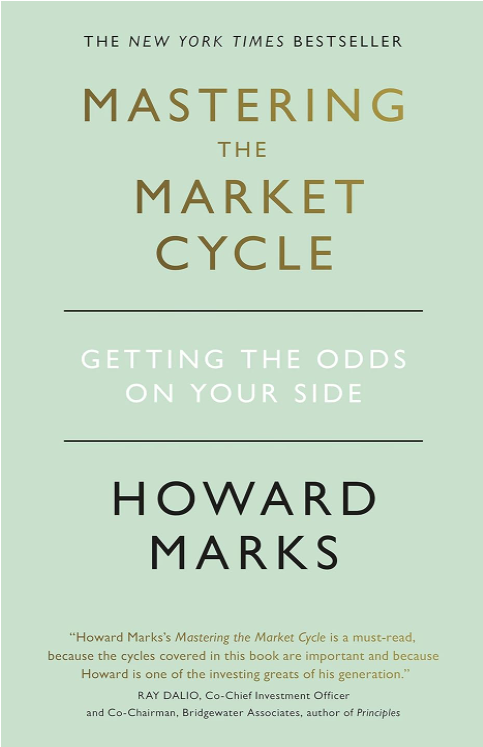
I read Howard Mark's Mastering the Market Cycle a few years back. The ideas of risk cycle, profit cycle, bad debt cycle, real estate cycle, and economic cycle; were profound and worthy of deeper study.
@peeyushc Do you mind explaining how you use the economic data sources? Like what all do you see in them and how do you understand the overall economic picture using those?
Thanks.
The point I am trying to make is, that Marks' book is like a greater whole and McGee expands on a specific part of it which is the Economic Cycle and its subcycles. Reading Marks' book and following up with McGee can provide much better insights into the idea of cycles.
I read Howard Mark's Mastering the Market Cycle a few years back. The ideas of risk cycle, profit cycle, bad debt cycle, real estate cycle, and economic cycle; were profound and worthy of deeper study.
FFW to now I came across another book by Robert McGee called 'Applied Financial Macroeconomics & Investment Strategy' which delves into economic cycles such as business, monetary policy, bonds, equities and commodities.
A look at the PE ratio. Here is a paper I read by Steven D. Bleiberg and William W. Priest, CFA for Epoch Investment partners; on how to understand the interplay between the PE ratio and the ROIC.
@skhetpal Hey great thread. Keep more of these coming.
Just one query. How/Why did the market deem this as a secular growth company? If it’s engaged in speciality solutions provider business, does it not make it dependent on cycles?
Pardon my naievity. Thanks.
15 THINGS I LEARNED IN INVESTMENT BANKING:
Lots of bankers here ask me questions. Thought I'd make a thread on everything I learned on how to navigate banking as a junior
🧵