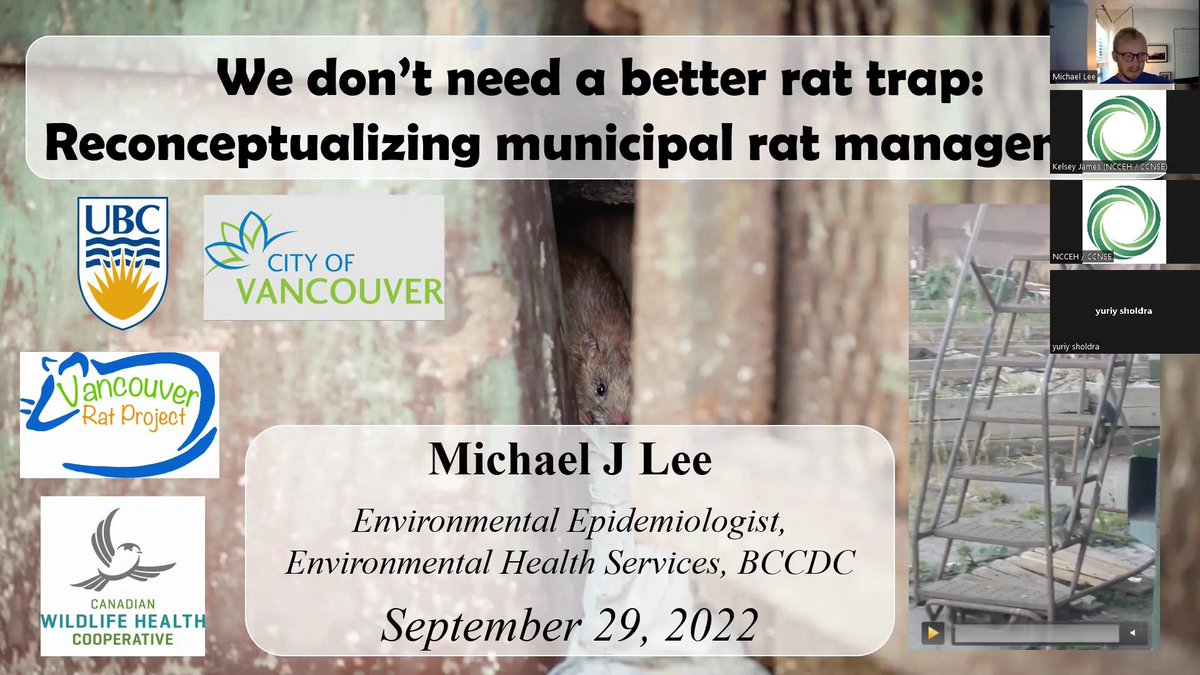
Urban rats continue to flourish in cities. An entrenched “war-on-rats” paradigm drives rat management, but in this @ncceh webinar, Michael J. Lee explores how reconceptualizing the problem as an unsolvable one, can change how cities approach management: https://t.co/SaQowTvijp
VanRatProject's @kaylee_byers is hosting @GenomeBC podcast Nice Genes! While the podcast is about what #genomics reveals about the world around us, it also includes a sprinkling of info about #rats and how we've studied them in #Vancouver#yvr. Link to Nice Genes! below 🐀🧬🔬🎙
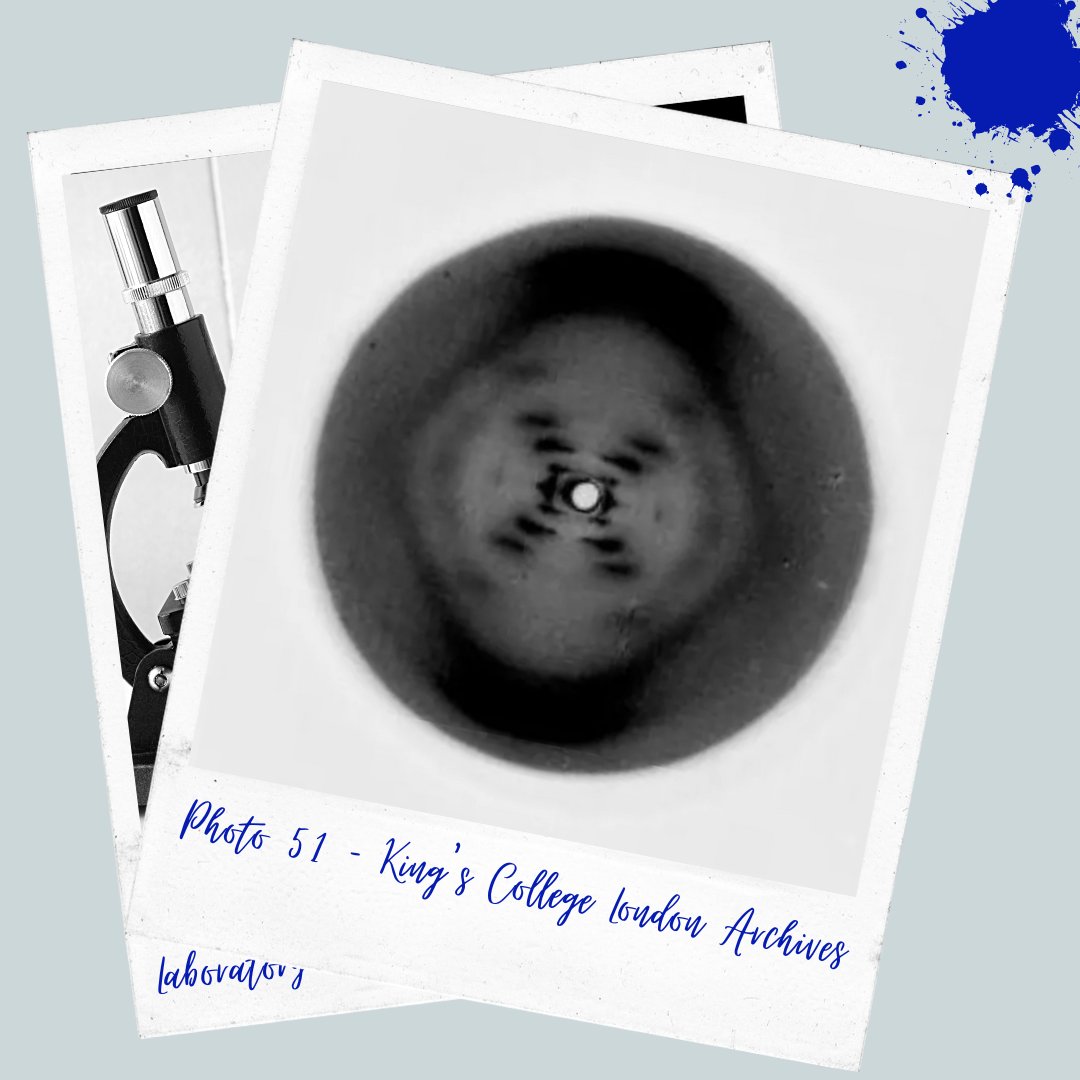
Who took this photo? What is it? How did it change the world?
Join host @kaylee_byers & guest @heysciencesam as they chat girl boss Rosalind Franklin, Jurassic Park, Christmas (Island) rats & brains.
Find Nice Genes! wherever you get your podcasts or: https://t.co/OOcKC8ULvm
We were happy to have Dr. Chelsea Himsworth and Dr. @kaylee_byers from the British Columbia Canadian Wildlife Health Cooperative for our webinar on transdisciplinarity to talk about their work with urban rats: the Vancouver Rat Project.
@VanRatProject
@CWHCRCSF
This is an excellent short video summary of the great work being done by @VanRatProject, @kaylee_byers, et al., covering the basic ecology & applied public/mental health aspects of urban rats. Now I need to squeeze this into our "pest" section of my Urban E&E course!
Spoiler alert: if you live in a city, you live with rats
@kaylee_byers's work is about managing rat population to limit health risks for humans in Vancouver
Check out this short entertaining and informative video about the @VanRatProject
Spoiler #2: rats in this video are cute
Had so much fun collaborating with @VanRatProject and @kaylee_byers to condense 7 years (!) of research into a video. Some of the coolest interdisciplinary science around!
What health risks do urban #rats pose to people? How might pest control impact those risks? How could rat movement determine where the disease-causing bacteria carried by rats are found? What can this teach us about managing rats? Learn more in this video about our findings
New study in @WildlifeDisease - In it we find that the distribution of #rats carrying the bacteria #Leptospira interrogans in #Vancouver was not associated with characteristics of the urban environment or measures of rat population density @ubcspph https://t.co/lnZw9xqLZo
Our new @VanRatProject study in collaboration with @HillLabSask revealed that #Vancouver rats and their fleas carry multiple species of Bartonella bacteria
https://t.co/xQgiBqYGlw
For more on the contributions rats have made to humanity and how they became to be known as cultural villains, read this:
https://t.co/8D6yxsdnqe (includes audio for part one in this series)
@mlynk@rodentologist@MichaelGVann @visualplague @kaylee_byers @nataliekofler
@HelsinkiRats@VanRatProject Yes there were including parks, empty lots and food gardens. Green spaces were also assessed in some of the environmental factors associated with carriage of zoonotic pathogens. For example: https://t.co/Mr28jJp7WQ
Rodents make up 43 per cent of all mammal species, and of these rodents, rats —thanks to their ability to exploit human environments — stand out as tenacious survivors.
https://t.co/8D6yxsdnqe
@rodentologist@MichaelGVann @visualplague @kaylee_byers @nataliekofler
Remarkable image of cannibalism in rats 🐀. This likely contributes to the maintenance and spread of Capillaria hepatica, a liver worm (parasite) that can also infect people. Here’s a link to our @VanRatProject study on it
https://t.co/eyrV2QJQgk
We're happy to have Dr. Chelsea Himsworth, UBC, back for our webinar on transdisciplinarity to talk about her work with urban rats: the Vancouver Rat Project. @VanRatProject
@CWHCRCSF
https://t.co/18bgzBPRGW
A very interesting line of study - does repeated rat eradication efforts lead to more sickly rats?
Certainly, many of the rats in the @VanRatProject had severe disease including respiratory infections. Could this be a function of poor fitness?
https://t.co/7nnLhZj0Pa
Rats are popular in horror stories. But unlike ghosts and goblins, getting rid of them is more difficult than calling Ghostbusters. #UBC researcher Kaylee Byers explains what we've gotten wrong in our battle with these critters. https://t.co/vLlyYChi9J
"As someone who has trapped more than 700 rats, I can tell you that this lack of information is partly because rats are notoriously difficult to study." https://t.co/wJTkHbqcql