Everyone shows up for the announcement.
Everyone shows up again for the celebration.
Almost nobody is there for the 400 quiet days in between, when the work is unglamorous and unfinished and yours alone.
That stretch is lonely by design.
Charlie Munger spent 50 years studying why intelligent people make catastrophically stupid decisions.
It is the most useful thing I have ever watched:
1. Incentives are more powerful than anyone thinks. Munger says he has been in the top 5% of his age cohort his entire life in understanding the power of incentives and he has still underestimated it every single year. Federal Express could not get their night shift to work efficiently until someone realized they were paying by the hour. They switched to paying by the shift. The problem disappeared immediately.
2. People rationalise terrible behavior when their incentives point that way, and they do not even know they are doing it. A doctor in Nebraska was removing perfectly healthy gallbladders for years. When Munger asked an old colleague whether the doctor knew he was harming patients, the answer was no. he genuinely believed the gallbladder was the source of all medical evil and that removing it was an act of love. That is incentive-caused bias at its most extreme.
3. Psychological denial is real, and it is not just for weak people. A family friend's son flew off a carrier in the North Atlantic and never came back. His mother, a completely sane woman, simply never believed he was dead. Reality was too painful, so she distorted it until it was bearable. Munger says we all do this to some extent, and it causes terrible problems.
4. Consistency and commitment tendency are one of the most powerful forces in the human mind. Once you have stated a position publicly, you are psychologically locked into it. Max Planck said the really important new physics was never accepted by the old guard. A new guard came along that was less brain blocked by its previous conclusions. If this happened to the deans of physics, Munger says, imagine what it does to ordinary people.
5. The Chinese brainwashing system used on prisoners of war worked better than torture. They did not start with big demands. They maneuvered people into making tiny little commitments and declarations and slowly built from there. The same mechanism operates in every cult, every sales system, and every ideology that gets deeply embedded in people's heads.
6. Pavlovian association shapes buying behavior at a level most people never consciously process. Munger estimates three quarters of all advertising works on pure Pavlov. Coca-Cola does not want to be associated with funerals. They want to be associated with the Olympics, wonderful music, heroics. The association itself changes how people feel about the product at a subconscious level. Raising the price of a product can actually increase its market share because price and quality are associated in the human mind, and people use price as a signal of value.
7. Persian messenger syndrome is alive and running every major organization. The Persians killed the messenger who brought bad news. Bill Paley in his last 20 years, did not hear one thing he did not want to hear. everyone around him knew bringing bad news was dangerous. The result was that one of the most powerful men in media made terrible decisions for two decades because reality never reached him.
8. Social proof causes otherwise intelligent people to follow each other off cliffs. When one oil company bought a fertilizer company in the 1970s, practically every other major oil company rushed out and did the same. There was no rational reason for oil companies to own fertilizer companies. But if Exxon was doing it, it was good enough for Mobil. Every single acquisition was a disaster.
9. The efficient market theory persisted in academia for decades despite Berkshire Hathaway existing as a living contradiction. One economist kept adding sigmas to explain away the anomaly. two sigma, then three, then four, eventually six sigma. Munger's observation: It is better to add a sigma than change a theory just because the evidence comes in differently. That economist later went into money management himself and sank like a stone.
10. Contrast bias warps perception constantly and invisibly. Put your hand in hot water, then room temperature water. It feels cold. Put your hand in cold water, then room temperature water. It feels hot. same bucket. The human sensory apparatus has no absolute scale, only a contrast scale. Real estate agents exploit this deliberately. They show you two overpriced, awful houses first, then take you to a merely overpriced house, and it feels like a bargain.
11. The frog in slowly heating water is the business version of contrast bias. If something bad comes to you in small pieces, you are likely to miss it entirely. Munger says he has known many high-powered brilliant businessmen who were destroyed this way. not because they were stupid but because each incremental change was too small to trigger alarm. The contrast was never large enough to notice.
12. Authority bias is so powerful it can make trained professionals watch a plane crash. In flight simulator experiments, when the pilot, the authority figure, does something that any trained co-pilot knows will crash the plane, 25% of the time, the co-pilot sits there and lets it crash anyway. They have been trained to know better. The authority relationship overrides the training.
13. Deprivation super reaction syndrome explains why people go insane over small losses. Munger's neighbor had a 180 degree view of the harbor. the neighbor put in a pine tree about 3 feet high that turned it into a 179 and three-quarter degree view. They had a blood feud that went on for years. The New Coke disaster is the corporate version. Coca-Cola told customers they were changing a flavor and triggered a deprival super reaction so powerful that Pepsi was weeks away from releasing old Coke in a Pepsi bottle. smart engineers. brilliant lawyers. armies of psychologists. All missed it.
14. Envy and jealousy are far more powerful than greed and almost entirely absent from psychology textbooks. Munger says Warren Buffett has said half a dozen times that it is not greed that drives the world but envy. In a thousand-page psychology textbook, the index entry for envy and jealousy is blank. One of the most powerful forces in human behavior and academia essentially ignores it.
15. Gambling addiction is not explained by variable reinforcement alone. Skinner thought he had fully explained gambling by showing that variable reward schedules pound in behavior more powerfully than fixed ones. But the people who design modern slot machines know things Skinner did not. Lotteries where you pick your own number get far more play than lotteries where the number is assigned to you. People who commit to a number believe it has more validity because they chose it. Near misses on slot machines trigger deprival super reaction syndrome. It is four or five psychological tendencies working together, not one.
16. The most dangerous situations are when multiple psychological tendencies combine toward the same end at once. Munger calls this the lollapalooza effect. Tupperware parties use four or five tendencies simultaneously. Moonie conversion methods combine multiple tendencies and work extraordinarily well. alcoholics anonymous achieves a 50% no drinking rate when everything else fails because it also combines multiple tendencies toward a constructive end. The Milgram experiment is not just about obedience. it involves authority bias, consistency and commitment tendency, and contrast effects all working together. That combination turns human brains into mush.
17. Boards of directors are structurally designed to fail as corrective mechanisms. The top executive is the authority figure. He is doing something questionable. You look around, and nobody else is objecting, which is social proof that it is fine. He flies you around in the corporate jet and raises your director fees every year, which triggers reciprocation tendency. Munger's rule: boards only act when the behavior gets so bad it starts making them look foolish or threatens legal liability. That is the only forcing function that reliably works.
18. John Goodfriend of Salomon Brothers destroyed his career and reputation because he did not fire a trusted employee who had lied to the government. Every psychological tendency pointed toward keeping the man. He was a close colleague. His wife was known. He was part of a group that had made over a billion dollars for the firm. He said he had never done it before and would never do it again. Goodfriend looked into his eyes and believed him. The man did it again. The lesson: everyone who gets caught embezzling says they have never done it before and will never do it again. That is what they all say.
19. Darwin avoided confirmation bias by deliberately seeking out disconfirming evidence. Munger says Darwin was not especially smart by ordinary standards of human acuity. Yet he is buried in Westminster Abbey. Munger studied how Darwin worked and realized he had psychological tricks worth learning. Darwin always paid extra attention to evidence that contradicted his theories. Munger started doing the same and credits it as one of the most important intellectual habits of his life.
20. Why is the most important word in communication? Carl Braun designed oil refineries with spectacular skill, and you got fired in his company if you wrote a communication without explaining why. not just who, what, where, and when, but why. Braun knew that in a complex system where things can blow up, a communication system that always explains the reason behind an instruction works dramatically better than one that does not. Forstein, the general counsel of Salomon, told Goodfriend on multiple occasions that he had to report the employee's misconduct. He explained it was the right thing to do. He never explained what would happen to Goodfriend personally if he did not. he failed to use the most powerful tool of persuasion. Goodfriend ignored him. When Goodfriend went down, Forstein went with him.
Desire stems from scarcity.
Not everything that is scarce in the world will be desirable to you, but whatever is desirable to you is so because it is scarce in your life.
Time and money have timeless desirability because they always feel scarce.
Jobs, places, achievements lose desirability much sooner.
So, the best way to evoke more desire is to design more scarcity in life.
I say 'design' because scarcity that is not by choice is harmful. You can be on a diet only when there is food in the fridge. Otherwise, it is poverty and what leads to the scarcity mindset.
The goal, then, is to have an abundance mindset with a life designed for scarcity so that the cup of desire is always full.
I focus on desire and not happiness because happiness doesn't fuel action. In fact, the desire for happiness is timeless because happiness is a transient, scarce emotion.
What keeps us alive is desire.
UNCOMFORTABLE TRUTHS ABOUT LIFE
Uncomfortable Truth 1:
Life has no purpose.
We came from nothing.
And once we are gone there will be nothing.
No one will remember us beyond a few years or decades.
And yet we will spend every second of our life wondering what people think of us!
Almost everybody you meet just wants to marry a good person, get a nice 2BHK, a compact SUV, maybe a dog, have kids eventually, and talk about how their day went building their low-drama, self-sufficient, profitable startup while having dinner together
If you have only been following VC funded companies, their founders, their funding stats, their progress, their lawsuits, all this via mainstream publications, then this dream may seem distant, even unpractical
But there is a wave of founders who are showing us an alternative path by choosing to do things differently. They don't want VC funding. They don't want hypergrowth. They don't want large teams. They don't care to be on Forbes 40under40. They rather watch TED talks on their plasmas than give one
All they want is to be independent and be in control of their own destiny
These champs are as cool, as calculated, and as important to the GDP as the folks from hyperfunded companies. They make enough money for themselves and their employees to have a comfortable life
I would even argue that it may be more rewarding for youngsters looking for employment to work with such founders and teams than spend their youth away in pointless meetings that could simply have been emails
Sure they have their ups and downs, and wins and failures. Risks are high and the struggles are real. But they are not nearly as dramatic as a life at a valuation chaser
Here are a few such Indian indie builders. There are 100s more talking about their learnings, earnings, spendings, etc in public on their social feeds. Their posts may be more up-to-date than a college syllabus. Look for #buildinpublic
1. @_skris - https://t.co/9ZnNlpnJwK
Founded: 2021
Team size: 1
Monthly income: INR 3.4L
2. Ujwal Surampalli - @IntrvwBuddy
Founded: 2017
Team: 10
MRR: INR 20L+
3. @sqlhorror & Deep Shah - Makkajai
Founded: 2014
Team: 13
4. @hSanat & Nikhil Kachare - https://t.co/naS53y8ovg
Founded: 2022
Team: 2
MRR: INR 3.8L
5. @louispereira - https://t.co/TIYwN7zeZt
Founded: 2023
Team: 1
6. Saurav Pathak - @BagistoShop
Founded: 2018
Team: 25
MRR: INR 24L+
With the kind of growth trajectory they are on, some of their MRRs will 2-5x in the next 24 months
There may be a play here for angel investors too. If termsheets can be drafted such that a return on investment is the focus rather than valuations, these founders may be open to outside capital. No board seats, drag alongs, etc. Just basic info rights and an agreed method of calculating return which could come via profits or a sale. Perhaps a 1.5-5x ROI based on the number of years from the investment. I'm trying my luck
This movement is not new. But with Aisle focused on serving serious daters, and AI giving us the ability to somewhat 10x our productivity, it may be more possible than ever to marry a good person, get a nice 2BHK, a compact SUV, maybe a dog, have kids eventually, and talk about how your day went building your low-drama, self-sufficient, profitable startup while having dinner together
99.99998% of success comes from
-starting
- doing
- showing up daily.
The 0.00002% isn’t worth zilch.
My real-world examples:
If you’re writing a book, open a Word doc on thee first day, name it “new book”, and close it.
The next day, add a title and close it.
Four months later, you will have written a lot.
**
If you’re planning a business, make ONE call on the first day and stop.
Next day, make two calla and send two emails
One year later, you will have got something worthwhile
**
If you plan to exercise, visit the gym or workout place in your car the first day but don’t step out.
The next day, get put, inspect the place and come back.
A month later, you will be pretty fit.
**
Just do it.
No wonder it’s Nike.
#dhandhekibaat
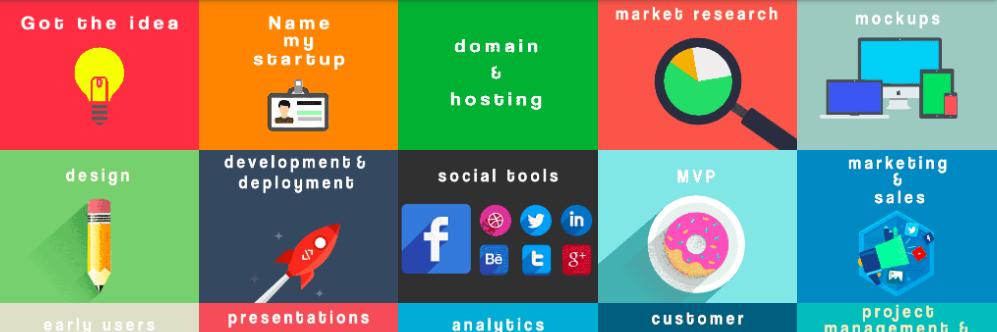
Check the pic!
At 2win, we ONLY HIRE via extensive assignments.
Learning:
- the funnel of “interested” to “still interested” crashes by 50% when told an assignment is involved. (Talent acquisition (TA) team nightmare)
- of the 50% who agree to do the only 20% complete it.
Show me a country that prospered and I will show you a set of people who worked hard. Yes, not everyone needs to work hard but growth does not happen without putting in the hours. It's a choice you make, just remember when you look back in a few years on results
How to write nonsense tweets and gain followers:
Step 1: Look around you and find inspiration. For ex - I'm sitting in my balcony and I see plants. So we will take plants as inspiration.
If ur gonna create history, u have to...? Chk pic.
This is the passion, dedication, die-hard 100 (Bruce Willis gaya tel lene), obsession, madness u need as an entrepreneur trying to achieve the impossible.
@bhash you’re amazing. But I suggest meditating also :) happy to lead!