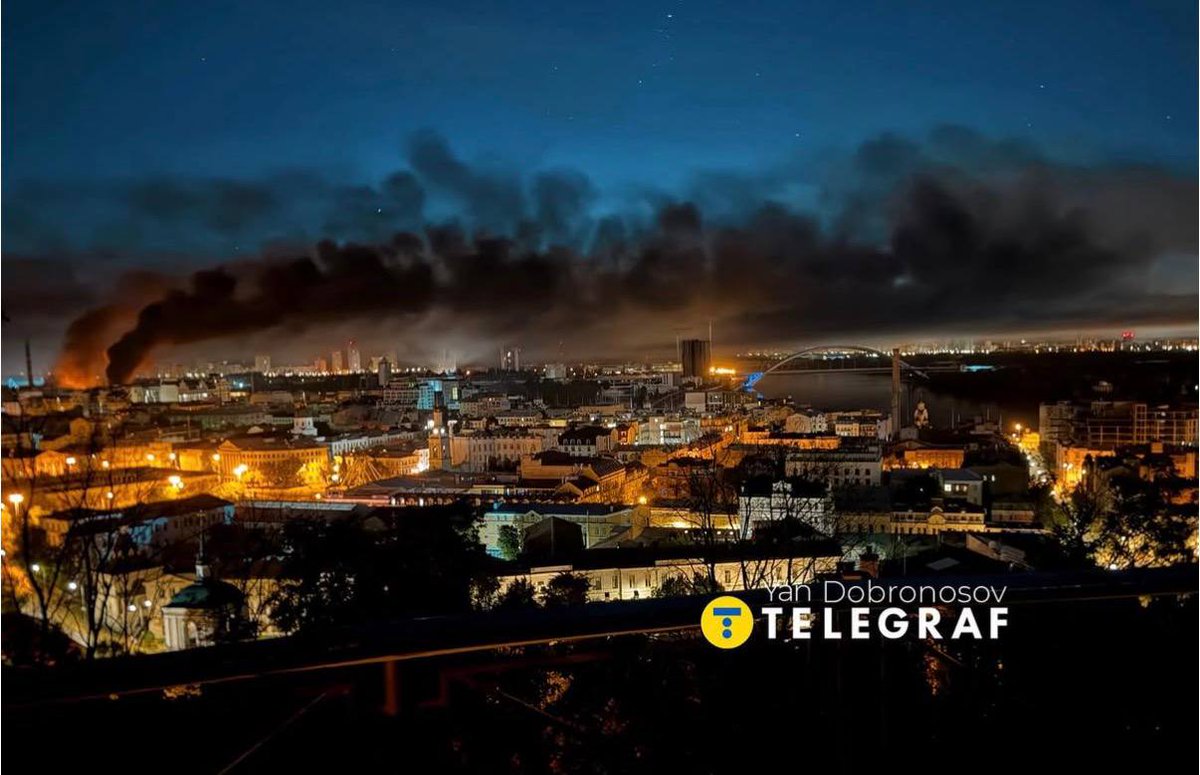
I criminali russi stanotte hanno fatto una nuova strage di civili in Ucraina. Hanno lanciato missili balistici, sono crollati o in fiamme palazzi, ci sono persone sotto le macerie a Kyiv.
Il mondo civile deve solo sconfiggere questa nazione criminale. Non ci sono molte altre vie
Per Slok, 87% of VC funding is directed at AI, 49% of investment grade bond issuance is AI, and 38% of high yield bond issuance is linked to AI.
During the internet boom, in 1999, less than 40% of VC funding was linked to internet companies.
Broadening to the wider tech-media-telecom (TMT) bubble, in 1999, VC funding for TMT hit 80% of all funding. TMT bonds were 40-50% of the high yield bond issuance in 2000 and 25-30% of total investment grade bond issuance.
Over $100B investment grade debt issued in 1999-2000 became junk by 2002.
High yield debt at 38% today vs 40%-50% back then belies the idea that today’s AI debt issuance is cleaner, backed by more profitable companies today.
Le scorte globali di greggio si stanno avvicinando al punto in cui il loro livello scatena strappi al rialzo dei prezzi, con distruzione vera della domanda (e dell'economia)
Global oil stockpiles could hit record lows if Strait of Hormuz remains closed https://t.co/rylBRyCWUR
There will be no AI jobpocalypse.
The story that AI will lead to massive unemployment is stoking unnecessary fear. AI — like any other technology — does affect jobs, but telling overblown stories of large-scale unemployment is irresponsible and damaging. Let’s put a stop to it.
I’ve expressed skepticism about the jobpocalypse in previous posts. I’m glad to see that the popular press is now pushing back on this narrative. The image below features some recent headlines.
Software engineering is the sector most affected by AI tools, as coding agents race ahead. Yet hiring of software engineers remains strong! So while there are examples of AI taking away jobs, the trends strongly suggest the net job creation is vastly greater than the job destruction — just like earlier waves of technology. Further, despite all the exciting progress in AI, the U.S. unemployment rate remains a healthy 4.3%.
Why is the AI jobpocalypse narrative so popular? For one thing, frontier AI labs have a strong incentive to tell stories that make AI technology sound more powerful. At their most extreme, they promote science-fiction scenarios of AI “taking over” and causing human extinction. If a technology can replace many employees, surely that technology must be very valuable!
Also, a lot of SaaS software companies charge around $100-$1000 per user/year. But if an AI company can replace an employee who makes $100,000 — or make them 50% more productive — then charging even $10,000 starts to look reasonable. By anchoring not to typical SaaS prices but to salaries of employees, AI companies can charge a lot more.
Additionally, businesses have a strong incentive to talk about layoffs as if they were caused by AI. After all, talking about how they’re using AI to be far more productive with fewer staff makes them look smart. This is a better message than admitting they overhired during the pandemic when capital was abundant due to low interest rates and a massive government financial stimulus.
To be clear, I recognize that AI is causing a lot of people’s work to change. This is hard. This is stressful. (And to some, it can be fun.) I empathize with everyone affected. At the same time, this is very different from predicting a collapse of the job market.
Societies are capable of telling themselves stories for years that have little basis in reality and lead to poor society-wide decision making. For example, fears over nuclear plant safety led to under-investment in nuclear power. Fears of the “population bomb” in the 1960s led countries to implement harsh policies to reduce their populations. And worries about dietary fat led governments to promote unhealthy high-sugar diets for decades.
Now that mainstream media is openly skeptical about the jobpocalypse, I hope these stories will start to lose their teeth (much like fears of AI-driven human extinction have).
Contrary to the predictions of an AI jobpocalypse, I predict the opposite: There will be an AI jobapalooza! AI will lead to a lot more good AI engineering jobs, and I’m also optimistic about the future of the overall job market. What AI engineers do will be different from traditional software engineering, and many of these jobs will be in businesses other than traditional large employers of developers. In non-AI roles, too, the skills needed will change because of AI. That makes this a good time to encourage more people to become proficient in AI, and make sure they’re ready for the different but plentiful jobs of the future!
[Original text in The Batch newsletter.]
La parata sulla piazza Rossa di Mosca si tiene per concessione di Zelensky
Putin non è in grado più neanche di proteggere Mosca.
Putin farà la fine dell’URSS
La chimica europea sta venendo lentamente uccisa dal dumping cinese e americano. Il paracetamolo non ha più un produttore europeo, la lisina ne ha uno solo. Le aziende europee utilizzatrici tendono a opporsi ai dazi anti dumping perché perdono competitività. Non se ne esce
EU anti-dumping complaints against Chinese chemicals at record high https://t.co/8meJgShmU8
Con 3000 morti e oltre 200 mila feriti sulle nostre strade ogni anno, la politica dovrebbe seriamente mettere al centro della propria azione un'apertura seria alla guida autonoma e #robotaxi.
Si potrebbero salvare oltre 2700 vite ogni anno e fare risparmiare miliardi di spesa sanitaria.
@bobocraxi Il numero di casi di cancro in eccesso dovuti all'incidente nucleare in questione si stima siano e saranno - per fortuna - ZERO. Il numero di 1300 deriva da ciarpame scientifico.
https://t.co/olSgnYiRyP
L’ho detto oggi ai ragazzi: siate come dei neuroni.
Cercate di fare andare le cose come immaginate, espandendovi in tutte le direzioni. Prima o poi la connessione che vi cambia la vita la trovate.
Se il neurone mollasse dopo un paio di tentativi non esisteremmo come specie.
Questo video fa tristezza, indipendentemente da come la si pensi sulla situazione internazionale, sul mondo, sulla politica. La tenerezza di un uomo che spera, illudendosi, che la sua presenza sia in qualche modo un segno, e la violenza, quella sì fascista, di chi gli impedisce fisicamente di essere, di starci, di partecipare.
E, in una giornata così, perde l'umanità.
Sono immagini che sinceramente mi fanno piangere. Come cazzo è possibile che un signore non possa manifestare con queste bandiere? Ma siamo alla follia!
Life is too short to worry about little things. Have fun. Fall in love. Regret nothing, and don't let people bring you down. Study, think, create, and grow. Teach yourself and teach others.
Rimettersi nelle mani del #gas russo è l'errore più grosso che si possa fare dal punto di vista energetico, politico, strategico. E, non in ultimo, per quanto mi riguarda, etico.
Ho scritto una lettera aperta alla Presidente @GiorgiaMeloni, al Ministro @Antonio_Tajani e al Ministro @Piantedosim, per l’inaccettabile e gravissima mancanza di un quadro normativo nazionale in applicazione delle sanzioni Ue.
Qui il testo.
l'Italia non sta applicando in modo efficace le sanzioni europee contro i media controllati dalla Federazione russa. Il quadro normativo è chiaro: il Regolamento (UE) 2022/350 e le modifiche al Regolamento (UE) n. 833/2014 vietano la trasmissione, la distribuzione e qualsiasi forma di aggiramento delle attività di emittenti come RT, Sputnik e altri organi di informazione sanzionati.
Eppure, nel nostro Paese, queste norme restano in gran parte inapplicate. Eventi, iniziative editoriali e attività pubbliche riconducibili a questi soggetti continuano a svolgersi, anche sul territorio nazionale.
Il recente festival legato a Russia Today a Bologna lo dimostra. Il problema è semplice: manca un decreto attuativo e mancano circolari operative perché dal 2022 ad oggi il Governo italiano che voi rappresentate ha scelto di non scegliere.
Senza questi strumenti, questure, prefetture e Polizia di Stato sono lasciate senza indicazioni chiare. Devono decidere caso per caso, senza una cornice uniforme.
Il risultato è che le sanzioni restano sulla carta.
Nel frattempo, queste attività si intensificano proprio in prossimità delle scadenze elettorali, con una presenza sempre più strutturata sul territorio e nei circuiti culturali.
Il festival di Bologna, organizzato da RT, ha ricevuto pubblicamente i complimenti di Margarita Simonyan, direttrice di Russia Today e figura centrale dell’apparato propagandistico del Cremlino, che ha rilanciato contenuti e partecipanti attraverso i propri canali ufficiali.
L’Italia è, insieme all’Ungheria, tra i pochi Paesi europei a non aver definito strumenti operativi per rendere effettive queste sanzioni.
Altrove si interviene. Qui si lascia correre. Questo indebolisce le istituzioni e rende inutile il lavoro delle forze di sicurezza. E apre un problema politico più ampio, che riguarda tutte le istituzioni della Repubblica, chiamate a garantire il rispetto degli obblighi europei e la tutela dello spazio democratico che oggi passa anche dalla capacità di non continuare ad essere il ventre molle dell’Occidente.







![AndrewYNg's tweet photo. There will be no AI jobpocalypse.
The story that AI will lead to massive unemployment is stoking unnecessary fear. AI — like any other technology — does affect jobs, but telling overblown stories of large-scale unemployment is irresponsible and damaging. Let’s put a stop to it.
I’ve expressed skepticism about the jobpocalypse in previous posts. I’m glad to see that the popular press is now pushing back on this narrative. The image below features some recent headlines.
Software engineering is the sector most affected by AI tools, as coding agents race ahead. Yet hiring of software engineers remains strong! So while there are examples of AI taking away jobs, the trends strongly suggest the net job creation is vastly greater than the job destruction — just like earlier waves of technology. Further, despite all the exciting progress in AI, the U.S. unemployment rate remains a healthy 4.3%.
Why is the AI jobpocalypse narrative so popular? For one thing, frontier AI labs have a strong incentive to tell stories that make AI technology sound more powerful. At their most extreme, they promote science-fiction scenarios of AI “taking over” and causing human extinction. If a technology can replace many employees, surely that technology must be very valuable!
Also, a lot of SaaS software companies charge around $100-$1000 per user/year. But if an AI company can replace an employee who makes $100,000 — or make them 50% more productive — then charging even $10,000 starts to look reasonable. By anchoring not to typical SaaS prices but to salaries of employees, AI companies can charge a lot more.
Additionally, businesses have a strong incentive to talk about layoffs as if they were caused by AI. After all, talking about how they’re using AI to be far more productive with fewer staff makes them look smart. This is a better message than admitting they overhired during the pandemic when capital was abundant due to low interest rates and a massive government financial stimulus.
To be clear, I recognize that AI is causing a lot of people’s work to change. This is hard. This is stressful. (And to some, it can be fun.) I empathize with everyone affected. At the same time, this is very different from predicting a collapse of the job market.
Societies are capable of telling themselves stories for years that have little basis in reality and lead to poor society-wide decision making. For example, fears over nuclear plant safety led to under-investment in nuclear power. Fears of the “population bomb” in the 1960s led countries to implement harsh policies to reduce their populations. And worries about dietary fat led governments to promote unhealthy high-sugar diets for decades.
Now that mainstream media is openly skeptical about the jobpocalypse, I hope these stories will start to lose their teeth (much like fears of AI-driven human extinction have).
Contrary to the predictions of an AI jobpocalypse, I predict the opposite: There will be an AI jobapalooza! AI will lead to a lot more good AI engineering jobs, and I’m also optimistic about the future of the overall job market. What AI engineers do will be different from traditional software engineering, and many of these jobs will be in businesses other than traditional large employers of developers. In non-AI roles, too, the skills needed will change because of AI. That makes this a good time to encourage more people to become proficient in AI, and make sure they’re ready for the different but plentiful jobs of the future!
[Original text in The Batch newsletter.]](https://pbs.twimg.com/media/HIIb1VGaUAAZoAB.jpg)