After decades of telling developing nations to privatise and let the invisible hand of the market do its thing, the West is coming out and saying government intervention is the way to go.
Here, American political scientist, Elizabeth Economy says the United States, a country that has historically portrayed itself by free-market capitalism, can’t compete without direct state intervention in the economy.
She says that if the US wants to compete with China it’s “going to have to adopt some elements of their playbook”.
This is is important because she’s effectively saying the Chinese model with its strict control of the commanding heights of the economy is simply the better model.
This moment would have been a great opportunity for the US to showcase to the world once and for all that letting the market dominate the economy is superior to having the state dictate the economy.
Instead, we have the supposedly most pro-market country in the world coming out to say the markets simply cannot do it when forced to compete against state intervention.
This goes even harder when you realise that Economy is responding to a question asking her if the market is not a better option. He response is that China has created a “playbook” of state intervention, and the United States doesn’t have anything to compete with. And you thought they had capitalism.
All of this just reinforces what serious people have been saying for years, that taking firm control over energy, finance, heavy transit and raw materials to dictate national strategy, rather than trying to play a passive, balancing referee is precisely what separates perpetually “developing” nations from those that go on to realise their full potential.
Of course, you have people who insist on some voodoo called a “mixed economy”, and claim that’s what China is doing.
What they don’t say (or realise) is that this middle-of the-road half-assed “mixed” bs approach is what the most stagnant, perpetually “up and coming” countries have been doing for a while now. Think Brazil, India, South Africa and others.
Beyond just its vagueness, the “mixed economy” stuff doesn’t work because whenever a developing state attempts to “balance” public interests with private market forces without establishing absolute strategic control, the private sector ends up controlling the state. Again, see the B, the I and the S in BRICS.
This is because private monopolies, a.k.a. oligarchs in energy, telecom, or banking use their profits to buy political influence, dismantle regulations and extract state subsidies without any pressure to deliver public infrastructure.
The result is that instead of getting a “dynamic market with government oversight” as promised, the nation gets crony capitalism where risks are socialised onto the public while profits are privatised. See Nigeria and Mexico.
The historical reality is that from the West to the Far East, every nation that successfully transformed from poor agrarian societies into industrial powerhouses did so by exercising absolute control over its strategic economic nodes, and not by handing them over to the “efficiency” of the private sector.
In the end, controlling the foundations of the economy with an iron fist, while forcing everything built on top of those foundations to compete ruthlessly, as China is doing, is the most proven industrial formula in modern history, and the Americans are openly admitting it now that doing so suits them.
Context matters :
14 million South Africans go to bed hungry every day.
28 million people are dependent on social grants and highest grant is R2400.
40.8 million people live below R2900 a month.
So there can be no job or business activity that should be undermined or dismissed as “crumbs” when people barely survive.
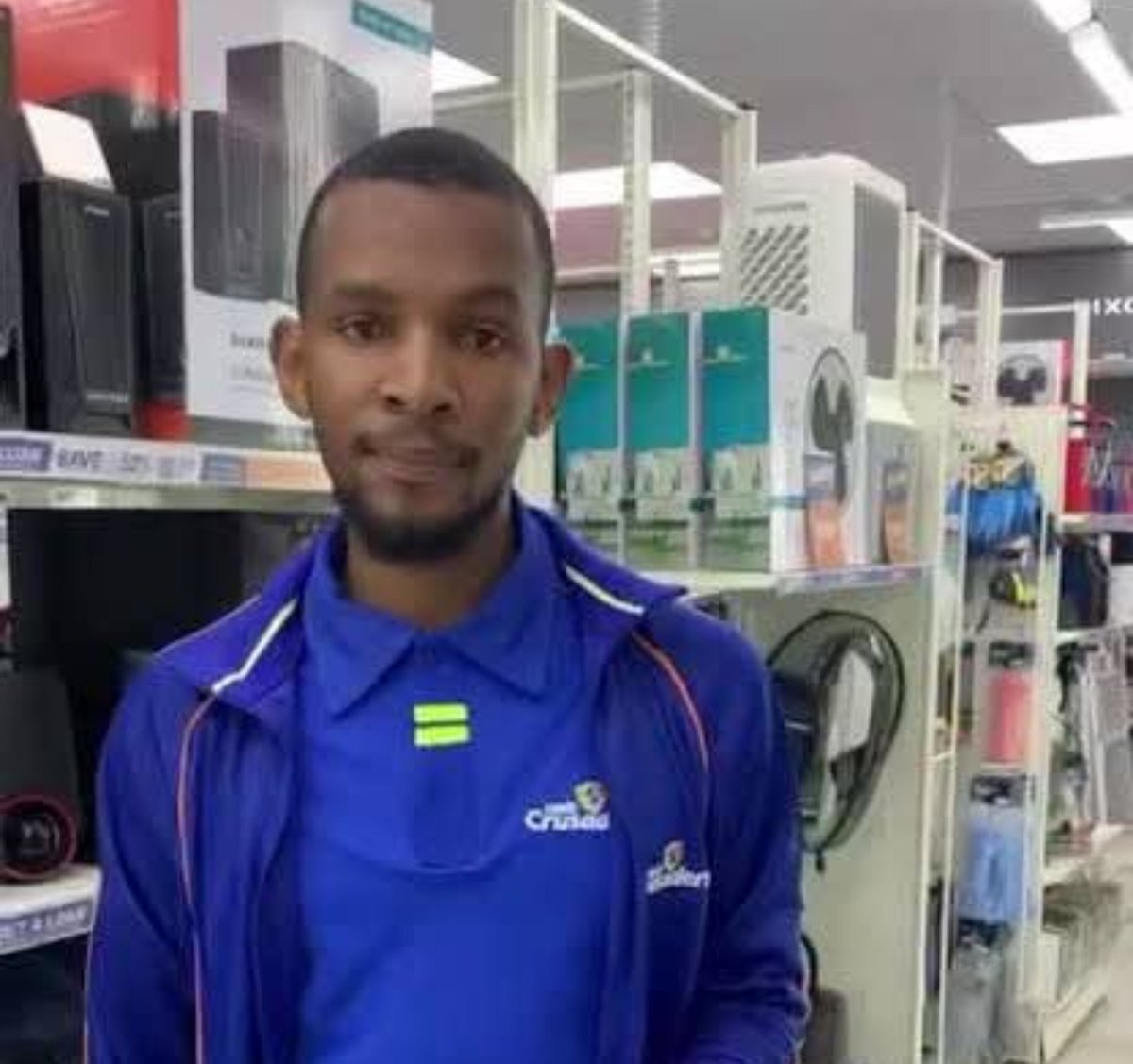
Zimbabwean Delivery Driver Wanted After Allegedly Disappearing With Company Mini Truck Loaded With Furniture and Stock Worth More Than R155,000
A Zimbabwean foreign national who was employed by a major pre-owned store Cash-Crusaders to deliver stock to another branch has allegedly disappeared with a company mini truck in Gauteng. The vehicle was reportedly loaded with furniture and other stock valued at more than R155,000, and the driver has not been located.
According to the information provided, the driver was assigned to transport furniture between the company's stores but allegedly failed to complete the delivery. The mini truck, together with its cargo, remains missing, and the driver is reportedly still on the run. No further details about the vehicle or the driver's identity were provided.
Cash-Crusaders has appealed to members of the public for assistance in locating both the driver and the missing truck. Anyone who sees the vehicle or has information about its whereabouts is urged to contact 066 398 1275 or report the matter to 012 542 7418.
The driver remains unaccounted for, and the truck carrying furniture and stock worth more than R155,000 has not been recovered. Cash-Crusaders is continuing its appeal for public assistance as efforts to trace the missing vehicle and driver continue.
@sugabelly After the media sympathy tour where she lied about her status and her mother’s identity theft. She re-entered the country illegally and is currently in court fighting deportation. Why wouldn’t South Africans be on her case?
Here is how a World Bank Loan Becomes Rand spending.
What do you notice?
🇿🇦Step 1: World Bank “Loans” $$$
🇿🇦Step 2: Treasury “Sells” To SARB
🇿🇦Step 3: SARB “creates Rands” 🤯
🇿🇦Step 4: Treasury “spends Rands” ✅
🇿🇦Step 5: Bank “reserves increase”
🇿🇦Step 6: Interest paid on Bank reserves
*Step 6 is an additional cost, that means there are two different liabilities that require servicing because of this loan.
1️⃣External dollar debt (world bank loan)
2️⃣Domestic monetary operations ( that’s Step 1 to Step 6 )
Summary:
This is called money creation. And it’s all done on digital screens. The ownership of dollars is transferred to SARB and SARB magically creates the Rands that
treasury can spend into the economy.
No World Bank Loan was needed to do that!
It is all simply balance sheet management, and ownership (claims) are moved around by adjusting accounting ledgers.
———
𝗧𝗵𝗲𝘆 𝗵𝗮𝘃𝗲 𝘁𝗮𝗸𝗲𝗻 𝗼𝗻 𝗮𝗻 𝗶𝗻𝘁𝗲𝗿𝗲𝘀𝘁-𝗼𝗻𝗹𝘆, 𝘃𝗮𝗿𝗶𝗮𝗯𝗹𝗲 𝗹𝗼𝗮𝗻 𝗶𝗻 𝗮 𝗳𝗼𝗿𝗲𝗶𝗴𝗻 𝗰𝘂𝗿𝗿𝗲𝗻𝗰𝘆. 🤯
Let me break down exactly what the government is doing with this World Bank loan. It’s actually insanity. 🔻
The government has officially taken out a $1.5 billion adjustable-rate (variable) loan denominated entirely in U.S. dollars.
✅The Grace Period of 3 years means they pay interest-only on the loan. (meaning zero reduction in the principal loan amount for the first 3 years).
✅The Current Rate is 3.66% (6 month, SOFR Variable Benchmark) + 1.35% (Fixed Margin) = 5.01% initial interest rate.
𝗧𝘄𝗼 𝗠𝗮𝗷𝗼𝗿 𝗥𝗶𝘀𝗸𝘀 𝗵𝗲𝗿𝗲
❌Interest Rate Risk: The 5.01% rate is variable and tied to global benchmarks. If global rates rise, the loan instantly becomes more expensive. (in dollars).
❌Currency Risk: The loan must be repaid in U.S. dollars. If the ZAR currency weakens against the USD, it will require significantly more Rands just to buy the dollars needed to service the same debt.
𝗦𝘂𝗺𝗺𝗮𝗿𝘆:
An interest-only, variable loan in a foreign currency pushes massive, unpredictable risk onto the country's future balance sheet.
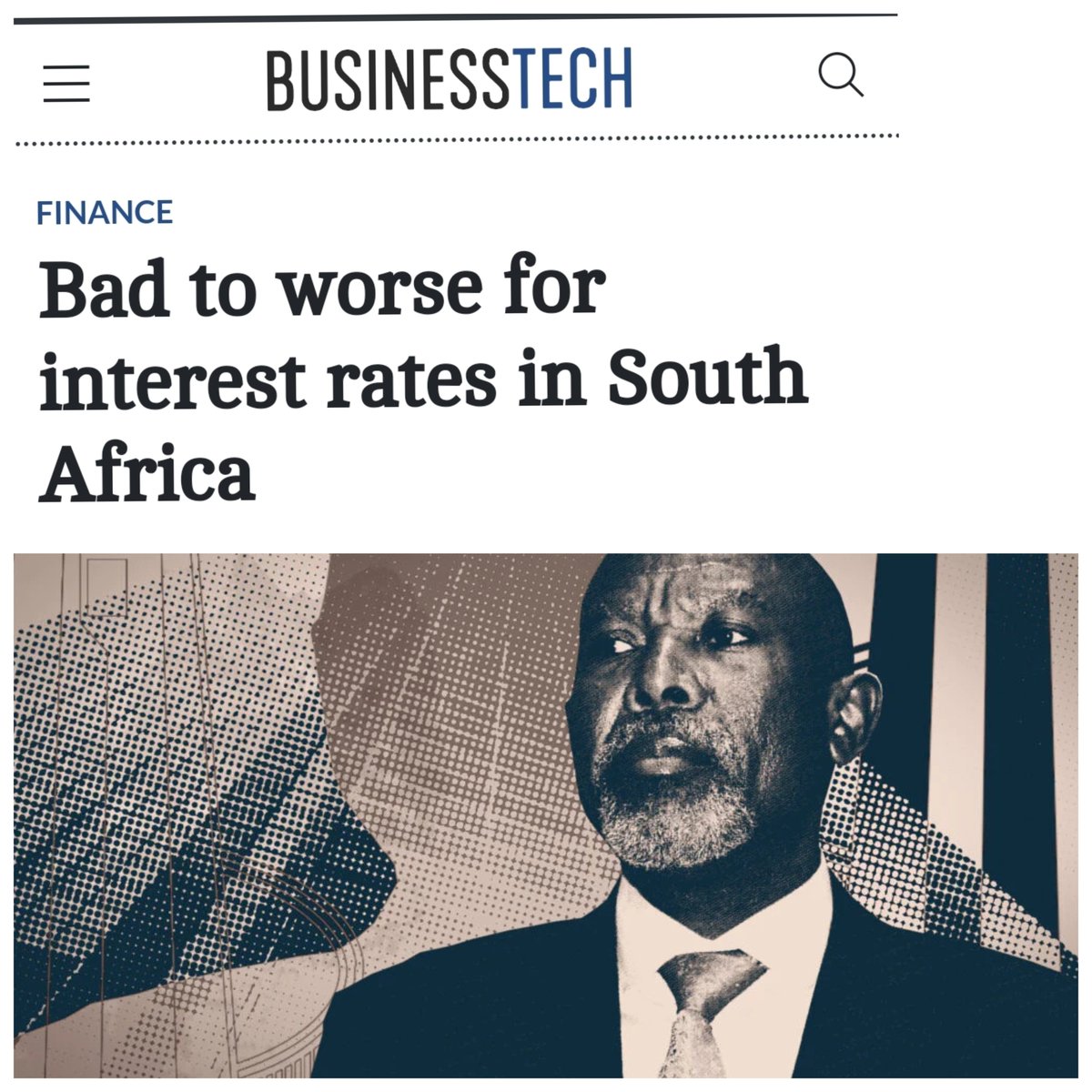
Last year, the South African Reserve Bank changed its inflation target from 3 - 6% to 3%, because they said the 6% was too high and that other countries had their target inflation around 2% to 3%.
Now they must keep interest high to reach their IMF-imposed target.
All of this is because the SARB operates on economic policies designed for rich economies where most people are employed and “managing demand” actually works.
Think of it this way: In a rich economy with high employment, when inflation rises, it usually means there’s too much consumer spending. Raising interest rates cools this demand.
In South Africa, however, where over 30% of people are unemployed, raising interest rates doesn’t fix the supply issue. It simply punishes already indebted households.
The SARB will say by keeping the financial markets stable through inflation control they protect the poor from loss of buying power. But this is just poverty maintenance, not alleviation.
Preserving the purchasing power of R370 may keep a person from sliding further into starvation, but it does not pull them out of poverty.
By lowering the target to 3% to align with the American and European central banks, the SARB is concerned with protecting foreign capital from currency depreciation. This makes South Africa attractive to foreign investors who hold government debt, but forces domestic monetary policy to punish to its own citizens.
Economists claim that the Reserve Bank has no choice but to raise interest rates to lower inflation, because that’s how monetary policy works, as if it’s a law of nature, when it’s just a choice of economic framework.
When they say South Africa has no choice, what they mean is that under the existing policy choices, any alternative policy triggers an immediate crisis.
What they mean is that because South Africa’s economic system is based on importing more value than it exports, bridging the gap relies on foreign investors buying South African government bonds and equities, a.k.a “hot money”.
These foreign portfolio investors can press a button and withdraw billions of dollars in seconds. So, to prevent them from pressing that button, the Reserve Bank must keep domestic real interest rates high enough to make South African debt attractive.
Basically, the South Africa is held hostage and forced to run monetary policy not for the primary benefit of the domestic real economy, but to maintain the confidence of foreign financial markets.
All of this *can* be changed, but it requires bearing the short-term pain that comes with switching the macroeconomic model.
The government and the Reserve Bank are far too captured to even consider this, and so South Africa keeps circling the drain indefinitely, and this is good enough for the technocrats in Pretoria.
A prosecutor can sit in the NPA with an investigator from IDAC and concoct charges against any person. The costs of defending yourself against trumped up charges is yours to foot.
I don’t know what else to do.
I need to be at Harvard by 10 August, and right now, I don’t know how I’m going to get there.
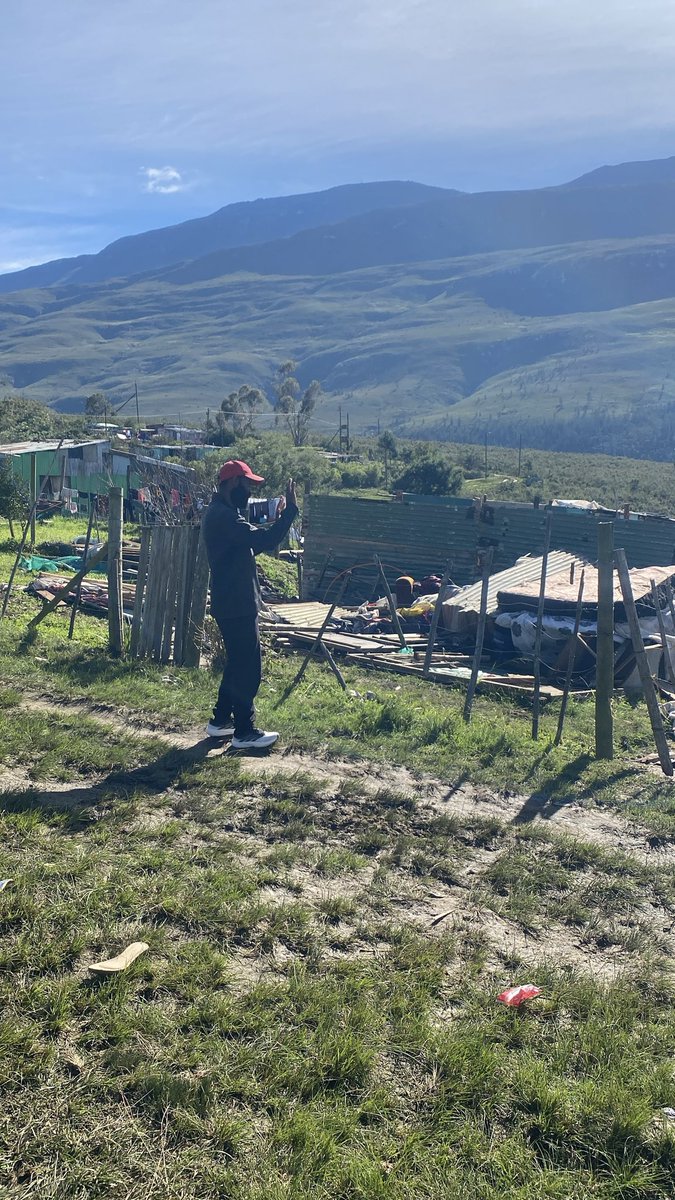
Over the last few months, I walked 1,600 km across South Africa as a fundraiser to help me get to Harvard and to better understand the housing challenges my AI platform is trying to solve.
I built Ubuntu Home, an AI platform that helps families design and plan affordable homes. But I knew technology alone wasn't enough. I wanted to learn directly from the people I hope to serve. So I slept in people's homes, from shacks to rondavels. I listened more than I spoke. I walked through storms, learning how people build, where they struggle, and what a housing solution that truly works for South Africans should look like.
That journey, together with my work building Ubuntu Home, led to my acceptance into Harvard's Master in Design Engineering program. Only 25 people from around the world were admitted this year.
Artificial intelligence is one of South Africa's most critical scarce skills. My dream has never been to leave South Africa. It has always been to return with world-class AI and engineering skills to build Ubuntu Home into a platform that helps solve our housing crisis.
I reached out to the Office of the Presidency, who referred me to Higher Education. I was told they fund study only in specific countries, and the US is not one of them. I reached out to the Minister of Human Settlements. I approached @AbsaSouthAfrica, @StandardBankZA, @FNBSA, and other major organisations. I applied for education loans, but as an international student going to the US, I don't qualify in South Africa, and the international loans available cover only a fraction of the cost.
After walking 1,600 km across my country, I may have to stay home. Not because I wasn't admitted, but because I can't afford to go.
I feel like I've exhausted every avenue I know.
If you can help with funding, make an introduction, connect me to someone who might be able to help, or simply share this story, I would be incredibly grateful.
@PresidencyZA@HigherEduGovZA@The_DHS@AbsaSouthAfrica@StandardBankZA@FNBSA@SollyMalatsi
Let's not lose South African talent because of funding. Let's invest in the people who will build South Africa's AI future.
⚠️ URGENT: NEW KIDNAPPING SCAM IN SOUTH AFRICA - PLEASE SHARE ⚠️*
Ladies, please be careful in town, taxi ranks, malls, and parking lots. There’s a new method kidnappers are using:
*How the scam works:*
1. *The approach*: A man in a car stops next to you. He calls you by a name or says “Hey, get in the car! We’ve been looking for you.”
2. If you refuse and say you don’t know him, he immediately switches tactics.
He turns to people around and says loud enough for everyone to hear:
_“Don’t worry guys, she’s my wife. She has amnesia / she’s mentally ill. She gets confused like this. I just need to get her home.”_
3. *Why it works*: People don’t want to interfere in “family problems” or with someone who “has a mental illness.” So they look away. That’s exactly what he’s counting on. That’s how he gets you into the car. That’s the strategy
*IF THIS HAPPENS TO YOU:*
- Do NOT get in the car for any reason.
- Be loud and specific*: Yell “*I DO NOT KNOW THIS MAN. THIS IS KIDNAPPING. PLEASE CALL THE POLICE AND HELP ME.*”
The word “KIDNAPPING” makes people react way faster than “I’m fine.”
- *Draw attention*: Drop your bags, sit on the ground, scream. Make it impossible for him to look normal.
- *Call for help*
*AS A MEMBER OF THE PUBLIC IF YOU SEE THIS HAPPENING:*
- Don’t assume it’s domestic. Don’t walk away, help the victim.
- Step in and ask the Scammer directly*: If they know the person they are trying to take, if they say yes, Ask the lady (victim) to whisper her name to you or the Lady(victim) to show you her ID…then Tell the scammer/kidnapper to tell you the name of that lady(victim) he’s trying to take.… if the scammer gets the name wrong it simply means he was trying to kidnap the lady….
- *Call 10111 or SAPS* right away and tell them you suspect a kidnapping.
- *Take details*: Car color, make, license plate, location, what the man looks like. Send to police and share to warn others.
Kidnappers are using our fear of “getting involved” and stigma around mental illness against us. Let’s not let it work.
*Please share this with your sisters, mothers, friends, coworkers, and WhatsApp groups.* One share could save a life.
Stay in groups where you can. Trust your gut. If something feels off, it probably is.
*Emergency numbers for Johannesburg:*
Tshenolopi: +27 66 472 7099
SAPS: 10111 | Ambulance: 10177 | JMPD: 011 758 9650 | GBV Helpline: 0800 428 428
#SouthAfrica #KidnappingScam #WomensSafety #SAPS #StayAlert #TshenoloPI
We’re really going have this discourse at least twice a year if we don’t address the real thing of it that there should be adequate social security guarantees that ensure that everyone, regardless of what they do or don’t have, has access to a dignified life via the provision of basic income security, healthcare, education and transport. The ZA government has put these in place and continues to prioritise this (kudos), but there are unfortunately other factors that cancel out what ought to be the benefits of these measures, i.e. large scale unemployment, corruption, illegal immigration, addiction, crime etc. We need to wake up because this is not a class war. One’s income should not be a determinant of whether they can make a good parent or not, but the reality is that lack of resources does hinder one’s ability to parent, nurture and protect children adequately to a large extent. We need to fight these hindering factors if we’re serious about making parenting accessible for everyone; because a poor person can choose to have kids and still have these factors hinder them from being able to parent adequately despite them wanting to, or they could choose to not have kids because of these factors, and neither of these is ‘agency’ imo. This is not a class war.
In the history of the men's FIFA World Cup, every championship-winning team has been led by a manager of their own nationality. This pattern has remained unbroken from the inaugural tournament in 1930 up through the 2026 tournament. 😬