#UnityTips A workflow for exporting Blender models to Unity, from a recent @unity webinar:
1. On Blender, note the local axis of your object at its natural orientation. You may need to use Apply Position / Rotation.
2. On the Blender FBX Exporter, modify only:
Apply Scaling = FBX All
Forward = your object’s local axis in the forward direction
Up = Your object’s local axis in the Up direction
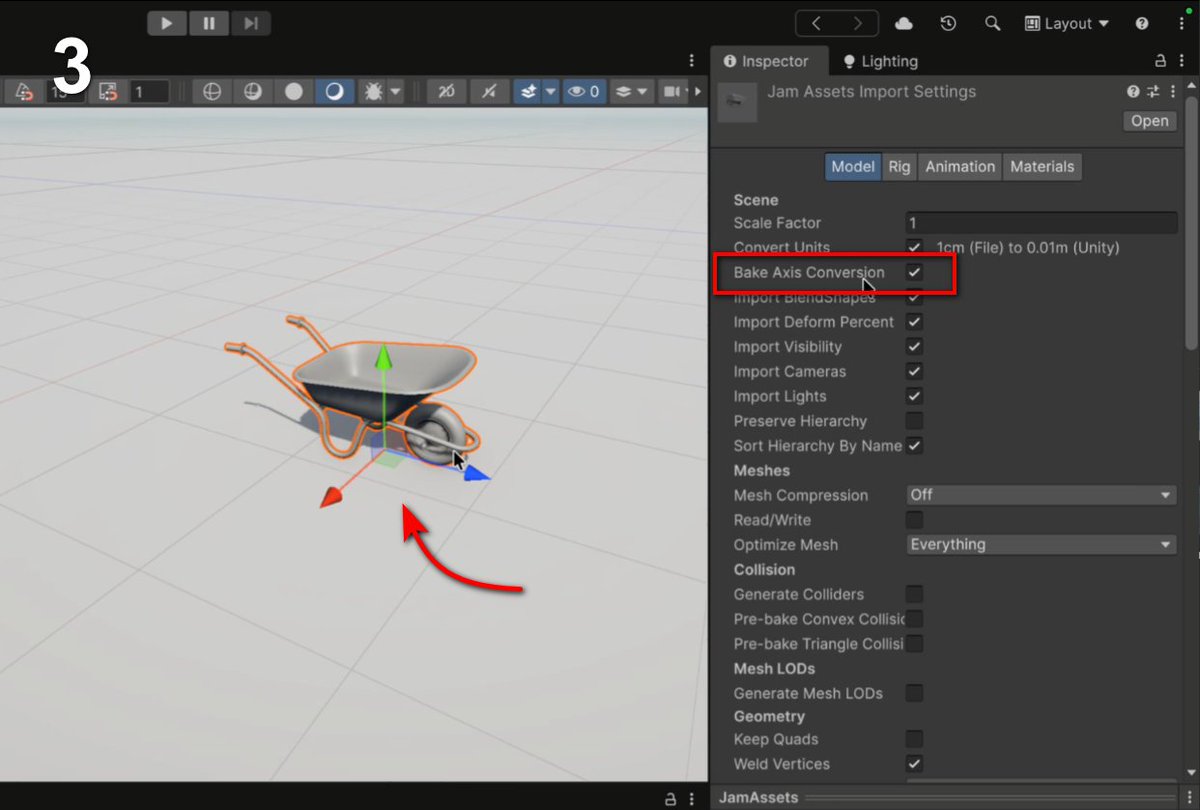
3. On the Unity importer, enable Bake Axis Conversion.
#Unity #Blender #IndieDev #GameDev
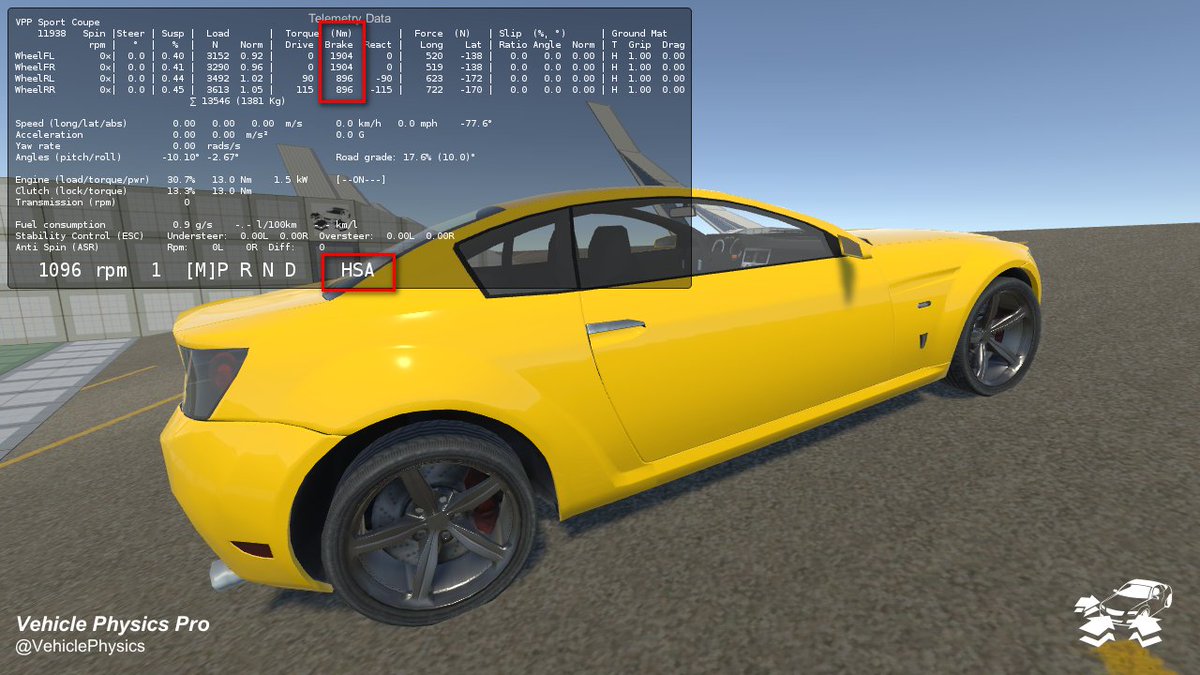
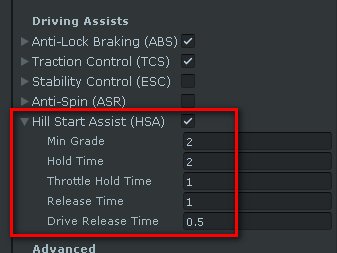
VPP dev update: Hill Start Assist (HSA), primary retarder brake, clutch-to-clutch automatic shifts, and a driveline overhaul that stays stable at any inertia ratio.
In the video, HSA keeps the brakes applied (orange) after the driver lifts off the brake pedal (red), and releases them once the driver applies the throttle (green).
#VPPDev #MadeWithUnity #Physics #Simulator #Trucks #IndieDev #GameDev #Engineering,
@Colonthreee@unity When that happens, that's because the model has x100 scale in Blender. The idea with this workflow is getting in Unity what it's already in Blender, as is.
Working on HSA (Hill Start Assist, also known as Hill Hold Assist) in Vehicle Physics Pro. This feature automatically holds the brakes on slopes and progressively releases them when the engine has built up enough torque to drive the car uphill. Most modern road cars and trucks already come equipped with this feature.
#MadeWithUnity #GamePhysics #Simulator #Driving #Engineering #Unity #VPPDev #IndieDev #GameDev #Trucks
Final version of the Anti-lock Braking System (ABS) model in Vehicle Physics Pro, shown in slow motion and real time. The model can be configured to simulate the behavior of specific real-world ABS systems.
In this setup, the ABS Pulsed model aims to keep the wheel slip ratio as close as possible to the peak slip during braking. The overshoot parameter allows intermittent wheel lockup. The lock-release cycle runs at 6.25 Hz, with a working frequency of 12.5 Hz, which can be simulated comfortably at the default physics rate of 50 Hz.
#MadeWithUnity #Physics #TireSimulation #Simracing #Motorsport #VPPDev #GameDev #IndieDev #GamePhysics #Simulator #Engineering
i tried to setup one of the models i had as a GT3 car but apparently my sim lacks a way to make pitch more controlled on braking and rear downforce was just quitting the chat
had to rake it like crazy for it to be drivable:D
Testing different approaches for the new ABS model in Vehicle Physics Pro. The differences are small because, in this setup, a locked wheel loses only 10% of its grip.
The new ABS model keeps the wheel's slip ratio as close as possible to the peak slip ratio during braking.
#Unity #Physics #Simulator #TireSimulation #Engineering #VPPDev #MadeWithUnity #GameDev #GamePhysics #Simracing #Motorsport
Traction Control (TCS) in Vehicle Physics Pro vehicles now works with with the new wheel and tire models.
TCS computes the wheel speed that keeps the tires at their peak grip, and limits the engine to match it. When cutting the throttle isn't enough, as at launch or when the clutch engages with the engine at high rpm, TCS also commands the clutch. The clutch slips just enough to transmit only the torque the tires can take, producing the maximum acceleration.
The plot compares throttle-only TCS with throttle + clutch. Without the clutch, the wheels spin up to 5.6 m/s over the target. With it, they stay at the target within one simulation step. That's at 50 Hz with 4 substeps.
#Unity #Physics #Engineering #Simulator #GameDev #VPPDev #IndieDev #GamePhysics #TireSimulation #Simracing #Motorsport
The map editor is pretty cool, I built a racetrack in the sky (and I forgot what I was actually supposed to be working on ☠️)
Can you wishlist Pico Drift please. It'll be available soon ✌️ #gamedev#indiegame
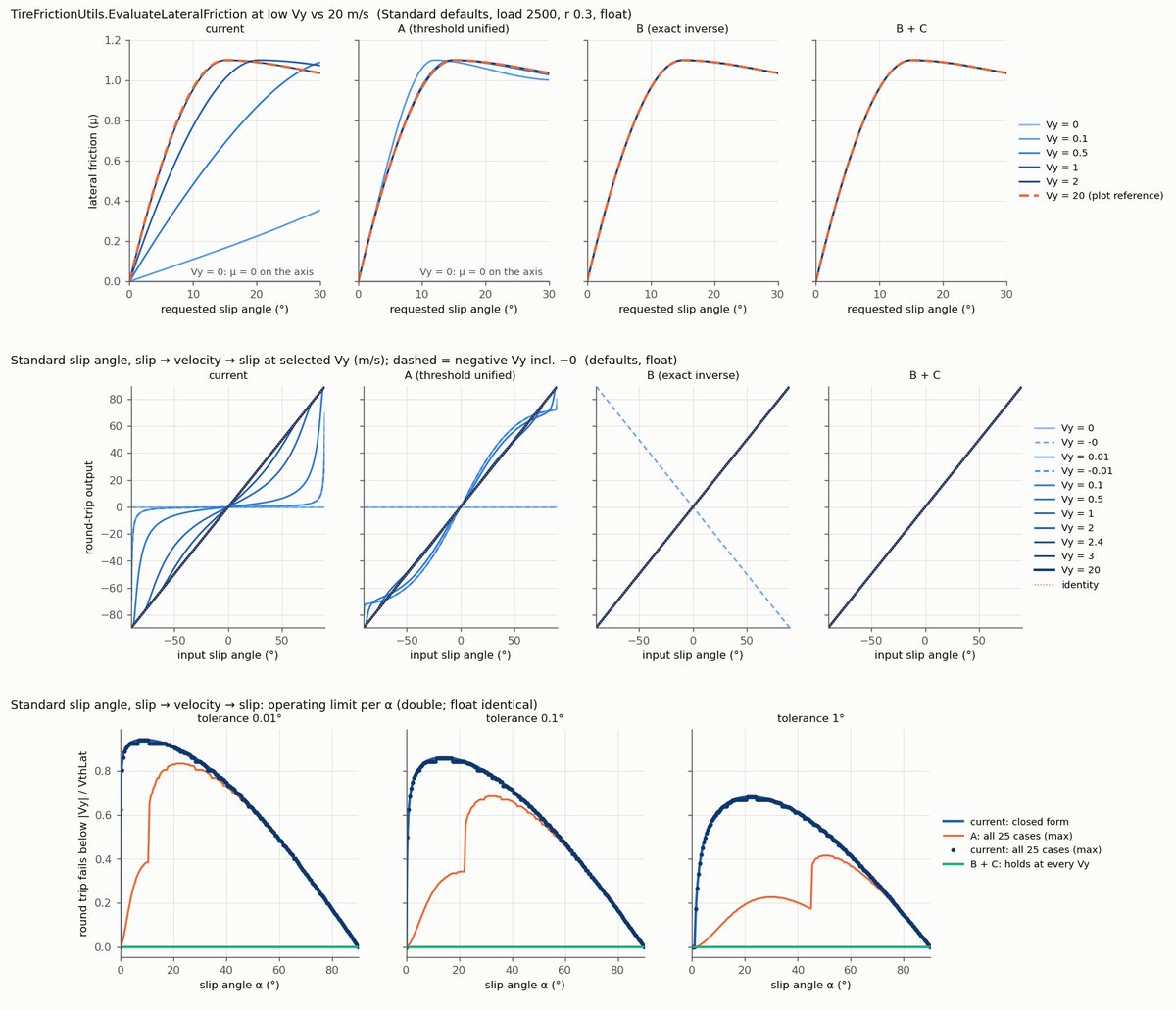
Development update. With the new wheel and tire friction models now complete, we’re conducting an in-depth review of the Vehicle Physics Pro dynamics core to ensure everything fits together properly.
And it does! A stability stress test shows that VPP can now sustain a realistic and completely stable simulation at just 20 Hz (fixedDeltaTime = 0.05). Simulation substeps can further improve precision, but just 2 substeps are now sufficient for standard cars, with inherent stability across the entire vehicle dynamics system. This represents a huge reduction in simulation cost for vehicles using Vehicle Physics Pro.
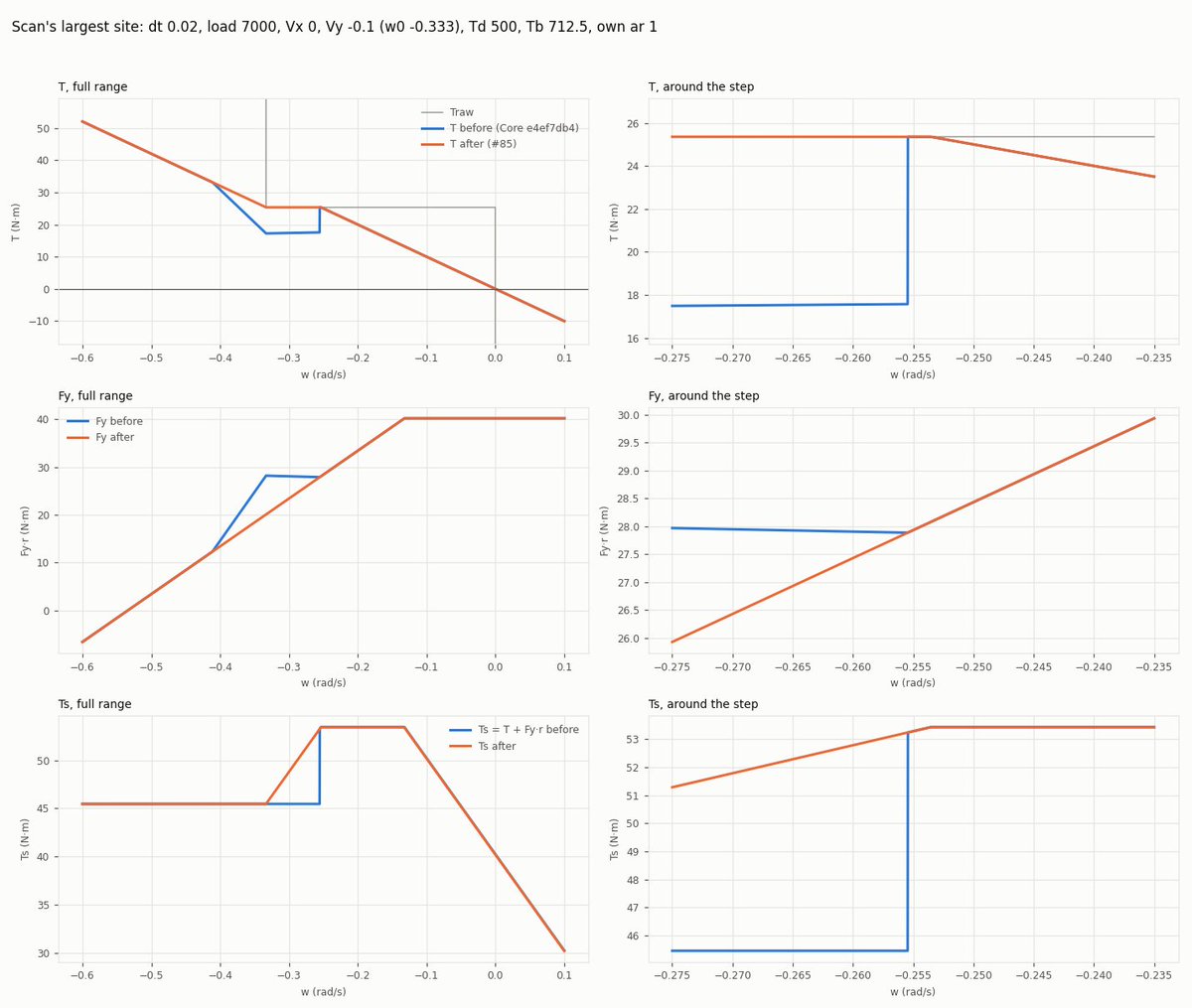
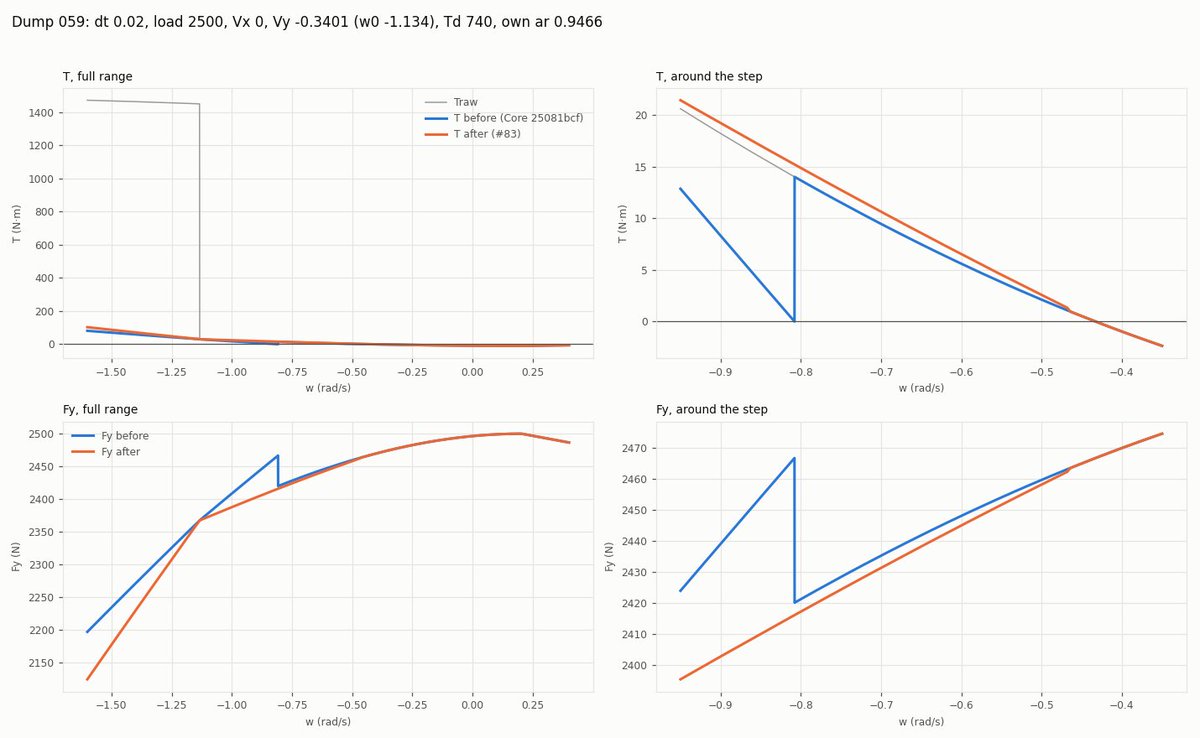
Several subtle fixes have further improved stability compared with the previous version. As a result, parts of the code could also be simplified, removing calculations that were previously needed to prevent instabilities. The plots show comparisons before and after some of these fixes.
This is what Vehicle Physics Pro means by a versatile vehicle simulation model: from mobile games running on low-end devices to engineering simulations that drive real-world design decisions, with everything in between. Every application gets as much realism and accuracy as possible, in every situation.
#Unity #Physics #Engineering #Simulator #GameDev #VPPDev #IndieDev #GamePhysics #TireSimulation #Simracing #Motorsport