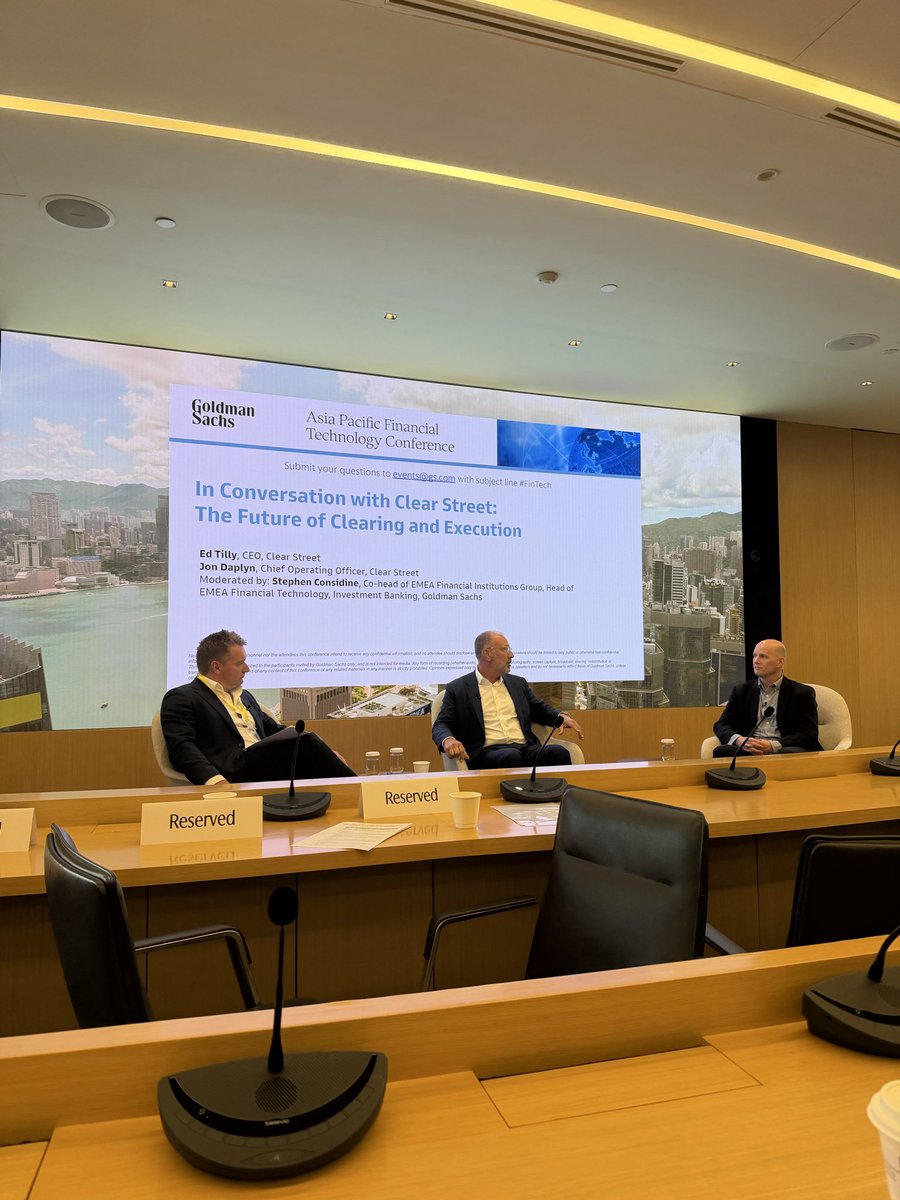
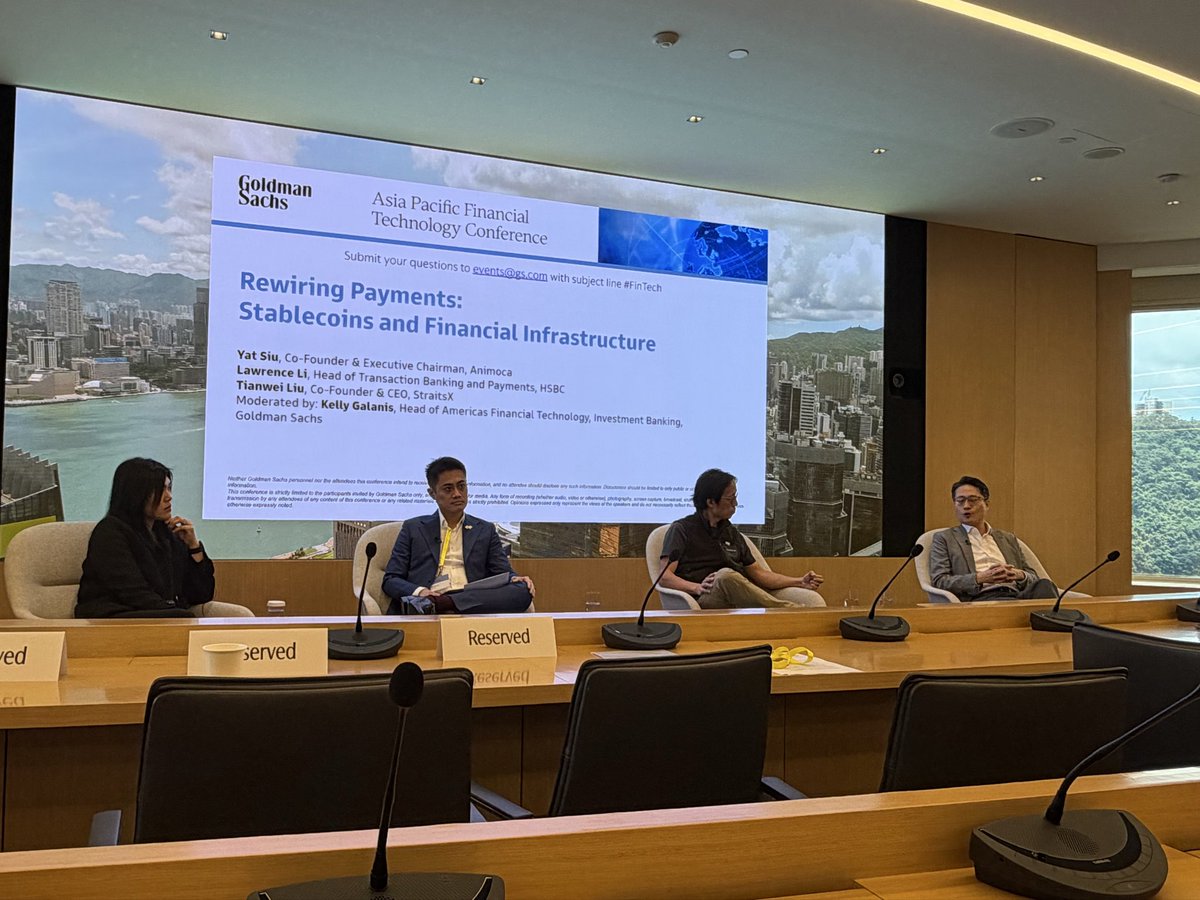
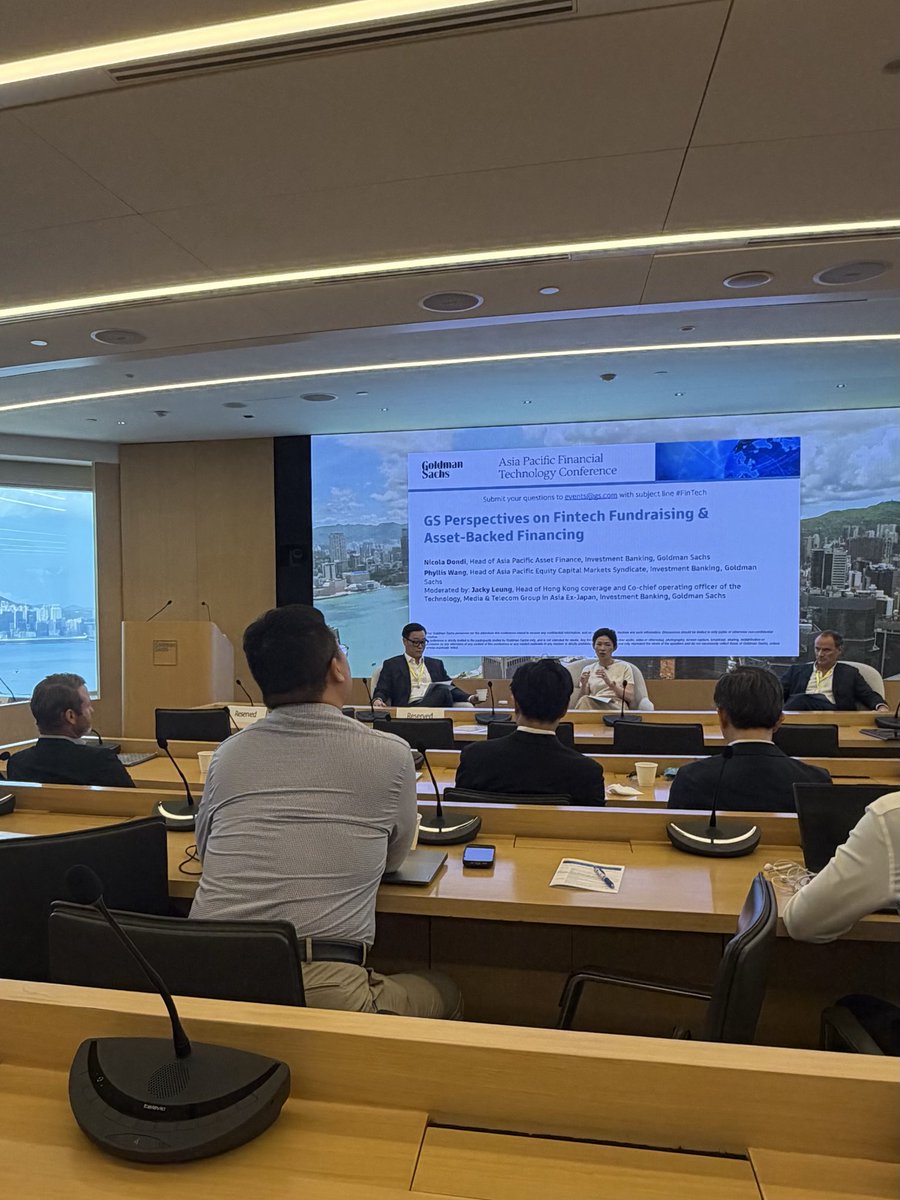
Goldman Sachs APAC FinTech conference today.
Incumbents realize the gate is already open:
licensed rails + bank infra are becoming programmable platforms for a new market of operators, fintechs and stablecoin-native companies.
Barbarians at the gate - but with APIs this time.
@tyler@cameron@meow I'm skeptical tbh - opening a bank account in many places around the world has now become a privilege. Compliance friction is real.
[news] Chinese battery storage company Sigenergy is drawing intense investor demand ahead of its Hong Kong IPO, with retail orders reportedly exceeding the available shares by more than 1,000 times. The surge in interest also lifted sentiment around listed peer Guoxia Technology, whose stock jumped nearly 15% as investors looked for ways to gain exposure to the AI-linked energy infrastructure theme.
Sigenergy, based in Shanghai, is seeking to raise about HK$4.4 billion. According to brokerage data cited by Futu Securities, retail investors borrowed HK$358.6 billion to subscribe, implying roughly 1,414 times oversubscription before its expected trading debut on Thursday.
The excitement reflects both Sigenergy’s background and its market position. The company was founded in 2022 by Xu Yingtong, a former longtime Huawei executive who previously oversaw the firm’s photovoltaic and AI computing operations. Sigenergy sells stackable distributed energy storage systems that let homes and businesses store solar power and manage charging, with a strong focus on residential use.
Despite being only a few years old, Sigenergy says it has already become the global leader in the stackable DESS segment, with a 28.6% share, citing Frost & Sullivan data in its prospectus. That combination of fast growth, founder credibility, energy storage exposure, and proximity to the AI power buildout appears to be driving investor enthusiasm.
Source: SCMP
The US-Israeli war on Iran has exposed the vulnerability of critical water infrastructure in a region that is among the most water-scarce in the world.
We look at how much of the Gulf’s water comes from desalination plants https://t.co/TjphnlRlpa
3. Capital-light revenue models with high switching costs
Businesses that scale without proportional increases in capex or labor. When AI cuts their costs, it falls straight to the bottom line—and customers can’t easily leave.”
Revenues are staying flat while margins are growing - labor costs are falling and unemployment is going up;
Company revenue is no longer tied to equivalent scaling of labor - so assets will appreciate way faster than wages;
https://t.co/8KPTSCgsGp
2. Pricing power that persists despite automation
Companies where the customer pays for outcomes, not labor hours. They can slash costs with AI while maintaining prices because the value proposition doesn’t change.
What @michaeljburry says here is very aligned with what @stephen_wolfram has been advocating for years - we need a combination of both shallow and deep computation to expand the boundaries of human knowledge:
https://t.co/tHP0CLT5e8
this is an interesting approach to bring RWA's onchain - curious to understand how @tenbinlabs plans to isolate risk, source yield on the underlying and whether plans to let external curators manage the vaults
1/
Introducing Tenbin Primer:
Tenbin is the first multi-asset issuance protocol that ensures institutional liquidity and near-instant minting/redemption for all its tokenized assets.
https://t.co/1yNXnfO4PZ
"code is now at the core of our lives and our future. There is perhaps only one thing that can counterbalance the power of code - it’s total opposite: love"
https://t.co/5MaYguDgJK