S&P Dow Jones Indices and trade[XYZ] have joined forces to launch the first official S&P 500 perpetual contract, available exclusively on Hyperliquid.
For 69 years, the S&P 500 has been a defining reference point for global finance. Until now, access to that benchmark has been shaped by market hours, intermediaries, and geography. Today, that changes.
The S&P 500 perp is now available 24/7/365, anchored by the official index data required for deep liquidity and institutional confidence at scale.
SPDJI helped define modern indexing. They are stewards of an iconic benchmark, the standard against which portfolios across the globe are measured. We are honored to bring that legacy on-chain.
Trade[XYZ] is bringing the world's most iconic assets towards a future of global, continuous markets — a future powered by Hyperliquid.
HyperCore will support outcome trading (HIP-4). Outcomes are fully collateralized contracts that settle within a fixed range. They are a general-purpose primitive that are useful for applications such as prediction markets and bounded options-like instruments. There has been extensive user demand in both of these areas, and builders will likely think of novel applications as well.
Outcomes bring non-linearity, dated contracts, and an alternative form of derivative trading that does not involve leverage or liquidations. The outcome primitive expands the expressivity of HyperCore, while composing with other primitives such as portfolio margin and the HyperEVM.
Outcomes are a work in progress and currently only being tested on testnet. Canonical markets based on objective settlement sources will be deployed once technical development is complete. Canonical markets will be denominated in USDH. Pending user feedback, the infrastructure will be extended to permissionless deployment.
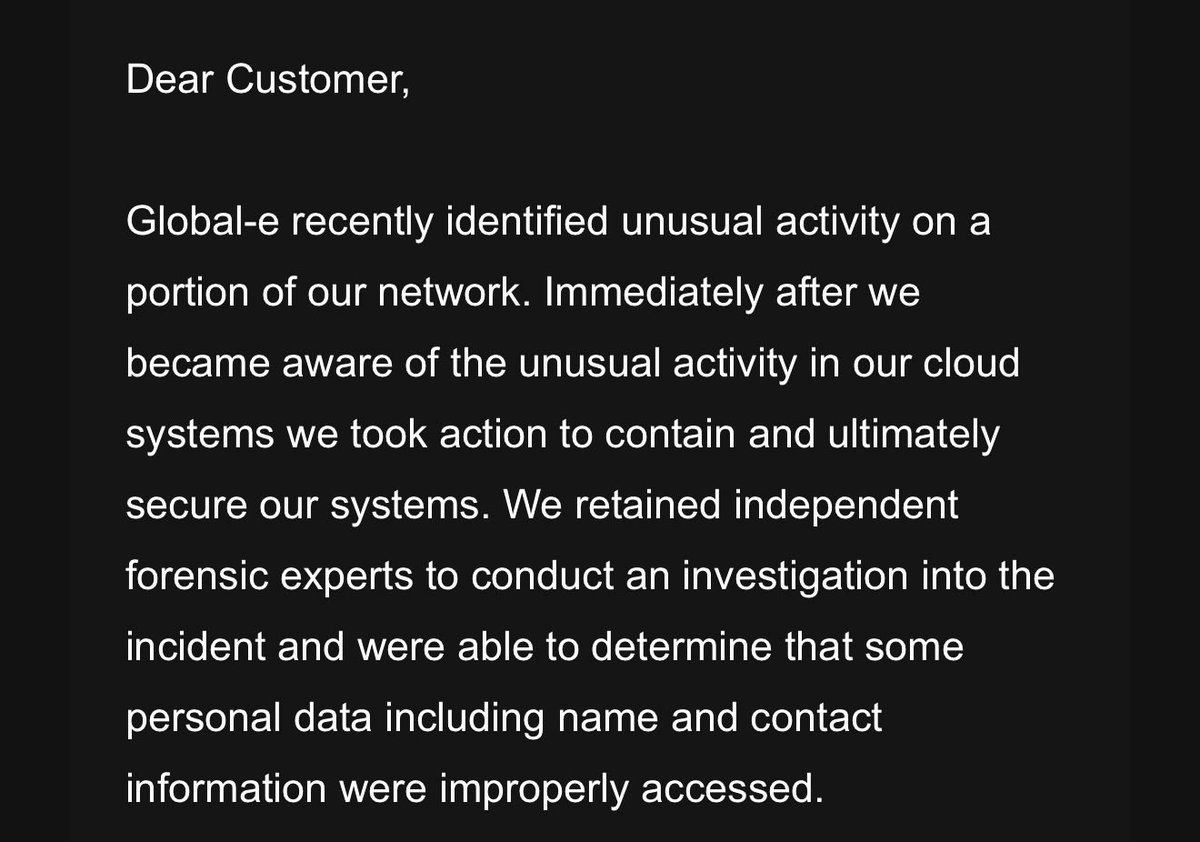
Community alert: Ledger had another data breach via payment processor Global-e leaking the personal data of customers (name & other contact information).
Earlier today customers received the email below.
We are announcing the Lighter Infrastructure Token (LIT)! Lighter is building infrastructure for the future of finance and the native token is key to aligning incentives. In this thread, we will describe the structure of the token, broader vision, and roadmap of use cases.
when i started building echo 2 years ago, i knew it had 95% chance of failing. to be honest, i couldnt really imagine any other outcome, but i thought at least it may be a noble failure worth attempting.
i certainly didn't think echo would be sold to coinbase, but, here we are: today coinbase bought echo for ~$375m.
echo will remain a standalone platform under its current brand for now, but we will integrate sonar's public sale product into coinbase, and likely introduce new ways for founders to access investors, and for investors to access opportunities into coinbase itself.
over the years i have chatted to brian a handful of times, and mostly to complain at him honestly. i have always respected how brian would listen to an outsider chat shit at him on the phone and take the feedback seriously. now, instead of complaining, i will have the opportunity try to do the work to make things better.
crypto itself has moved on a long way since we started working on echo. i guess partially this is because of the election result. but, i feel energised by a lot of the cool things being built in crypto again: hyperliquid, zcash, stablecoin supercyle, and so on.
feels like a good time to be on the field instead of an idiot with a twitter account yapping nonsense. well, i guess i still will be that.
anyway, job's not finished. onwards.
oh fuck yeah, before i go, the final season of up only (now "unc only" due to our severe old age) will commence when we figure out who the guests should be lol
cobber
Equity perps are now live.
Trade [XYZ100] with up to 20x leverage 24/7, 365.
The XYZ US 100 Index tracks the value of the top 100 non-financial companies.
The first 100 users on the waitlist will get alpha access to https://t.co/0pSGkVZda0 today.
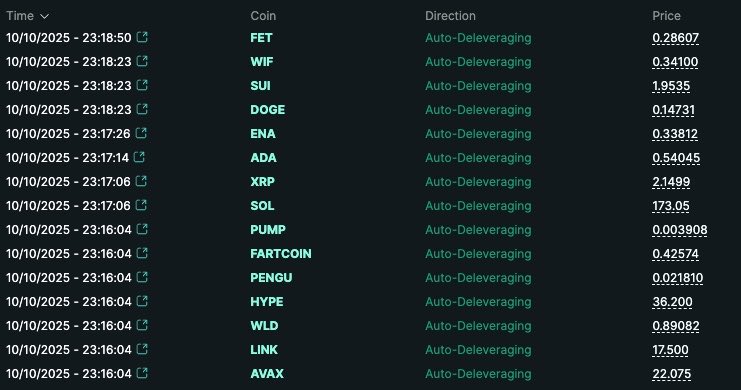
1/ Since a lot of people are waking up to see their perps positions closed and wondering what the hell “Auto-Deleveraging” means, here’s a quick and dirty primer.
What is ADL? How does it work? And why does it exist?
🚨 There’s a large-scale supply chain attack in progress: the NPM account of a reputable developer has been compromised. The affected packages have already been downloaded over 1 billion times, meaning the entire JavaScript ecosystem may be at risk.
The malicious payload works by silently swapping crypto addresses on the fly to steal funds.
If you use a hardware wallet, pay attention to every transaction before signing and you're safe.
If you don’t use a hardware wallet, refrain from making any on-chain transactions for now.
It’s still unclear whether the attacker is also stealing seeds from software wallets directly at this stage.
Excellent report here: https://t.co/5CtiZJHYsN
Every System Sucks
Social media trading glorifies perfect win rate systems with 0 drawdown entries that go straight to target.
Gurus don't talk about their losing trades or losing streaks to maintain the fantasy that you can consistently risk and win without losing.
This brainwashes their less experienced followers into believing they're doing something 'wrong' if they lose a trade (or multiple trades) and sends them on a goose chase for a mythical trading system that never loses money.
It doesn't exist.
If you trade, you're going to lose money at some point.
Every edge or profitable trading system either decays over time or gets washed out completely by a change in the market regime.
Trends end and have false starts. Trend followers get chopped.
Breakouts fail. Momentum traders get trapped.
Means stop reverting. Mean reverters get steamrolled.
That doesn't mean the system is inherently flawed.
It's just the cost of doing business.
The point of risk management is to allow you to absorb those unavoidable losses and stay in the game.
That's why it's called risk management, not risk avoidance.
If you want to avoid losing trades, there's an easy way to do it: don't trade.
Otherwise, you need to be comfortable with the fact that even the best trading system will eventually serve you losing trades.
This is precisely why traders obsess over position sizing: the goal is to maximise your edge while it's there/the regime is supportive, without losing your shirt once it decays or disappears entirely.
Crucially, if your previously profitable trading system starts losing, that can be an early warning signal that the underlying regime is changing.
Losing streak on a trend following system that was printing? The market may be consolidating.
Breakout trades turn into traps? The market may be running out of steam.
Mean reversion trades overshooting their expected ranges? Volatility expansion may be underway.
These are critical insights, but you can only meaningfully gain access to them if you're willing to stick to your system, learn its nuances, gather data, and take risk instead of panicking and abandoning ship after the first losing trade.
To summarise:
1. Losses are inevitable. Every trading system experiences losing trades. They are the cost of doing business, not proof of a flawed system.
2. Risk management is not risk avoidance. The goal is to size such that losses don’t knock you out, not to eliminate losses entirely.
3. Edges decay. Market regimes shift, so a once profitable strategy may stop working and losses can be an early signal of change.
4. Stay disciplined & collect data. By sticking to your system through different regimes and by stomaching variance, you can learn its behaviour and spot regime shifts early.
5. There's no free lunch.
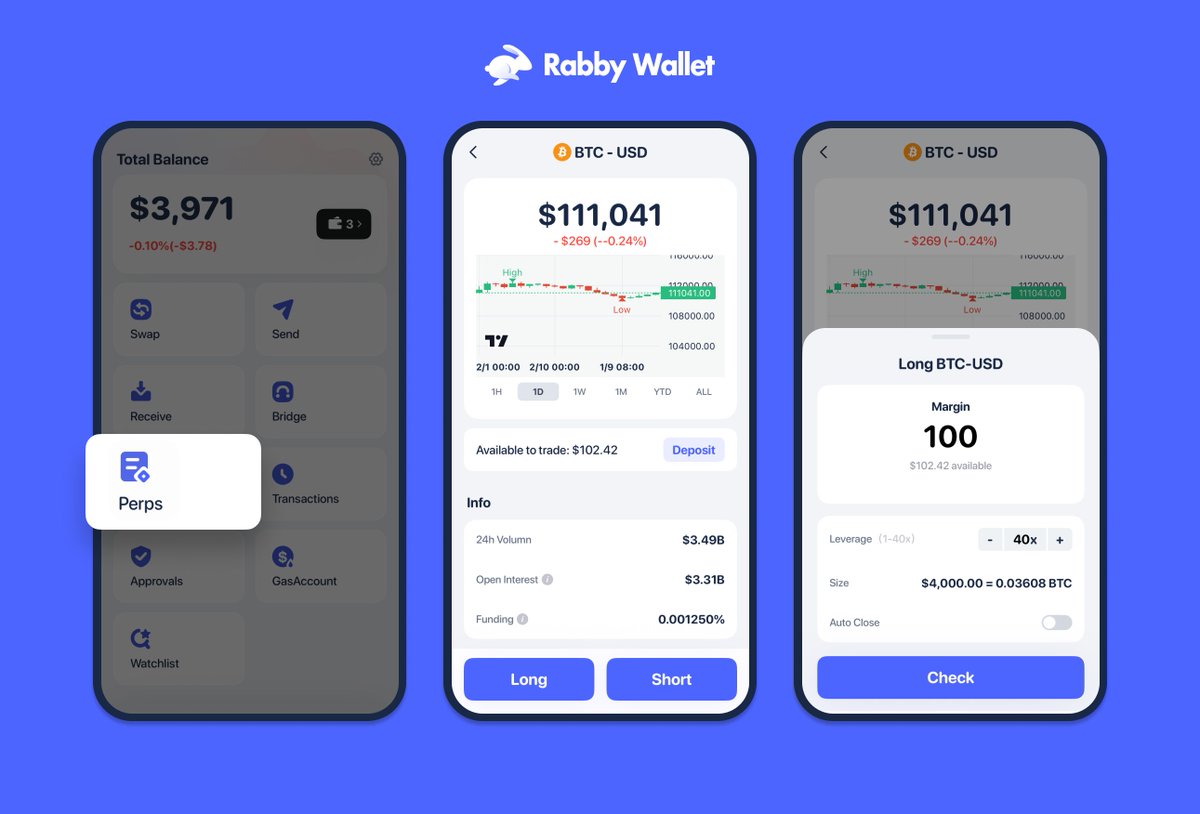
Rabby Perps is live — now on Rabby Mobile and Rabby Extension.
Trade with up to 40x leverage across 100 markets.
Go long or short anytime, anywhere.
Powered by @HyperliquidX



![tradexyz's tweet photo. Equity perps are now live.
Trade [XYZ100] with up to 20x leverage 24/7, 365.
The XYZ US 100 Index tracks the value of the top 100 non-financial companies.
The first 100 users on the waitlist will get alpha access to https://t.co/0pSGkVZda0 today. https://t.co/nSULaM81uQ](https://pbs.twimg.com/media/G3JRZD5WUAAM4de.jpg)