I don't think enough emphasis is being put on the fact that neighbours called 999 to report shouting and a possible stabbing before the Digwa brother called the police. Between the snapchat video (which was just before the stabbing occurred) and the body cam footage of the police nearly an hour had passed.
The neighbours heard someone shouting that they had been stabbed and called 999.
If Henry was shouting then he was still well enough to be saved. So where were the police for nearly an hour? Why wasn't an ambulance arranged when the initial 999 call was made? And why when they eventually bother to show up did nobody know that a stabbing had been reported earlier? And then to top it all off they cuff the victim like a violent criminal and oversee his painful death with callous indifference?
So much is not adding up but everything points to failures by the police at every possible level.
“When I was a Revolutionary Marxist, we were all in favour of as much immigration as possible. It wasn’t because we liked immigrants, but because we didn’t like Britain.”
— Peter Hitchens
Miliband is wrong. This is not a CBI (@CBItweets) report. This report was produced by @CBI_Economics, a private consultancy. It was commissioned by a ECIU, an advocacy campaign sponsored by Big Green interests. The report's disclaimer makes this clear. Last week, the BBC was forced to update a headline after making a similar misleading claim.
🚨 New
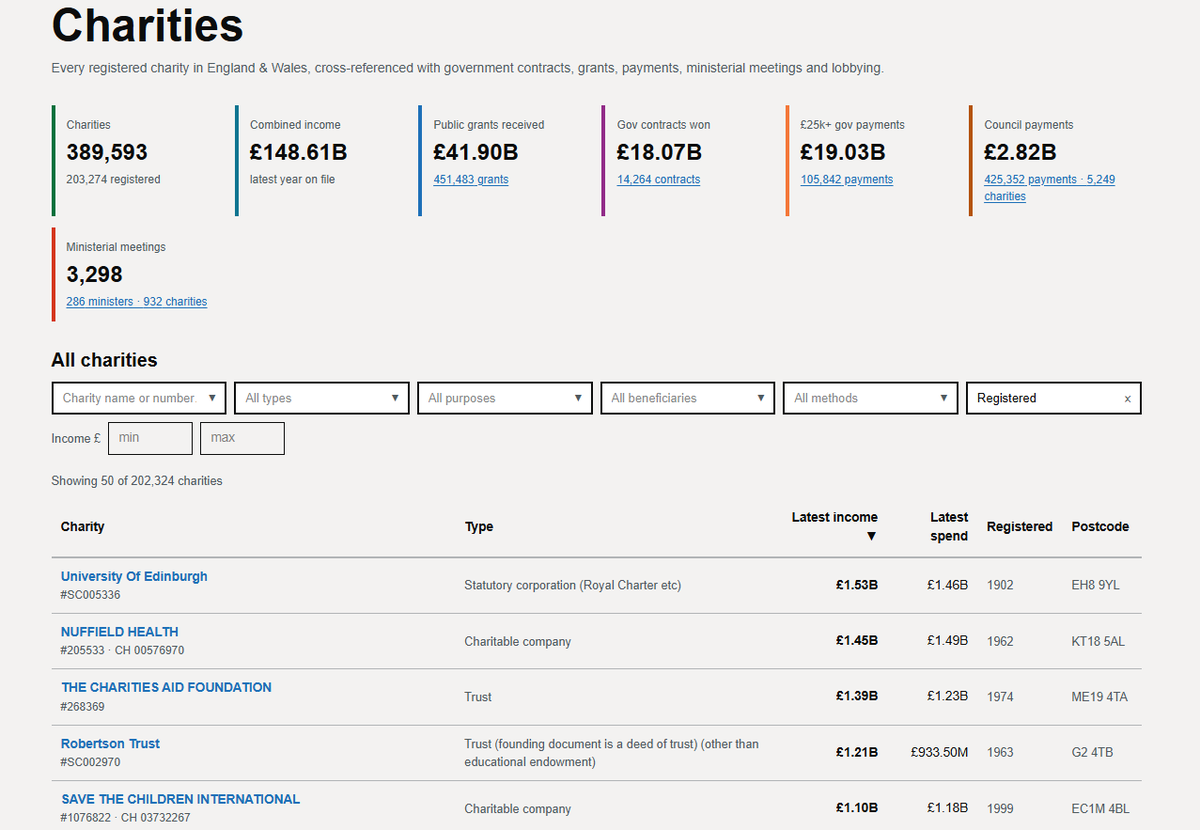
Charities in England and Wales pulled in £101.87bn last year. About £17.71bn of that came from government. Covering everything from a village hall to Oxford Uni and Cancer Research UK. 75% of all income goes to just 2.6% of charities
389,000 charities are now tracked.
Cross-reference them with grants, contracts, gov payments, council payments, and ministerial meetings
What’s Wrong With Britain’s Railways?
Britain has the most expensive walk-up train tickets in Europe.
A system consuming billions in annual subsidy.
Here is what actually went wrong.
The historical truth nobody mentions.
Victorian railways were built entirely by private capital.
Zero government subsidy.
Genuine competition on major routes.
Real fares fell consistently as productivity improved.
Private enterprise built the finest railway network in the world.
Then the state got involved.
1921 — The First Mistake.
The Railways Act 1921 forced hundreds of competing private companies into four regional monopolies. London Midland and Scottish.
London and North Eastern.
Great Western.
Southern.
Competition — the mechanism that had driven quality and falling prices was eliminated by government diktat.
Decline began here.
Not in 1994.
Not in 1948.
Here.
1948 — Nationalisation.
British Railways.
The experiment ran for 46 years.
The verdict is unambiguous:
Chronic losses requiring continuous taxpayer subsidy.
Catastrophic industrial relations — strikes, restrictive practices, union capture.
Deteriorating service quality.
The Beeching cuts closing 5,000 miles of track.
Nationalisation did not work.
By the 1980s British Rail was a national embarrassment.
1994 — Privatisation by John Major
The solution to nationalisation’s failure.
Except it wasn’t privatisation.
It was the worst possible structural design.
Here is what they actually created:
Fatal Flaw One — They Split Track From Train.
Government via Network Rail owns and operates the infrastructure.
Train operators run the services.
Result:
No single entity accountable for the passenger experience.
Constant conflict over access, delays, and costs.
The Hatfield crash 2000 — caused by a cracked rail —
exposed catastrophic underinvestment under Railtrack.
The infrastructure was effectively renationalised by 2002.
Eight years into privatisation. The track was already back in state hands.
Fatal Flaw Two — They Created Private Monopolies.
Not competition.
One operator per route.
A private monopoly replacing a state monopoly.
Franchises awarded by government bureaucrats — not by the market.
Passengers had no alternative.
This is not capitalism.
Fatal Flaw Three — The Subsidy Paradox.
British Rail in its final years received approximately £1 billion annually in subsidy.
After privatisation — designed to reduce subsidy —
government support exceeded £6 billion annually by 2019.
Privatisation was supposed to save money.
It cost six times more.
The profits were privatised.
The losses were socialised.
Exactly what genuine free markets are supposed to prevent.
Fatal Flaw Four — Ticketing Chaos.
One state system became thousands of fare types.
Advance. Off-peak. Anytime. Super off-peak.
Different prices for identical journeys
depending on which company issued the ticket
and when you happened to buy it.
A passenger paying £12.50 sitting next to one paying £93.
Same seat. Same train. Same destination.
This is not a market.
It is price discrimination exploiting information asymmetry.
Why Are Tickets So Expensive?
Five specific reasons.
Reason One
Infrastructure costs are extraordinary.
Network Rail maintains 15,849 km of track.
Historic underinvestment requiring expensive catch-up.
Heavily unionised maintenance workforce.
Safety regulation imposing significant cost.
British infrastructure projects consistently cost multiples of equivalent European projects.
HS2 — budgeted at £33 billion — exceeded £100 billion before partial cancellation.
Every pound of that cost flows through to fares or subsidy.
Reason Two
Labour costs are extraordinary.
Train drivers averaging £60,000-£70,000 annually.
Well above comparable European levels.
ASLEF has maintained extraordinary wage levels for decades.
The 2022-2023 strike wave produced significant pay increases with no corresponding productivity improvements. This is the predictable consequence of monopoly employment.
A union facing a single employer with no competitive alternative has unlimited leverage.
The passenger pays.
Reason Three
Regulatory complexity.
Office of Rail and Road.
Department for Transport.
Competition and Markets Authority.
Safety and Standards Board.
Each franchise agreement running to thousands of pages.
Every layer of regulation has a cost.
That cost flows through to fares.
Complexity itself serves incumbent interests —
established operators navigate it.
New competitors cannot.
Reason Four
High fares AND high subsidy simultaneously.
Britain has both.
This apparent paradox reveals the dysfunction perfectly.
High infrastructure costs require high access charges.
High access charges require either high fares or high subsidy.
Political pressure limits how high fares can go.
So both are high.
The subsidy flows to infrastructure and loss-making routes.
The fares flow from commuters and intercity travellers.
Neither adequately funds the system’s genuine costs.
The passenger pays twice — as traveller and as taxpayer.
Reason Five
No genuine competition.
In a genuine market providers compete on price and quality.
Passengers choose between competing operators.
Inefficient operators lose business.
Efficient operators grow.
Prices fall. Quality rises.
Britain has never had this on its railways.
Not under British Rail.
Not under the franchise system.
Not under renationalisation.
The passenger has always had one choice — pay or don’t travel.
The Numbers That Indict The System.
Great Western Railway — Europe’s most expensive operator.
Fares two and a half times the EU average.
London’s Underground — most expensive metro in the world.
Standard single fares triple those in Seoul.
Twice those in Madrid.
What About Renationalisation?
The current government’s answer.
Great British Railways.
Full nationalisation by 2027.
Here is the problem.
British Rail 1948-1994 demonstrates conclusively that state operation:
Does not reduce costs.
Does not improve service.
Does not reduce fares.
Does increase subsidy burden.
Does worsen industrial relations.
The worst railway strikes in British history happened under nationalisation.
The Political Economy Problem.
A nationalised railway faces irresolvable political pressures.
Trade unions lobby for higher wages — ultimately taxpayer funded.
MPs lobby for uneconomic routes serving their constituencies.
Treasury demands subsidy reduction conflicting with investment needs.
Passengers demand lower fares conflicting with financial sustainability.
All mediated through politics rather than markets.
The result is guaranteed — the same institutional sclerosis as British Rail.
Not because the people involved are bad.
Because the incentive structure makes good outcomes nearly impossible.
Britain’s railway problem is not technical. It is not even primarily financial.
It is constitutional.
Britain has never decided what railways are.
A genuine market — requiring real competition, real failure, real price signals.
Or a public service — requiring honest subsidy and genuine political accountability.
Instead it created something that is neither.
Private monopolies enjoying public subsidy.
Commercial pricing without commercial discipline.
Competitive branding without competition.
The government is now renationalising a system
that was never genuinely privatised.
And presenting this as progress.
The passenger will pay.
The taxpayer will pay
Again.
End of thread.
#GreatBritishRail #GBR #GreatBritishRailways #Renationlisation #PublicOwnership #RailRefor
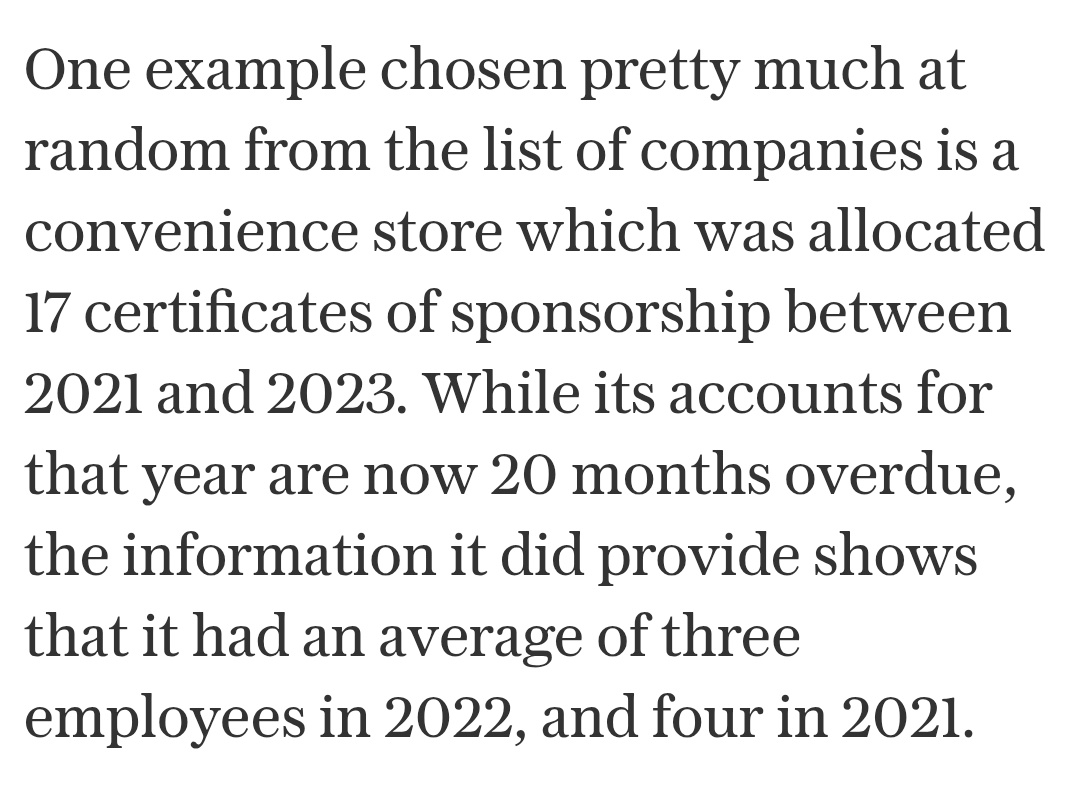
There are also 16 businesses with "car wash" in their name on the skilled worker visa list.
One of them - Hot Wheelz Car Wash Ltd, of Dudley - was previously ordered to cease operations after trading without permission.
This is a deeply damaging lie on the @oxfamgb
website.
Poverty is not created. It's the default position. It has been capitalism which has lifted countless people out of poverty.
The funny thing about these types of announcements is that most people’s first reaction is probably "Wait, we give benefits to criminals??" and not "Wow that's tough"
Using the evidence from Auckland's upzoning, we infer that a 1% increase in housing stock reduces rents by 3.6%.
Rents fell by 21.6% and the housing stock increased by 6.9%, so the elasticity of rents to housing stock is ln(1-0.216)/ln(1+0.069) = -3.6.
“We should have a communist area and a capitalist area beside each other to see who wins.”
North Korea vs South Korea
East Germany vs West Germany
South America vs North American
We’ve already run this test.
Communism always loses.
The fury over a proposed Kirpan ban is a textbook example of what Thomas Sowell meant when he said: “When people get used to preferential treatment, equal treatment seems like discrimination.”