Metas glucémicas en diabetes gestacional:
- Glucosa en ayuno <95 mg/dL
- Glucosa 1 h postprandial <140 mg/dL
- Glucosa 2 h postprandial <120 mg/dL
- HbA1C <6% (<7% si no puede lograrse sin hipoglucemia)
ADA Standards of Care 2026
Mantener el ritmo de todo lo que sale de Medicina es... apabullante.
Pero ya está el tema de Bacteriemia por Staphylococcus aureus, totalmente reestructurado con la nueva Guía de la IDSA 2026 en Accio (https://t.co/FQyQuLPcWG). En Español y con un algoritmo rápido interactivo.
Además:
🔵 Agregamos +1,000 casos clínicos y preguntas nuevas al Simulador ENARM y mejoramos toda la interfaz (https://t.co/oDIxUb0ar0).
🔵 En Junio corregimos y actualizamos cientos de temas en Memodi, Desde Anemia, Epilepsia, Dengue, choque séptico, edema agudo pulmonar, insuficiencia cardíaca, diabetes, tuberculosis.
🔵 Agregamos muchas muchas calculadoras a Calculus. FIB-4, SOFA-2, HOMA, PSI, FeNa, HEART, NEWS2.
🔵 En Accio, ahora intento que cada artículo relevante, esté actualizado pronto: hepatopatía asociada a alcohol, lumbalgia, IAMcEST, cefalea, dengue y más. Pronto hay una nueva actualización a la app.
No vamos a parar hasta hacer que @MemodiApp sea imprescindible para la Medicina en Latinoamérica. Si no lo han hecho: conozcan las apps (https://t.co/eEwHNUCNgx).
Staphylococcus aureus bacteremia guidelines recommend obtaining FUBCs every 2-4 days until bacteremia clearance!
🆕💥💥🟢 cohort study at two Dutch hospitals : Routine serial follow-up blood cultures after a negative result within 48 hours of MSSA bacteremia: low yield, high cost.
🔺Early Skip phenomenon in SAB was uncommon : Among 1005 included SAB patients, 31 patients had early SP (3.1%): In 27 of these (87%), clinical condition prompted repeat FUBCs. If one negative FUBC within 48 hours was considered sufficient, four patients (1%) without clinical triggers would have been misclassified as early clearance, potentially missing persistent bacteremia
🔺Clinically stable, afebrile patients without signs of metastatic infection and one negative FUBC within 48 hours have a very low risk of missed persistent bacteremia
🔺Potential cost savings from discontinuing FUBCs after one negative result within 48 hours were 13,513 USD per 100 patients #idxposts https://t.co/hh14NrwTin
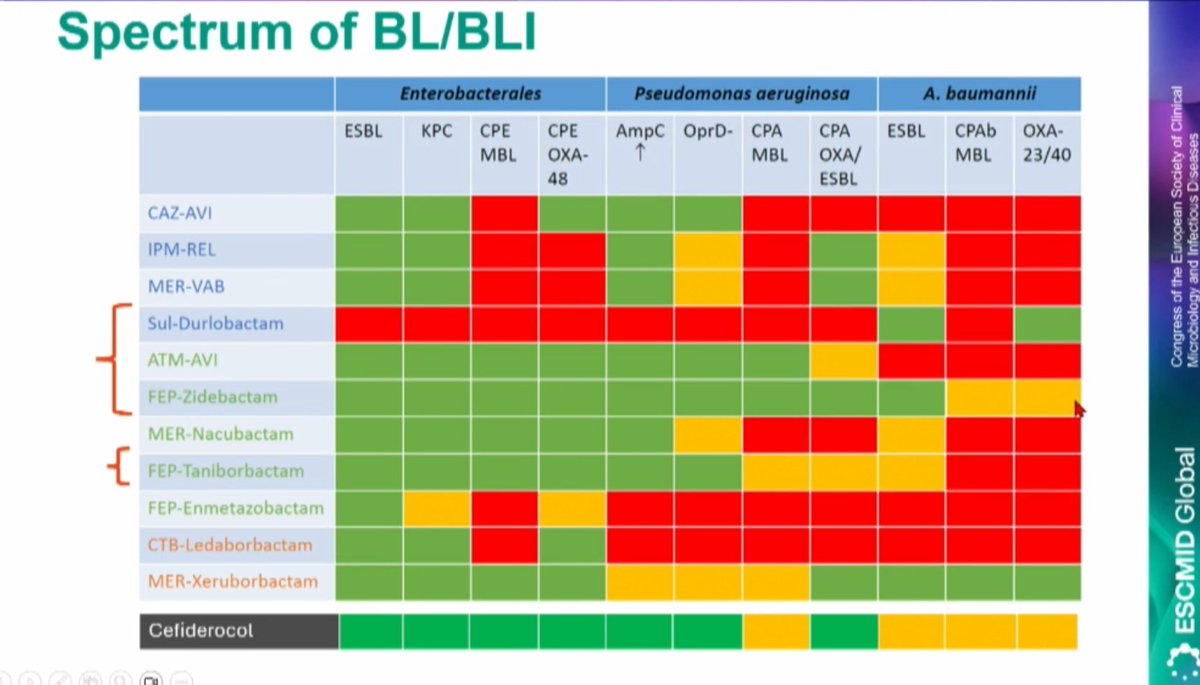
Cómo son los “nuevos” #antipseudomonicos BL/BLI❌🟢en #Pseudomonas R a #carbapenemes? #AntimicrobAgChemother 800 cepas🌍
💉Ceftol/Taz 31% R
💉Ceftaz/Avib 33% R
💉Imip/Releb 66%R
No en todos lsitios iguales resistencias👉🏻IMPORTANTE conocer TÚ 🫵🏻ecología
🔗🆓https://t.co/dIumkkdwrQ
People with HIV (PWH) and cancer have greater cancer-specific mortality than patients without HIV. In @CIDJournal, authors describe the associations between low CD4 cell counts and cancer-specific mortality in PWH with cancer. https://t.co/6zjPY5gCFe
📢 Actualización clínica relevante sobre la bacteriemia por Enterococcus faecium (BSI), basada en un consenso Delphi internacional (ESGBIES).
⚠️Un microorganismo cada vez más frecuente y asociado a elevada morbimortalidad.
Nuevo fármaco🆕🎉🥳 en #HepatitisBcronica🦠 @NEJM Ensayo Clin. F3 donde #Bepirovirsen (semanal y subcutáneo durante 24 semanas)💉 junto con #NoAnálogos (al menos 48 semanas) consiguió curación aprox 20% a las 72 semanas 👏👏👏 Buenísima noticia!📰👌🏻
🔗 🆓https://t.co/XQ6pSMh256
🆕💥🔴An updated meta-analysis and evidence map of systematic reviews
The efficacy and safety of inhaled antibiotics in the treatment of lower respiratory tract infection #idxposts
https://t.co/Dp9oizQ6gX
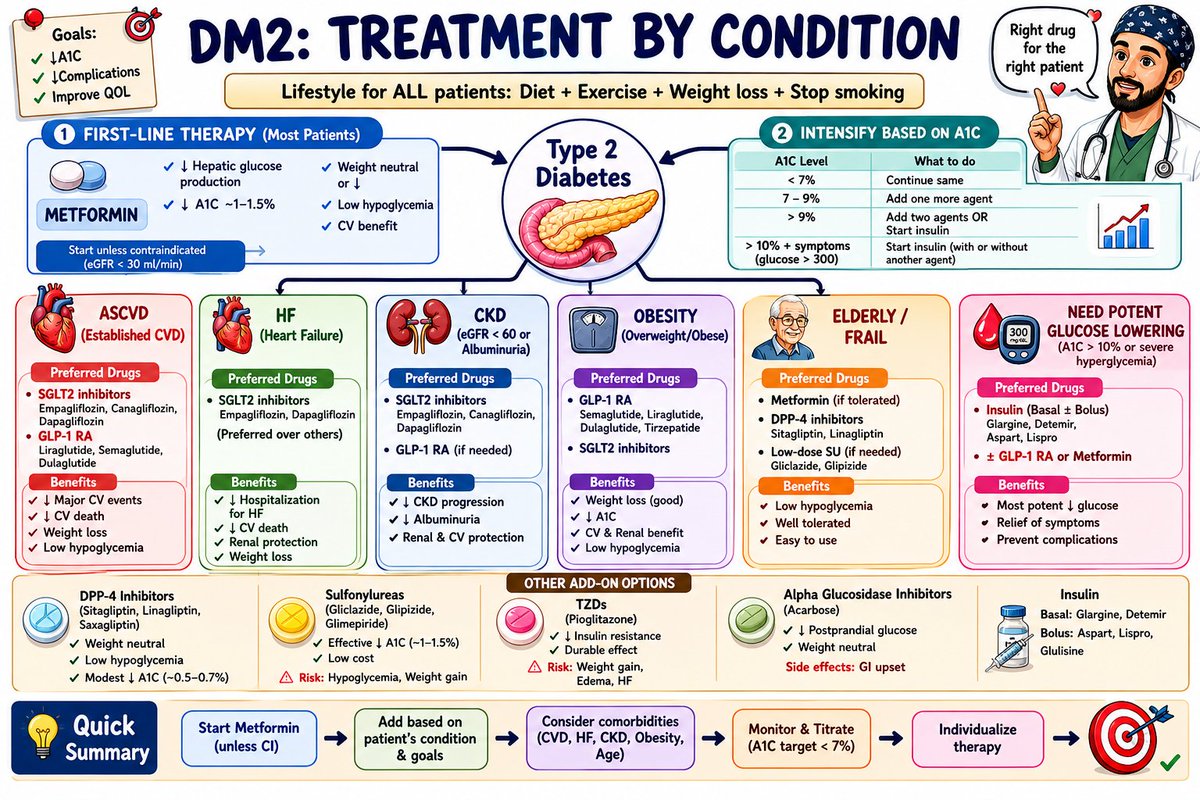
DM2 treatment is not one drug for everyone 👀
📌 ASCVD → SGLT2i / GLP-1 RA
📌 HF → SGLT2i
📌 CKD → SGLT2i ± Finerenone
📌 Obesity → GLP-1 RA
📌 Very high A1C → Insulin
Simple DM2 approach with benefits & drug names 💉📚
https://t.co/4r50aAuxIN
Never underestimate the staph aureus!
A new case report in IDCP of MRSA right coronary artery aneurysm in a 56-year-old male with poorly controlled diabetes and recent complex MRSA bacteremia originating from a skin source #idxposts
https://t.co/FXvWCk2JuH
Sabemos q #Gripe puede asociarse a #AspergilosisPulmonar(#IAPA)🦠🫁➡️🍄🫁 dado q entidad grave y alta mortalidad⬆️☠️… Damos profilaxis antifúngica en gripe en #UCI🛌💨? En @CMI_journal en 448 pac.:Profilaxis NO redujo IAPA y aumentó la hepatotoxicidad🤢
🔗https://t.co/nwos5rx8B1
🦠😷Diagnóstico Microbiológico de las Infecciones Respiratorias en Pacientes Inmunocomprometidos Criticos
🔰📚Seminars in Respiratory and Critical Care Medicine
doi: 10.1055/a-2808-5317
Enlace a Artículo Completo👇🏻✅🆓
https://t.co/xumUMHaxVK
Urine antigen tests (UATs).
Used for respiratory pathogens because they provide a rapid, non-invasive, and simple way to identify specific bacteria that are otherwise difficult or slow to culture.
These tests detect specific proteins (antigens) shed by pathogens like Legionella pneumophila and Streptococcus pneumoniae that are concentrated by the kidneys and excreted in urine.
*Key Reasons for Using UATs
1. Speed:
Results are typically available within 15–30 minutes, allowing for immediate clinical decisions compared to 48+ hours for traditional cultures.
2. Non-Invasive:
They require only a simple urine sample, avoiding invasive procedures like bronchoalveolar lavage or the difficulty of obtaining high-quality sputum from very ill patients.
3. Unaffected by Antibiotics:
Unlike cultures, UATs can often detect pathogens even after antibiotic treatment has started, because they look for bacterial fragments rather than living organisms.
4. High Specificity:
Most UATs have a specificity greater than 90–95%, meaning a positive result is a very strong indicator of the specific infection.
5. Targeted Treatment:
Early identification helps doctors switch from broad-spectrum "guesswork" antibiotics to narrow-spectrum therapy specifically targeting the identified pathogen, which improves patient outcomes and reduces antibiotic resistance.
https://t.co/5rvHY0oChV.
https://t.co/vvteQ1ejN8.