Every championship team has one.
A player who rarely scores.
Rarely starts.
Rarely gets mentioned in the newspaper.
But if you asked the coach which player they couldn’t afford to lose, this name would be near the top of the list.
And that’s what most fans never see…
We celebrate stars. We should. You need talent to win games.
But championship teams are usually built on players whose impact never shows up in the box score.
They’re the first to celebrate a teammate’s success.
They’re the voice in the huddle after a tough stretch.
They’re the player who could complain about their role but chooses to serve the team instead.
I think about the term domestique in professional cycling.
A domestique doesn’t ride to win the race.
They sacrifice their race so someone else can.
No spotlight.
No headlines.
Just impact.
Every great team has a version of this player.
The teammate who makes practice better.
The teammate who keeps the locker room connected.
The teammate who helps the stars become stars.
What makes them special isn’t talent.
It’s maturity.
It’s humility.
It’s selflessness.
And if you’ve coached long enough, you know this truth:
Many championship runs are carried by players who never receive the credit they deserve.
The best teams don’t just have great players.
They have players willing to play a role.
And that is often the difference between a good team and a championship team. 🏆
Who are these players on your team and how do you celebrate them?
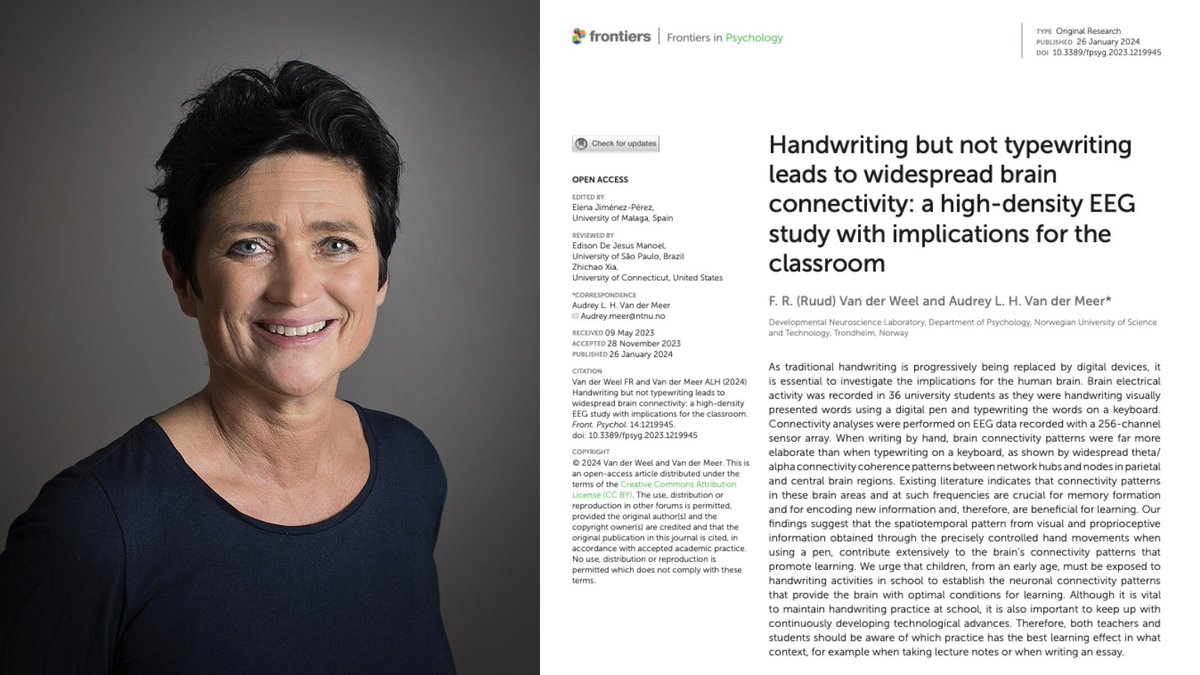
A Norwegian neuroscientist spent 20 years proving that the act of writing by hand changes the human brain in ways typing physically cannot, and almost nobody outside her field has read the paper.
Her name is Audrey van der Meer.
She runs a brain research lab in Trondheim, and the paper that closed the argument was published in 2024 in a journal called Frontiers in Psychology. The finding is brutal enough that it should have changed every classroom on Earth.
The experiment was simple. She recruited 36 university students and put each one in a cap with 256 sensors pressed against their scalp to record brain activity. Words flashed on a screen one at a time.
Sometimes the students wrote the word by hand on a touchscreen using a digital pen, and sometimes they typed the same word on a keyboard. Every neural response was recorded for the full five seconds the word stayed on screen.
Then her team looked at the part of the data most researchers had ignored for years, which is how different parts of the brain were communicating with each other during the task.
When the students wrote by hand, the brain lit up everywhere at once.
The regions responsible for memory, sensory integration, and the encoding of new information were all firing together in a coordinated pattern that spread across the entire cortex. The whole network was awake and connected.
When the same students typed the same word, that pattern collapsed almost completely.
Most of the brain went quiet, and the connections between regions that had been alive seconds earlier were nowhere to be found on the EEG.
Same word, same brain, same person, and two completely different neurological events.
The reason turned out to be something nobody had really paid attention to before her work. Writing by hand is not one motion but a sequence of thousands of tiny micro-movements coordinated with your eyes in real time, where each letter is a different shape that requires the brain to solve a slightly different spatial problem.
Your fingers, wrist, vision, and the parts of your brain that track position in space are all working together to produce one letter, then the next, then the next.
Typing throws all of that away. Every key on a keyboard requires the exact same finger motion regardless of which letter you are pressing, which means the brain has almost nothing to integrate and almost no problem to solve.
Van der Meer said it plainly in her interviews.
Pressing the same key with the same finger over and over does not stimulate the brain in any meaningful way, and she pointed out something that should scare every parent who handed their kid an iPad.
Children who learn to read and write on tablets often cannot tell letters like b and d apart, because they have never physically felt with their bodies what it takes to actually produce those letters on a page.
A decade before her, two researchers at Princeton ran the same fight using a completely different method and ended up at the same answer. Pam Mueller and Daniel Oppenheimer tested 327 students across three experiments, where half took notes on laptops with the internet disabled and half took notes by hand, before testing everyone on what they actually understood from the lectures they had watched.
The handwriting group won by a wide margin on every question that required real understanding rather than surface recall.
The reason was hiding in the transcripts of what the two groups had actually written down.
The laptop students typed almost word for word, capturing more total content but processing almost none of it as they went, while the handwriting students physically could not write fast enough to transcribe a lecture in real time, which forced them to listen carefully, decide what actually mattered, and put it in their own words on the page.
That single act of choosing what to keep was the learning itself, and the keyboard had quietly skipped the choosing and skipped the learning along with it.
Two studies. Two countries. Same answer.
Handwriting makes the brain work. Typing lets it coast.
Every note you have ever typed instead of written went into your brain through a thinner pipe. Every meeting, every book highlight, every idea you captured on your phone instead of on paper was processed at half depth.
You did not forget those things because your memory is bad. You forgot them because typing never woke the part of the brain that would have made them stick.
The fix is the thing your grandmother already knew.
Pick up a pen. Write the thing down. The slower road is the faster one.
At a certain point, something interesting happens.
An advanced athlete’s training starts to resemble a beginner’s again.
Not because they’ve regressed or may not use some special strength work, but because they’ve achieved sports mastery.
They know what works and how they
🚨Student athletes should:
-Play multiple sports
-Avoid energy drinks
-Drink 80-100 oz H20
-Avoid sport specialization
-Consume 3–4 balanced meals daily
-Eat two breakfasts on game day
-Sleep 8–11 hours and prioritize recovery
-Strength train under guidance of a CSCS
-Work with a sports dietitian for smart supplementation
-Avoid playing too many tournaments and showcases
This should not be controversial. Thank you for your attention to this matter.
🚨PARENTS🚨
We coaches are VERY aware how long track meets can be😂
We know showing up for just a bit of time can drag. Especially if you have a tight schedule.
But being there for your athlete… IT MEANS EVERYTHING.
Whether they are a top dog or not.
Showing up matters!
D1 sounds like the dream...
But here's what it actually looks like:
- Summers gone
- Major sometimes chosen for you
- Limited or no time for internships
- Graduate w/ zero work experience
Think about the entire experience
40 year plan, not 4 years
Recruits - Do not burn bridges ⬇️
Coaches value honesty & telling them if you aren't actually considering their school
Plus, they might still end up coaching you down the road - Here are two examples where that happened...
💨 Athletes:
Please understand, getting faster is one of the BEST ways to improve your performance in your sport
Go spend time getting faster. You WILL get better significantly if you do
🚨ATHLETES🚨
Avoiding speed training because you aren’t fast…
It’s the number one way to continue to stay slow.
You don’t need to be blazing, but you do need to be able to keep up.
Train speed regularly! Dont avoid what you need!
Servite (CA) sets a new standard with a 39.82 in the 4x100, marking the first sub-40 relay in state history. 🤯🔥
( via pomanprod/yt , zeke castellanos/ig)
@ServiteSports
A loyal assistant coach is one of the most valuable things in a program.
They keep the locker room steady.
They reinforce standards.
They make the head coach better.
Behind every strong program…
there’s usually a strong coaching staff.
The best way to know if a D3 school is right?
Visit campus. Here's what to look for ⬇️
- Do players seem happy & connected?
- How does coach talk about academics?
- What’s the campus vibe outside of sports?
Pro tip: Ask current players, “What’s one thing you wish you knew before committing?”
8 ways to enhance your training as an athlete!
1. Stop training like a bodybuilder… be athletic, throw med balls, train power
2. Train plyometrics in multiple planes
3. Stop being afraid & lift heavy!!
4. Build your grip strength
5. Perform maximal depth landings
6. Train plyometrics unilaterally
7. Race a partner when you sprint
8. Use repeat contact jumps/plyos
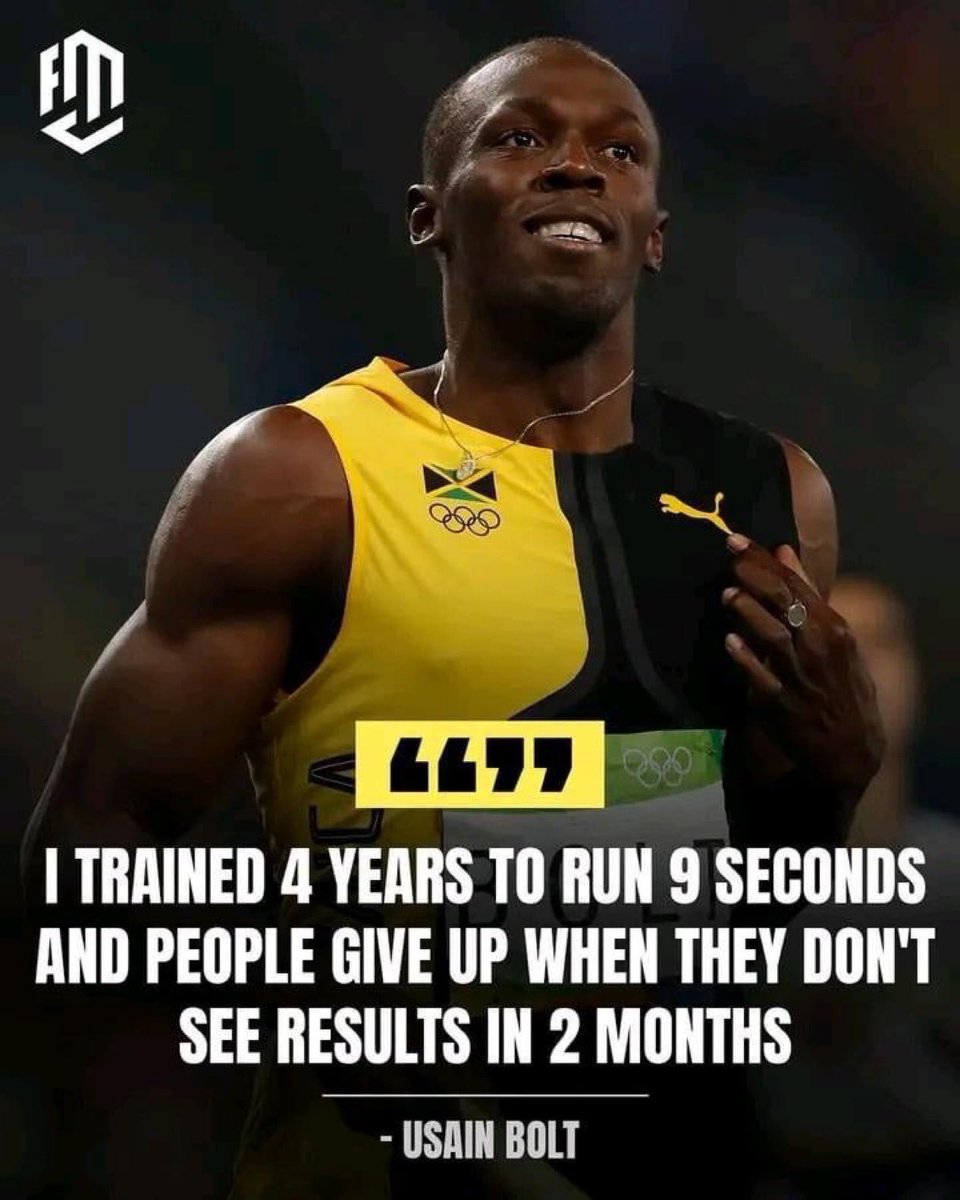
“I trained 4 years to run 9 seconds and people give up when they don’t see results in 2 months.” - Usain Bolt
Progress takes time, routine & consistency.