House finches and sparrows use sigarette butts as pest repellant!
The birds weren't sticking whole cigarette butts into their nests.
Instead, they would pull out cigarette butt fibres the same way they might grab a single twig or feather.
As it turned out, the nests with the most fibres also tended to have the fewest parasites like ticks and mites!
📸National Autonomous University in Mexico
Stunning sunset
This happens because of a phenomenon called Rayleigh scattering: cirrus clouds scatter the longer, red wavelengths of light and give the sky an orange or reddish hue
[📹 jiangzhibin24 姜志斌]
Plant collection day! 🍃
Our team of scientists travelled to North Head Sanctuary in Sydney to conduct vital field research, collecting trip 231 specimens, representing at least 132 distinct plant species.
#BotanicSydney#Botany#Science
Video 😍 What a magical experience! I got to see Rafflesia keithii in the rainforest of Borneo. Such a special plant and the world biggest flower!
Rafflesia keithii is a parasitic flowering plant in the genus Rafflesia endemic to Sabah in Borneo.
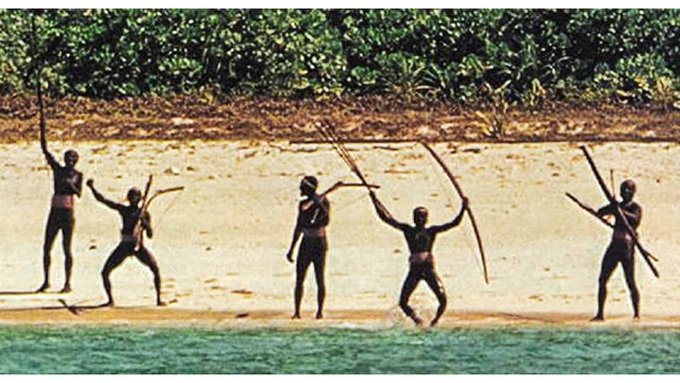
These people lived on North Sentinel Island for 60,000 years, maintaining an isolated existence on this landmass in the Indian Ocean, comparable in size to Manhattan.
This small community, numbering between 80 to 150 individuals, has subsisted through hunting and gathering, a lifestyle reminiscent of the Stone Age. Notably, agriculture finds no place in their practices.
The island's isolation has been a shield against external contact, as attempts to engage with the Sentinalese have consistently been met with fierce hostility. Historical accounts reveal a pattern of encounters that underscore the steadfast determination of this isolated community to preserve their autonomy.
In 1771, some East India Company's ships glimpsed lights on the shores of North Sentinel Island but refrained from further investigation. Subsequent interactions with the outside world paint a vivid picture of the Sentinalese's unwavering resistance. In 1867, an Indian merchant ship, forced to land on the island due to harsh monsoons, faced a barrage of arrows from the islanders after three days. The crew's defense with basic weapons lasted until the Royal Navy intervened.
The year 1880 marked a disturbing episode when British forces returned to find a deserted village. In an ill-fated attempt to breach their isolation, six Sentinalese individuals were kidnapped. However, exposure to the outside world proved calamitous for them as they succumbed to illness. Another tragic incident occurred in 1896 when an escaped convict reached the island, meeting a gruesome end with arrows and a slit throat.
The most recent and perhaps the most widely publicized interaction occurred in 2018 when an American Christian missionary sought to convert the Sentinalese. Despite warning shots and clear signs of aggression from two armed islanders, the missionary persisted in approaching, expressing love and religious beliefs. The encounter ended tragically with the missionary's death by arrows, his body left unrecovered on the island's beach.
Renowned Academician @shekhar_mande spends his morning today at our #AJCB Indian Botanic Garden #Howrah. He visited the #GreatBanyanTree, and Aquatic Plant Section, and was enthralled by seeing Roxburgh's Botanical Paintings and Illustrations at Central National Herbarium.1/2
In the early 1990s, Sebastião Ribeiro Salgado, a Brazilian photojournalist, witnessed the harrowing Rwandan genocide firsthand, an experience that left him deeply traumatized.
Seeking solace in his childhood home in Minas Gerais, Brazil, Sebastião returned in 1994 to find a starkly different landscape: a once-lush green forest had been reduced to a barren wasteland, devoid of life. "The land was as sick as I was," he observed, noting that only 0.5% of the land was covered in trees.
Inspired by his wife, Lélia Deluiz Wanick Salgado, Sebastião embarked on an ambitious mission to restore the forest to its former glory. Over the following two decades, the couple tirelessly planted an astonishing 2.7 million trees.
Their unwavering dedication paid off, transforming 1,500 acres of barren land into a thriving rainforest.
The rejuvenated ecosystem now harbors 293 plant species, 172 bird species, and 33 animal species, including several on the brink of extinction.
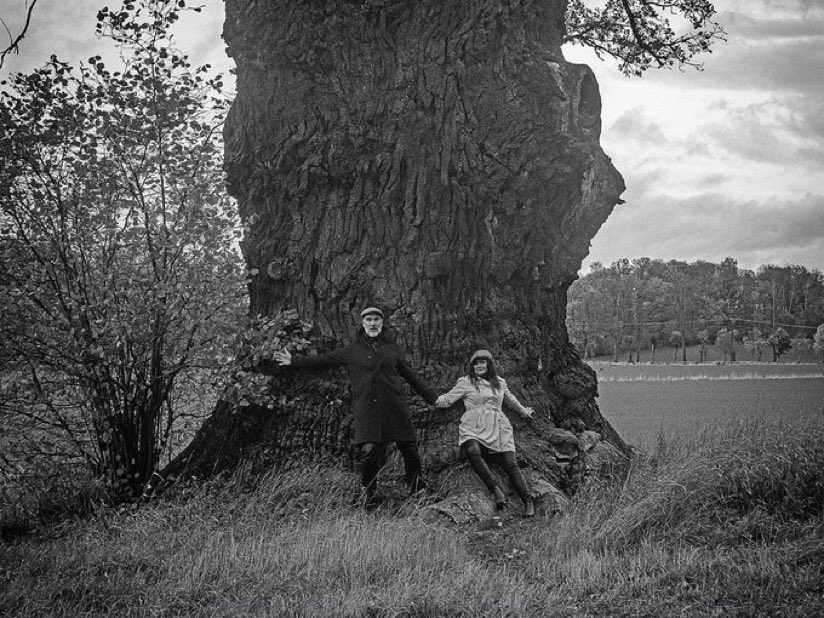
In 1977, an Indian man embarked on an extraordinary journey, cycling from India to Sweden to reunite with a woman he met during her vacation in India. This incredible voyage took him through 8 different countries and spanned a total of 4 months. Remarkably, 44 years later, the couple is happily married in Sweden.
The man behind this remarkable journey is Pradyumna Kumar Mahanandia, often known as Dr. P. K. Mahanandia. He is an Indian-born Swedish artist celebrated for his epic bicycle ride from New Delhi to Gothenburg in 1977, all in the name of love to meet the woman of his dreams, Charlotte Von Schedvin.
Mahanandia has since become a well-known figure in Sweden, not only for his artistic talents but also for his role as an advisor in art and culture for the Swedish government. His artwork has been exhibited in major cities worldwide, and his pieces have even earned a place on prestigious UNICEF greeting cards. On the 4th of January 2012, he received an honorary doctorate degree (Degree of Honoris Causa) from Utkal University of Culture (UUC) in Bhubaneshwar, Odisha, recognizing his outstanding achievements. In addition, he was appointed as the Odia Cultural ambassador to Sweden by the Government of Odisha.