🏁 The MoCha @ #ECCV2026 Challenge leaderboard is here!
Submit your method and follow the rankings for Parkinsonian gait severity prediction from privacy-preserving 3D motion data.
🥇 €1,000 First Place
🥈 €500 Runner-Up
Awards sponsored by @MachineMedicine@eccvconf
🔗 https://t.co/5vqW0l0Rbv
🚨 The MoCha @ ECCV 2026 Challenge is open!
Submit your method for Parkinsonian gait severity prediction using privacy-preserving 3D human motion data.
🏆 €1,000 First Place + €500 Runner-Up, generously sponsored by @MachineMedicine
🔗 https://t.co/vvOhLRoJkT
MoCha @ ECCV 2026 is listed on the official ECCV workshop page!
You can find us under: Human Motion in Real-World and Clinical Settings — Benchmark and Challenge on Parkinsonian Gait #MoChaECCV2026#ECCV2026
Call for Papers! #ECCV2026 Workshop and Challenge on Human Motion Challenges in Real-World and Clinical Settings.
🌐Website: https://t.co/TsphgKcWMR
best paper award and cash prizes for top 2 challenge teams generously sponsored by @MachineMedicine
Time to move beyond lab and solve human motion challenges where they matter: in the clinic and in the wild
If you’re working on 3D motion or digital health, we’d love to see your work
Think your models are ready for a real challenge? Bring them to our clinical motion competition
Visually realistic doesn’t always mean biomechanically correct. HumanScore is a new benchmark that measures how well video models actually move like humans. Worth checking out if you work with human motion data.
Pickford’s goal is to tell emergent stories with an emotional center, using dialogue, characters and even environments that are new every time.
The only way to make our characters move and emote believably is to train our own model from scratch.
Great work from the team!
Kudos: @Vida_adl, @SoroushMhrbn, @ColeClifford
Today I woke up to reports of ~12,000 lives lost in Iran in the past few days. I can’t begin to process that number. Here’s a simulation of just 6,000 particles to visualize it. Thinking of my Iranian friends/colleagues, hope you and your families are safe. #DigitalBlackoutIran
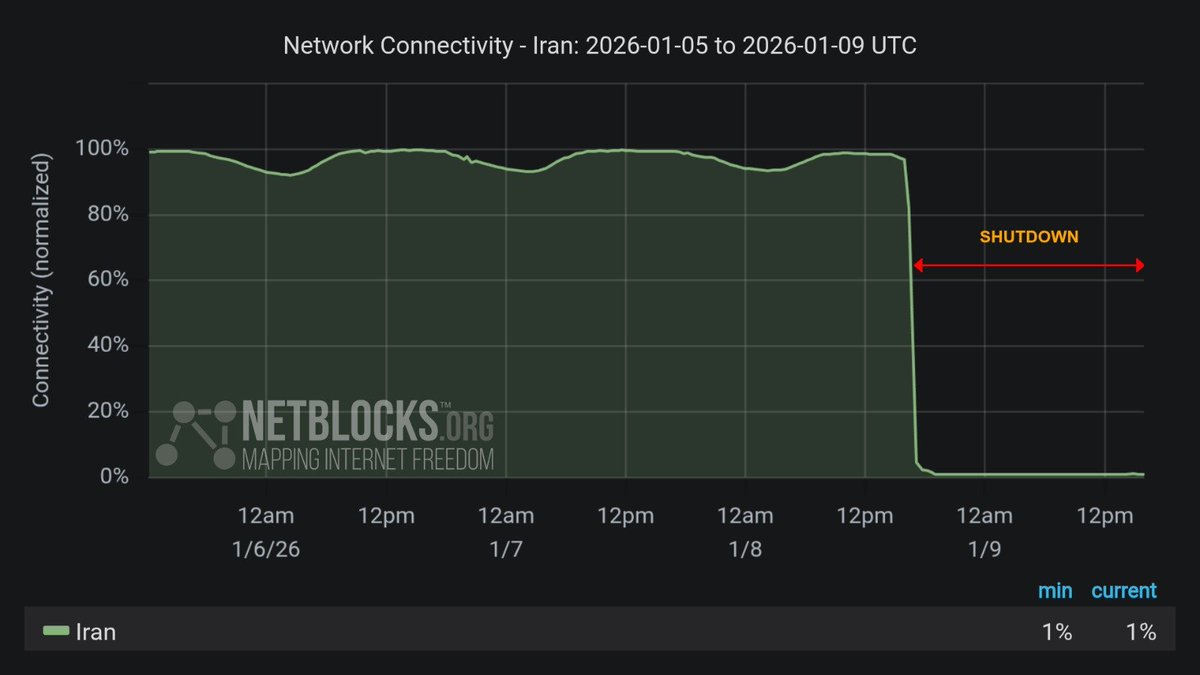
⚠️ Update: It has now been 24 hours since #Iran implemented a nationwide internet shutdown, with connectivity flatlining at 1% of ordinary levels. The ongoing digital blackout violates the fundamental rights and liberties of Iranians while masking regime violence ⏱
POWERFUL PROTESTS: Video from inside Iran shows massive crowds filling the streets in protest against the hardline Islamist government, despite the internet crackdown in the country.
The protests have grown in recent days as frustrated Iranians speak out against rampant inflation and a failing economy.
‼️ Code, model weights, dataset now available! ‼️
We built a new way to take any video and transform it into a different artistic style (think: making your home movie look like a Van Gogh painting) while keeping everything else intact.
The big problem? There's almost no training data showing videos in multiple styles side-by-side. Our solution, called PickStyle, gets around this by training on paired still images instead, then cleverly adapting that knowledge to work with videos.
Here's how it works:
We add lightweight "style adapters" to existing video AI models, so they can learn new artistic styles efficiently
We create synthetic video clips from paired images by simulating camera movement, helping the AI understand motion
We developed a new technique (CS-CFG) that separately controls "what's happening in the video" versus "what style it should look like"
The result: you can transform videos into new artistic styles while maintaining smooth motion and preserving all the important context—who's in the scene, what they're doing, etc.
Our tests show this works better than existing methods at keeping videos temporally consistent (no flickering between frames) while faithfully applying the target style.
Why it matters: This could enable new creative tools for filmmakers, advertisers, and content creators who want to rapidly prototype different visual treatments without reshooting footage.
Research coming out of our ML team in collaboration with Vector Institute and University of Toronto. Congrats to Soroush Mehraban, Vida Adeli, Jacob Rommann, Babak Taati, Kyryl Truskovskyi.
📌 Our CARE-PD poster will be presented on Dec 3, 1–4pm CST at the Mexico City poster session (#NeurIPS2025).
Feel free to stop by and chat if you’re around.
Project page: https://t.co/cdYTh8Z0aH
We're releasing the largest public collection of 3D gait meshes for Parkinson's Disease: 9 cohorts, 8 clinical sites, 363 participants, 18+ hours of anonymized SMPL sequences.
CARE-PD is the largest multi-site dataset of 3D gait meshes for Parkinson’s Disease (collected across 9 cohorts from 8 clinical centers from different countries), enabling clinical AI and motion analysis at scale.
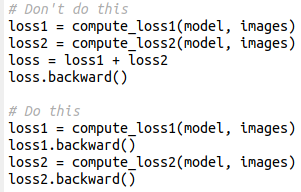
This simple pytorch trick will cut in half your GPU memory use / double your batch size (for real). Instead of adding losses and then computing backward, it's better to compute the backward on each loss (which frees the computational graph). Results will be exactly identical
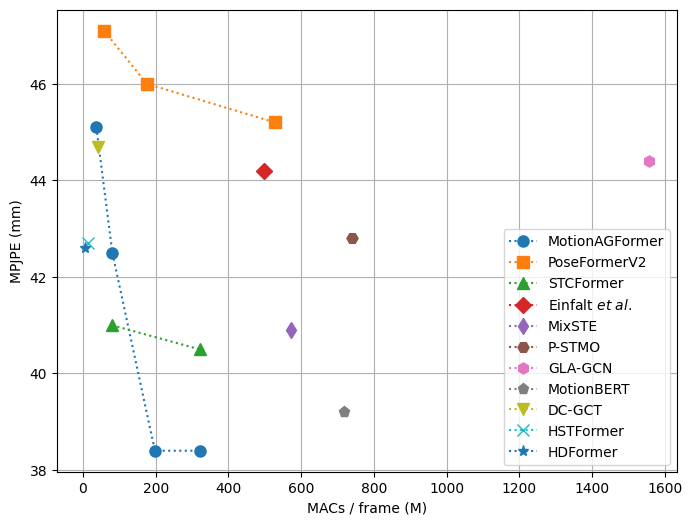
Delighted that MotionAGFormer has been accepted at #wacv2024.
We achieve SOTA 3D human pose estimation on Human3.6M and MPI-INF-3DHP.
paper: https://t.co/slbZXmDbzm
code: https://t.co/cLaM8XYXKS
Nice work by @KITETrainees@SoroushMhrbn@bme_uoft and @Vida_adl@UofTCompSci
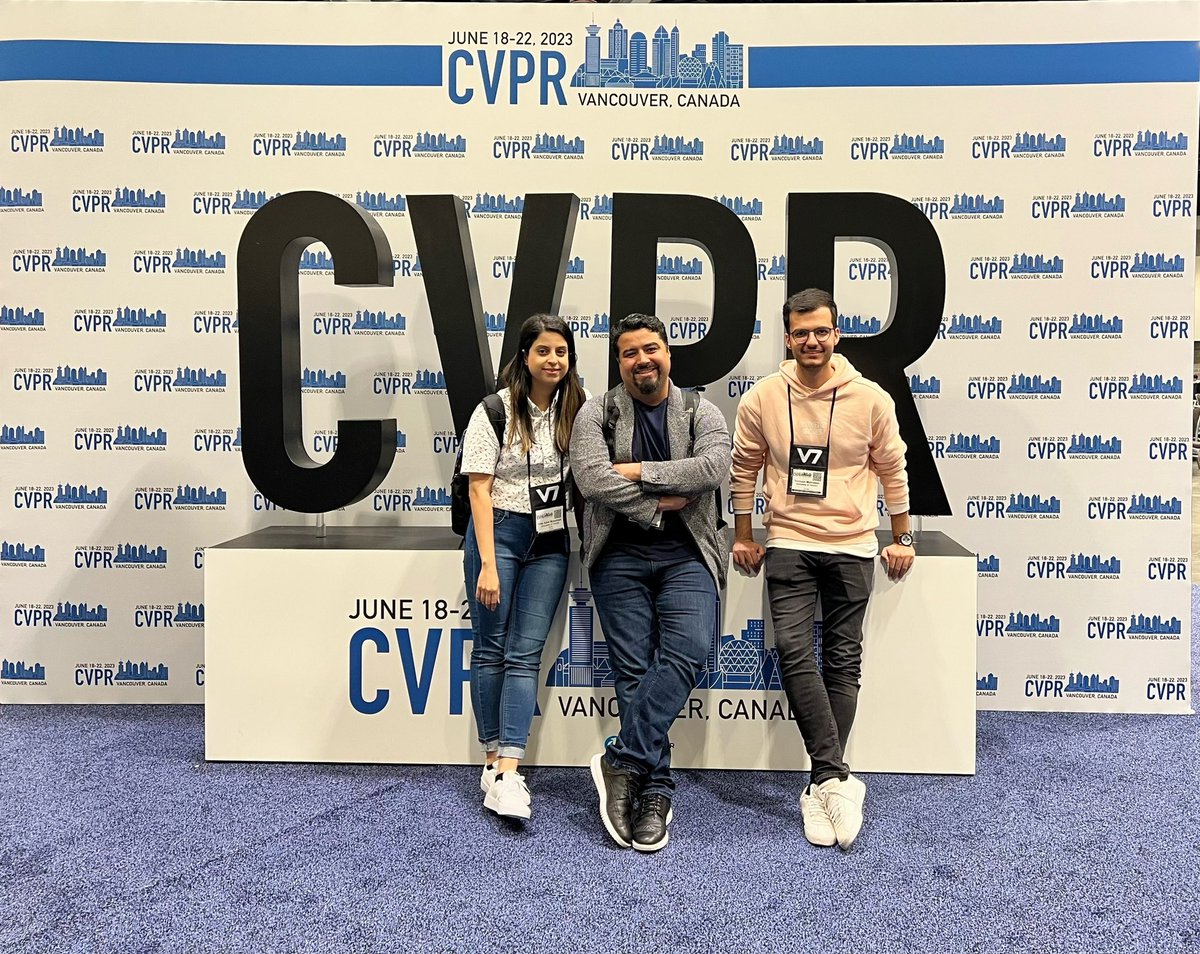
Attending #CVPR2023 was incredible! I had the chance to meet many amazing people in the field and learn from a diverse lineup of outstanding speakers. It's exciting to be part of such a dynamic community. Grateful for the opportunity and looking forward to what lies ahead!