before the frangipanis that now line up the balme library's forecourt, there were traveler's palms, & water lilies too.
today's green spaces were even greener.
legon, c. 1968.
kids seen playing in a stream surrounded by palm trees.
dzorwulu, accra, c. 1968.
what has become of that stream today?
@MichaelKAllotey@AccraMetropolis
The Quaque family should rather be paying reparations to the state.
1. Philip Quaque’s father, Obirempong Cudjoe, was a caboceer.
2. If you didn't know, a caboceer was a big, strong & powerful African man whose job was to raid communities in the hinterlands, and capture free men, women & children for sale to Europeans as slaves.
3. This job became lucrative following the arrival of the Portuguese on the Gold Coast, continued under the Danes and the Dutch, and ended with the British.
4. Obirempong Cudjoe built a strong business relationship with the biggest slave trader of the 1750s in Anomabo, an Irishman named Richard Brew, who was governor of the Royal Africa Company (RAC) at the slave fort in Anomabo.
5. But for the enterprise in Gold Coast’s slave forts, which were the manger that served greener pastures to most British employees, Richard Brew, an unemployed drunkard back in Ireland, would have perished in poverty. Ironically, now we rather troop to their ends in search of greener pastures.
6. Together, Brew & Cudjoe profited from slavery. Part of those profits financed the education of Cudjoe's son, Philip Quaque, at Oxford. Quaque later became Africa's foremost Anglican priest and preacher at the slave forts. After returning from Oxford, however, he was alienated from his Fanti people, could no longer speak his mother tongue fluently, and began trading in slaves himself.
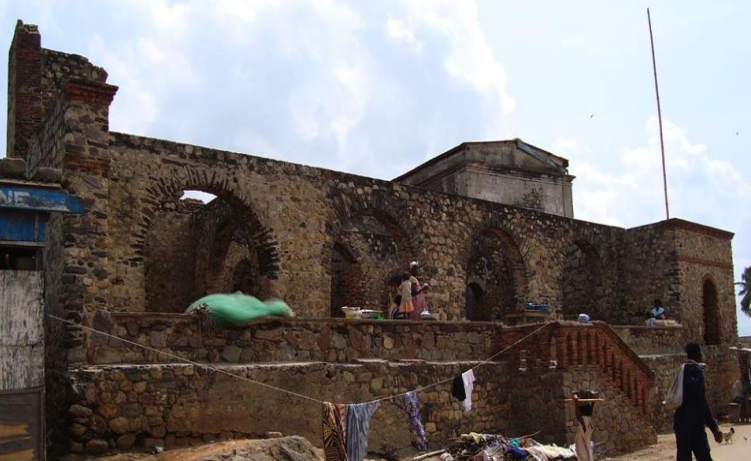
7. Richard Brew, on the other hand, undermined the RAC, made even greater profits, and built himself a fort named Castle Brew, which still stands in ruins at Anomabo.
8. To strengthen their relationship, Richard Brew's mulatto son from a caboceer's daughter, Henry Brew, married Quaque's sister, Abba Kayba. The Brew family in Ghana emerged from this union and developed into a large privileged lineage that persists to this day.
9. Kwesi Brew (poet, diplomat, & member of the first batch of students to attend Legon), his daughter Rama Brew (veteran actress), Marietta Brew (second female attorney-general & current chair of Legon Council), Amandzeba Nat Brew (celebrated musician), & hyphenated-and-allied Brews all descend from this lineage.
10. These descendants & their allied Quaque family should be among those held accountable for the ancestral debt.
11. They can begin by renaming the Quaque House at Adisadel College in memory of their enslaved victims, whose family names I would rather not mention to avoid stigmatization.