🚨BREAKING: A Palestinian girl in Gaza wore her orange Eid dress, waiting to celebrate Eid al-Adha with her family. Minutes later, an Israeli missile struck their building, killing them all.
10 Palestinians were killed and dozens of neighbors injured in the massacre.
This 8 minute video by Nassim Taleb will show you how a 70-year-old formula used by quants separates top traders from bankrupt ones
Bookmark & watch it. It will change the way you trade forever. Then read the post below
🚨🇮🇱 JUST IN: The occupying army's armored vehicles deliberately collide with a bus carrying pregnant women in Palestine.
Have you found more hatred than this?
هذه السيدة احتاجت 42 سنة…
عشان تشرح لك شيء في أقل من دقيقة:
مو كل شيء « منطقي »
ولا كل شيء « واضح »
ولكن هناك فرق بين المنطق والمنظور
واللي يربكك فعلًا؟
إنك تحسب إنك تشوف الحقيقة ..
بينما أنت تشوف نسختك منها فقط 🤔
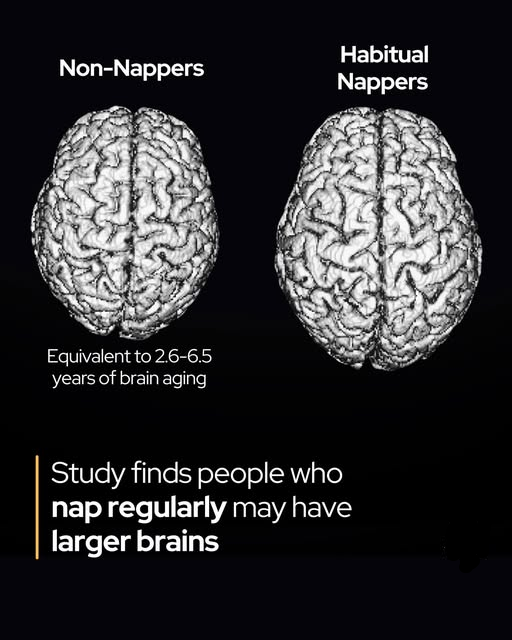
Skip your daily nap, shrink your brain.
A study by researchers from University College London and the University of the Republic in Uruguay has found that people who habitually take daytime naps tend to have significantly larger total brain volume—a key indicator of brain health that typically declines with age and is associated with reduced dementia risk.
The team used Mendelian randomization, a method that leverages genetic variants (present from birth) that make people more likely to nap regularly. By analyzing brain MRI scans and health records from more than 35,000 participants in the UK Biobank, they discovered that those genetically inclined to nap had brain volumes corresponding to 2.6 to 6.5 fewer years of aging.
While this doesn’t definitively prove that napping itself enlarges the brain, the genetic approach helps rule out many lifestyle-related confounding factors, providing stronger evidence of a potential causal relationship than traditional observational studies.
Notably, the researchers found no link between napping predisposition and performance on tests of reaction time, memory, or visual processing. However, previous studies have shown that short naps can deliver immediate cognitive benefits.
The study lacked specific data on nap duration, but prior research suggests naps of 30 minutes or less provide the greatest advantages while minimizing disruption to nighttime sleep.
This is the largest study to date linking regular napping with brain structure. Although further research is needed in more diverse populations, the findings bolster the idea that a brief daytime rest may help preserve brain volume and support long-term cognitive health.
Une enquête d’Al Jazeera révèle comment les munitions thermiques et thermobariques fournies par les États-Unis, qui brûlent à 3 500 °C, ont fait disparaître sans laisser de traces près de 3 000 🇵🇸Palestiniens.
https://t.co/YimVntsObZ