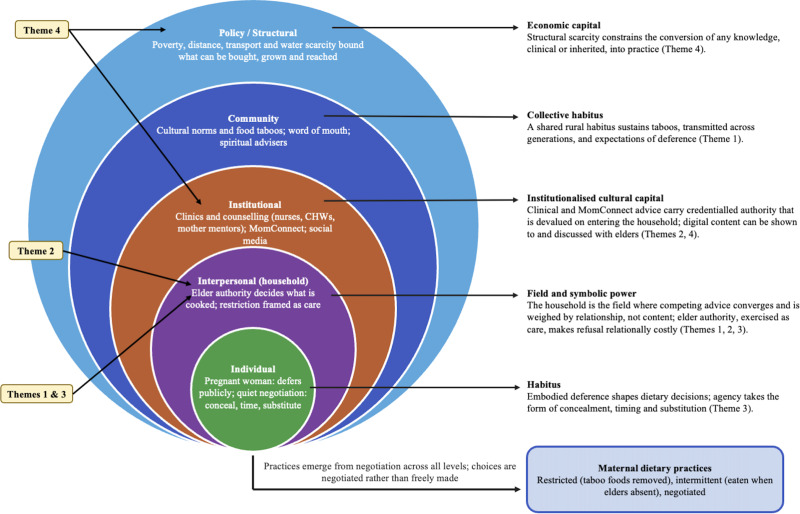
Conducting a study in rural #SouthAfrica, #CurrDevNutr authors find "maternal dietary practice is shaped by intergenerational power dynamics & resource constraints rather than by nutritional knowledge alone." #HealthyBabies#InfantNutrition#Breastfeeding https://t.co/FLoCEFZ86k
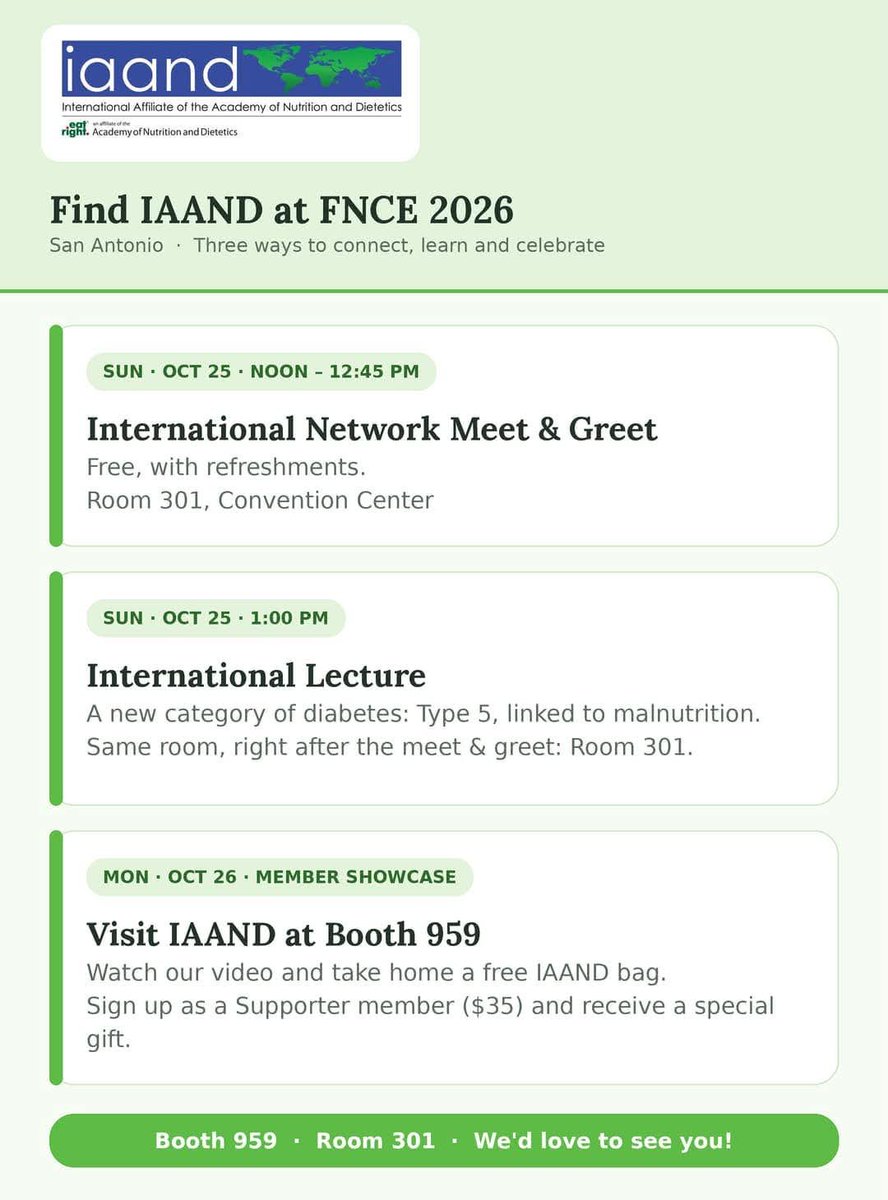
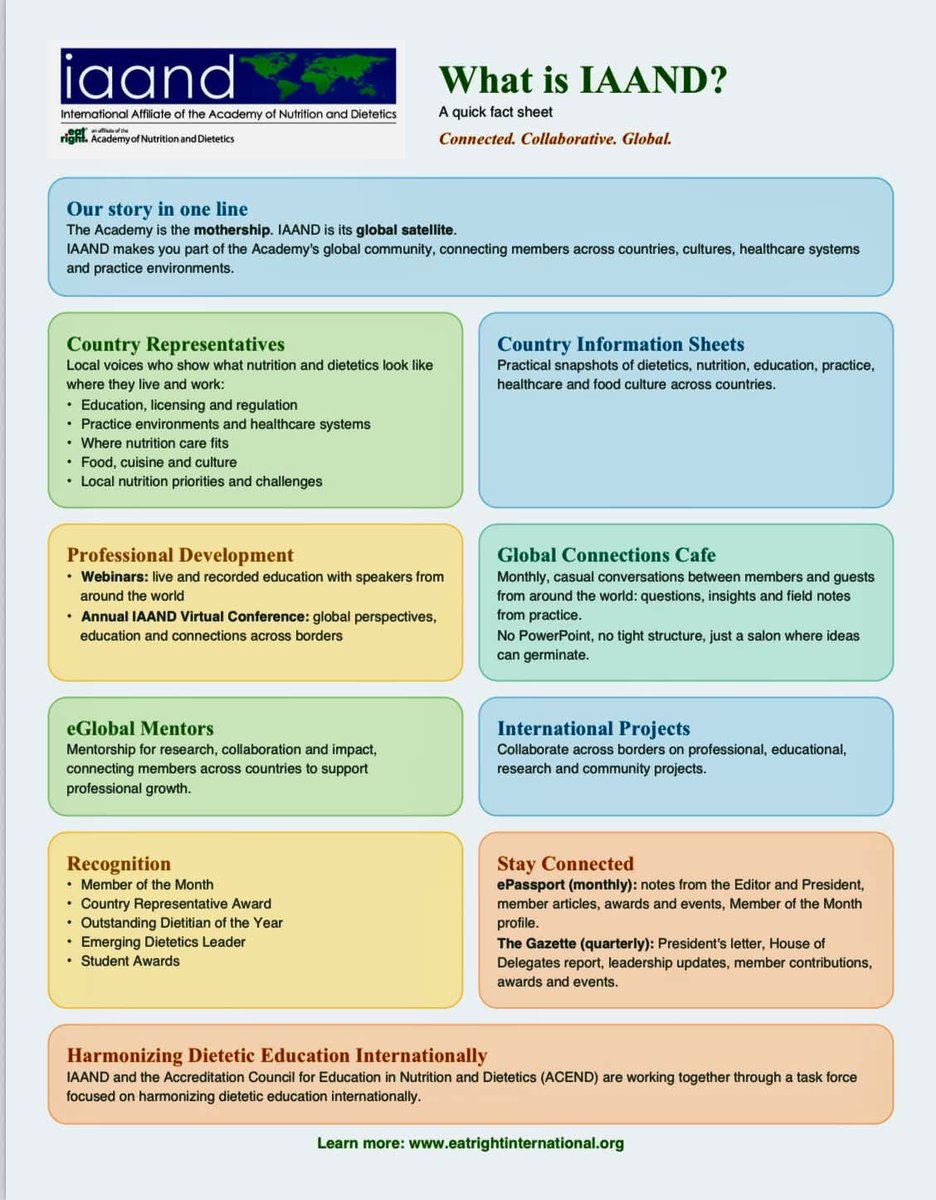
Know the uniqueness of IAAND💪IAAND connects dietitians worldwide to learn, collaborate, mentor, and grow across cultures and healthcare systems - creating a truly global nutrition community. 🌎🤝 #IAAND#GlobalDietetics#Eatright#Nutritioneducation
An Indian woman tried to pay her hotel bill in Rotterdam. The card was declined.
She had enough money in the account. The bank had made an error.
Players from other countries were standing there. Some of them made remarks. Not just about whether she could pay, but about India.
Her name is Dipika Pallikal.
She is one of the best squash players India has produced, and an Arjuna Award winner. She was in the Netherlands in 2011 for a tournament.
At the hotel, her Axis Bank debit card would not go through.
There was nothing wrong with her account. There was enough balance in it. The failure was at the bank's end.
But nobody standing in a hotel lobby can see that. All anyone sees is a young Indian sportswoman whose card has been refused.
She had a second card from another bank. She used that and paid.
That should have been the end of an embarrassing evening.
Then the money went missing.
The transaction had failed, but the amount was still taken from her account, and Axis Bank did not put it back.
Most people would have made calls, got nowhere, got tired, and written it off as a lesson.
She filed a case in a consumer court in Chennai.
Her complaint was not really about the money. It was about humiliation and loss of reputation. She had been made to look, in front of international competitors, like someone who could not pay her own hotel bill.
The case took about 3 years.
On 24th March 2014, the consumer court held Axis Bank responsible for deficiency in service. It ordered the bank to pay her 5 lakh rupees in compensation, and another 5,000 rupees towards her costs.
Here is why this case is worth knowing about, even if you will never play squash for India.
A bank failing your card is not treated in law as bad luck or a technical glitch. It is treated as a service you paid for, delivered badly.
And the damage the law recognised was not the amount of the bill. It was what happened to her standing in that room, in front of those people.
Your reputation is something a court can put a number on.
Hers came to 5 lakh rupees.
Everybody who wants AI to be a boon for nutriton & wellness is gonna be deeply disappointed when they learn about the quality of data and the decades of underfunding of one of the hardest things to study.
Anger may seem to be a source of energy, but it’s blind. It causes us to lose our restraint. It may stir courage, but again it’s blind courage. Negative emotions, which often arise from a spontaneous impulse, cannot be justified by reason, whereas positive emotions can. Scientists suggest that constant anger and hatred undermine our immune system. Compassion, bringing inner strength, is good for our health.
No matter how capable a person may be, no one can survive alone. We depend on the community in which we live. By dedicating ourselves to the welfare of others, we actually bring about our own benefit. As soon as I wake in the morning, I dedicate myself to helping others to be happy, which gives me self-confidence and inner strength.
An alert from the FBI and the Environmental Protection Agency warned that “malicious cyber actors” have been remotely tampering with water systems after at least seven states reported cyberattacks that interrupted their operations this week. https://t.co/6pjWmoZrbk
Day 3 at #Nutrition2026 brought the conference's biggest lesson into focus.
Discovering a biological mechanism is only the first half of translation. The harder part is deciding what thresholds, biomarkers, models, and systems actually carry that science into practice.
From Food is Medicine implementation and biomarker validation to adipose tissue biology and paternal preconception health, a common theme emerged: good science does not automatically produce good practice.
This reflection also includes a personal highlight—hearing Susan Fried deliver the George Bray Award Lecture. Early in my career, I had the privilege of working with her lab while coordinating bariatric surgery research at Johns Hopkins. Seeing her reflect on decades of pioneering work in obesity biology was especially meaningful.
My Day 3 reflections are now live:
🔗 https://t.co/ROIzz9fBOK
#Nutrition2026 #NutritionScience #FoodIsMedicine #PrecisionNutrition #ObesityResearch #TranslationalScience
This is probably the clearest example of an actual academic collapse.
Weiss entered MIT in 1950, initially studied electrical engineering and then transferred to physics. During his third year, a painful romantic breakup overwhelmed him.
In his own Nobel autobiography, he states plainly;
“I failed all my courses at MIT and had to leave as a student.”
He was no longer progressing toward a degree. He returned to MIT not as a student but as an hourly electronics technician in Jerrold Zacharias’s atomic-beam laboratory. He punched a time clock and worked alongside machinists and laboratory technicians.
That apparent demotion became his real education. Weiss learned machining, sheet-metal work, soldering, welding, electronic design and the improvisational craft of experimental physics.
Instead of merely solving prepared textbook problems, he helped graduate students construct the instruments required for their research and worked on an early caesium atomic clock. With Zacharias’s support, he eventually completed his undergraduate degree and entered graduate school.
Decades later, Weiss became the central experimental architect behind laser-interferometric gravitational-wave detection.
He shared the 2017 Nobel Prize in Physics with Kip Thorne and Barry Barish for decisive contributions to LIGO and the observation of gravitational waves.
I am hoping to see the new dropper soon, and even more important is that these cetirizine drops(zyrtec or cetzine) are not given Over The Counter. Overdosing can result in serious complications like severe drowsiness and respiratory depression, rapid heart rate, vomiting, etc, especially in infants.
@drreddys
has assured the new dropper will be available with the cetzine drops and zyrtec drops in less than a month.
PERSISTENCE AND PERSEVERANCE ALWAYS WIN IT FOR US!
#cetirizinedrops #zyrtecdrops #cetzinedrops #overdose #drreddys
In 1930, the dark, cavernous inner sanctum of the Brihadeeshwara Temple in Thanjavur holds a massive secret. For nearly a 1000 yrs, a series of exquisite, large-scale murals painted during the height of the Chola Empire had been completely lost to history. They were buried under a thick, crude layer of 17th century Nayak era paint & centuries of black soot from oil lamps.
When historians finally discovered the hidden Chola paintings beneath the top layer, the ASI faced a terrifying technical nightmare: How do you peel away a 300 yr old layer of paint to reveal a 1000 yr old masterpiece beneath it, w/o destroying either one?
Traditional archaeologists were completely out of their depth. They tried scraping it, but the ancient plaster crumbled into dust. They needed a scientist. Specifically, they needed a young man named Srinivasan Paramasivan, who had just been hired as a mid level chemical assistant at the Government Museum in Madras.
Paramasivan did not treat ancient art as a matter of aesthetics; he treated it as a problem of pure chemistry, material science & geology. Working inside a tiny, damp lab at the Madras Museum with next to no budget, he realized that to save the paintings, he had to reverse engineer exactly how the ancient masters created them.
He pioneered a highly meticulous method of micro-chemical analysis. He chipped off microscopic flakes of the plaster, smaller than a grain of sand & subjected them to rigorous tests to analyze the binding media, the moisture content & the chemical composition of the pigments.
His findings completely rewrote the history of Indian art. He proved that unlike the secco technique (painting on dry plaster) common in later Indian periods, the Chola masters used the incredibly difficult true fresco (fresco buono) technique. They painted directly onto wet, freshly laid lime plaster, causing the pigment particles to chemically fuse inside the limestone as it dried.
Armed with this chemical truth, Paramasivan designed a delicate, specialized solvent mixture. He carefully brushed it onto the top Nayak layer, softening it just enough so it could be mechanically separated & rolled back like a sticker, exposing the pristine, brilliant 1000 yr old Chola colors underneath. It was the 1st time in global archaeology that a dual layer of ancient frescoes had been successfully separated w/o losing the art.
Paramasivan's next massive, hidden triumph involved India's iconic Chola Bronzes. By the late 1930s, ancient bronze statues of Nataraja & other deities stored in museums & temples across South India were actively dying. They were covered in a bright green, flaky crust known to curators as "Bronze Disease."
This is not ordinary rust. It is a highly destructive electrochemical reaction that occurs when buried copper alloys come into contact with chlorides & moisture. Left unchecked, the metal literally eats itself from the inside out, turning priceless, intricate sculptures into piles of green powder.
Western museums solved this by scraping the statues down/using aggressive acid baths, which stripped away the beautiful, historic "patina" (the dark, protective skin the metal naturally develops over centuries). Paramasivan flatly refused to deface the statues. Instead, he pioneered an incredibly elegant electrolytic restoration method.
He submerged the fragile, corroded bronze deities into a customized chemical solution, wrapped them in a gentle wire mesh & ran a highly controlled, very low-voltage electrical current through the bath for weeks at a time. The electrical current reversed the chemical oxidation process, forcing the destructive chloride ions to detach from the statue & migrate toward the wire mesh.
When the statues emerged from his bath, the destructive disease was completely eradicated, but the gorgeous, original, dark historic patina remained perfectly intact. He had saved the soul of the bronze using basic electrochemistry.
Paramasivan eventually rose to become the Archaeological Chemist of the ASI, publishing his groundbreaking research in elite global journals like Nature & Technical Studies in the Field of the Fine Arts.
Yet, to his neighbors & his domestic circle, he never looked like a pioneer. He lived a fiercely disciplined, intensely quiet life, rarely boasting about his international publications.
Long before modern universities offered degrees in "Archaeological Science," a quiet man in a modest house in Madras was using electrochemistry, geology & physics to rescue India's greatest artistic legacies from turning into dust.
Jo Nagai was raising swallowtail butterflies at his home in Kobe, Japan, when he noticed something odd. The ones he had looked after as caterpillars seemed to recognize him. Wild butterflies fled. His didn't.
He was in second grade. He wrote a four-page letter to Dr. Martha Weiss, an entomologist at Georgetown University who had studied whether moths could retain memories through metamorphosis. He asked if she could help him design a version of her experiment for butterflies.
She said yes.
Using a muscle therapy device, Jo trained caterpillars to associate the scent of lavender with a mild vibration. When the caterpillars became butterflies, 70 per cent of them still avoided the lavender. Their brains had been completely rebuilt during metamorphosis. The memory survived anyway.
Then he bred them.
The offspring, which had never been trained, also avoided lavender. So did their grandchildren. Without ever experiencing the vibration, two generations of butterflies inherited an aversion to a scent their grandmother had been taught to fear.
Jo documented it all in a 33-page research paper and presented his findings at the International Congress of Entomology in Kobe in 2024. He was 10.
A second grader wrote a letter to a Georgetown professor, and together they found evidence that butterflies can pass memories down through generations.
-Wilderness Whisper
Brilliant rejuvenation of city river in Vadodara 🇮🇳!
The Vishwamitri River has caused a lot of pain to this historic city in Gujarat. Now flooding will be controlled by building of dams and lakes. 48 kilometer of river front will be brought back to old splendor - with beautiful plants and varied fauna - as well as playgrounds, cafes and vendor shops at the river front.
There are even crocodiles in Vishwamitri and a sanctuary will be established.
Congrats to the good people of Vadodara and my friend city commisioner Arun Mahesh Babu for extraordinary work!
Around 23 lakh litres of synthetic milk made with detergent, palm oil, and chemicals, have been uncovered in Maharashtra. It was mixed with genuine milk.
Authorities suspect that over 2.3 crore litres of adulterated milk may have reached the market.
Maharashtra govt has launched a statewide crackdown through its Food and Drug Administration (FDA) and the police.
79% of milk samples in Maharashtra failed purity tests. 🥛⚠️
That was enough for IAS Tukaram Mundhe to launch one of the state's biggest crackdowns on milk adulteration.🥛
In just 30 days, the FDA conducted 360 raids, filed 235 FIRs, arrested 350 adulterators, and sealed 274 illegal units.
Even Mumbai's iconic K Rustom & Co. faced action over serious quality and hygiene violations.
Transferred 25 times in 21 years, Mundhe continues to put public health above pressure and politics.
Because every glass of milk should nourish, not harm.
Do we need more such officers in every state? Tell us in the comments.
@Tukaram_IndIAS
#FoodSafety #PublicHealth #PositiveNews #MilkSafety #IASTukaramMundhe
[Maharashtra Milk Adulteration Crackdown, IAS Tukaram Mundhe Food Safety Drive, Maharashtra FDA Milk Raids, Synthetic Milk Mafia Crackdown India, Milk Purity Investigation Maharashtra]