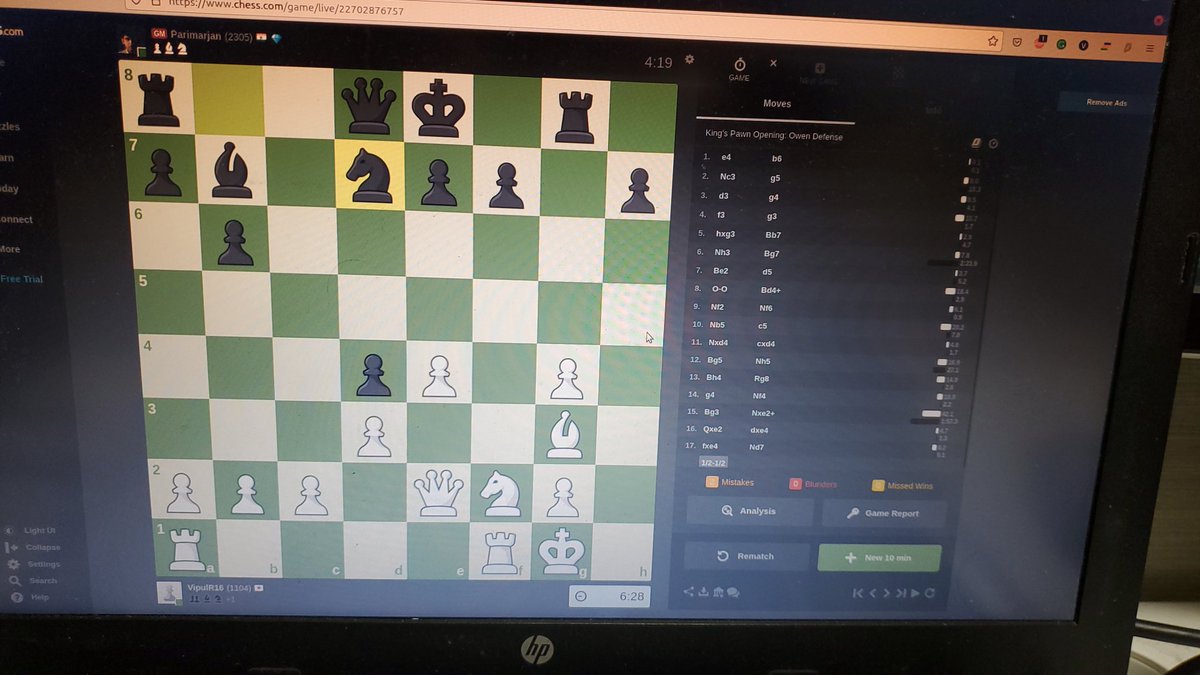
Had an absolute blast playing with @parimarjan and having a talk with all the talented folks in tech @sh_reya@suzatweet. Thanks a lot @chipro for this!
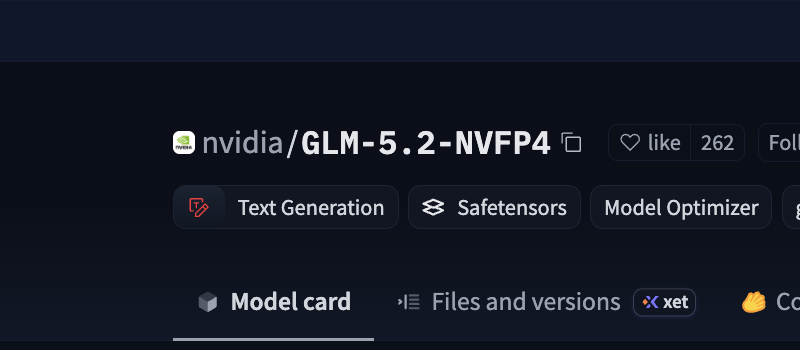
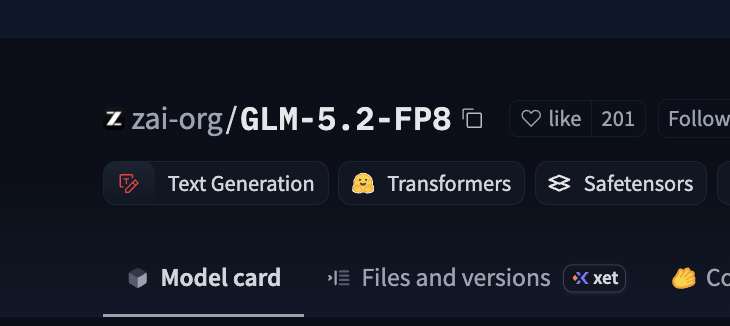
it took 1 intern 3 months of continuous work, but eventually, a quantization method that beat every other algo in the market, including @nvidia's official modelopt
to explain why this matters, i ask for exactly 69 seconds of your attention (275 words @ avg reading speed of 238 wpm):
frontier models (like glm52) are huge (~0.8T params). as released, each parameter takes 2 bytes (bf16), so overall size is about 1.6 tb
a b200 has 180gb of memory. a node of 8 gives you 1.44 tb, barely fits weights, much less activations / kv cache
must quantize the model (reduce the size of each individual parameters) to serve. fp8 quantization means each parameter takes 1 byte (fits in 0.8 tb), fp4 takes 1/2 a byte (fits in 0.4 tb)
cutting the model to a quarter its original size is necessary for it to run a) cheap b) fast, and every lab serving models does this.
but, quantization lobotomizes the model if not done correctly (this is why you see people complain about @AnthropicAI nerfing claude or @OpenAI nerfing codex)
there are currently several algorithms (like Nvidia's official model-opt) that attempt to figure how to quantize a model with the least amount of damage.
they find the redundant layers that can be slashed, and sensitive/important layers that need to stay in full-precision.
these algo's have two drawbacks:
1) they take a long time to run
2) they quite often result in a sub-optimal configuration
for the past 3 months, a research (and, as always, waterloo) intern on our model perf team (@the_joshua_hill) came up with a new quant algorithm.
it consistently finds the optimal configuration:
a) in less time than SOTA
b) with more aggressive quant than SOTA
c) scoring higher on benchmarks than SOTA
achieving just one of the above is a feat on its own.
all three...excited for the paper to come out this week
Today, we're introducing SimFoundry, our real2sim2real framework at NVIDIA GEAR that automatically turns real-world scenes into simulation-ready worlds from a single image or video.
Website: https://t.co/JB3kf3GlYm
Paper: https://t.co/pVhE1qWXtU
This work marks a major step for our team toward leveraging simulations and synthetic data for foundation model training and systematic policy evaluation at scale. Code will be open-sourced soon. Stay tuned!
I’m so excited to share this update on @Conception –
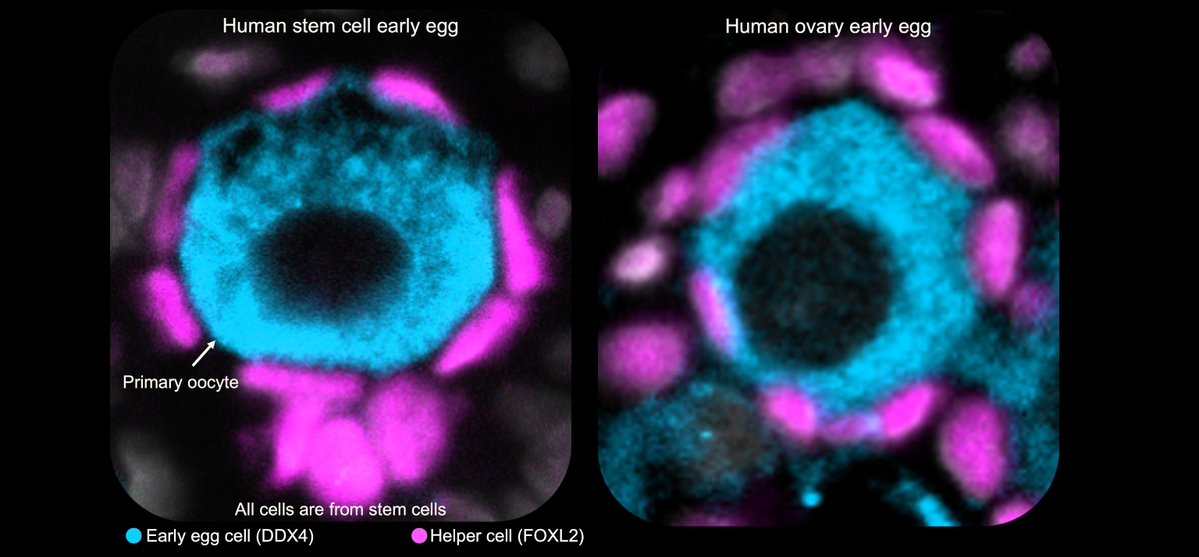
We’ve generated the first early human eggs derived from stem cells.
This is a big deal -- the potential to redefine fertility is real.
been in ML research for 7 years, wrote a paper on compression & scaling laws, and passed openai's information theory interview
yet the latest 3b1b *still* gave me fresh intuition on entropy
either i'm an impostor or 3b1b is the greatest teacher of all time
@deepigoyal Wait how is it even fair to compare my guess a highly engineered composite metric to raw probably unadjusted heart rate?! A real comparison should pitch raw metrics against each other like raw cerebral blood flow versus raw heart rate to see which signal is actually better.
🧐 Simulation has long promised robot pretraining, but breaks at the moment of real-world deployment.
🚀 Today, we introduce SIM1: the first real-to-sim-to-real paradigm where the generative world becomes the same one as reality.
SIM1 produces simulation data whose execution is directly valid in the physical world, enabling policies trained entirely in simulation to transfer zero-shot, at scale.
📈 This unlocks a new scaling law for robotics: we scale intelligence without scaling real-world data.
✨ Few demonstrations in, real-world policies out.
Simulation is no longer a proxy; it is supervision itself.
https://t.co/Kp1YBe5Gmf
https://t.co/GG2SBQfPpG
Hey! A new vision encoder for robotics is in town 👀🤖
Instead of using models trained on static images (CLIP, SigLIP, DINO), we bake the dynamics-awareness directly into perception.
It transfers well everywhere and boosts real-world OOD success by +22.5%
Check it out👇
For over a decade, we’ve accepted that end-to-end backprop is the only way to train deep networks. But holding the entire network in memory all at once is why AI training is hitting a resource wall.
We found a new way to break the network into blocks and train them independently. The trick? Treating the network’s forward pass like a diffusion model denoising a signal.
This reinterpretation slashes the memory needed to train deep models. In our #ICLR2026 paper (https://t.co/PK5h0mqQSo), we matched end-to-end performance across ViTs, DiTs, and LLMs. We did this while training just one isolated block at a time.