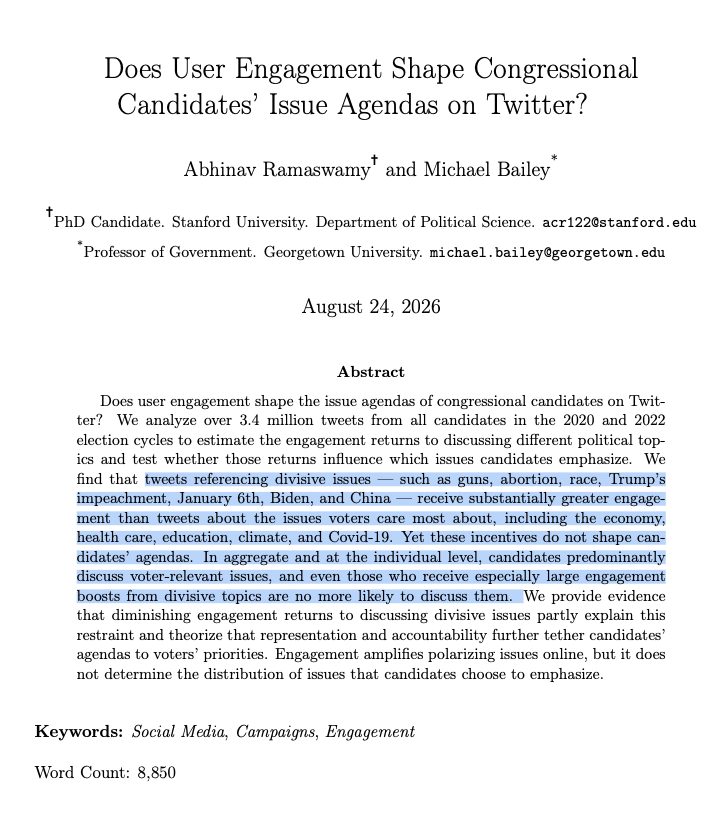
"tweets referencing divisive issues ... receive substantially greater engagement than tweets about the issues voters care most about" but "candidates predominantly discuss voter-relevant issues"
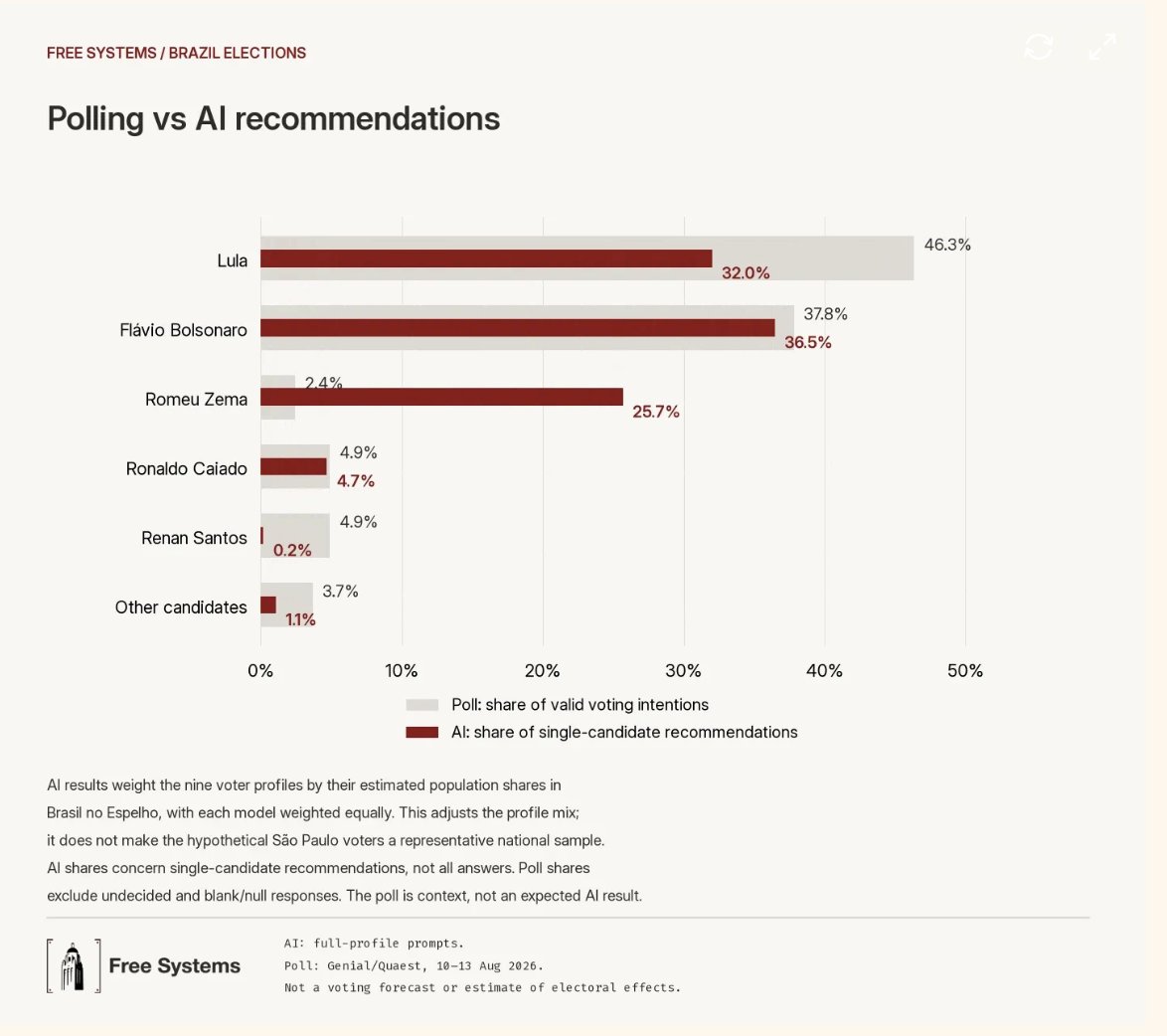
Latest Free Systems research: how are AI models making voting recommendations in Brazil?
@leticiaauriemo and Luca Moreno Louzado ran a huge study to find out! Some highlights...
--Top frontier models are quite stubborn at refusing to give direct voting reccos, consistent with a new Brazilian law forbidding reccos; other models are less stubborn
--As you provide more info to AI about yourself and what you care about, it's easier to get reccos even when you shouldn't
--These recommendations don't necessarily reflect the distribution of political preferences in society (not clear that they should, but it's an interesting benchmark). In Brazil, reccos for a less popular businessman candidate (Zema) occur at an unusually high rate.
More generally, I think these results raise a lot of profound question about what we want out of AI for politics. Should we forbid AI from making direct recommendations, like Brazil has?
How do you even define what a recommendation is? It's not clear, and in this study, the authors found AI models providing advice that arguably falls short of a direct recommendation but toes the line.
What would optimal political advice look like? And how would we know it if we saw it?
Incredibly excited to see this research, and to see Free Systems continue to scale beyond me and my work, and beyond the borders of the US! Check out the full piece here:
https://t.co/9ukLFpx0Gw
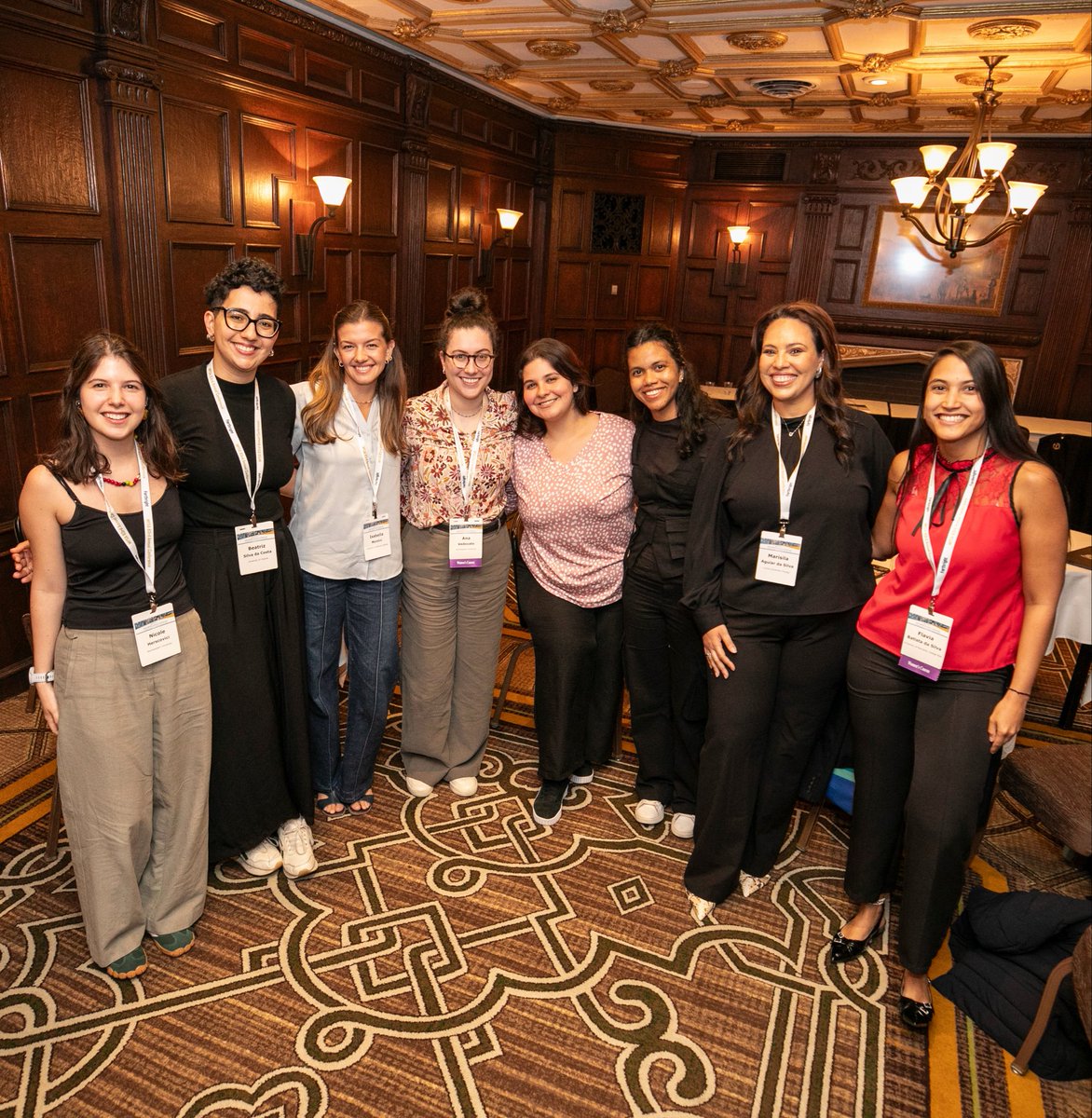
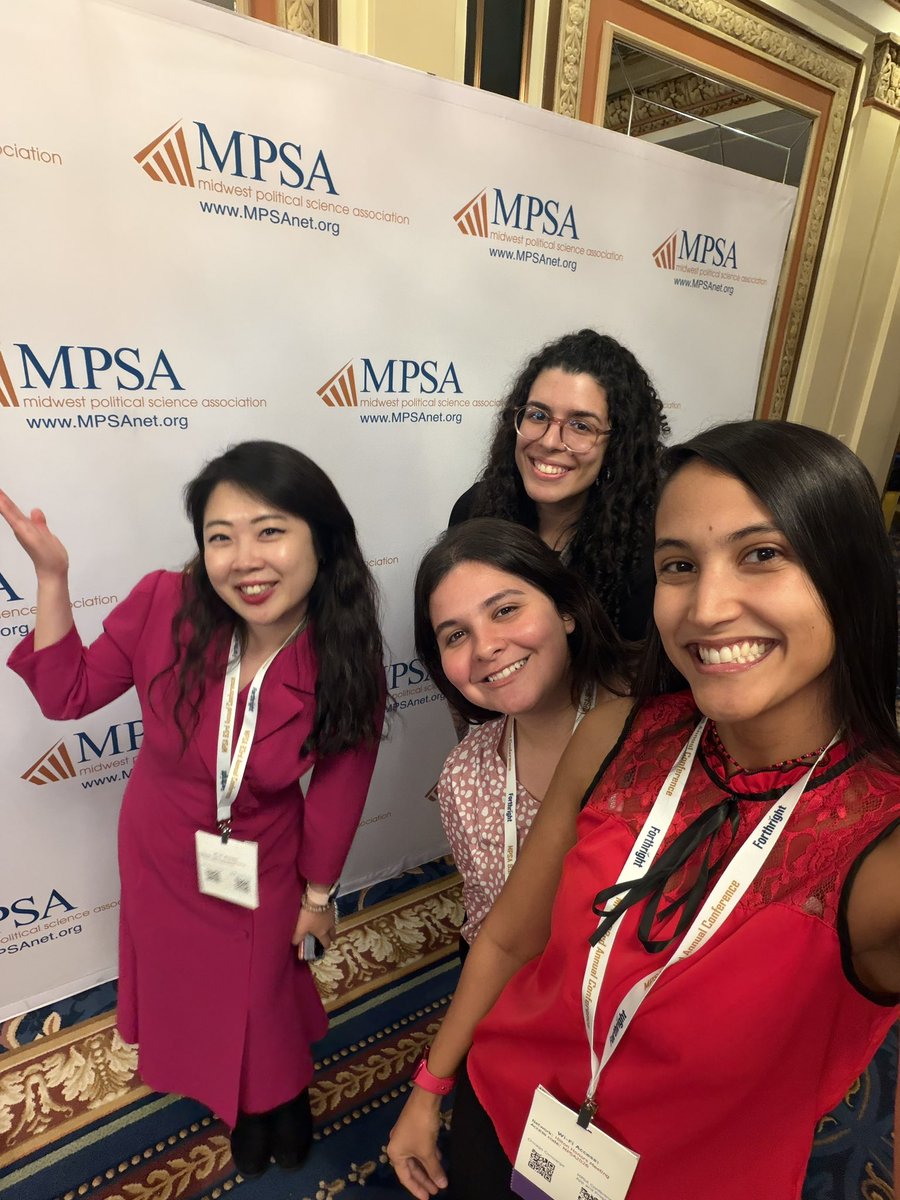
That’s a wrap, #MPSA2026!! Two presentations, so many reunions, and new connections made. Now back to finishing that dissertation and becoming Dr. Flávia very soon 🙏🏽✈️
These findings are consistent with the “minimal effects” theory: the misinformation reduction did not translate to user belief accuracy and polarization changes.
Although users saw less false content, their attitudes stayed the same.
The semester may be over, but we have been busy this weekend hosting the third annual Elections, Pubic Opinion, and Voting Behavior (@epovb) conference! Scholars from around the US and abroad have come to share research on research around voting and elections.
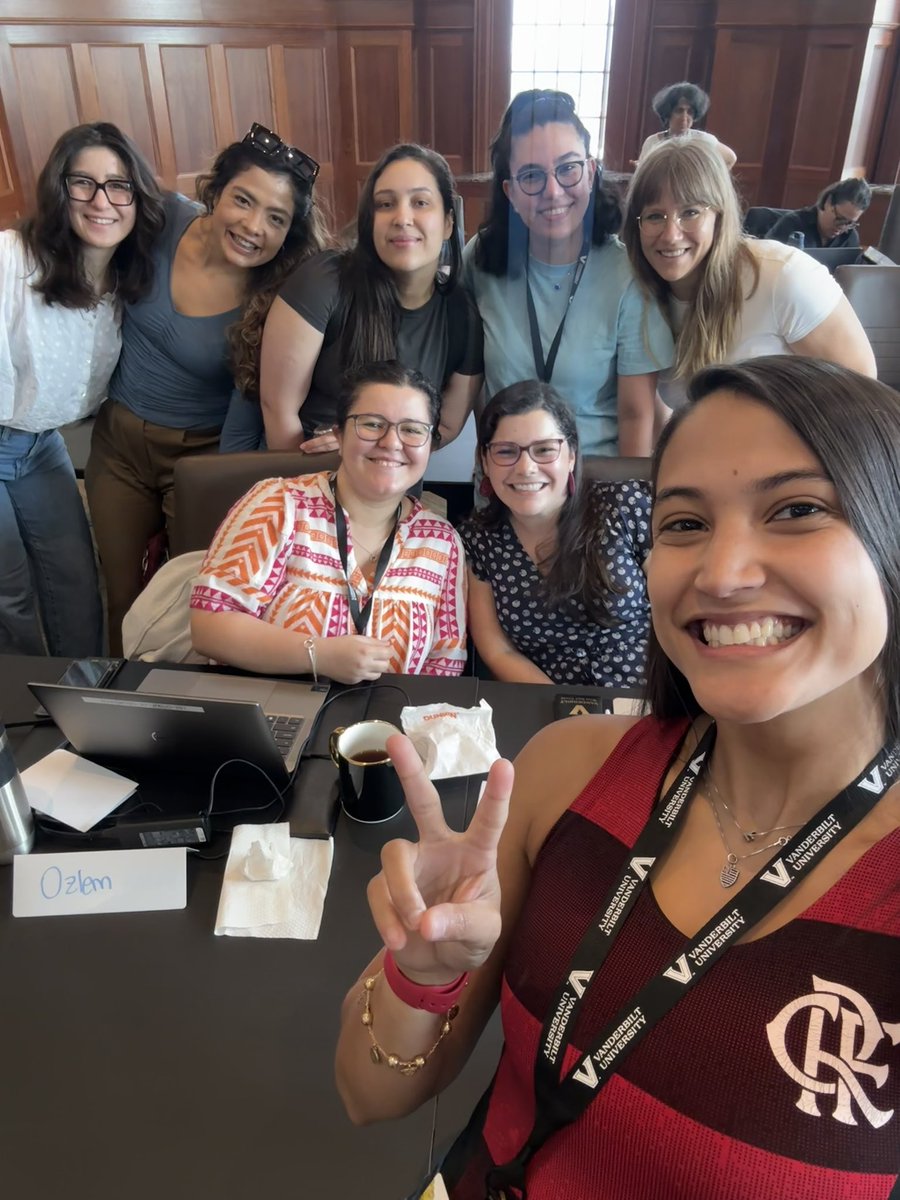
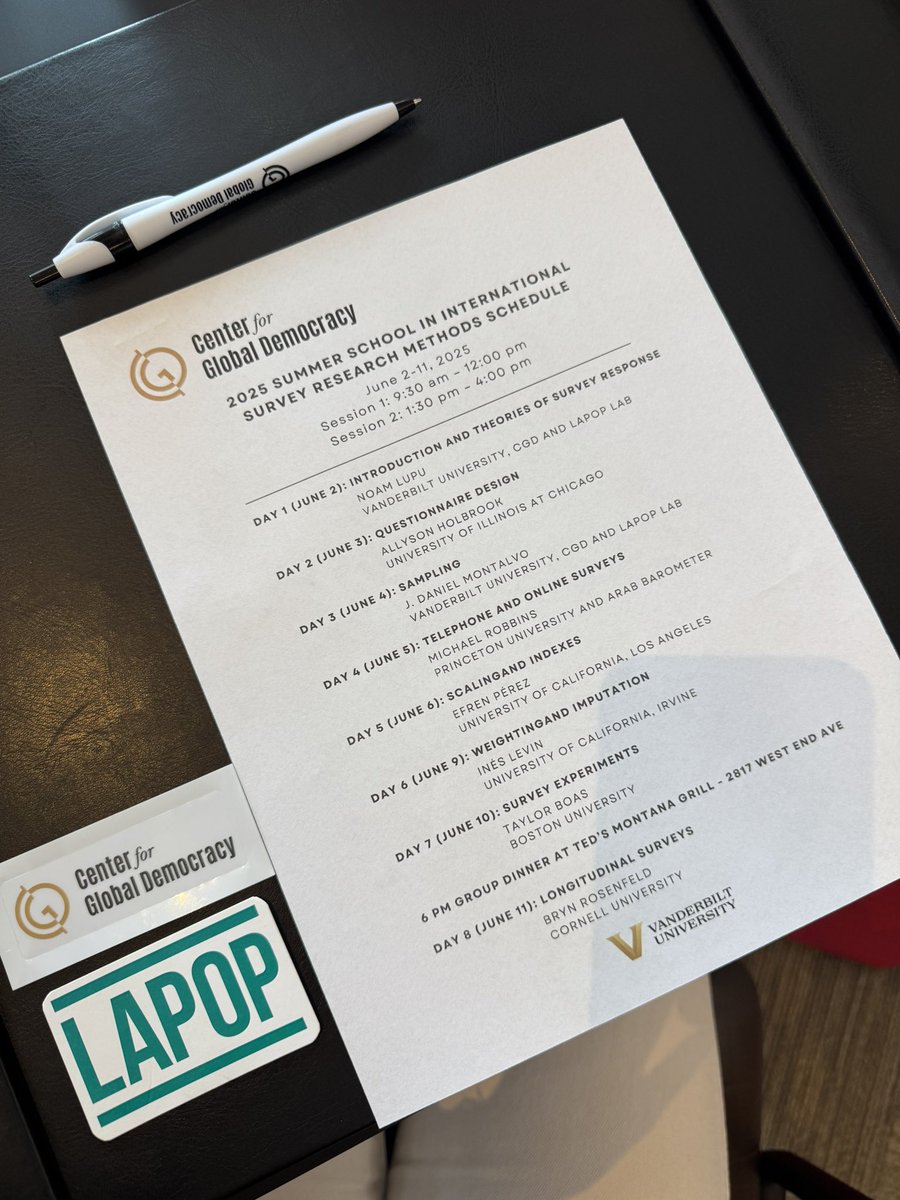
I’m at @VanderbiltU this week for the Summer School in International Survey Methods, hosted by the Latin American Public Opinion Project (@LAPOP_Lab) and the Vanderbilt Center for Global Democracy (@VU_CGD).
Learning from amazing scholars & peers about global survey design! 🫡
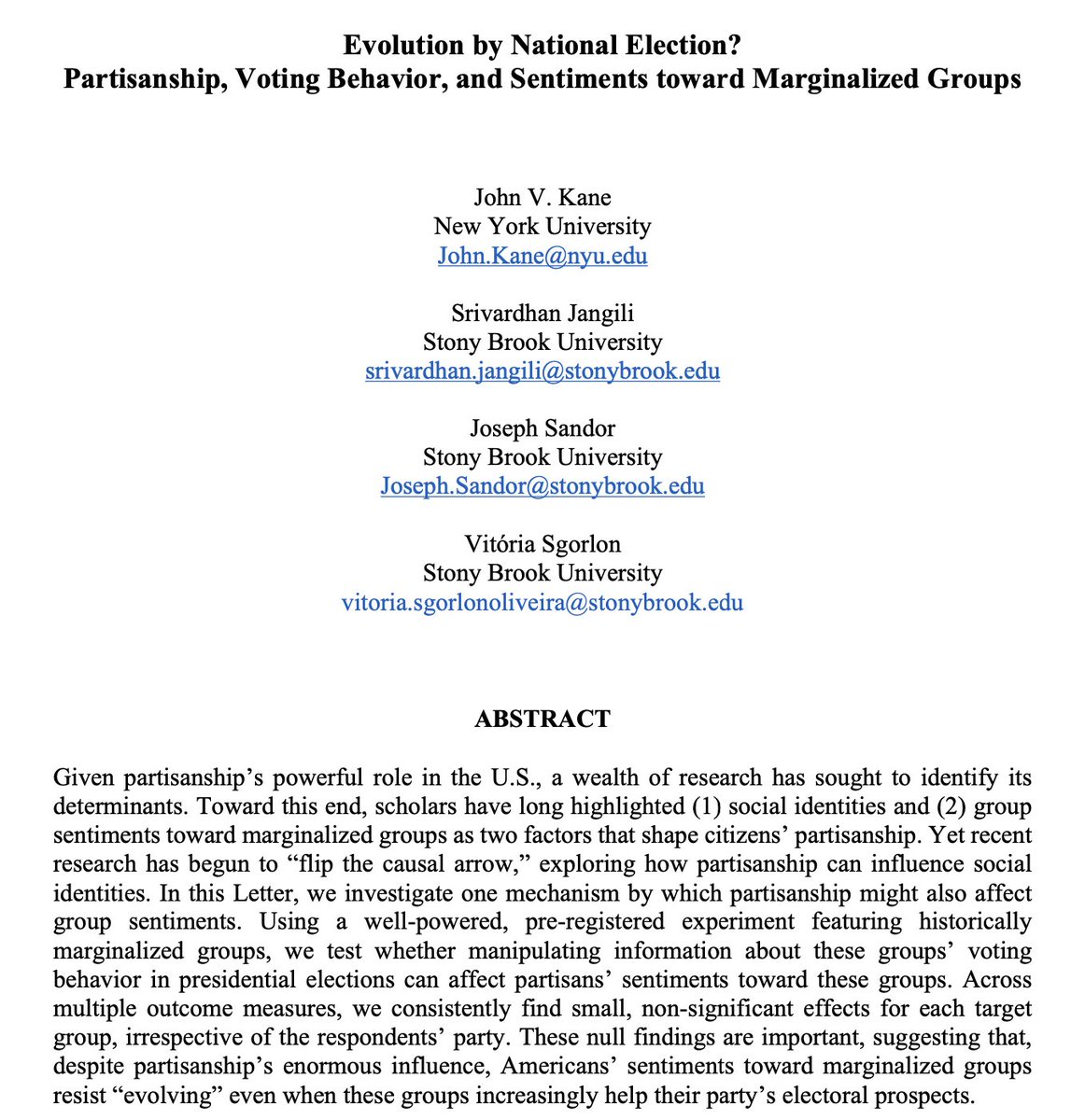
🚨New working paper w/ some terrific @SBUPoliSci grad students!
Using a pre-registered experiment, we test whether shifts in groups' voting behavior can change partisans' sentiments toward members of those groups (Black, LGT & Muslim Americans). 🧵
https://t.co/cFen7gqrGy
Kicking off #MPSA24! Aka the Lollapalooza, Comic-Con, and Rock in Rio of political science, where we all dress-up (cosplay?) as respected scholars to geek out over political science!
I'll be presenting 3 papers, and @VitoriaSgorlon will present Fractured Trust.
Come say Hi!
A shout-out to Vitória for being an amazing coauthor in this project and travelling to Brazil to talk about it! We will also be presenting this project at the next MPSA as we hope to receive all the feedback we can before submitting it for review. Stay tuned!
Our project with Vitoria Sgorlon (@vitoriasgorlon) just co-won Best Poster at the @LAPolMeth Conference! Thrilled by this honor & grateful for the insightful feedback. We look at how police violence affects pol trust & democratic satisfaction, using observ. & experimental methods