So happy to see this finally out! We extract quantitative information about aerosols from uncalibrated OP-FTIR data, and look at the plume of the 2021 Fagradalsfjall eruption. With @MikeBurton_Volc@tamsinmather@Volcano_Matt Melissa Pfeffer @Vedurstofan
https://t.co/W81HuXWfBS
Fully funded PhD project at @UoM_EES with @BrendanVolc, @skebmeier and @volcano_ben, supported by @NERC_COMET and @OfficialUoM on volcanic degassing and ground deformation processes.
Great career opportunities arising from this training.🌋
Apply at: https://t.co/Ou6CAde2AJ
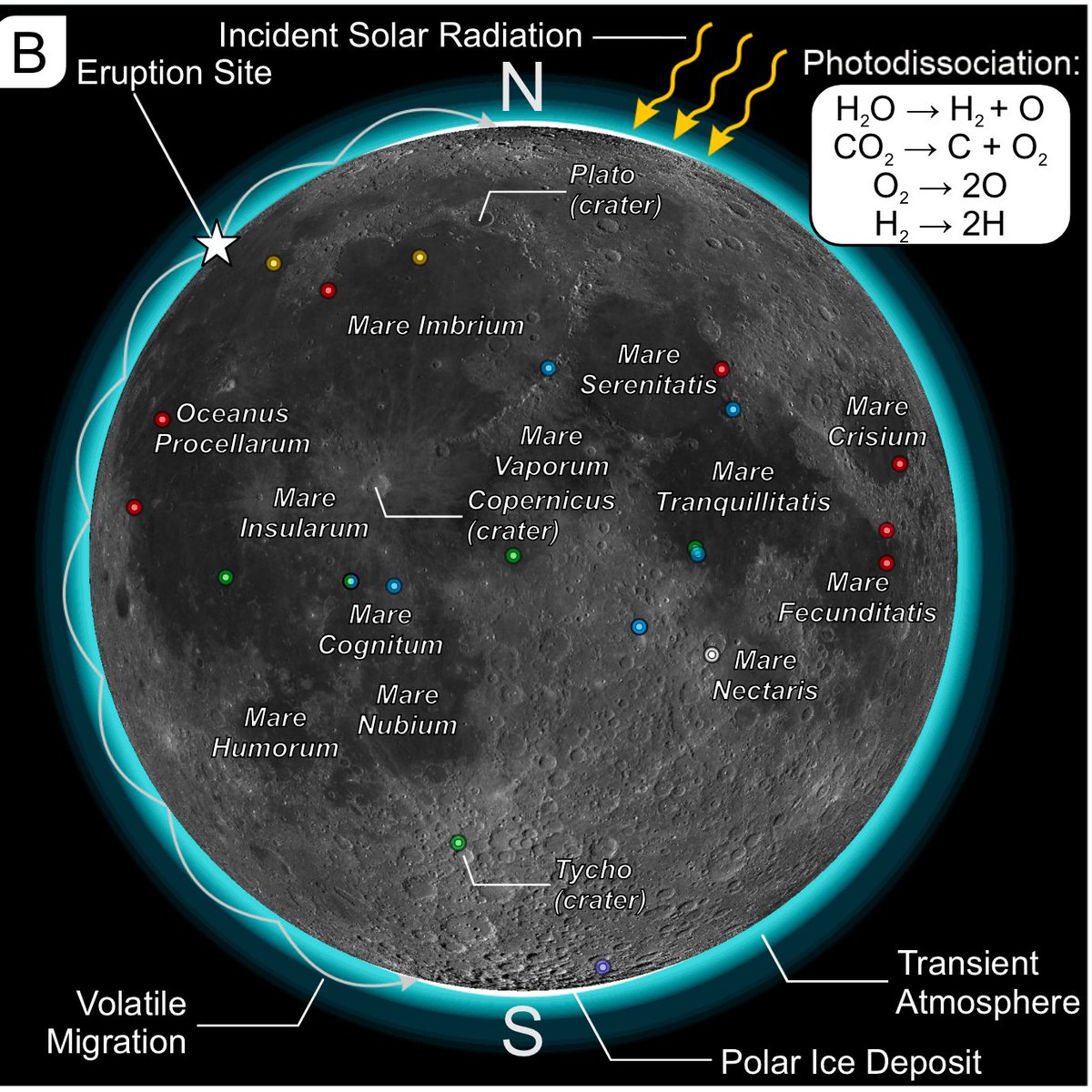
Hopefully putting all the information in one place will make it easier to assess if the lunar polar volatiles have volcanic compositions when we get some in-situ measurements.
Looking at the petrological measurements, the best evidence suggests lunar eruptions were more hydrogen- and sulfur-rich than carbon-rich.
Can't wait to see how this impacts lunar eruption models!
With the upcoming NASA #Artemis and CLPS missions interested in exploring ice deposits at the lunar poles, some previous work suggested volcanic eruptions as a possible source of the trapped volatiles.
Thrilled that my #volcanology review of lunar volcanic gases is now out!
Big thanks to my advisor here at @UArizonaLPL, Christopher Hamilton, and @jessrocks88.
Check out the review here: https://t.co/hgcysWoJ4H , but here’s a quick summary:
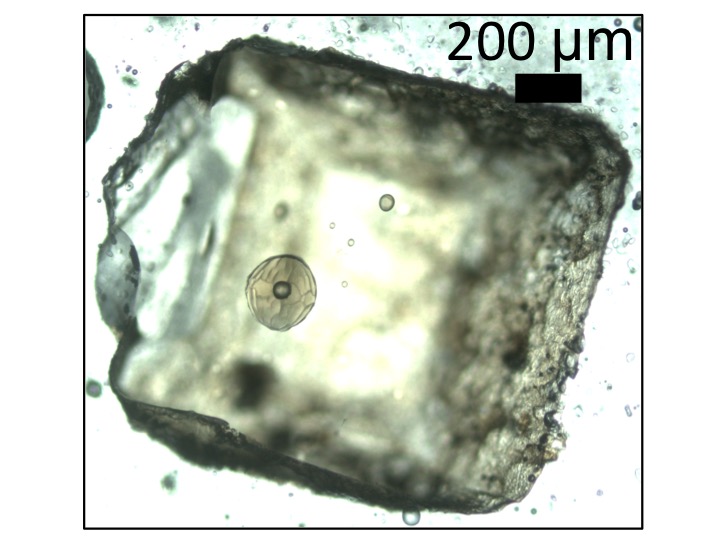
Congratulations to @euanjfmutch for his beautiful paper about 3D diffusion of water in olivine, out today in G-cubed! @umdgeology 🌋 https://t.co/2ZrtxAp3Mm
Very excited about this fully funded PhD project in @UoM_EES with @BrendanVolc @skebmeier and @volcano_ben, supported by @NERC_COMET and @OfficialUoM on volcanic degassing and ground deformation processes. Great career opportunities arising from this training. Please apply!
Less than a week left to apply for two Postdoc positions in @oxford_EODG at @OxfordAOPP. The postdocs will use satellite data to study the volcanic clouds emitted by the 2022 Hunga Tonga eruption. (1/3)
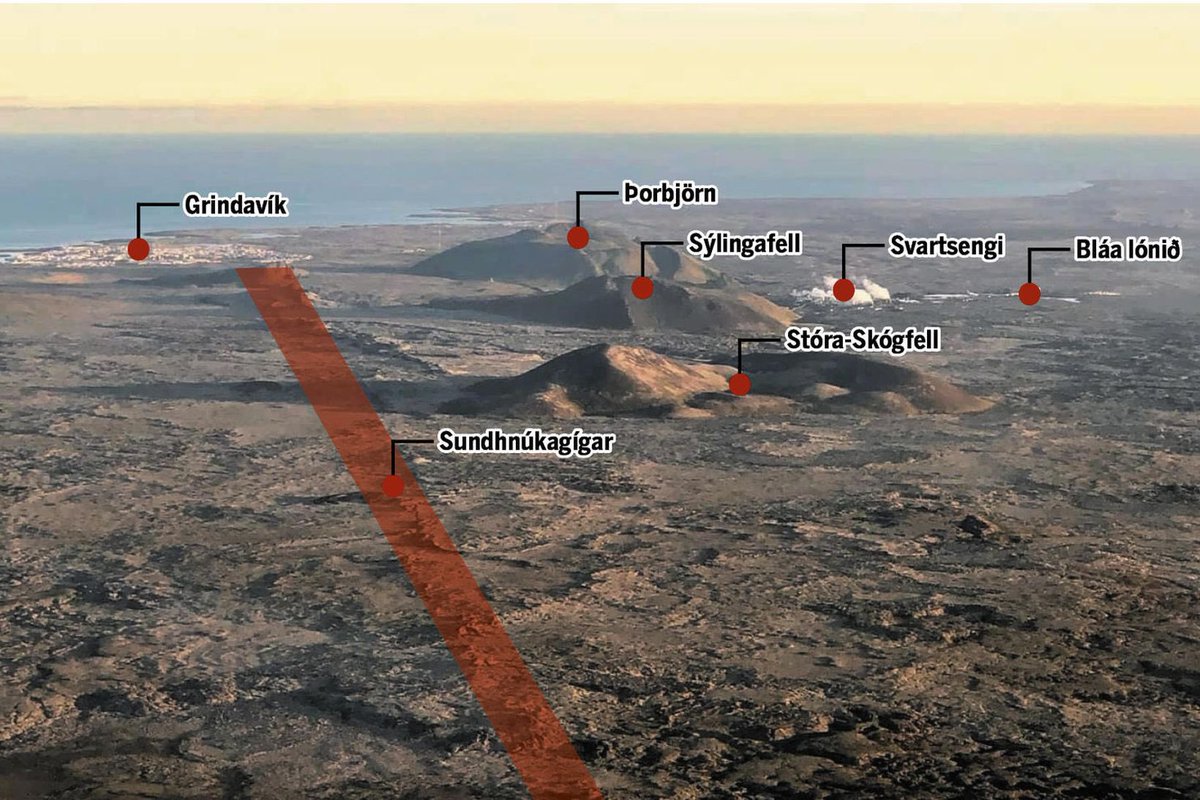
Afraid the Icelandic place names are not any easier in this volcanic episode. Sundhnúksgígar*, a row of ancient eruptive craters, is where the dyke lies now #Grindavik
*It says Sundhnúkagígar on the pic, but that's grammatically incorrect
Pic from https://t.co/j9jDjWTZXx
TOUCHDOWN! The #OSIRISREx sample capsule landed at the Utah Test and Training Range at 10:52am ET (1452 UTC) after a 3.86-billion mile journey. This marks the US's first sample return mission of its kind and will open a time capsule to the beginnings of our solar system.
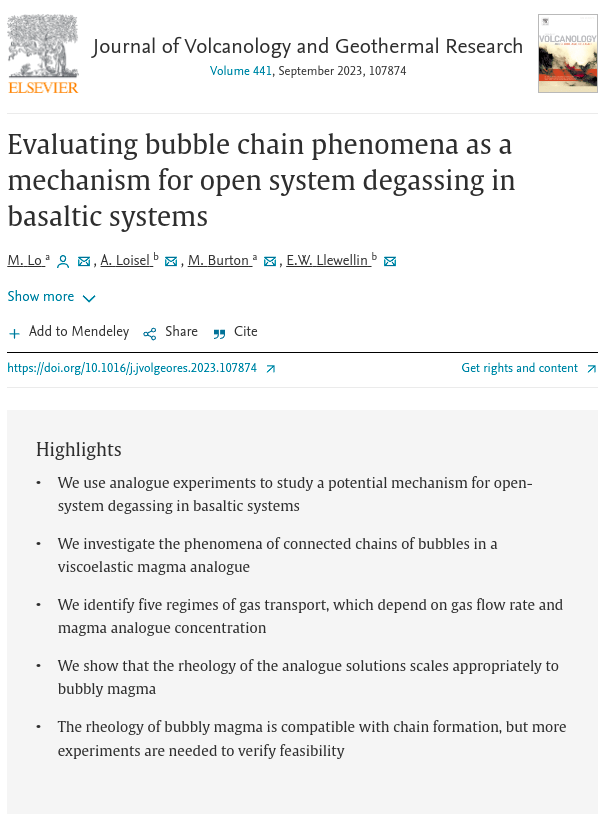
🌋Super excited to share my 2nd paper! 🫧
Could bubble chains facilitate open system degassing in basaltic systems?
Answer: it's possible, but more complex experiments are needed!
Check out the full paper here (free for the next 50 days): https://t.co/yQxN2i3vqr
@jfsmekens It seemed totally crazy to me too. I have no idea what events led up to it.
My impression was it was past contacting the first author. Any idea how to even write that message to the editor? My thought was to send a draft with the copied paragraphs highlighted.
My friend wants advice as their research was stolen and published with their coauthors’ names (paragraphs of text and figures were lifted from the draft).
Absolutely fuming for them 😡, but what’s the best approach? Immediately contact the editor? Or something else?