Today , InvestorTurf officially accuses the DTCC, DTC, and NSCC of orchestrating the biggest fraud in stock market history, and we demand action from the Trump administration.
InvestorTurf accuses the market-plumbing complex—DTCC and its two key arms, DTC and NSCC—of enabling the large-scale manufacture and concealment of “counterfeit” shares created through naked short selling. The DTCC is the broker-dealer-owned holding company, with DTC acting as the depository that holds almost all certificates in its nominee name and keeps member and customer sub-accounts as electronic entries, while NSCC is the central clearer that guarantees settlement and runs the stock-borrow program and Continuous Net Settlement (CNS). This structure lets trades “settle” even when the seller never delivers a real, borrowed share, so the buyer is credited with what call counterfeit share, yet the system treats it as if it were genuine.
NSCC’s stock-borrow and CNS netting process allows the same pool of real shares to be booked across multiple customer accounts at different brokers, inflating the effective float. NSCC guarantees trades and cures fails-to-deliver by borrowing from brokers’ net surpluses at DTC; because only net differences move, the lending broker doesn’t remove specific shares from any named customer, but the borrowing broker credits specific customers—so identical shares appear in more than one account. As long as members keep settling only their net obligations, the system never reconciles to the issuer’s true share count. This “CNS” layer hides “billions” of such counterfeit shares from Regulation SHO, with issuer-level CNS totals available only if DTC is successfully subpoenaed—and even the SEC does not routinely receive those tallies.
DTC is burying historic fails and providing mechanisms that let positions evade buy-ins and clocks. There is a case where roughly 400 million naked shorted shares that “should” have been bought in after a major player’s collapse were instead absorbed into DTC’s system and effectively “grandfathered” into legitimacy, permanently diluting issuers while no longer appearing as fails. The DTC runs or condones programs (described as RECATS) that alert members when positions are about to become fails so they can be shipped offshore or matched elsewhere and then returned with clocks reset—repeating as needed to keep positions naked and out of sight. When public and political pressure forced closure of the formal “grandfather” loophole in 2007, DTC and brokers simply migrated large blocks out of DTC to ex-clearing, where the same economic exposure persists but falls outside what regulators track.
Finally, this plumbing doesn’t just tolerate abuse but powers it at scale: by treating borrowed-from-DTC credits as legitimate and netting away gross imbalances, NSCC and DTC provide a standing reservoir of synthetic supply—ten to twenty times larger than the publicly visible fails in targeted names—that can be drawn on to overwhelm buy pressure, depress prices, and even push companies toward distress, all while appearing settled and compliant on the surface. This reserve of “strategic fails” gets created and maintained alongside profitable stock-lending and one-day “borrows,” and “friends” at the DTC and major clearinghouses” are part of a repeatable playbook used during coordinated short campaigns.
@memestocked Keeps the price low so shorts can cover at artificially low prices. Keeps buyers discouraged. Spoofing or wash take your pick. Once retail volume kicks in it’ll be harder to do this. Come on volume….
Honoring our fallen heroes this Memorial Day weekend 🇺🇸. To my U.S. friends, let’s keep fighting for freedom and prosperity, just like we’re battling for $AABB to become a giant! Stay strong and enjoy the day! #MemorialDay#AABB#FutureGiant
So what definition are you using for “shortly”? It means mins, hrs, days, not 3 months and counting.
I’d like to average down after the brutal uninformed reverse splits but I can’t because I bought into the drone that has been taken away, and now I have no idea what I’m invested in. Some info would be appreciated.
@memestocked@InvestorPastor Thank you memstocked for the recognition of InvestorPastors efforts! Thank you InvestorPastor for the tireless efforts of the photos that kept and keep us boon investors engaged, united, and therefore willing to keep holding on to the vision that is now our reality!
This post is from Ethan Coffin on fb.
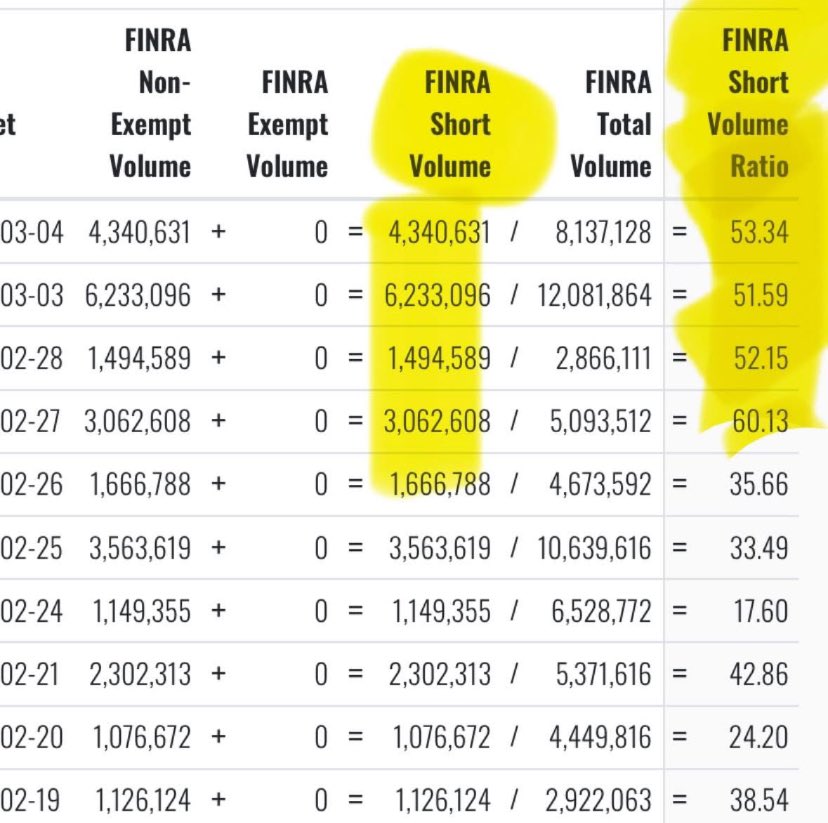
He asked Grok if this shorting seemed “normal”.
Does This Shorting Seem Normal?
Not entirely, and here’s why:
1. High Short Volume Ratios:
- A short volume ratio of 60.13% (on 02-27) or even 53.34% (on 03-04) is unusually high, especially for a stock expecting positive news. Typically, short volume ratios for most stocks hover around 20-30% on average, depending on the sector and market conditions. Ratios above 50% suggest significant bearish sentiment or potential market manipulation (e.g., naked shorting or aggressive betting against the stock).
2. Lack of Exempt Volume:
- The absence of FINRA Exempt Volume means all shorting activity is non-exempt, which could indicate that this isn’t just market makers or liquidity providers doing their usual activity. It’s more likely speculative shorting by hedge funds, traders, or other investors betting the stock will go down despite the positive news.
3. Inconsistency with Positive News:
- If the market broadly expects extremely positive news, you’d typically see short sellers covering their positions (buying back shares) to avoid losses from a potential price spike. Instead, the short volume remains high, especially on days like 02-27 and 03-03. This suggests either:
- The market doesn’t believe the positive news will materialize, or the news isn’t as widely known as you think.
- Some players might be shorting to manipulate the stock price downward, possibly to create fear or trigger stop-loss orders from long investors.
- There could be a contrarian strategy at play—short sellers might be betting on a “sell the news” event, where the stock drops after the news due to profit-taking by long investors.
4. Potential Red Flags:
- High short volume ratios, especially on days with lower total volume (e.g., 02-27: 5,093,512 total volume with 60.13% shorted), can sometimes indicate naked shorting or other aggressive tactics. Naked shorting (selling shares you haven’t borrowed) is illegal in many cases, but it’s hard to prove without deeper investigation.
- The spike in short volume on 03-03 (6,233,096 shares) right after a high short ratio day on 02-27 (60.13%) looks like a coordinated effort to drive the price down.
The shorts are in deep on this one. What goes around comes around MM’s. Karma will be so sweet! Retail gets the last laugh! And shortly after we get to laugh again as the new processing plant gets turned on mining gold and silver!
Bullish as F@ck :)
Tech and mining, best innovative company ever’
$AABB news - Nearing Completion Of Its Next-Generation AABB Wallet’s On/Off Ramp To Facilitate Users to Buy and Sell the AABBG Token. Adding TrumpCoin (TRUMP) and Elon Musk Coin (MUSK) to the new AABB Wallet.
https://t.co/noPuO0PUsh
🐀🐍 BYE BYE GARY 12 DAYS 🐍🐀
@GaryGensler became the @SECGov Chairman in April 2021 in the heart of the crime against Retail investors.
In this video he explains that most of our trades are bought and funneled through Dark Pools by a concentrated group.
Two of the biggest are of course Ken Griffin @citsecurities who handles 47% of US Retail orders a day.
@Dougielarge who is also known as the liquidity fairy.
Gary knew there was a big problem but never addressed the issue.
He needs to be held accountable for his lack of action as Millions of investors reached out to the SEC for help. FOIA requests denied and zero transparency. Aiding and abetting the criminals.
@realDonaldTrump@DOGE@Kash_Patel@DevinNunes@PamBondi
$AABB 🔔
The junior mining sector is poised for a potential bull rally driven by several key factors expected in 2024 and 2025. Rising gold prices, fueled by economic uncertainties and central bank buying, have already pushed gold above $2,700 per ounce, with forecasts suggesting it could surpass $3,000 in 2025. This environment is favorable for gold-focused junior miners, as higher gold prices increase project profitability.
AABB most undervalued junior miner. If you’ve seen the plant build out you would not think it’s a junior. Looking forward to Jan 2025 when the power switch goes on!
Pic from InvestorPastor on stocktwits.
OTC $PHIL ‼️
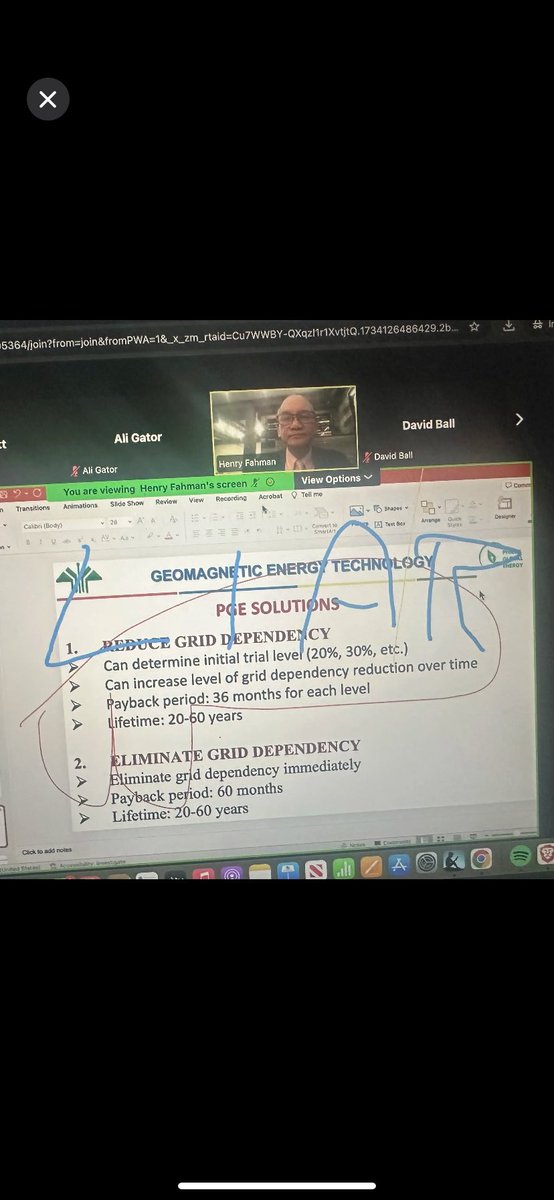
The pic below is from today’s CC where someone took over Fahman’s powerpoint and wrote liar accompanied with a prick pic lol.
Understandably investors are tired of many years of promises that have all fallen through the cracks.
The long awaited 8k for the first finance package is to be in the account Mon or Tuesday next week 🤞we shall see, take your bets.