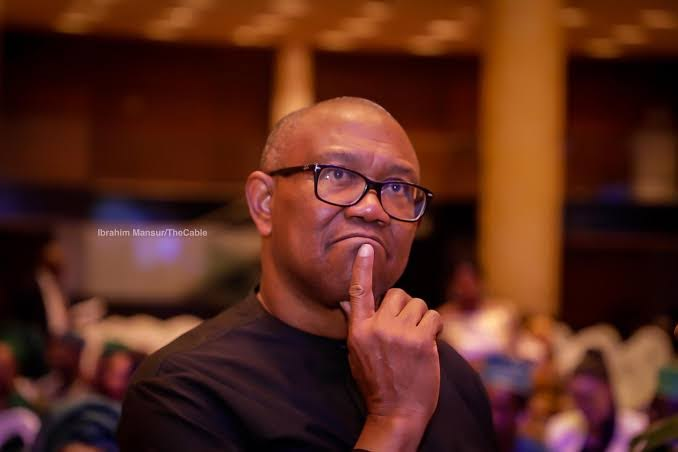
If PETER OBI ever attempts to go against the status quo in Nigeria, or against the west, this is how it will play out as it has played out exactly with other African leaders who dared to challenge them.
Week one: Congratulations from Washington, London, Brussels, Paris, Beijing, and the AU. Warm statements. Talk of partnership.
Month two: IMF technical team arrives for “consultations.” World Bank signals readiness to discuss debt restructuring. The British Foreign Office announces a new bilateral trade engagement program. French commercial delegations request early access meetings.
Month four: First conditions surface publicly. Subsidy framework review. Exchange rate liberalization. Trade policy alignment with multilateral frameworks. None of it is called conditions. It is called “technical recommendations from development partners.” The language is soft. The intent is structural submission.
Month eight: First media destabilization pieces land. Reuters runs “Can Obi Deliver?”
Bloomberg raises “governance uncertainty.” The ethnic tension framing begins circulating in Nigerian legacy media funded by the old order. The permission structure for domestic opposition is being quietly constructed. International cooling begins.
Month fourteen: Domestic opposition, now emboldened by that international cooling and the manufactured uncertainty, begins aggressive National Assembly obstruction. Budgets are stalled.
Key ministerial appointments are rejected on procedural technicalities. The destabilization has moved from narrative to institutional. Governance theater is in full production.
Month eighteen: Security crisis escalates on at least one front, Northwest bandits, Southeast tensions, or a coordinated Abuja-proximate incident.
The crisis is not random. It is the security weapon deployed on schedule. International media amplifies every casualty. “Investor confidence” language returns from the same financial press that celebrated him in week one.
Month twenty-four: The choice point. Submit to the architecture, or face the full weight of coordinated destabilization.
Nigerians have to prepare for when all this starts happening because it will happen and when it does, only the people united against a common enemy can build.
Please save this somewhere. This FAST card helps you recognise the warning signs of a stroke.
F: Face drooping: One side of the person's face may suddenly look uneven.
A: Arm weakness: One arm may suddenly become weak or numb.
S: Speech problems: The person may suddenly struggle to speak clearly.
T: Time to go to hospital now: If you notice any of these signs, get the person to a hospital immediately.
Do not wait to see if they will get better.
PRESS RELEASE
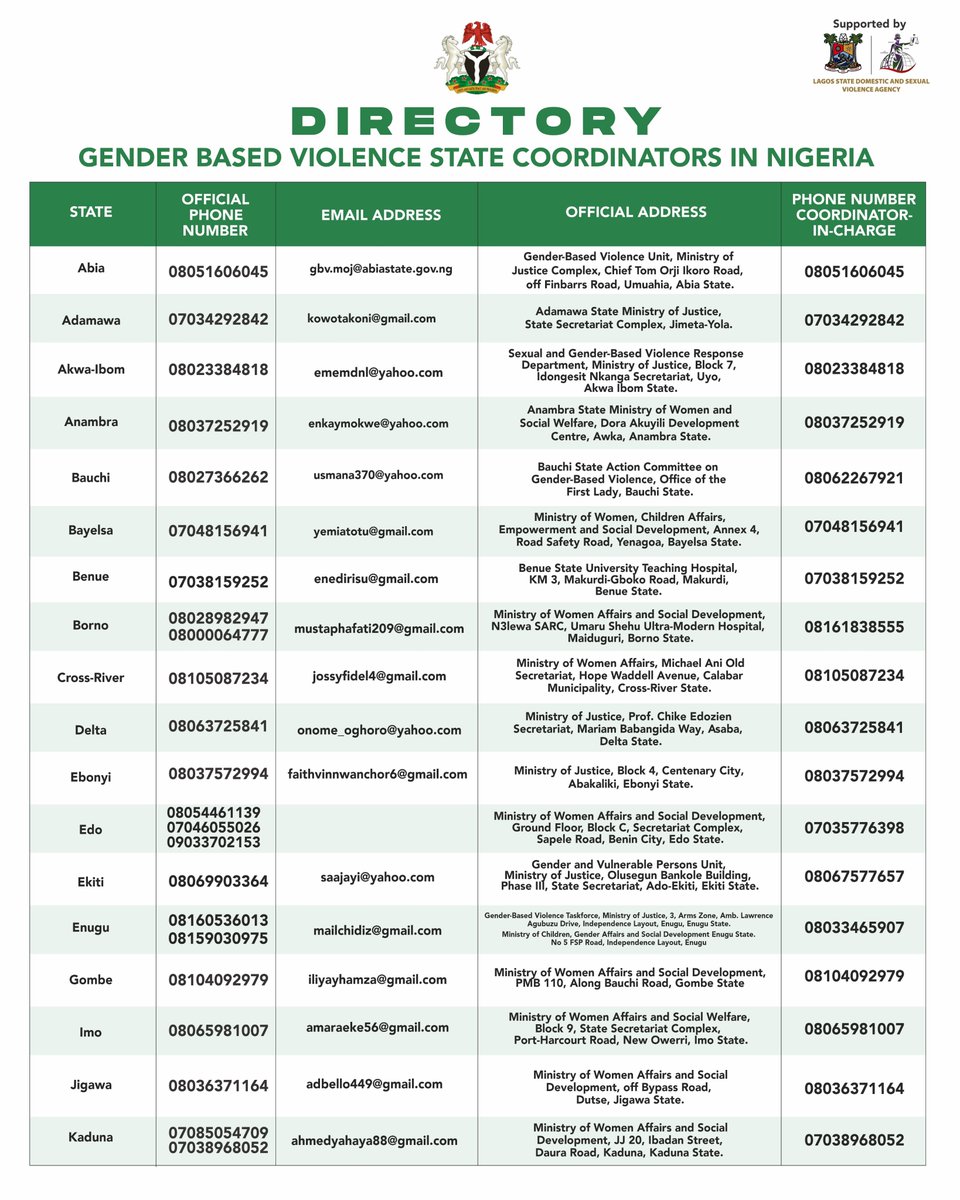
LAGOS DSVA RELEASES DIRECTORY OF GBV STATE COORDINATORS IN NIGERIA
The Lagos State Government, through the Domestic and Sexual Violence Agency (DSVA), has released a directory of Gender-Based Violence (GBV) State Coordinators across the 36 states and the Federal Capital Territory (FCT).
The directory is an outcome of continued efforts to strengthen national coordination and collaboration among GBV response stakeholders, following the landmark two-day National Convening of GBV State Coordinators hosted by Lagos State, with support from the Rule of Law and Anti-Corruption (RoLAC II) Programme @rolacng, funded by the European Union @EUinNigeria and implemented by the International Institute for Democracy and Electoral Assistance (IIDEA) @IntIDEA_NG.
The directory provides key contact details of GBV State Coordinators, serving as a practical resource to support reporting, referrals, and access to appropriate response services for survivors of Sexual and Gender-Based Violence.
It is designed to strengthen coordination and referral pathways among stakeholders working in GBV prevention and response, while making it easier for citizens to identify and connect with the appropriate state-level contacts.
The Lagos State Government encourages individuals, organisations, government institutions, civil society organisations, community groups, and other stakeholders to make use of the directory and share it widely within their networks.
DSVA remains committed to strengthening collaboration, supporting coordinated GBV response, and improving access to timely and appropriate services for survivors across Nigeria.
E-signed,
Onadipe Opebere
Head, Public Affairs Unit
Lagos DSVA
12/10/2026
#LagosDSVA #SGBVItEndsWithUs #SGBVNotInMyLagos #AGreaterLagosRising #LASG @followlasg
Ownership is not a feeling. It's a decision.
Most people treat their standards as a response to their environment performing when conditions are good, pulling back when they're not.
I've built my entire career on the opposite principle. https://t.co/YUIkXbvZAz
In 1976, Nigerian journalist Sam Ogun confessed to DRUM that he had spent nearly 10 years spying on Nigeria for the CIA. He also warned that many other Nigerians were being recruited to infiltrate different sectors of the country.
He told the magazine, "The CIA has so many arms or branches — trade union organisations, educational institutions, cultural organisations. The CIA is the father and through these organisations which are sent to Africa to help developing countries. The agents or officers of these organisations use their organisations as covers to spy for the CIA."
Ogun said Nigerians could be recruited without knowing it, benefiting directly or indirectly from development programmes run by organisations he claimed were linked to foreign intelligence networks.
"You don't apply to be an agent or spy. You are spotted, trailed, and an assessment is made of you without your knowing," he said.
His own career as a spy began in the early 1960s, when he worked as an "information officer" for the American Motion Picture Export Company. An American film distributor known as Jack paid him to write reviews of foreign films for local newspapers, which were then forwarded to New York. Ogun said that was how he was first placed on a payroll.
He later confessed to spying on foreign diplomats, trade unionists, civil servants, students and fellow journalists. He said he was trained to use a camera and a pocket-sized tape recorder designed for espionage.
Ogun eventually retired from spying and explained his decision to confess: "I found out by myself the evil the CIA had been doing to Africa."
They call Nigerians criminals, but the official number from the Government of South Africa does not back up the claim that Nigerians are wholesale criminals in South Africa.
Nigerians form a small minority of foreign inmates. Available figures and statements place the number of Nigerian inmates in the low hundreds, estimated at roughly 1–3% of all foreign inmates; note foreign inmates, not total inmate population
The branding of Nigerians is not backed by data, but it's rather by personal animus towards an immigrant class that is successful in South Africa.
Data is stubborn
Haha, in an hour of posting, I’ve gotten so much feedback… what I’ll say is:
- These are legal and backed by law.
- LIRS follows my account, and they know about tax planning. The folks who work in LIRS are really smart.
- We’ve let the worst of our society talk about money a lot… we can’t start having a problem when legitimate people talk about money.
- No, I’m not trying to show off, lol… my account has always been dedicated to sound personal finance.
- Yes i will keep writing about smart financial planning
Most people do not like the person, especially a younger person, who mirrors what their lives would have looked like had they made good decisions when they had the opportunity.
This is why i said we really have a numbers problem in this country.
There are only about 7200 dollar Millionaires (billionaires in Naira) in Nigeria. This is nowhere near 1 million in Lagos alone.
In 2025, Customer deposits in tier 1 banks (First Bank, UBA, GTCO, Zenith and Access Bank) was N114 trillion.
But according to this egbon's calculator, 1 million people x 1 billion naira each = N1 quadrillion.
This is thousands of times larger than Nigeria’s entire banking system deposits. Impossible.
Pls stop cooking these ridiculous numbers nau.
“Give me a lever long enough and a fulcrum on which to place it, and I shall move the world. ” - Archimedes.
This is why I refuse the fraud and poverty capital tag for Nigerians. Give people a chance and like Archimedes with a lever and fulcrum, they will move the world.
Communicate like a Director.
Don’t just say - ‘We can’t hit the deadline because we are short-staffed’.
📌Start with what you have been able to do despite being short-staffed.
📌 Then identify what more you can achieve conveniently despite being short-staffed.
📌 Then call out the items that are at risk due to you being short-staffed.
Shows progress despite limitations and your ability to drive outcomes in uncertainty.
Feyi was just 26, yet, she was dealing with stage 4, cervical cancer. Back in 2021, a doctor mentioned HPV to her during a checkup. She said she understood and would follow up. Then…
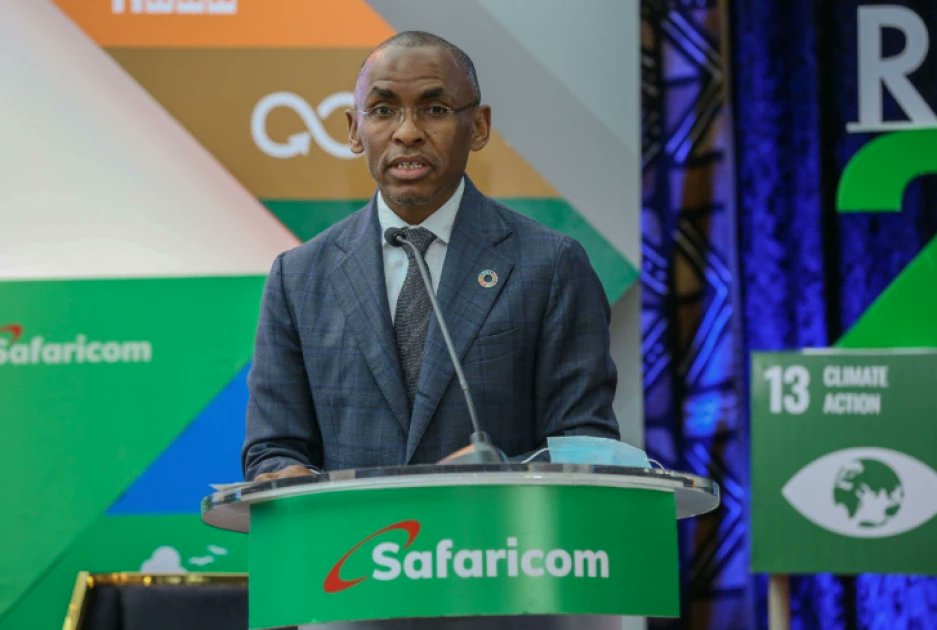
A Kenyan has just beaten Safaricom PLC in court and been awarded Sh1.4 billion.
And honestly, this case is disturbing.
Peter Nthei Muoki says he developed a child-wallet concept for M-Pesa and pitched it to Safaricom in 2021.
According to court documents, he was told it wasn’t workable. Then later, Safaricom rolled out a similar feature.
He sued.
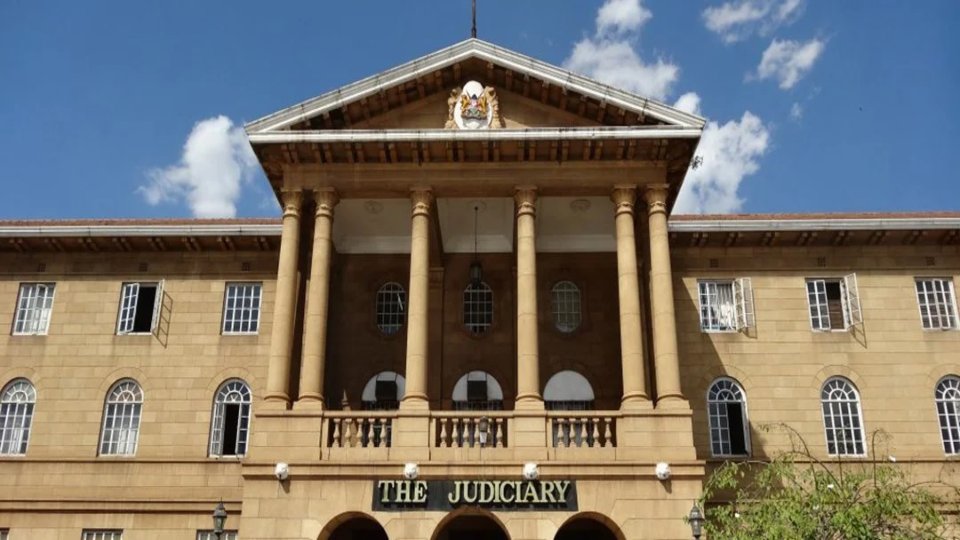
And High Court Judge Josephine Wayua Wambua Mong'are ruled in his favour.
Safaricom has now been ordered to pay him Sh1.4 billion plus annual royalties.
Imagine being told your idea won’t work, then later seeing it launched by one of the biggest companies in the country.
That’s the painful part.
Because, how many ordinary Kenyans have pitched ideas to powerful companies, been ignored, and watched those same ideas come back as products?
This case will make many innovators think twice.
‘Look at me, I am a good person’ - The need to want to be seen as a good person is the steel cuffs keeping us bound to people’s judgement and perceptions.