@GenosHistoria They were particular Scythians and Scythians were honorable. If even the Bible defends the Scythians, it is not a small thing in my humble opinion.
'Sarmatian' is a word in Lithuanian, meaning 'honor', but nobody wants to talk about it, not even Lithuanians. I could go on deeper, but...nobody wants 😀
Check out how Sarmatians plot on PCA compared to modern populations. They plot between Uralic NW Russians and the northern caucasus. This makes perfect sense because they lived in SW Russia which is between those two regions.
Jesus said to him, “‘You shall love the Lord your God with all your heart, with all your soul, and with all your mind.’
This is the first and great commandment.
Matthew 22:37-38 NKJV
Government bond yields have exploded around the world.
What most people miss is that the roots of the bond crisis are demographic, the natural consequence of societies growing old.
New article!
Brazil is the ultimate AI hedge.
If the buildout continues, the binding constraint is atoms, and Brazil sells the atoms: niobium, rare earths, bauxite, iron ore, and 216 GW of installed capacity that is ~85-88% renewable.
If the buildout breaks, trillions rotate out of crowded tech positions and into the assets that were never in the trade, which is food, fuel, land, and minerals.
Same destination either way.
That said, I'm still not a buyer of the index.
Vale, Petrobras and Itaú carry a third of the Ibovespa, so the trade is an iron ore price, a state-controlled oil major and a bank credit spread.
The endowment sits in assets that never list: farmland, grain storage, generation, ports, mineral projects.
I'd rather own that cash flow directly, in dollars, at a price set by EBITDA instead of by foreign flow.
Often Old Church Slavonic words correspond to Baltic rather than Slavic. "Giria" means forrest in Lithuanian. Th4 reconstructed "Gora" is a dialect variation; with Baltic speaking Pre-Slavs at 55.9% of Pre-Slavic population. Hallstatt & Sweden Skane IA caused the language shift.
Where did the Slavs actually come from?
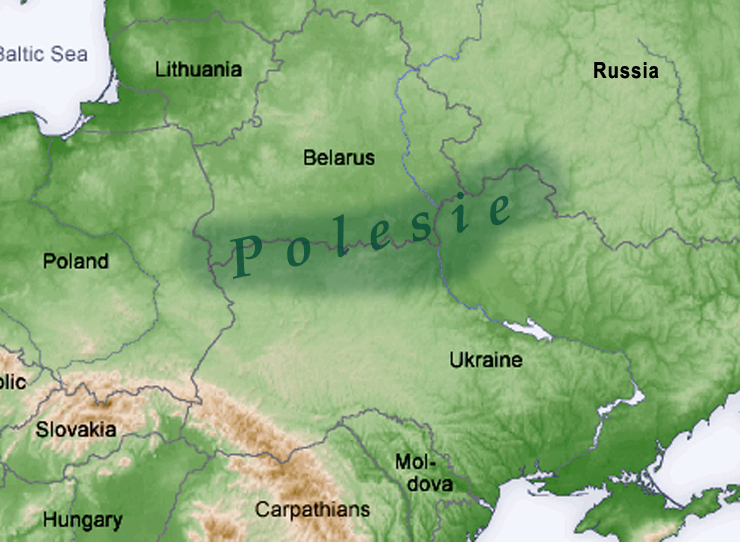
The origin of early Slavic populations is best understood through a combination of hydronymy, archaeology, and formal archaeogenetic modeling. The current evidence points to a northern forest core centered in Polesia that integrated a southern, Carpathian-Dniester forest-steppe substrate prior to the main 6th-century migrations.
The Polesian Ecological Core
Linguistic and archaeological data anchor the early Slavic ethnogenesis in the Polesia region (the Pripyat basin across northern Ukraine and southern Belarus):
Hydronyms: The highest density of archaic, uncompounded Slavic river names occurs in the Pripyat and Dnieper river basins.
Linguistic Reconstructions: Proto-Slavic lacks inherited Indo-European terminology for high alpine terrain or coastal marine environments. Reconstructed terms like *gora originally denoted a wooded hill or forest rather than a mountain peak, while words for hills like *xъlmъ were borrowed from Germanic. Conversely, the lexicon contains an extensive, native vocabulary for bogs, fens, and riverine ecology.
Archaeological Succession: The 5th-century Prague-Korchak culture - characterized by square semi-subterranean dwellings with corner stone ovens and unornamented hand-made ceramics - shows direct typological continuity with earlier local groups in the forest-steppe zone, such as the Kiev culture.
Archaeogenetics and Pre-Expansion Admixture
While earlier models treated early Slavs as an unadmixed northern population, formal statistic and qpAdm modeling demonstrates that westward-expanding Slavs already carried southern, EEF-shifted (Early European Farmer) ancestry.
A standard three-way qpAdm model for early medieval Slavs from Moravia (Czechia_Breclav_EMA) yields a statistically robust fit:
55.9% Lithuania_IA (representing the northern Balto-Slavic forest core)
26.0% Ukraine_EIA_ThracianHallstatt (representing an Early Iron Age Carpathian/Dniester forest-steppe substrate, associated with horizons like Gáva/Holihrady)
18.1% Sweden_Skane_IA (representing Germanic-like drift absorbed along the Central European movement corridor)
This indicates that population contact between northern Balto-Slavic groups and southern Carpathian/Thracian-shifted populations occurred along the Dniester and forest-steppe margin before or during the initial movement into Central Europe.
Demographic Expansion
During the 5th and 6th centuries AD, the political vacuum left by the destabilization of Hunnic and Germanic hegemonies enabled this composite forest/forest-steppe population to expand rapidly. Paternal lineages such as I2a-Y3120 underwent severe founder effects during this period, leaving a distinct genetic signature across Central, Eastern, and Southeastern Europe.
@kvali_app Often Old Church Slavonic words correspond to Baltic rather than Slavic. "Giria" means forrest in Lithuanian. Th4 reconstructed "Gora" is a dialect variation; with Baltic speaking Pre-Slavs at 55.9% of Pre-Slavic population. Hallstatt & Sweden Skane IA caused the language shift.
I just want you to remember. That we live in a world where octopuses dream, otters have a favorite shell that they carry with them all their lives, cows have best friends, and bees have different "dialects" of dance depending on the region. Cats purr at a frequency that accelerates bone healing, the forest grows flowers first after a fire, and dolphins give each other names and respond to them. Penguins make proposals by giving each other the most beautiful pebble