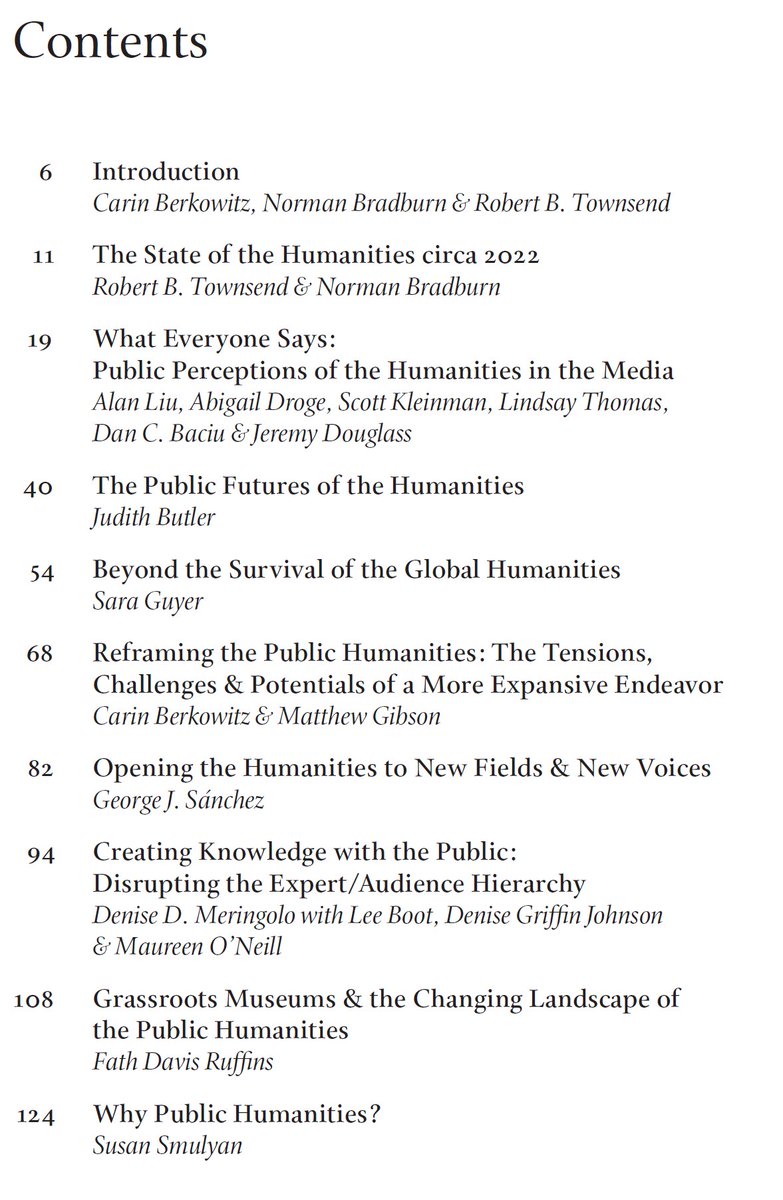
The @4Humanities & @MellonFdn WhatEvery1Says project (WE1S) uses digital humanities methods to study public discourse about the humanities at large data scales.
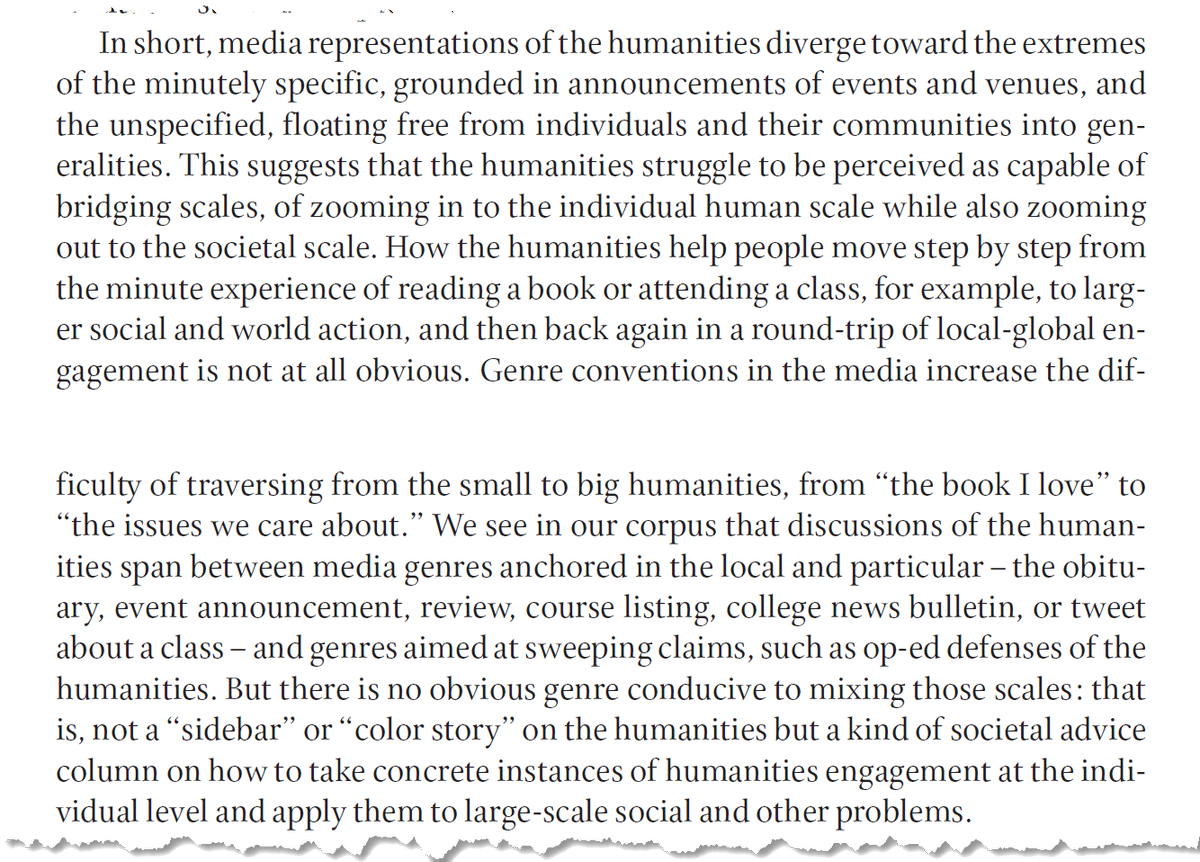
Excerpt from our @WE1Sproject article in Daedalus, https://t.co/6kDddVaR7D:
>> On how the humanities fail to show how to bridge between the "small" humanities ("the book I love") to the "big" humanities ("the issues we care about")
Excerpt from @WE1Sproject article in Daedalus, https://t.co/6kDddVaR7D:
>> On how "object-poor" the humanities are. In the public's perception, humanists do talks; scientists do things. See also WE1S card on contrast with sciences: https://t.co/1wE9UZhX5f)
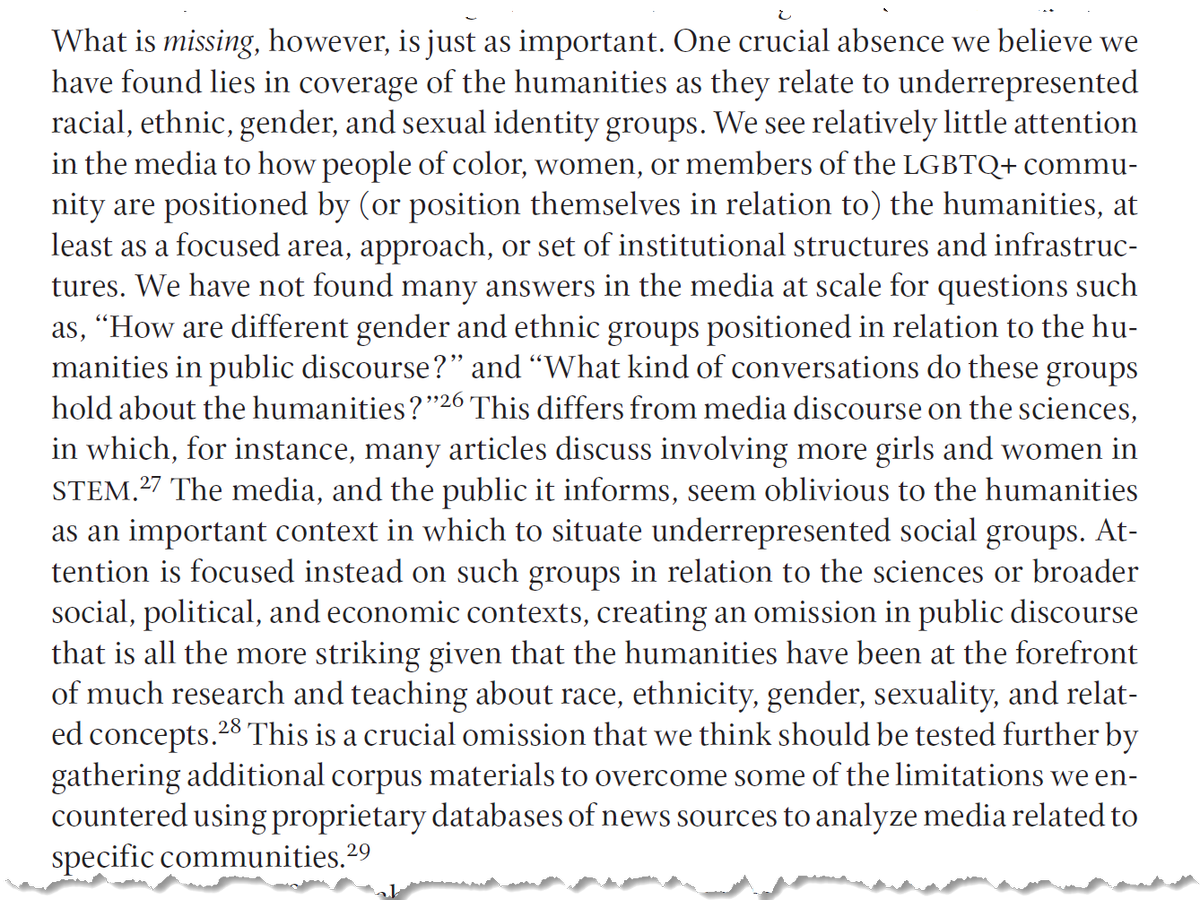
Excerpt from @WE1Sproject article, https://t.co/6kDddVaR7D:
>> On lack of media attention to how underrepresented groups relate to humanities by contrast to the sciences. This was WE1S's most frustrating research inquiry: huge effort, sparse results. Public doesn't seem to care.
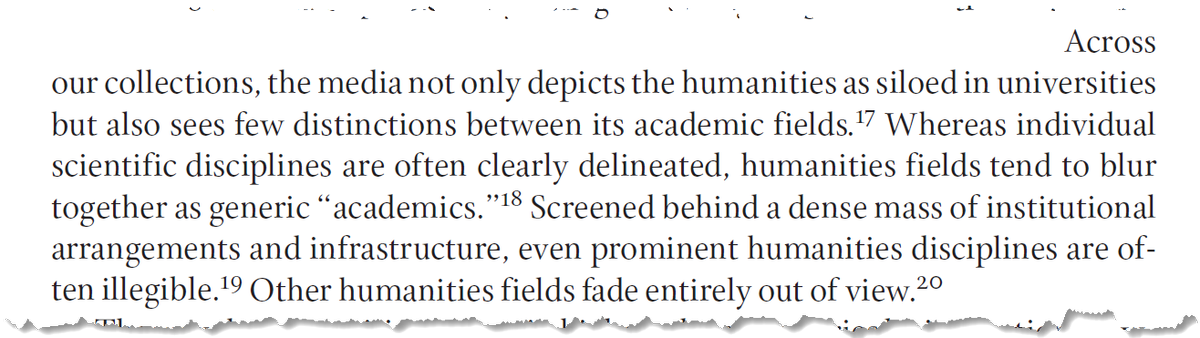
@WE1Sproject Excerpt from our @WE1Sproject article in Daedalus, https://t.co/6kDddVaR7D:
>> On the perception of the academic humanities as siloed in universities and blurred-together by contrast with the sciences.
Excerpt from our @WE1Sproject article in Daedalus, https://t.co/6kDddVaR7D:
>> On the different mind-share and flavor of the humanities in private vs. public higher ed institutions.
Excerpt from our @WE1Sproject article in Daedalus, https://t.co/6kDddVaR7D:
>> On the diffusion of humanities in "ordinary" life. (Cf. Michael Levenson's book, The Humanities and Everyday Life, 2017. See also WE1S cards on humanities & ordinary life: https://t.co/zeDXIpIIbJ)
Excerpt from our @WE1Sproject article in Daedalus, https://t.co/6kDddVaR7D:
>> On the invisibility of the "humanities crisis" in media. (See also WE1S cards on the humanities crisis: https://t.co/zeDXIpIIbJ)
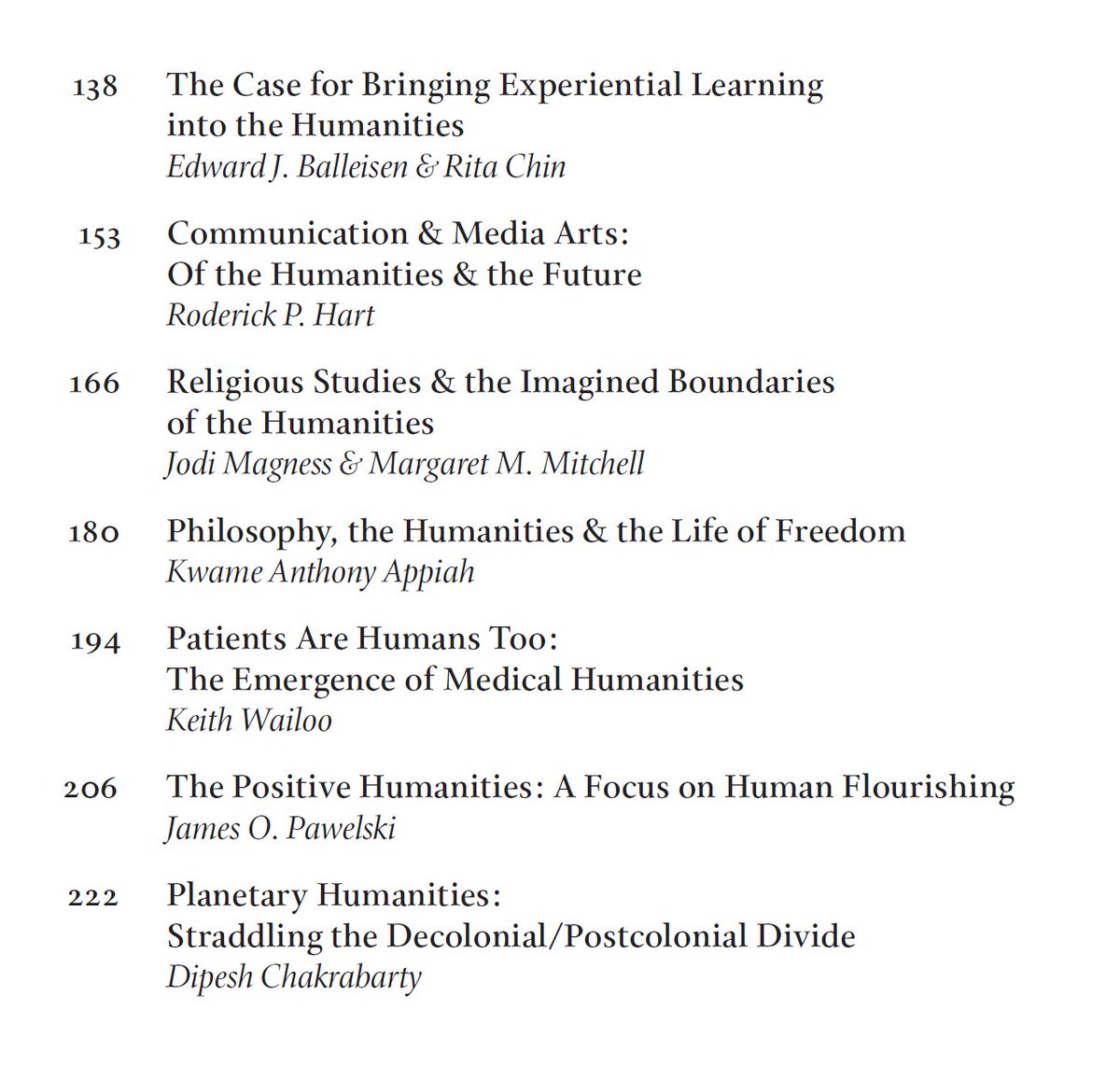
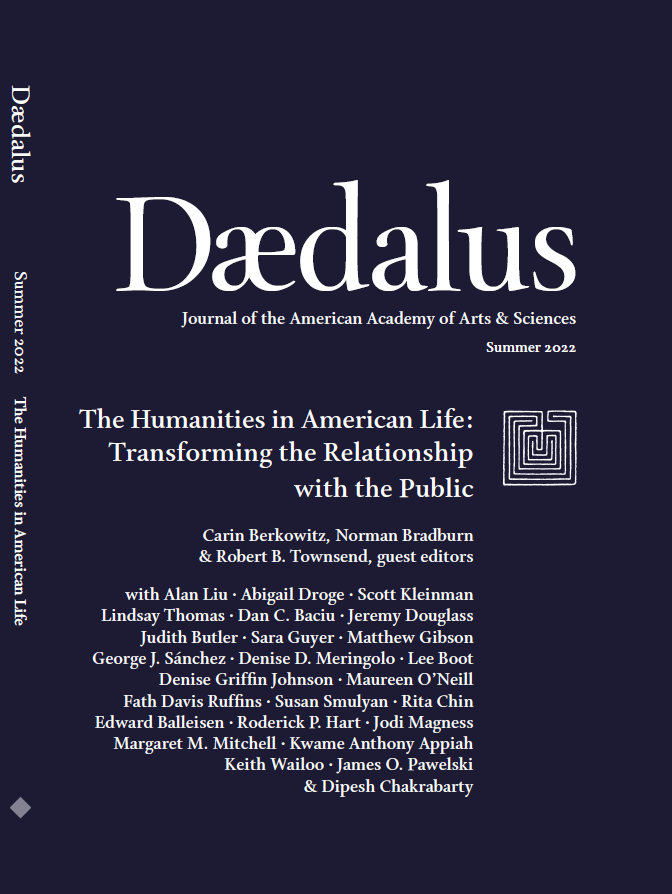
Our @WE1Sproject article in Daedalus is part of issue of the journal about "The Humanities in American Life: Transforming the Relationship with the Public": https://t.co/la1ska8hmS
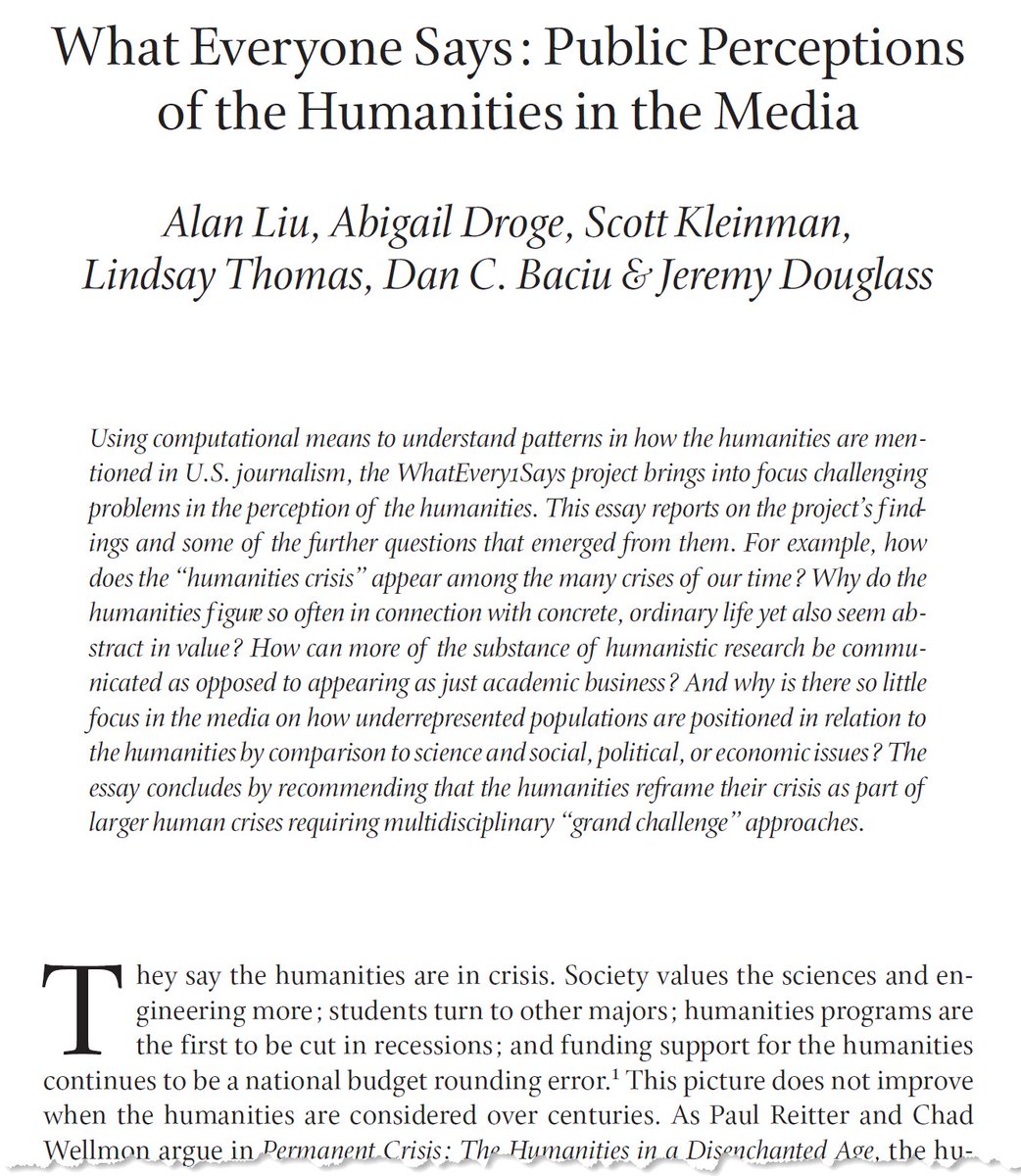
Just out in Daedalus: our ariticle "What Everyone Says: Public Perceptions of the Humanities in the Media" -- a high-level synthesis of findings from our WhatEvery1Sasy (WE1S) project, with reflections and and general recommendations for the humanities: https://t.co/ywigrWFvj4
Thrilled to finally share the new Daedalus issue on The #Humanities in American Life: Transforming the Relationship with the Public. Online (and open access) at https://t.co/1Ook53MVd5.
Eloquent commentary in @CulturalAnalyt today by @lindsaycthomas & @abigaildroge (https://t.co/CMhTAHj4uo), following up on their article in Cultural Analytics on “The Humanities in Public” (https://t.co/LVWgp5Faqa) based on @WE1Sproject data (https://t.co/9S3caBGKi7).
For example, we use grounded theory methods to tag our WE1S sources for journalistic articles mentioning the humanities according to many categories (e.g., geo region, political affiliation, kind of university (if student newspaper): https://t.co/MICnI4BYCo
Also on the qualitative side of method: WE1S uses "grounded theory"method -- originating in the social sciences to bridge between quantitative and qualitative methods -- to establish defined workflows for analyzing and tagging (labeling) collected materials.
"For an intro to grounded theory, see the excellent post on WE1S's research blog by @baker_r_r: "Using Grounded Theory to Construct the WE1S Hand-Codebook" https://t.co/Ydc6420nIq
Hot off the press!🔥 Check out my new article on developing hermeneutics for computational data in the humanities, w/ a case study on stylometry https://t.co/rR3wip5aHw
Creating a workflow between "distant reading" (computational big-data machine learning) and "close reading" (analysis of paradigmatic texts through close examination by human readers) is the main reason we made our "Topic Model Interpretation Protocol": https://t.co/pF3yD82ZsU
On the qualitative side of method, @WE1Sproject uses computational topic-modleing & other machine-learning "distant reading" methods to inform "close reaing"--e.g. to guide human researchers for close reading to artticles highly associated statisticallly with topics of interest.
This human-in-the-loop side of interpreting machine learning is part of the general computational interpretability / explainability probem today. See https://t.co/jPAvkEDZ3v
The general paradigm of WE1S's Topic Model Interpretation Protocol is more important than our specific, early implementation. We publish it under open license so others can fork it for projects, & so that the idea might spread to interpretation of other kinds of machine learning.
There should be a declared, transparent, and reproducible protocol for each kind of machine learning that guides researchers through steps of observing the outputs of computation and communicating the reasons and evidence that lead to their conclusions.