Jalal Bateeh from Rural Damascus shares how the lab helped his brother get tested and treated quickly for malaria.
Fast, free services reduced travel and costs, and timely results helped save his life.
WHO supports @SyrMOfH, funded by @aics_it.
@ItalyinSyria@Ste_Ravagnan
Dr. Houria Al-Qassab shares how mobile health teams are delivering essential care to displaced communities in northern Aleppo—ensuring no one is left behind.
Supported by WHO, with funding from @eu_echo.
Across #Syria, stronger laboratory teams mean faster diagnosis and more timely care for people in need.
With support from @aics_it, @SyrMOfH and @WHO trained 50+ technicians on sample collection & rapid detection of priority epidemic diseases.
Read how: https://t.co/Fgs3SmHpgW
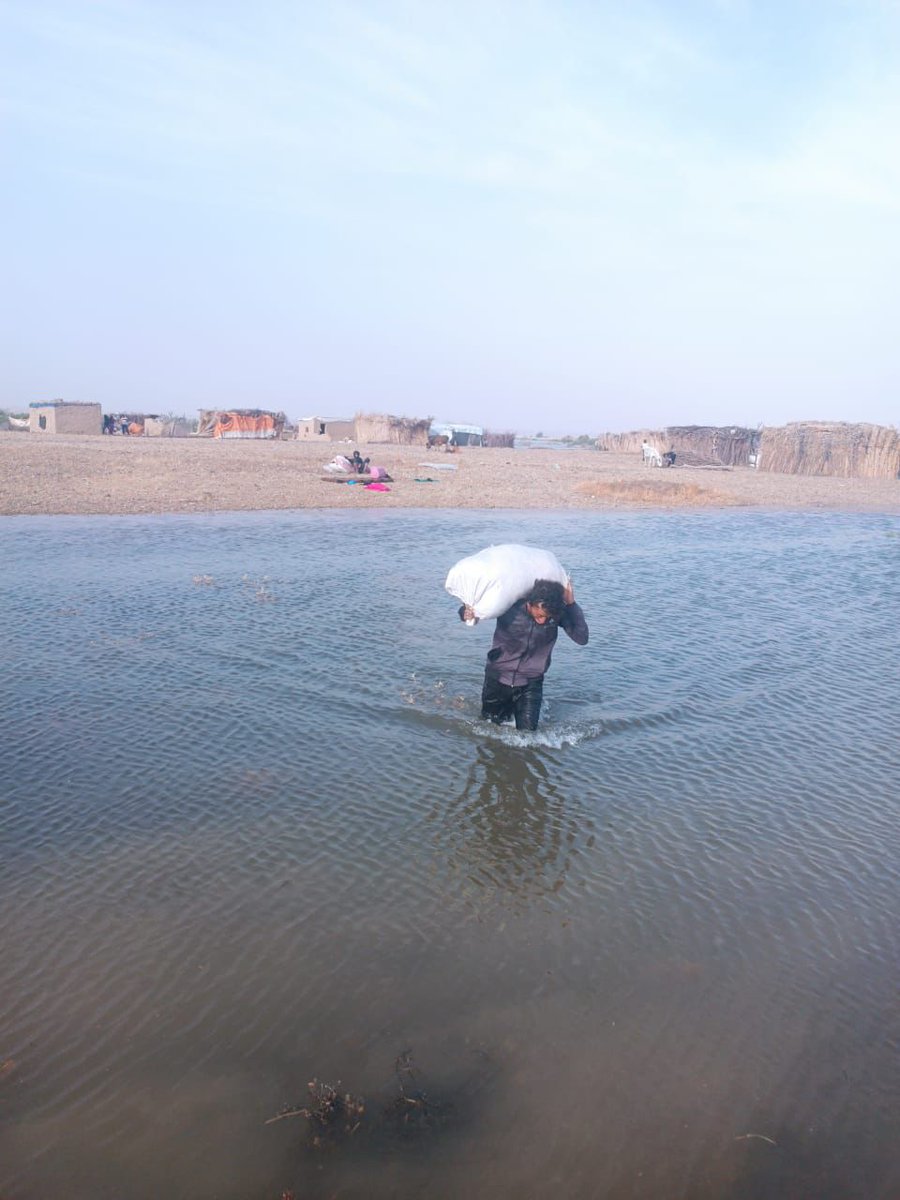
In #Syria, recent flooding along the Euphrates River continues to pose public health risks for thousands of people in Deir ez-Zor and Ar-Raqqa. While water levels have started to recede in some areas, several water stations remain disrupted, increasing the risk of waterborne diseases. Access challenges are also limiting people’s ability to reach functioning health facilities, with emergency referrals particularly affected.
@WHO and partners continue to support the response led by national authorities and @SyrMofH, helping communities access safe water, timely medical care and lifesaving referrals, despite ongoing disruptions.
Over the past few days, with support from @eu_echo, @WHO has delivered 7.5 tonnes of medical supplies to support health facilities and emergency response efforts, while also strengthening water quality monitoring and disease surveillance. To help maintain access to care, @WHO is also supporting 24/7 emergency referrals in Deir ez-Zor through 6 ambulances, 4 boats and 18 ambulance crew members.
As authorities continue to monitor the situation, @WHO is strengthening preparedness to help maintain essential health services and enable a rapid response should health risks increase in the weeks ahead. Sustained operational support and flexible funding remain critical.
Ramia, a laboratory technician, shares how training staff from across Syria is strengthening laboratory teams’ skills, easing the burden on patients, helping them get diagnosed & ensuring high-quality services.
WHO supports @SyrMOfH with practical training, funded by @aics_it.
The grip of tobacco addiction can be broken. And the benefits are felt immediately:
⏱️ In 20 mins, your heart rate drops
🫁 2–12 weeks, your lung function improves
❤️ In 1 year, heart disease risk is cut in half
Take the step, break the addiction: https://t.co/q9kbdt1lmw [2/2]
Today is #WorldNoTobaccoDay 🚭
Tobacco and nicotine companies deliberately design their products to hook you.
Sugars, flavours, and cooling agents all mask the harshness of nicotine so you inhale more, and get addicted faster.
[1/2] #Tobaccoexposed
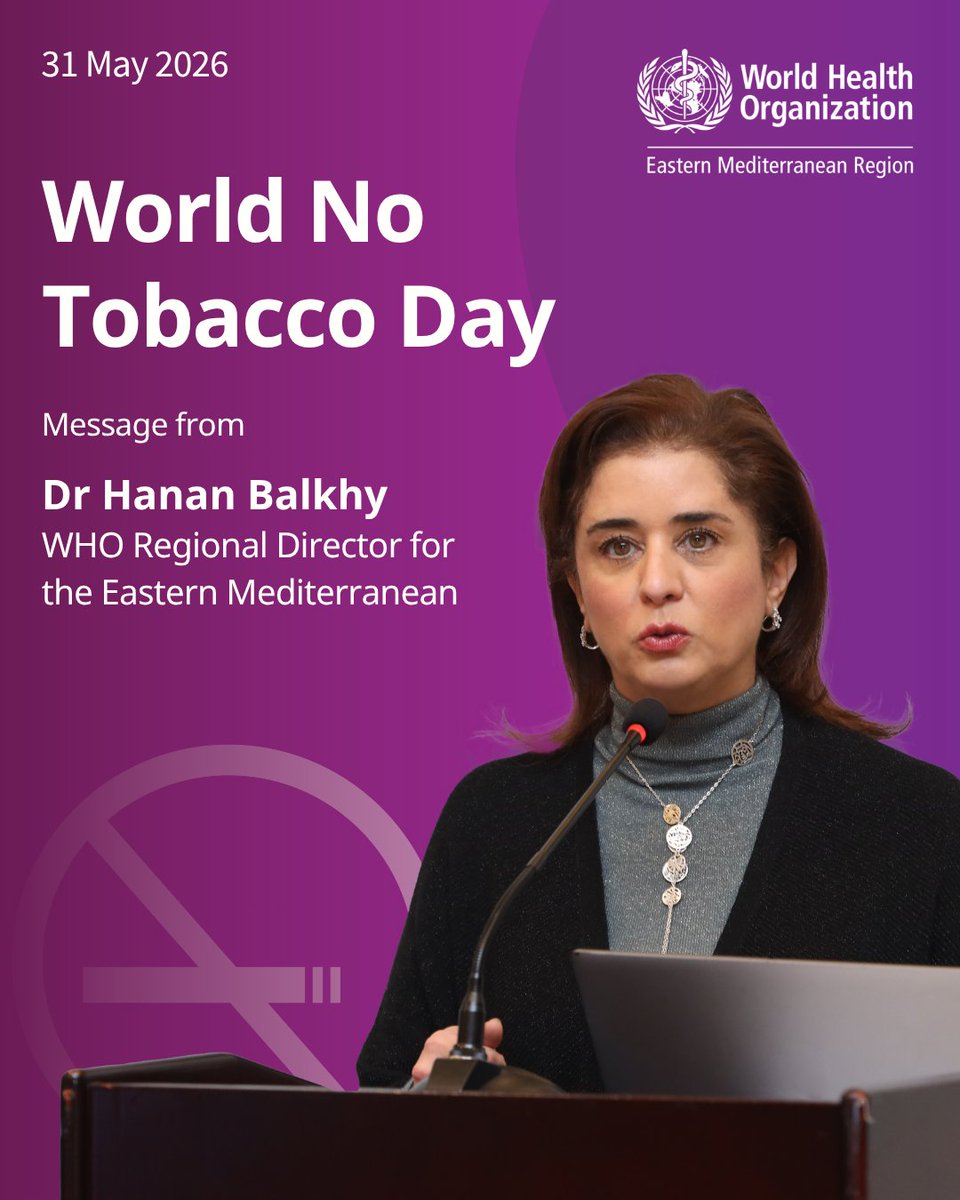
Message from Dr @HananBalkhy, WHO Regional Director for the Eastern Mediterranean on the occasion of #WorldNoTobaccoDay 2026
-----------
This year’s World No Tobacco Day campaign shines a light on a hard truth: the tobacco and nicotine industry is constantly reinventing itself—repackaging harm to hook a new generation, particularly children and adolescents, while sidestepping stronger regulation.
As a paediatrician and a mother, I find this deeply concerning. These products are designed to create addiction early, targeting young people at a stage of life when their bodies and brains are still developing.
Despite decades of progress, tobacco and nicotine products continue to cause millions of preventable deaths each year.
In the Eastern Mediterranean Region an estimated 5.5 million children aged 13 to 15 are already using tobacco. Adolescents are far more likely than adults to use e-cigarettes, with rates among young people—especially boys—reaching alarming levels in some areas. Across many countries, more than half of young people report exposure to tobacco advertising and promotion.
This is not accidental. It is the result of deliberate strategies—flavours that mask harshness, packaging that attracts, and digital marketing that normalizes use. Combined with weak regulation, enforcement gaps and persistent industry interference, these tactics are driving a growing and evolving epidemic.
In a Region where a large share of the population is under 30, the stakes could not be higher. Without decisive action, we risk locking a new generation into lifelong addiction.
We must act immediately to ban flavours that target youth, to regulate product design, and to mandate clear graphic health warnings and adopt plain packaging. We must enforce comprehensive bans on advertising, promotion and sponsorship—including across digital platforms.
We must protect people from second-hand smoke, strengthen cessation services, and increase taxes to reduce affordability. Together, we must unmask the appeal, counter these tactics and act now to safeguard health across the Eastern Mediterranean Region.
No industry should be allowed to profit from nicotine and tobacco addiction at the expense of future generations.
#TobaccoExposed
Today is #WorldNoTobaccoDay 🚭
Almost 60% of tobacco users want to quit. Maybe you're one of them.
That’s 750 million people worldwide.
With support, you CAN make your wish come true.
Quitting tobacco can earn you big wins for your health:
⏱️ In 20 minutes, your heart rate drops
🫁 2–12 weeks, your lung function improves
❤️ In 1 year, heart disease risk is cut in half
You can overcome addiction. Help is available, quit today! 👉 https://t.co/0r9hCWMfUd
#TobaccoExposed #WHO #WorldHealthOrganization
This support was made possible thanks to @eu_echo, helping WHO and partners keep health services running as families in Deir ez-Zor & Raqqa face the health risks of flooding.
The supplies will support emergency care, disease prevention and the wider health response.
Over 7.7 tons of medical supplies have been dispatched to Deir ez-Zor & Raqqa to support the flood response.
The shipment includes IV fluids, antibiotics, chronic disease medicines, water purification tablets & more.
@WHO continues to support @SyrMOfH & partners.
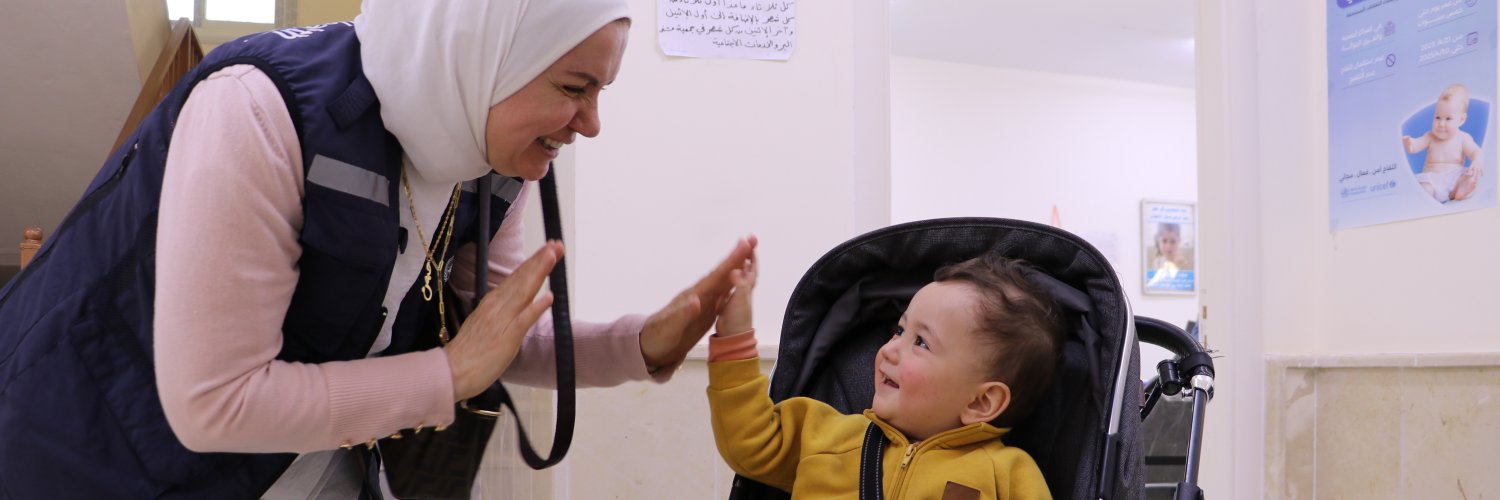
Mobile medical teams are bringing essential health care closer to displaced families in northern Aleppo.
Led by @SyrMOfH, in collaboration with @WHO & support from @eu_echo, mobile teams provide free consultations & medicines to displaced families.
Read: https://t.co/cBTKsFl1ps
Eid Al-Adha Mubarak from WHO Syria.
On this occasion, we extend our warm wishes to all those celebrating in Syria and around the world. Wishing you and your loved ones peace, health and joy.
Dr Wasim, Director of Medical Laboratories at Ministry of Health, shares how the training strengthens lab technicians’ skills—helping speed up diagnosis & ensure patients receive timely treatment.
WHO supports @SyrMOfH with practical training, funded by @aics_it.
@ItalyinSyria
Strengthening frontline outbreak detection and response in Syria.
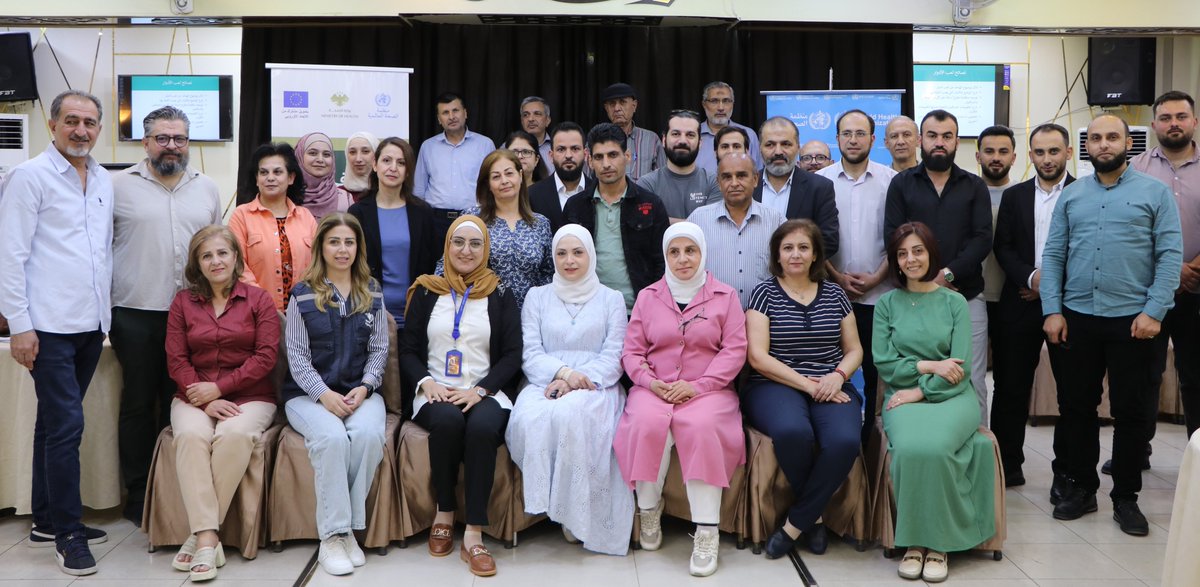
22 health workers completed Syria’s first Frontline FETP, led by @SyrMOfH with support from @WHO, @eu_echo & @EMPHNET, strengthening surveillance & rapid response capacities.
https://t.co/nRV9EuX0rK
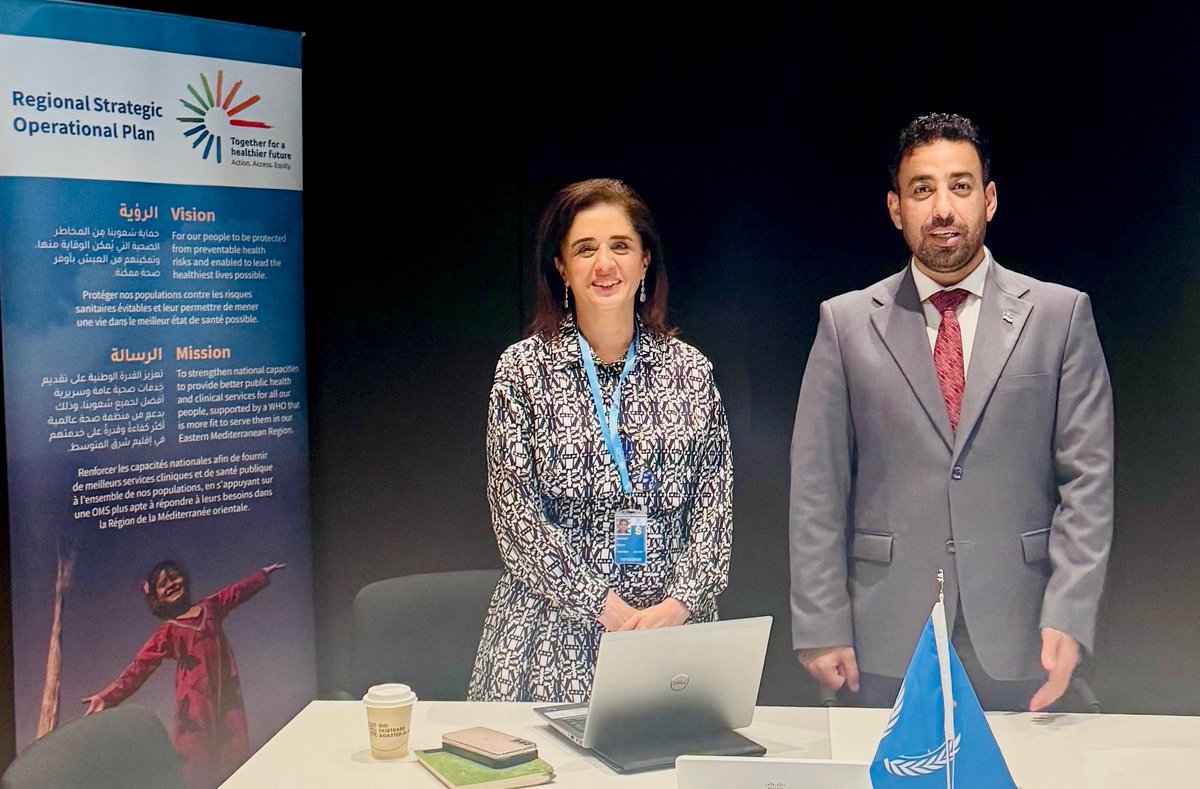
I was pleased to meet again with H.E. Dr @Musaab_Al_Ali, Minister of Health of Syrian Arab Republic, after having met him in Damascus earlier this year and witness firsthand the determination to rebuild and strengthen the country’s health system.
We discussed advancing Syria’s health system recovery, strengthening emergency preparedness and sustainable financing, and ensuring health remains at the centre of national recovery efforts. @WHO remains committed to supporting the Syrian people and the Ministry of Health on the path towards resilient, inclusive and equitable health for all. #WHA79
@WHOSyria | @syrianmofaex | @SyriatoUN | @SyrMOfH
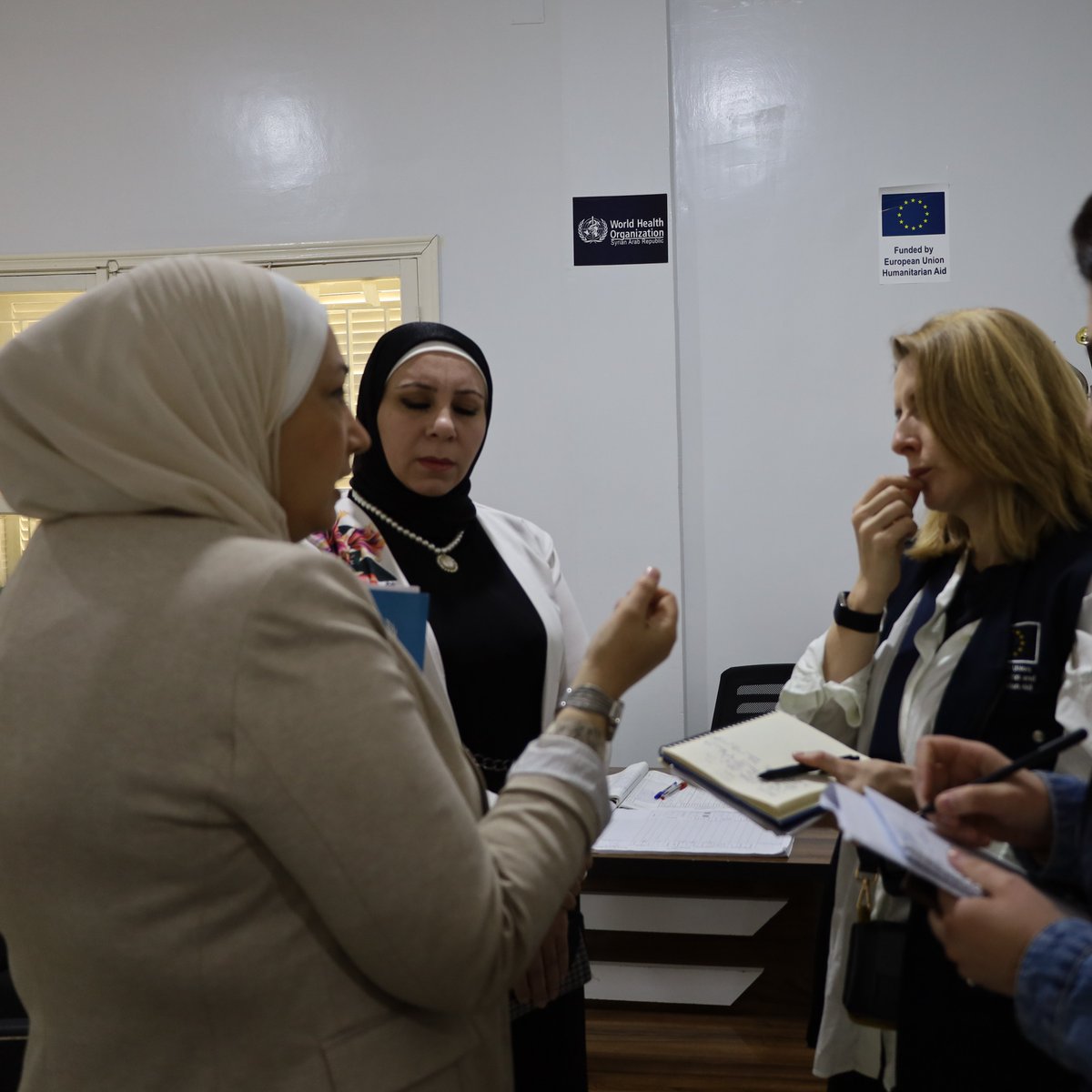
WHO welcomed @eu_echo delegation to Al-Hasakeh to review support for essential health services in northeast Syria.
The visit included Markada, Darbasiyah, Amuda & Qamishli primary health centres, where health workers provide care for communities where needs remain high.
WHO welcomed @KSRelief to Aleppo & Idleb to review joint support for health services.
With partner @alameen_ngo, the visit included Al-Bab PHC, Ariha PHC, Ariha Dialysis Centre, Ma’arrat An-Nu’man PHC & Ma’arrat An-Nu’man Dialysis Centre, where teams saw services in action.
Strengthening mental health care through primary health care!
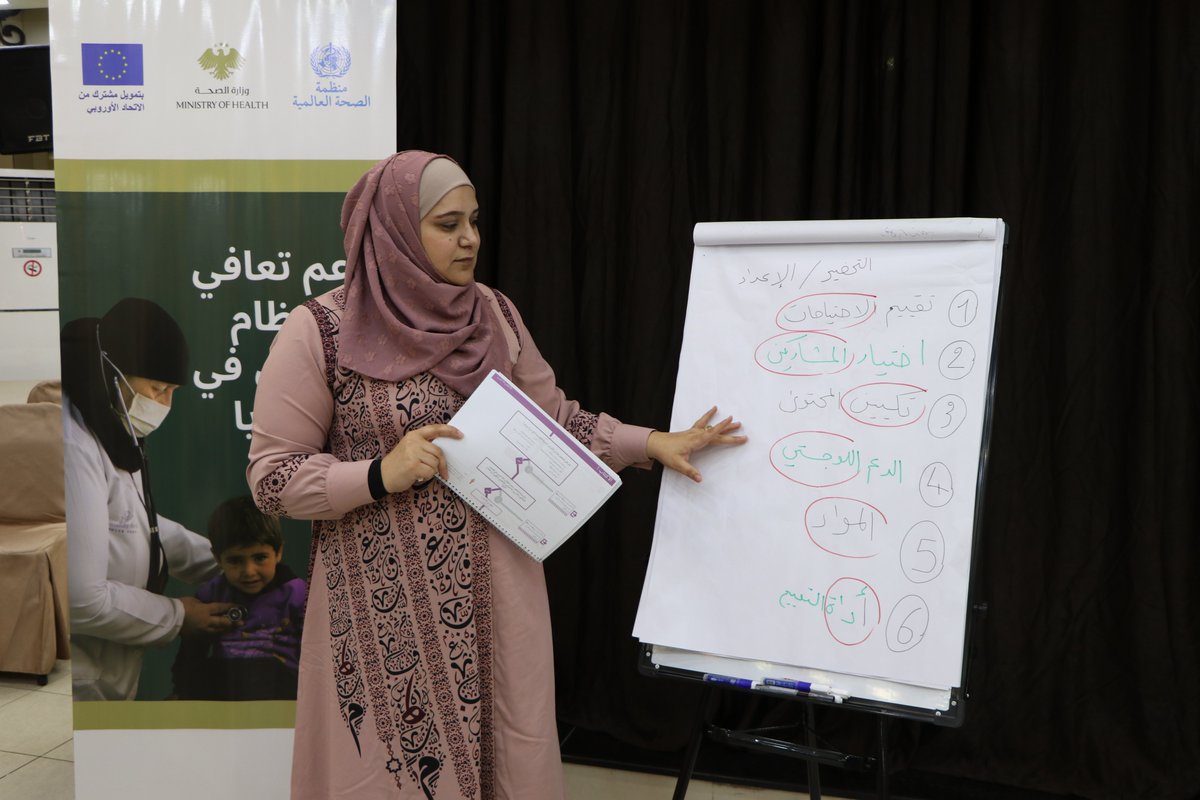
Led by @SyrMOfH, with @WHO & @EUinSyria's support, health professionals completed training on mhGAP guidance to help expand access to mental health care through primary health centres.
https://t.co/Z0IonKO7SM











![WHOSyria's tweet photo. Today is #WorldNoTobaccoDay 🚭
Tobacco and nicotine companies deliberately design their products to hook you.
Sugars, flavours, and cooling agents all mask the harshness of nicotine so you inhale more, and get addicted faster.
[1/2] #Tobaccoexposed https://t.co/NDJzIl8sjJ](https://pbs.twimg.com/media/HJp4mOnXsAIcNJi.jpg)