The All India Tiger Estimation (AITE), launched in 2006, is conducted once every four years and has completed five successful cycles so far.
Recognized by the Guinness World Records as the world's largest camera trap wildlife survey, AITE has transformed wildlife monitoring in India. Beyond estimating tiger numbers, it provides critical insights into the status of co-predators, prey populations, habitat quality, and landscape connectivity.
The information generated through this exercise plays a vital role in guiding conservation planning, strengthening management interventions, and addressing emerging challenges across India's tiger landscapes.
#NTCA #ProjectTiger #AITE6 #AmritKaalKaTigerVision2047
@PMOIndia@moefcc@wii_india@MSTrIPES@PIB_India@EnvironmentPib@IBCA_official@Unitedfortigers
#WATCH | Union Minister for Environment, Forest & Climate Change, Bhupender Yadav says in an interview with ANI, "I am constantly in touch with the Gen Z... we have witnessed a significant expansion in our network of Ramsar sites, Tiger Reserves, and Protected Areas. Moreover, spanning the years 2016 to 2025, our country draws immense strength from its Biosphere Reserves—regions that serve as custodians of incredibly unique and distinct varieties of flora... Nature provides us all with clean water and fresh air—and it does so absolutely free of cost. It is we humans, however, who are responsible for degrading it... That is why I often emphasise that, alongside the technological advancements we pursue, we must equally focus on how technology can be leveraged to ensure our continued coexistence with nature..."
On Ek Ped Maa Ke Naam, he says, "People's consciousness is indeed on the rise; in fact, we have even launched a dedicated portal specifically for Generation Z to engage with this initiative. Approximately 1.2 billion people have already participated through that portal..."
Watch full episode here: https://t.co/GaQgXCZWV4
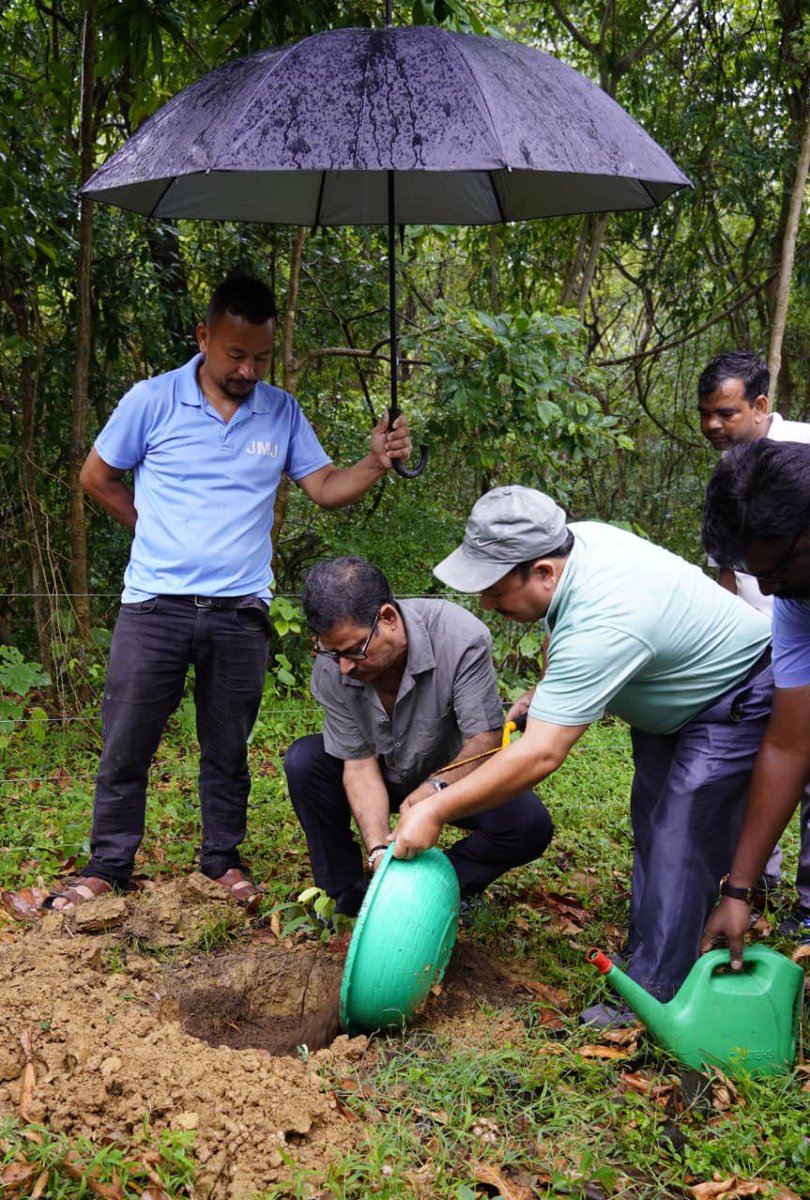
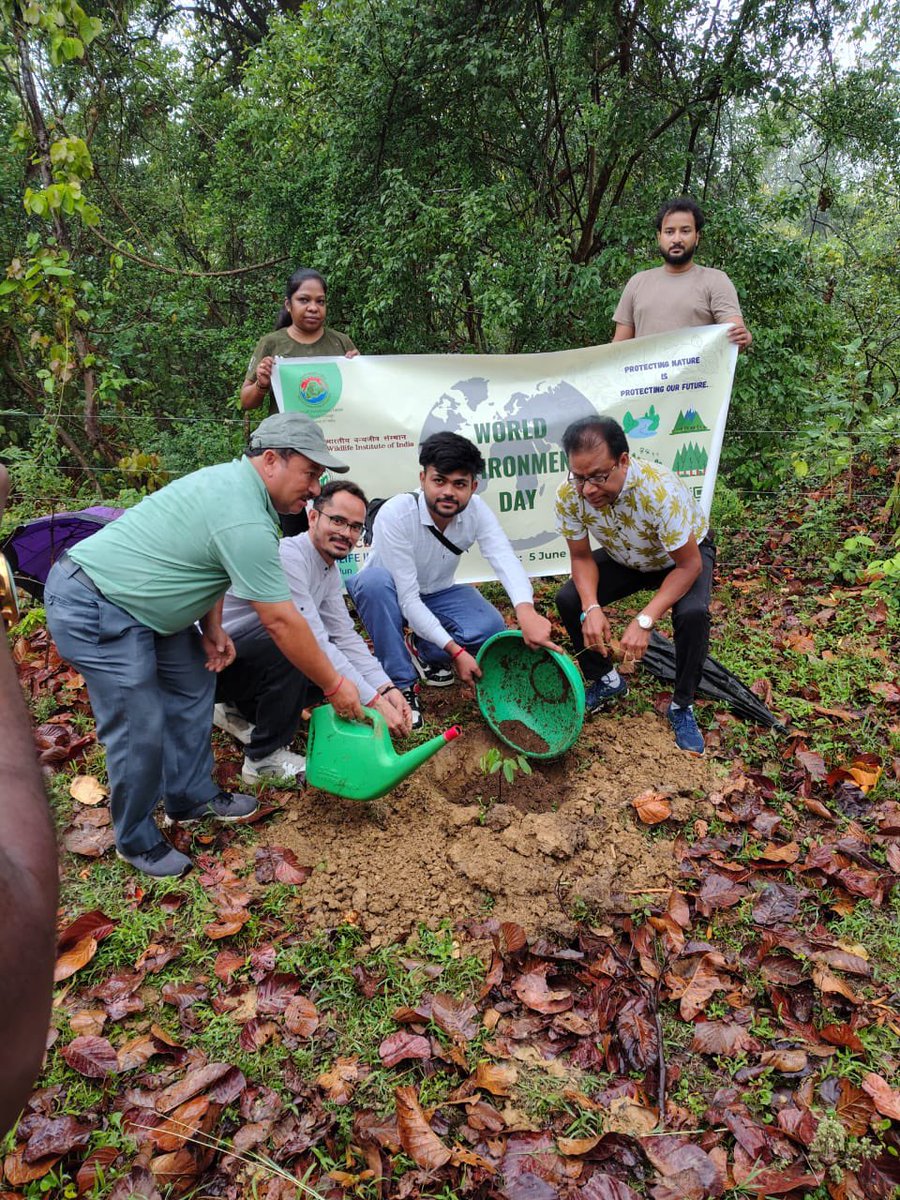
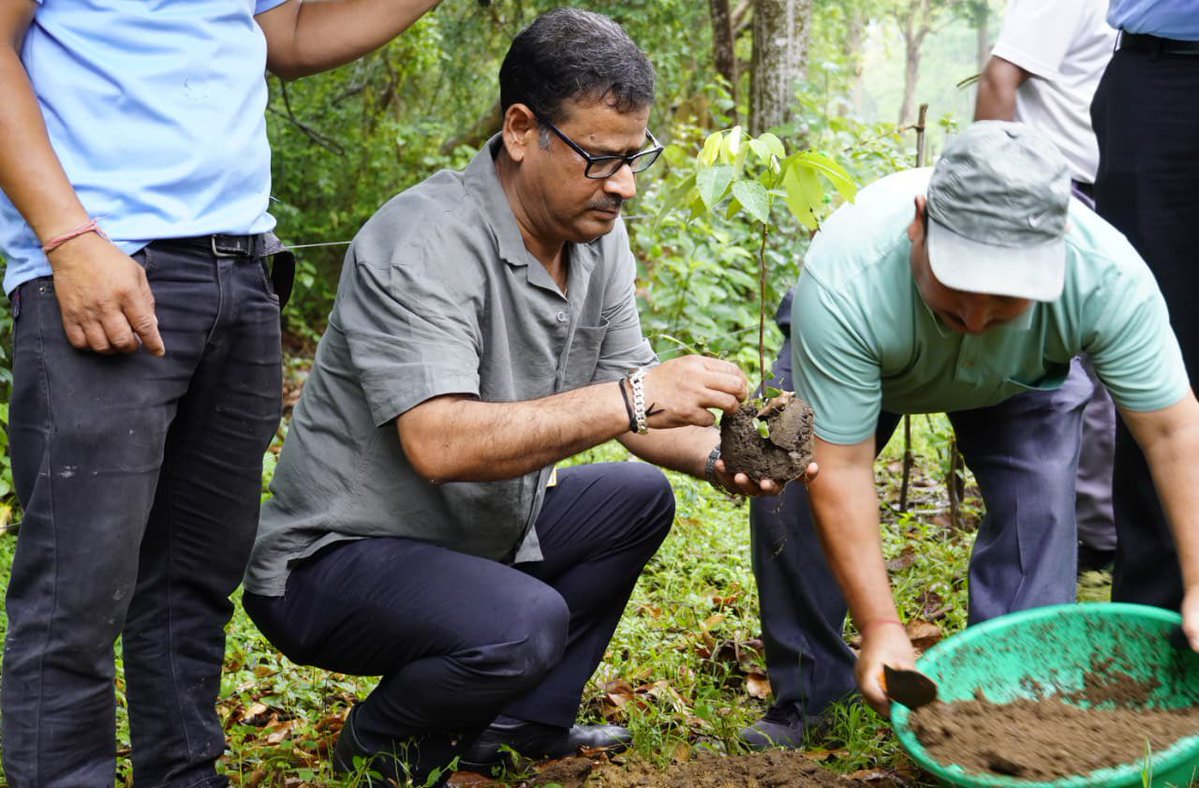
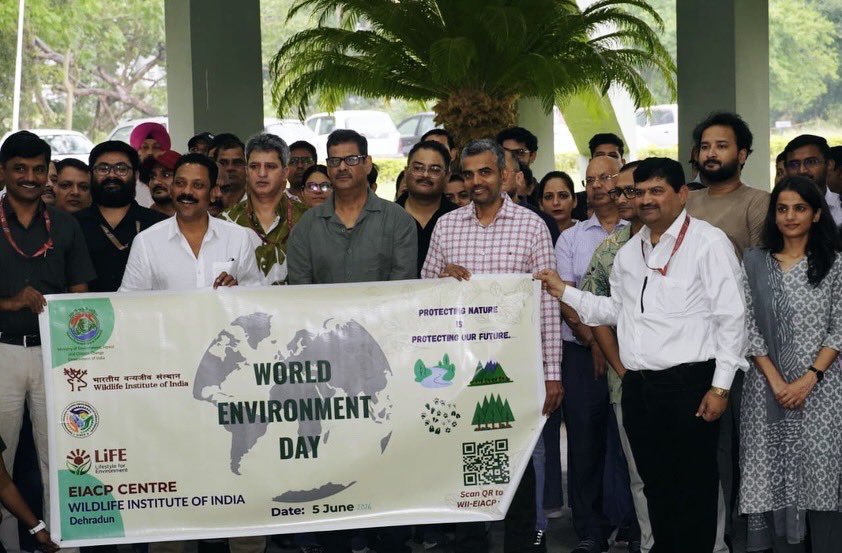
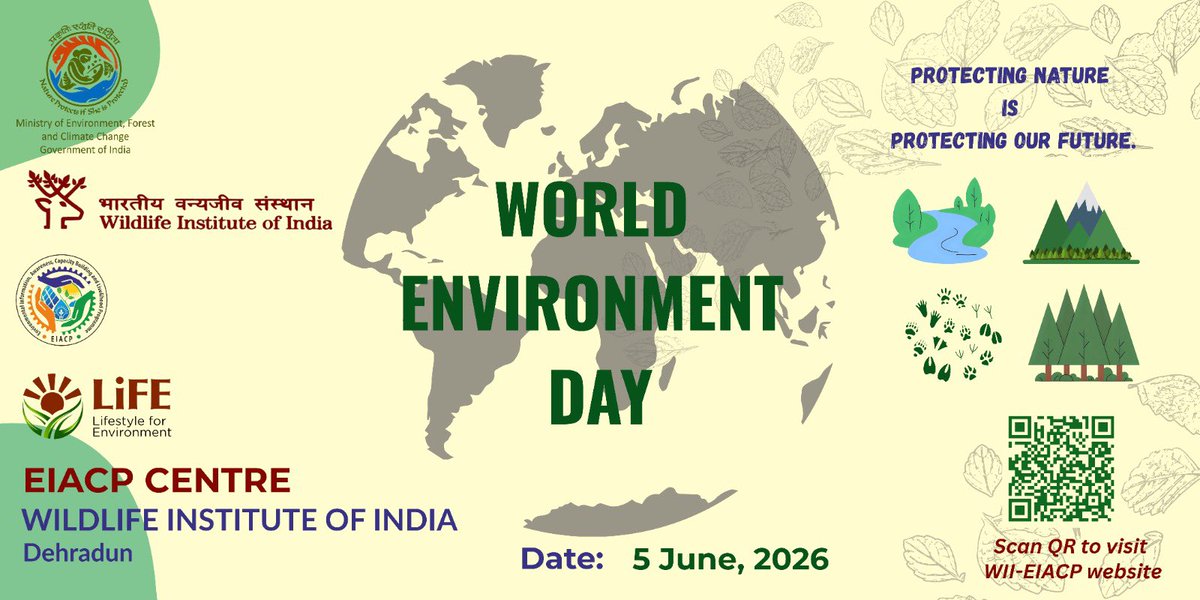
As we mark #EnvironmentDay today, let us renew our pledge to remain 'Inspired by Nature. For Climate. For Our Future.'
Nature is our greatest ally in the fight against climate change. Every tree we plant, every ecosystem we restore, and every sustainable choice we make strengthens our collective future.
Let us work together to build a greener, cleaner and more resilient India for generations to come.
#NowForClimate
Over the last 12 years, under PM Shri @narendramodi ji's environmentally sensitive leadership, India has made great strides in wildlife conservation.
At a time the world is losing wildlife, India continues to ensure they thrive and prosper.
#NowForClimate
📢 WII-Newsletter Spring 2026 (Vol 33, Issue 1) is out now!
We are pleased to share the latest issue of the Wildlife Institute of India Newsletter, featuring updates from the Institute’s research, training, conservation initiatives, field activities, academic programmes, and outreach efforts.
This issue brings together stories from the field, institutional highlights, and ongoing efforts toward wildlife research and biodiversity conservation in India.
🔗 Read the full newsletter here:
https://t.co/2GjLD7csWs
#WildlifeInstituteOfIndia #WII #NewsletterRelease #WildlifeConservation #Biodiversity #ConservationScience #WildlifeResearch #NatureConservation #MoEFCC #India
@moefcc@wii_india@SACONCoimbatore@GobindsagarBha1@RuchiBadola2@V_kolipakam@RiteshGautamWII@amarjeet_kaur10
The final session of module for MCT Phase-III (18) featured a Panel Discussion on Critical Perspectives on Advances in HWC Management!
The focus was on reflecting on advances, emerging challenges, and future directions in HWC management.
Panellists: Dr. Dhananjai Mohan, IFS Retd. (Former PCCF & HoFF, UKFD), Dr. K Ramesh (Scientist-F, WII & Head of Office, WII-SACON), Sh. Maria Christu Raja D, IFS (Scientist - F and Registrar, WII) & Dr. Ramesh Chinnasamy (Scientist-E, WII).
The session opened with Dr. K Ramesh highlighting the recently inaugurated Centre of Excellence in HWC at WII-SACON — envisioned as a platform for knowledge exchange, capacity building, and addressing critical gaps in HWC management. Drawing on their extensive administrative and field experience, Dr. Dhananjai Mohan and Shri Maria Christu Raja D emphasized the need for proactive rather than reactive approaches to conflict management, highlighting that while scientific institutions can provide tools and evidence, effective implementation ultimately rests with field managers and forest departments.
The discussion reinforced that human–wildlife conflict is not solely a wildlife management issue, but a complex socio-ecological challenge requiring interdisciplinary solutions, adaptive management, and strong institutional partnerships.
#HWC #CentreOfExcellenceHWC #ConservationPolicy #MultidisciplinaryApproach #Coexistence #MCT2026
@moefcc@wii_india@GobindsagarBha1@EIACPIndia@wii_eiacp@IGNFA_GoI@CentralIfs@CRamesh_WII@amarjeet_kaur10@RuchiBadola2@SACONCoimbatore@Kramesh95@wlforensics
Veterinary intervention in HWCM
Post-lunch session 🐘 — Dr. Parag Nigam, Scientist-G, WII delivered a highly informative session on Veterinary Intervention in Human-Wildlife Conflict Management at MCT Phase-III (18) for IFS Officers.
He provided insights on the practical aspects of animal handling — covering different types of traps used for various species, and a detailed overview of chemical immobilisation protocols and drugs used for wildlife capture, along with the legal regulatory requirements governing their procurement, storage, transport, and use.
Importantly, officers were introduced to the right circumstances and established guidelines for animal euthanasia — a sensitive yet necessary aspect of conflict management that requires clear legal and ethical understanding.
Dr. Nigam further walked the trainees through various darting equipment and techniques, and the "best practices for post-capture handling, monitoring, and transportation — ensuring both animal welfare and human safety are upheld at every step.
By combining technical knowledge, legal frameworks, and animal welfare considerations, the session strengthened the capacity of participants to make informed decisions during wildlife rescue, conflict response, and emergency management situations.
#AnimalCapture #WildlifeImmobilisation #HWCManagement #AnimalWelfare #WildlifeManagement #Darting #WII #MCT2026
@moefcc@wii_india@GobindsagarBha1@EIACPIndia@wii_eiacp@IGNFA_GoI@CentralIfs@CRamesh_WII@amarjeet_kaur10@RuchiBadola2@SACONCoimbatore@Kramesh95@paragnigam09
Forensic evidence in HWC management 🔬 Dr. C.P. Sharma, Principal Technical Officer, WII conducted a technical-cum-field practical session on Forensic Investigation of Injuries in Human-Felid (Large Cat) Conflict & demonstration of sample collection at HWC situations for MCT Phase-III (18).
Using real field cases and a live demo field crime scene setup, Dr. Sharma gave IFS officers a firsthand experience of wildlife forensic investigation and how to integrate forensic investigation into management decision-making.
A key learning was how to identify and differentiate attack signatures of different animal families viz., feline vs. canine from injury patterns, helping officers accurately determine whether a human death was caused by an animal attack or due to other reasons. A critical skill that can make or break a wildlife conflict case!
This kind of ground-level forensic training is exactly what frontline wildlife managers need to make informed, evidence-based decisions in HWC situations.
#WildlifeForensics #LargeCats #HWCForensics #FieldTraining #WildlifeCrimeInvestigation #HWC #WII #MCT2026
@moefcc@wii_india@GobindsagarBha1@EIACPIndia@wii_eiacp@IGNFA_GoI@CentralIfs@CRamesh_WII@amarjeet_kaur10@RuchiBadola2@SACONCoimbatore@Kramesh95@wlforensics
Dr. Bilal Habib, Scientist-F, WII delivered a thought-provoking session on Understanding Human-Wildlife Conflict Management: Issues, Challenges & Way Forward at MCT Phase-III (18).
He opened with a powerful call — wildlife managers must think outside the box and move beyond traditional conflict mitigation approaches. He categorised HWC across four dimensions: level of wildlife damage, level of conflict, response to conflict, and conservation consequence — offering a nuanced framework for IFS officers to assess and act.
In a refreshingly bold perspective, he challenged the notion that infrastructure like roads and expressways are purely negative for conservation. An expressway may clear trees, yet dramatically reduce fuel consumption, travel time & carbon footprint — urging us to see conservation through a wider, systems-level lens.
He also flagged that already-fragmented Protected Areas are a key driver of rising HWC — and crucially, HWC is not just about deaths or physical damage. At its core, it is a conflict of human perception — a psychological tussle between people and wildlife sharing shrinking spaces.
True coexistence begins in the mind!
#HumanWildlifeConflict #HWC #Coexistence #WildlifeManagement #ConservationThinking #ProtectedAreas #WII #MCT2026
@moefcc@wii_india@GobindsagarBha1@EIACPIndia@wii_eiacp@IGNFA_GoI@CentralIfs@wildwithwolves@CRamesh_WII@amarjeet_kaur10@RuchiBadola2@SACONCoimbatore@Kramesh95
Species Recovery: Dugong
Dr. J.A. Johnson, Scientist-F, WII delivered an insightful session on Dugong and their habitat under the Species Recovery Programme at MCT Phase-III (18) for IFS Officers. 🌊
He stressed upon the critical importance of seagrass meadows as the lifeline of Dugong habitat, and how accelerating anthropogenic activities are severely degrading these ecosystems directly threatening India's last surviving Dugong populations.
He also highlighted WII's pioneering threat mapping efforts in critical Dugong habitats, helping identify and prioritize conservation interventions.
A standout highlight was WII's remarkable citizen science initiative bringing together fishers, Forest Departments, Marine Police, Indian Coast Guard, Indian Navy, and even local school students to be trained and sensitized for Dugong conservation.
This grassroots outreach has reached over 1 Lakh people all proudly called Dugong Ambassadors!
A truly people-powered conservation model!
#Dugong #DugongAmbassadors #MarineConservation #SeagrassMeadows #CitizenScience #SpeciesRecovery #WII #MCT2026
@moefcc@wii_india@GobindsagarBha1@EIACPIndia@wii_eiacp@IGNFA_GoI@CentralIfs@CRamesh_WII@amarjeet_kaur10@RuchiBadola2@SACONCoimbatore@Kramesh95
Species Recovery: Dolphin
Dr. Vishnupriya Kolipakkam, Scientist-E, WII presented on Dolphin and their habitat under the Species Recovery Programme at MCT Phase-III (18), WII Dehradun. 🐬
She highlighted India's first-ever nationwide riverine dolphin population estimate a landmark contribution by WII along with the development of various mechanisms to reduce dolphin mortality. 🗺️
A key focus was on the growing anthropogenic pressures threatening dolphin populations particularly habitat fragmentation driven by sand mining, river dams, boat traffic, and other riverine disturbances. She also shed light on the fascinating acoustic behaviour and activity patterns of dolphins, underlining their importance as indicators of aquatic ecosystem health. 🌊
Protecting our dolphins means protecting our rivers! 💧
#Dolphins #GangeticDolphin #SpeciesRecovery #WildlifeConservation #AquaticEcosystem #SandMining #RiverConservation #WII #MCT2026
@moefcc@wii_india@GobindsagarBha1@EIACPIndia@wii_eiacp@IGNFA_GoI@CentralIfs@CRamesh_WII@amarjeet_kaur10@RuchiBadola2@SACONCoimbatore@Kramesh95@V_kolipakam
Dr. Ramesh Chinnasamy, Scientist-E & Course Coordinator, WII presented a comprehensive Overview of Wildlife Institute of India Activities to IFS officer trainees at MCT Phase-III (18).
He walked the trainees through WII's diverse departments and their specialized mandates spanning Wildlife Research, Ecology, Remote Sensing & GIS, Wildlife Health, Human-Wildlife Interaction, and more. He highlighted the wide spectrum of ongoing projects and flagship activities WII undertakes from Species Recovery Programmes and Landscape-level Conservation Planning to Capacity Building,
Environmental Impact Assessment, and Policy Support for the Government of India. 🌿🔬🗺️
A powerful reminder of how WII serves as the backbone of evidence-based wildlife conservation and management in India and beyond
#WII #WildlifeInstitute #IFSOfficers #MCT2026 #ConservationEducation #WildlifeResearch #SpeciesRecovery #EIA #CapacityBuilding
@moefcc@wii_india@GobindsagarBha1@EIACPIndia@wii_eiacp@IGNFA_GoI@CentralIfs@CRamesh_WII@amarjeet_kaur10@RuchiBadola2@SACONCoimbatore@Kramesh95
A one-day module on HWC Management & Conservation Programmes began at @wii_india under the Mid-Career Training (MCT) Phase-III (18) for IFS Officers. Dr. Ramesh Chinnasamy, Module Coordinator & Scientist-E, WII, joined by Shri Aishwariya Raj, Associate Professor, IGNFA , highlighted the multi-pronged facets of HWC, and need for such training.
In his Inaugural Address, Dr. Gobind Sagar Bhardwaj, IFS, Director WII, set the stage with a powerful overview of challenges associated with Wildlife Management & Conservation in the country and emphasized that true solutions lie in fostering coexistence, not just mitigation. He underscored WII's pivotal role in providing rigorous background research that informs on-ground conflict management strategies across India. 🐘🐆🌿
#HWC #HumanWildlifeConflict #WildlifeConservation #Coexistence #HabitatFragmentation #IFS #MCT2026 #WII #IGNFA
@moefcc@wii_india@GobindsagarBha1@EIACPIndia@wii_eiacp@CRamesh_WII@amarjeet_kaur10@RuchiBadola2@SACONCoimbatore@IGNFA_GoI@Kramesh95