📢 The State of Conservation Technology 2026 report is live!
5 years of data show conservation technologies are advancing, but the sector's core challenges remain.
Explore what’s changed, what hasn’t, and why progress depends on more than just tools:
👉 https://t.co/kRbye3hQc8
Join us on November 25 for the next WILDLABS Variety Hour!
Learn about the latest in #tech4wildlife, from solar-powered field sites and a live map of wildlife detections to the UN Biodiversity Lab and Project SPARROW’s edge to cloud solution.
Register: https://t.co/0ZE3AUiHvX
Calling all map lovers and nature nerds! 🗺️
Our WILDLABS Geospatial group leaders are hosting #WildMapsChallenge2026, now through Nov 23!
15 days, 15 themes. Jump in anytime, pick your favorites, and share your maps 🌿
https://t.co/HUCyPNR20U
Cambridge, UK conservation tech folks, join our autumn meetup next week! 🍂
📅 Wed 18 Nov, 5:30pm
📍 BrewBoard, Peas Hill
No talks or agenda, just good people, ideas, and drinks. Everyone welcome!
Register 👉 https://t.co/ETFmi5iwnO
#ConservationTechnology#Tech4Wildlife
The WILDLABS partnership is growing! 🎉
We're thrilled to welcome the Smithsonian’s National Zoo & Conservation Biology Institute (@NationalZoo), joining @ConservationOrg, @FaunaFloraInt, @World_Wildlife & @TheWCS as our first new partner since 2015.
👉 https://t.co/mbkxS765kL
Missed the October Variety Hour? The recording’s up now 🎬
Bumblebee acoustics with on-device AI, dolphins in Argentina’s Bahía Blanca estuary, connecting biodiversity datasets, and conservation tech in the remote Seychelles.
https://t.co/KVsZzM8dsI
From hand-built prototypes to 240+ devices on six continents 🦋
With a 2025 WILDLABS Award, the Mothbox team redesigned their open-source insect monitor for mass manufacturing, cutting assembly time from two days to just two hours.
📹 Learn more: https://t.co/VvNrSR9lGV
What do you want from the AI for Conservation WILDLABS group this year? 🤖🌿
Our group co-leaders are planning 2026-27 events (workshops, networking, applied AI) and want your input. Take the quick survey and share your ideas 👇
https://t.co/VA9E1VHiLx
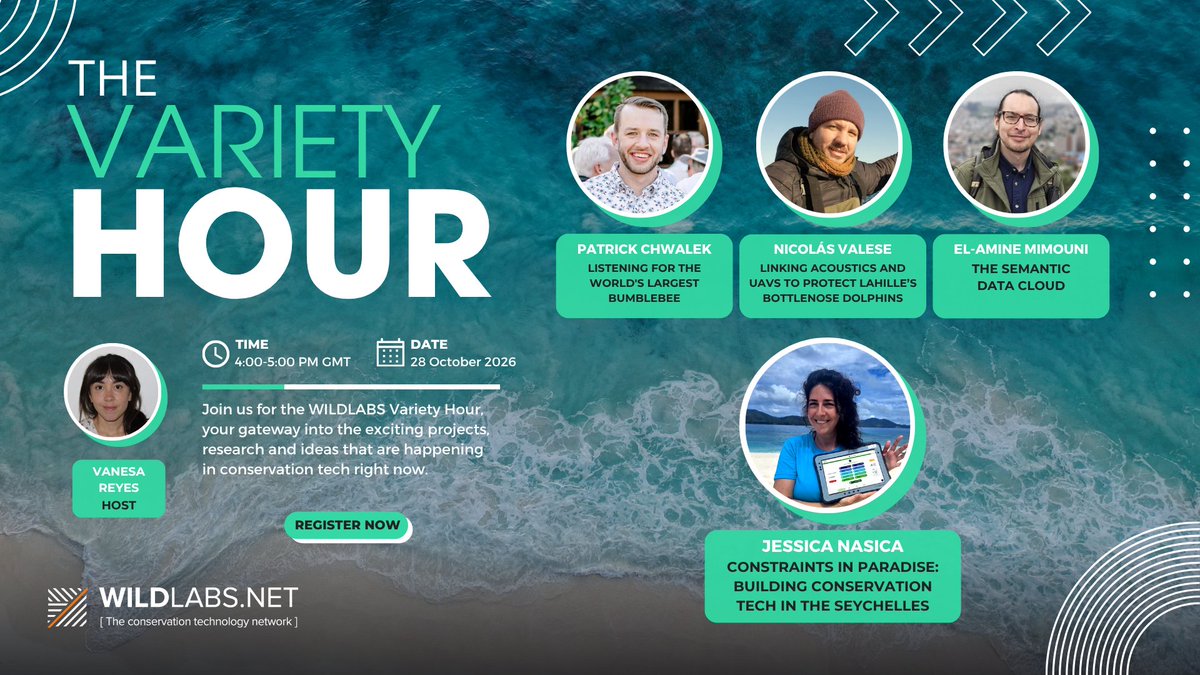
Join us on October 28 for the next WILDLABS Variety Hour!
Learn about new approaches in #tech4wildlife, from AI-powered bumblebee monitoring and acoustic dolphin research to biodiversity data sharing and conservation tech in the Seychelles.
Register: https://t.co/aPG9nS956f
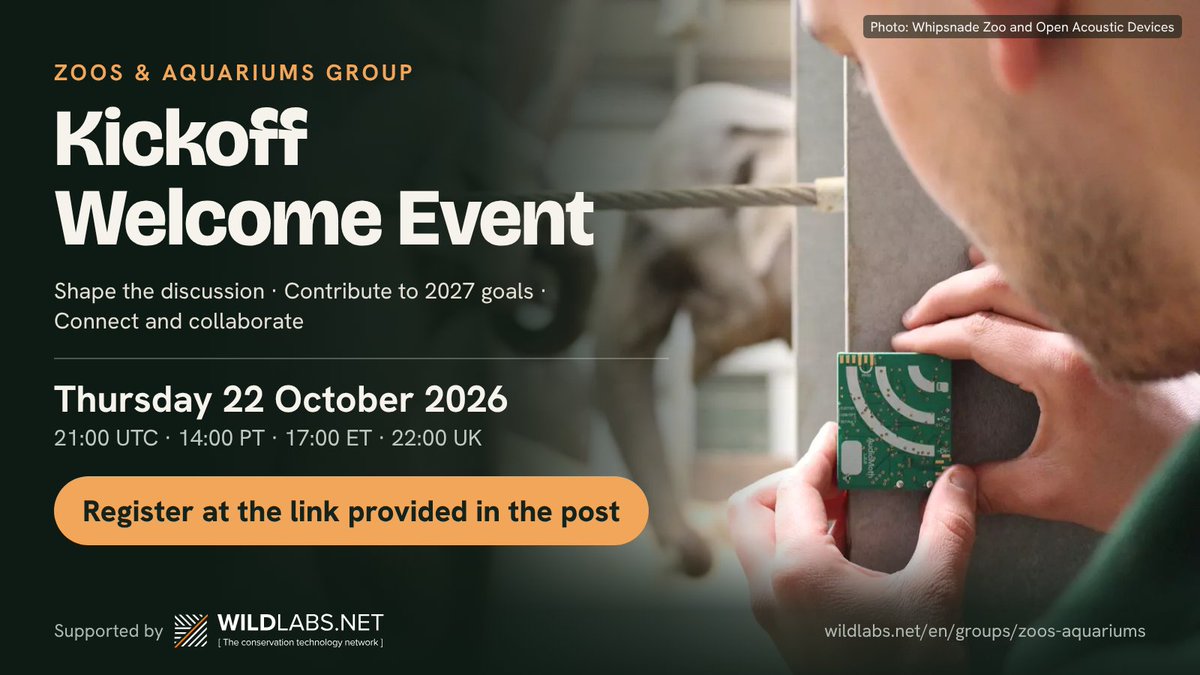
Our Zoos & Aquariums group leaders are hosting their first community gathering tomorrow!
Meet the leaders and help shape the group's activities and collaborations.
🗓️ Oct 22 | 21:00 UTC
👉 Register: https://t.co/l1Lf18AsGN
How do you study whales while minimizing disturbance? 🐋
This WILDLABS Awards 2025 project in Brazil is developing an AI-powered smart drone to make whale tagging safer, more efficient, and less disruptive.
Learn more: https://t.co/wkaKqfZjAw
#Tech4Wildlife#Oceans#Drones
Missed the September Variety Hour? The recording’s up now 🎬
Emerging innovations in movement ecology, movement data in biodiversity indicators, vicuña tracking in the Bolivian Andes, automated playback systems, and more.
👀 Learn more and watch it: https://t.co/QNoijIGsQG
Targeted investments in #ConservationTech can unlock outsized impact.
Our 2025 WILDLABS Awards & Boring Fund projects, supported by @Arm, helped protect species, scale technologies, strengthen local expertise, and secure new resources.
👉 Learn more: https://t.co/vjo4oS5Spz
Camera traps create mountains of biodiversity data. Managing it all is tough. 📷🐻
Meet Trapper Keeper, a WILDLABS Awards 2025 project. It's an open-source, AI-powered platform for camera trap data and species recognition.
👀 Learn more: https://t.co/YQi4cU74Lt
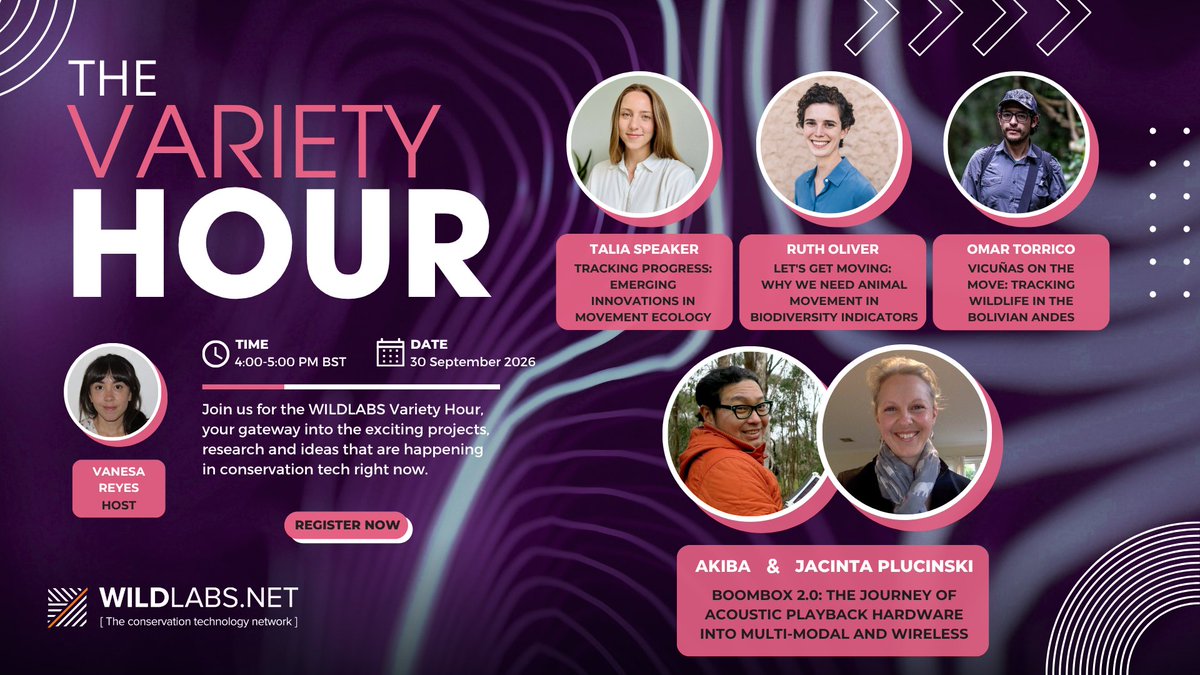
Join us on September 30 at 4pm BST for the next Variety Hour!
Learn about new approaches in #tech4wildlife, from emerging innovations in movement ecology to biodiversity indicators and multi-modal playback technology for wildlife research.
Register here: https://t.co/usKTLLg9Rz
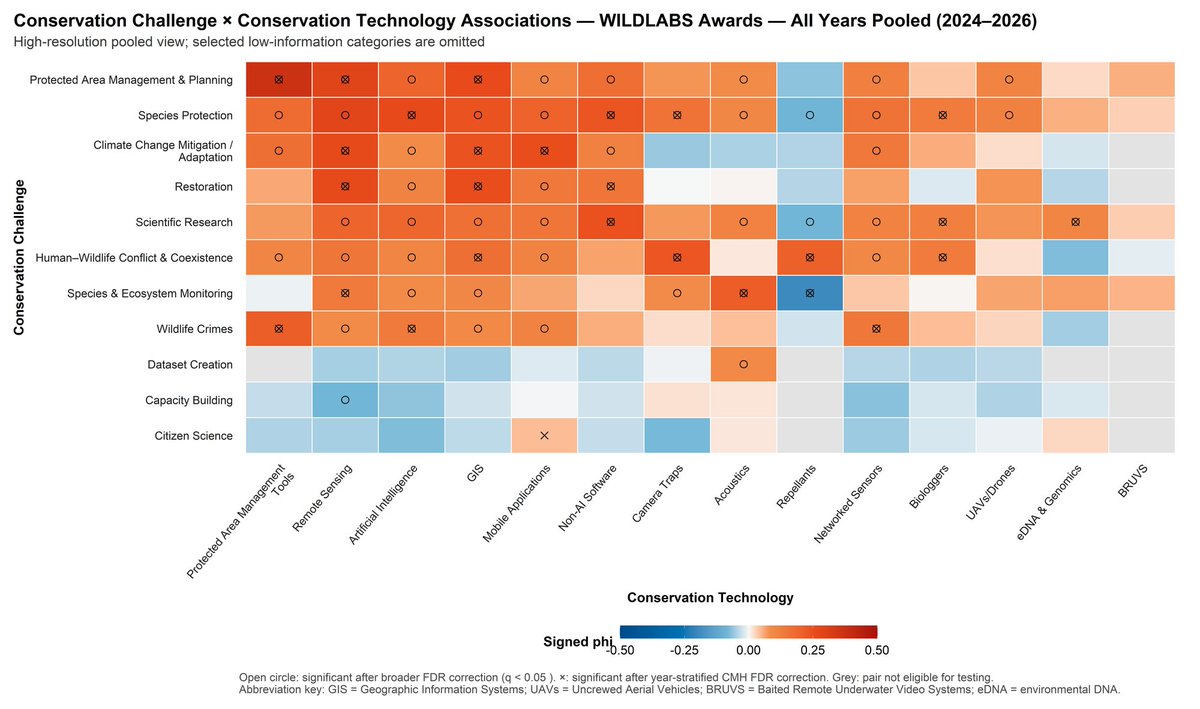
What can 2,000+ grant applications tell us about conservation tech? 📊
New analysis of WILDLABS Awards data shows where applicants are seeking support, spanning what's being developed, where, and for which conservation challenges.
👉 https://t.co/U55ZM32Slm
#tech4wildlife
Missed the August Variety Hour? The recording's up now 🎬
Biodiversity data access, fin whale movement tracking, custom pangolin telemetry, and assisted reproduction tech for endangered species. Conservation tech in all its variety, as always.
Dive in: https://t.co/5rNzLayl7i
In Kenya, a new tool is cutting elephant crop damage by 86% and large carnivore livestock depredations by 90%, without habituation. 🐘
Meet Ambiance, an open-source, solar-powered playback system developed by one of our WILDLABS Awards 2025 projects.
📹 https://t.co/xOOxlA0wRT
New paper: How do we integrate nature tech data? 🧬🌿🛰️
Now available open access, the paper looks at how camera traps, acoustics, eDNA, GPS tags, and satellite data are being combined, and what needs to improve to make biodiversity monitoring scale.
👉 https://t.co/XMRXenMRHP
Join us on August 26 at 11am EDT / 4pm BST for the next Variety Hour! 📡🐋
Hear about accessible biodiversity data, fin whale migration, new telemetry for pangolins, and assisted reproductive technologies for wildlife conservation.
Register here: https://t.co/K35pxGesmq