For 50 years, conductor Barbara Schubert led the University Symphony Orchestra, shaping generations of musicians. On May 9–10, the Opus 50 concerts will bring alumni back to celebrate her legacy—and perform with her again.
Learn more: https://t.co/c3b9QAGHtU
A quantum computer solved in approximately 15 minutes what would overwhelm the world's top traditional computers. Led by IBM with a UChicago team, the milestone demonstrates "quantum advantage"—the point where quantum outperforms classical computers.
https://t.co/xIvK4qW0HN
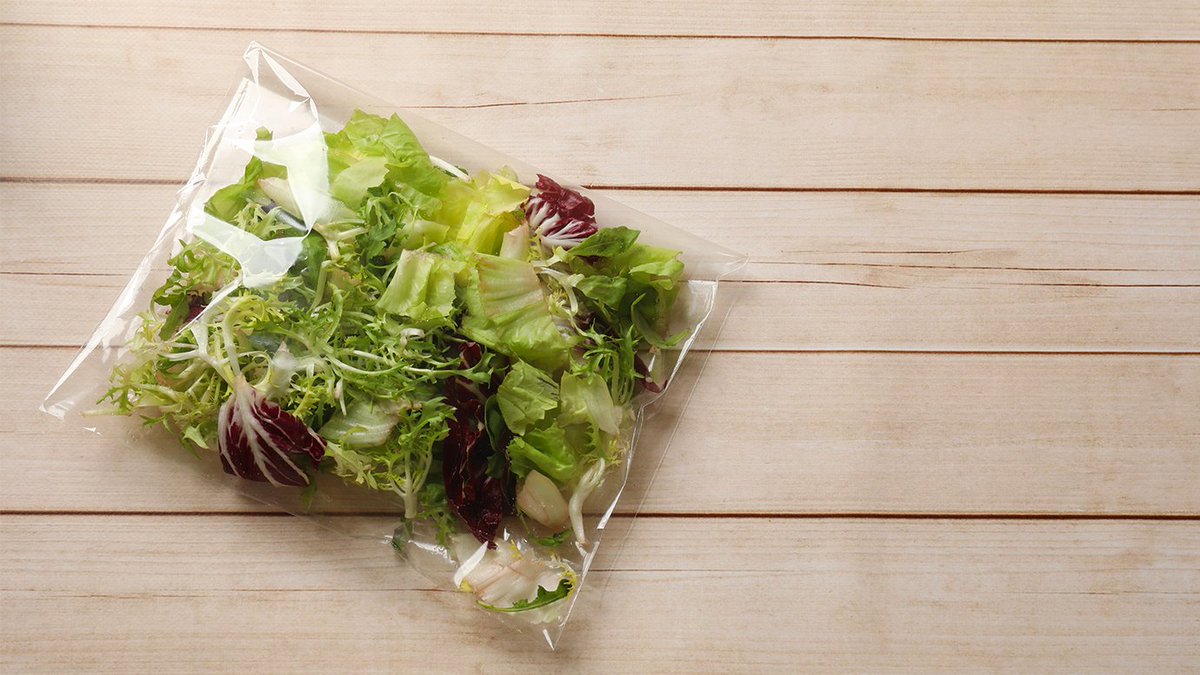
With this summer's cyclospora outbreak on track to be the worst on record, should you second-guess your salad? @UChicagoMed experts explain which fresh foods to watch, how to lower your risk and what to do if you're feeling ill.
Learn more in this Q&A: https://t.co/PjkZ2VIQbZ
The way to make a plant grow more may be to take something away. Trimming a section off a plant gene raised rice harvests up to 25% in new tests by UChicago scientists, while also creating better tolerance for drought and heat.
Learn more: https://t.co/8E3ad8EoQg
According to new UChicago research, a vast category of planets known as "mini-Neptunes" appear to be generating clouds of soot deep within their atmospheres. The findings could help explain how these mysterious worlds formed and evolved.
Learn more: https://t.co/75mFWYcLQk
What can a simple toy teach us about human-robot interaction? UChicago researchers are using PopTuber, a system that transforms plastic pop tubes into dynamic 3D shapes with just five motors, advancing shape-changing materials.
Your Sunday Watch: https://t.co/ttipRANZzP
Straight out of a science fiction movie, this interactive hologram—called the BloomBeacon by its creators at UChicago—spins into shape when you need it and disappears when you don’t.
Learn more: https://t.co/lPGeqGfwBd
The Department of Energy has renewed UChicago @Argonne, LLC's contract to manage Argonne National Laboratory for another five years, continuing its leadership of one of the nation's premier research labs.
Learn more: https://t.co/5zgApTGrug
Distant planets may be hiding more water than telescopes reveal, UChicago scientists find. Their new approach gives researchers a deeper look into 'sub-Neptune' worlds—shedding light on how we interpret signals from faraway atmospheres.
Learn more: https://t.co/IbD1lNq0k8
An ancient fossilized fish discovered more than a century ago in an English coal seam is helping UChicago scientists study how vertebrate brains evolved, thanks to its exceptionally preserved brain.
Learn more: https://t.co/oWxHWT5lKP
A new cosmic census led by @Argonne and UChicago has cataloged over 7,000 galaxy clusters—20% never seen before—offering fresh insight into how the universe grew and transformed over billions of years.
Learn more: https://t.co/lHYSHr1LwQ
What makes a decision wise? UChicago psychologist Howard Nusbaum is studying how experience and reflection shape wiser thinking through the Center for Practical Wisdom.
Your Sunday Read: https://t.co/IzDjRkRKG8
Competition is generally considered a good thing, but could it make the AI race less safe? New research from UChicago scholars finds the pressure to be first to develop artificial general intelligence (AGI) can shift resources away from safety.
https://t.co/X5rBxsCGGL
Remembering Prof. Peter B. Littlewood, a renowned physicist whose research transformed our understanding of condensed matter physics and whose leadership advanced scientific discovery worldwide.
Learn more: https://t.co/Xo6axhrji6
A nutrient naturally found in breast milk may help strengthen the immune system. UChicago researchers found that mice given a diet that included trans-vaccenic acid (TVA) increased production of immune cells during early development. Learn more: https://t.co/RJWCm8dZT5
UChicago Facilities introduced two new fish species—redear sunfish and bluegill—to the pond, along with protective boulders that provide shelter and habitat. They also added more fathead minnows, golden shiners and channel catfish to strengthen the pond’s food web.
Why is it easy to sign up for an online subscription but difficult to cancel?
On @BigBrainsUC, @UChicagoCS computer scientist Marshini Chetty explains her research on "dark patterns" on the web—the hidden tricks that companies use to deceive users.
https://t.co/8stPry5fx8
A new breakthrough by UChicago chemists shows how to easily customize molecules by swapping carbon-oxygen pairs for nitrogen atoms. This could fast-track the time it takes to develop new medicines.
Learn more: https://t.co/nHVdVa6bh0
AI music now makes up about half of new song uploads. UChicago computer scientists developed Quicksilver, a browser extension that helps identify AI-generated songs and promote transparency in music.
Learn more: https://t.co/XWYURpAX59
Search “fire” in UChicagoNode to overlay Great Chicago Fire maps on today’s city in the @UChicagoLibrary’s new hub. That’s one of the connections the platform makes possible — bringing together more than 4,000 files from institutions across the country. https://t.co/U02xBddbHu