NEW: $100 million went missing from an online bank.
"Neobanks" promise higher rates and lower fees, but they exist in a regulatory black box created by Andreessen, Thiel, Musk and more.
We investigated an online bank where thousands of Americans' FDIC-insured savings vanished.
Let me trace the timeline here because nobody's connecting it.
Step 1: Scrape the entire internet. Every book, every article, every conversation, every piece of art, every forum post. Do it without asking. Do it without paying.
Step 2: Train a model on all of it. Call it "artificial intelligence."
Step 3: Go to BlackRock's Infrastructure Summit and announce: "We see a future where intelligence is a utility, like electricity or water, and people buy it from us on a meter."
Step 3 is where you sell people's own knowledge back to them. On a meter.
They took the collective output of human thought, compressed it into a model, and now they want to charge you by the token to access a version of what you and everyone you know already created.
One Reddit user put it perfectly: "They stole all this data from us, the people, our life's work, creativity, art, by devouring the internet and blowing through all copyright laws. Now they want to sell it back to us in the form of a utility."
Imagine if someone photocopied every book in the public library, burned the library down, and then opened a subscription service for the copies.
That's the metered intelligence business model.
And they're pitching it to infrastructure investors as though they invented water.
@Speedkicks There's a lot of books about this, (Derivative Media, Blank Space), but after the 90's & 9/11 there was a cultural pushback against indie snobs & critics. This lead to unregulated optimism. ie, the death of the revolutionary, the establishment of wall street & culture valuation
@Speedkicks there was a whole film crew at Woodstock they knew exactly how bad it was. the real issue is death of counter culture, the "let people enjoy things" era. its a combination of art becoming capital, the algorithm controlling the narrative, and that everything is a safe derivative.
When some of my friends wanted to learn Tekken, I taught them about fundamentals and how they should approach a match. Then said, "You will apply these ideas. And then you will lose to people who have no idea what they are doing. Over and over and over."
John Alcott on filming the “candlelight” scenes in Barry Lyndon (1975), from an interview by Herb A. Lightman, published in American Cinematographer, March 1976, issue:
Alcott: "The objective was to shoot these scenes exclusively by candlelight — that is, without a boost from any artificial light whatsoever. As I mentioned earlier, Stanley Kubrick and I had been discussing this possibility for years, but had not been able to find sufficiently fast lenses to do it. Stanley finally discovered three 50mm t/0.7 Zeiss still-camera lenses which were left over from a batch made for use by NASA in their Apollo moon-landing program. We had a non-reflexed Mitchell BNC which was sent over to Ed DiGiulio to be reconstructed to accept this ultra-fast lens. He had to mill out the existing lens mounts, because the rear element of this t/0.7 lens was virtually something like 4mm from the film plane. It took quite a while, and when we got the camera back we made quite extensive tests on it.
The Zeiss lens was like no other lens in a way, because when you look through any normal type of lens, like the Panavision T/1.1 or the Angenieux f/0.95, you are looking through the optical system and by just altering the focus you can tell whether it’s in or out of focus. But when you looked through this lens it appeared to have fantastic range of focus, quite unbelievable. However, when you did a photographic test you discovered that it had no depth at all — which one expected anyway. So we literally had to scale this lens by doing hand tests from about 200 feet down to about 4 feet, marking every distance that would lead up to the 10-foot range. We had to literally get it down to inches on the actual scaling."
American Cinematographer: "You say that the focal length was 50mm?"
Alcott: "It was 50mm, but then we acquired a projection lens of the reduction type, which Ed DiGiulio fitted over another 50mm lens to give us a 36.5mm lens for a wider-angle coverage. The original 50mm lens was used for virtually all the medium shots and close shots."
American Cinematographer: "And those scenes were illuminated entirely by candlelight?"
Alcott: "Entirely by the candles. In the sequence were Lord Ludd and Barry are in the gaming room and he loses a large amount of money, the set was lit entirely by the candles, but I had metal reflectors made to mount above the two chandeliers, the main purpose being to keep the heat of the candles from damaging the ceiling. However, it also acted as a light reflector to provide an overall illumination of toplight."
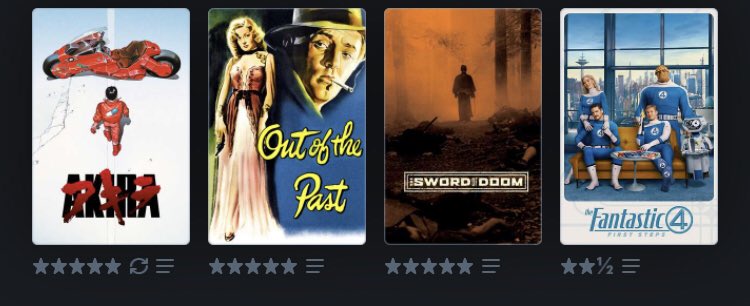
there may be worse films in terms of budget, poor acting skills, etc. but this is a film with the entire arm of Disney behind it, and all they could do is asked to be acknowledged by the larger design. Not to mention some of the worst CGI & set design i’ve ever seen.
It’s the Waluigi of movies, the core material is references to the MCU & a meta narrative about mergers & acquisitions. It can not be sustained from its own merit, or have anything valuable to say about its cast of characters.
Film Twitter treats Deadpool and Wolverine like it’s a virus outbreak it’s so funny how boring their lives have to be for them to claim it’s “one of the worst movies they’ve seen”.
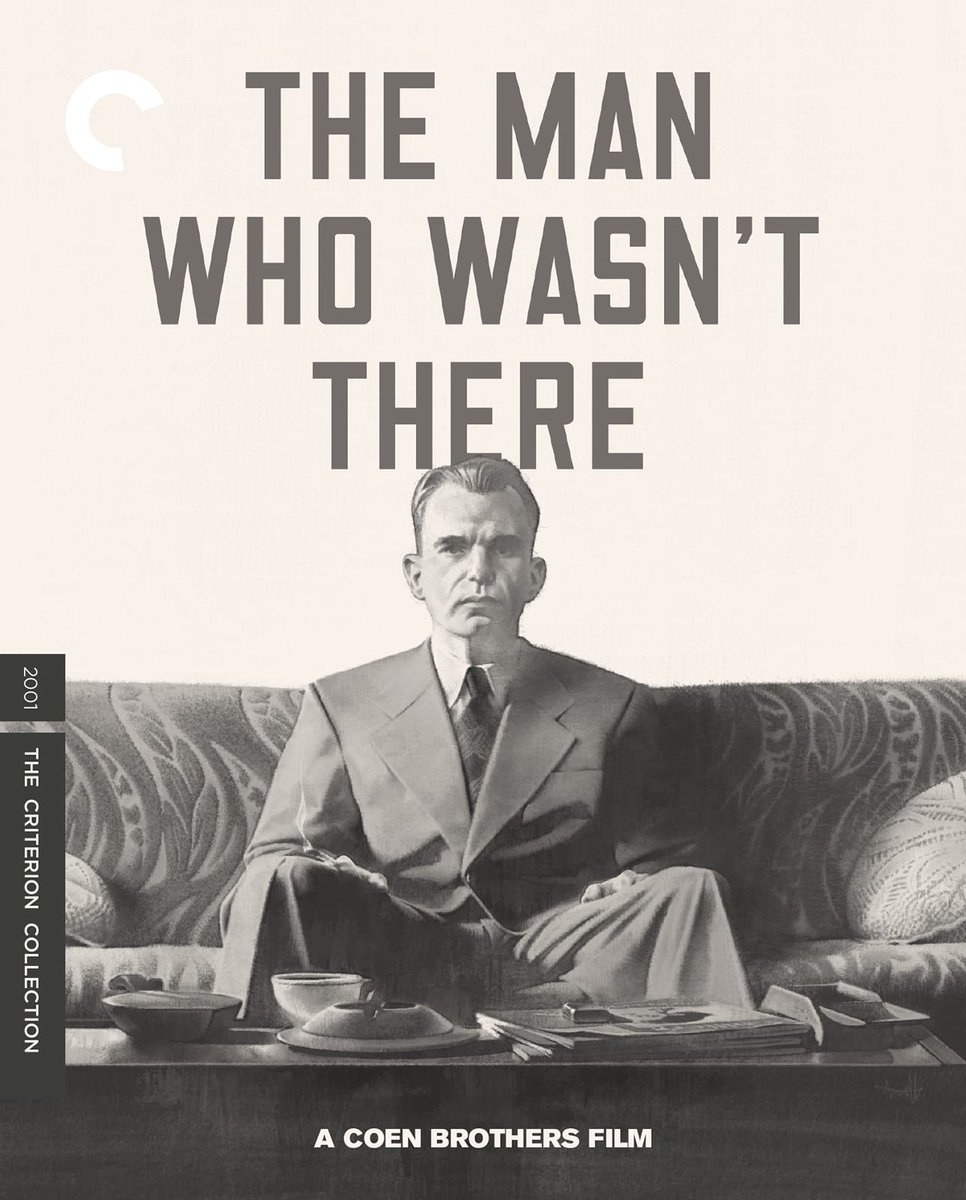
✨Announcing our FEBRUARY 2026 Criterion releases✨https://t.co/gGVvfPkNZA
A prescient X-ray of the corrupted soul of a corporate-dominated America; an existential noir thriller set in 1940s California; four elegant, bawdy pre-Code movie musicals; and, fresh from theaters, a darkly comic, gonzo revenge thriller.