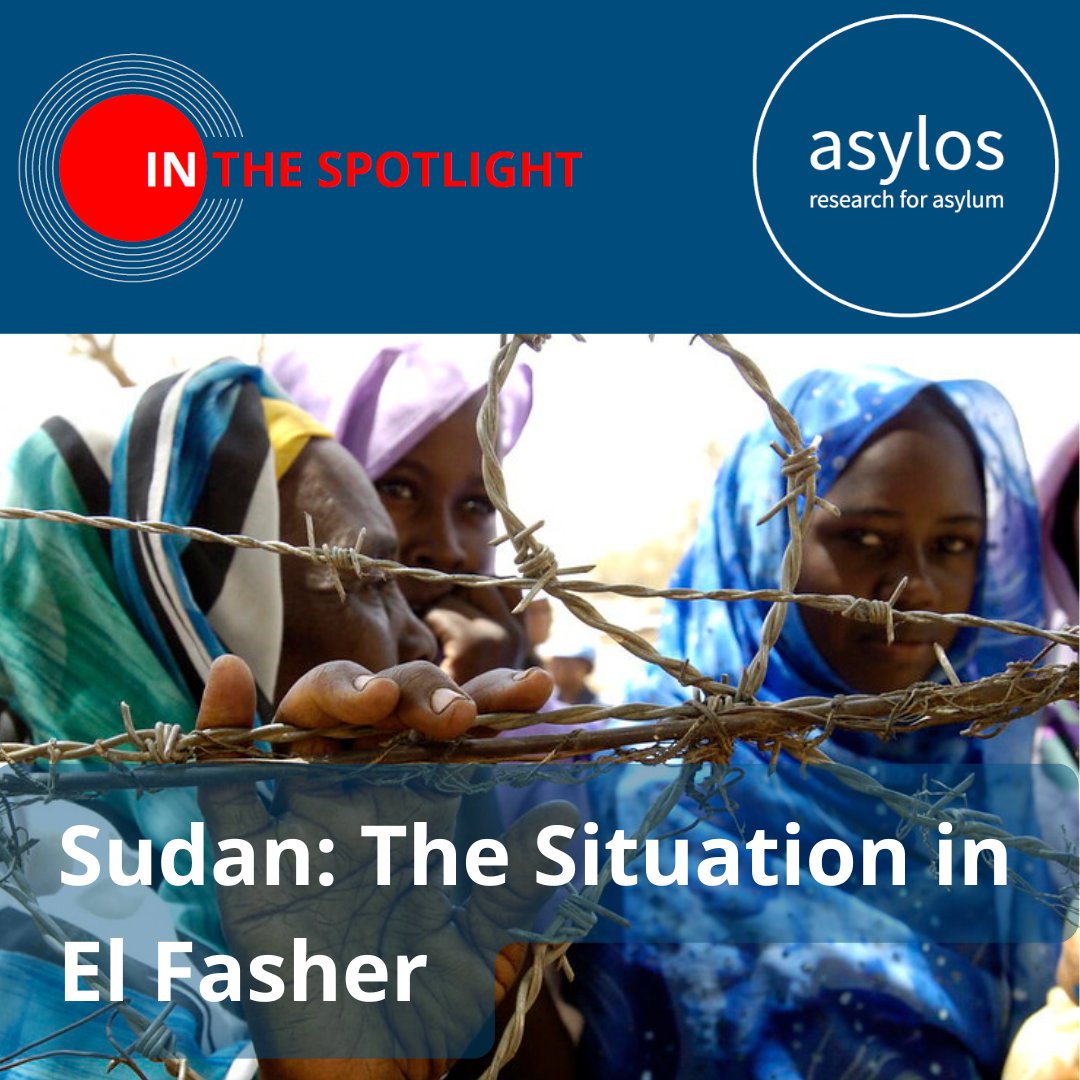
In October 2025, the RSF seized El Fasher, killing thousands in days in one of the deadliest massacres of Sudan’s civil war. For a new documentary, @LHreports and @AJFaultLines traveled to Uganda to hear survivors’ stories.
https://t.co/H2k19yCLip
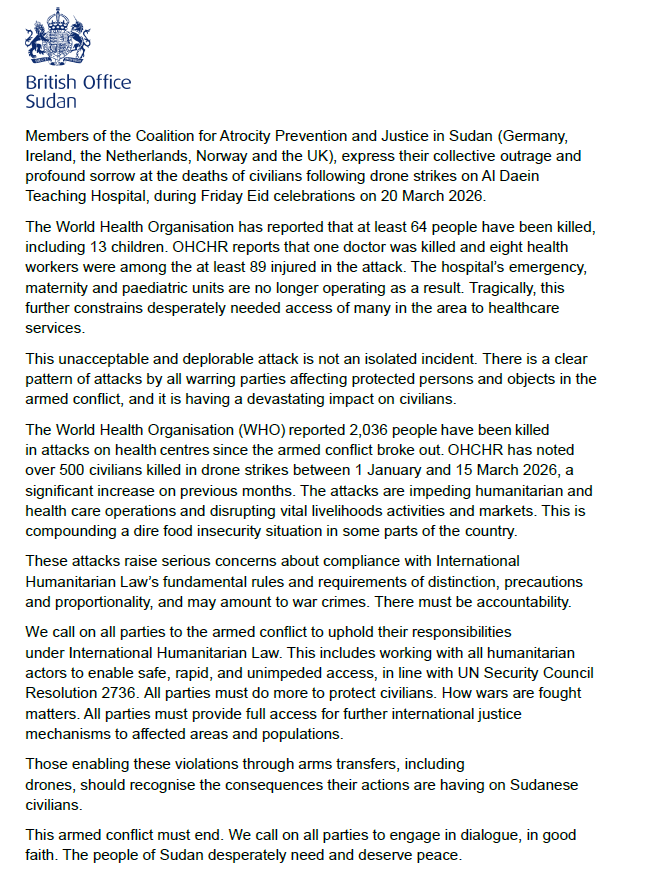
🇬🇧🇩🇪🇮🇪🇳🇱🇳🇴 Members of the Coalition for Atrocity Prevention and Justice in Sudan issue a joint statement on the drone strikes in Al Daein Teaching Hospital on Friday 20 March.
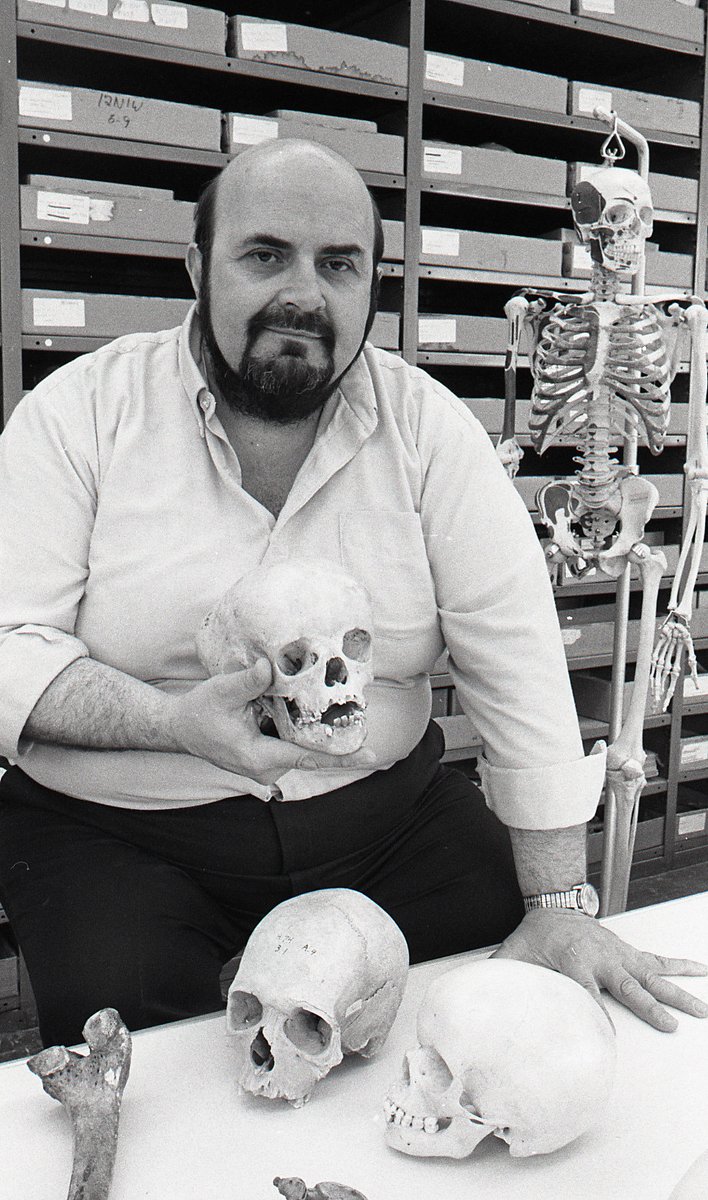
In 1980, a bioarchaeologist at Emory University named George Armelagos was studying ancient human bones from Sudanese Nubia, the kingdom that flourished along the Nile south of Egypt between roughly 350-550 CE, when something stopped him. Under ultraviolet light, the bones glowed.
They fluoresced with a distinctive yellow-green color that Armelagos recognized immediately, because the same glow appeared in the bones of modern patients who had been treated with tetracycline.
The antibiotic binds tightly to calcium and phosphorus in bone tissue as the body metabolizes it, leaving a permanent fluorescent marker. What Armelagos was seeing in bones nearly two thousand years old was chemically identical to what he saw in twentieth-century medical subjects.
The archaeological community was skeptical. The received history of antibiotics began with Alexander Fleming’s discovery of penicillin in 1928, and tetracycline itself was not isolated until 1948. The idea that a pre-literate population in the Nile valley had been routinely ingesting it seemed implausible, and the initial findings were dismissed as post-mortem contamination from soil bacteria.
Armelagos spent three more decades building the case. He eventually partnered with Mark Nelson, a leading tetracycline specialist at Paratek Pharmaceuticals, who agreed to perform a definitive chemical analysis.
The process required dissolving the ancient bones in hydrogen fluoride, one of the most corrosive and dangerous acids in existence. What the resulting liquid-chromatography mass-spectrometry analysis found was not a trace of tetracycline.
The bones were saturated with it. Multiple tetracycline variants were identified, including chlortetracycline and oxytetracycline, in concentrations indicating sustained exposure beginning in early childhood and continuing throughout life.
Ninety percent of the Nubian individuals tested showed the labeling. The exposure had not been accidental or occasional. It had been lifelong and deliberate.
The source was their beer.
Ancient Egyptian and Nubian brewing began with grain, typically emmer wheat or barley, which in that region was naturally contaminated with Streptomyces, a soil bacterium that produces tetracycline as a metabolic byproduct.
The grain was germinated, made into bread, then incompletely baked to preserve an active center, and finally fermented in vats of water. The standard practice was to seed each new batch with ten percent of the previous one, which kept the Streptomyces culture alive and active from batch to batch in a continuous chain.
The resulting brew was thick, sour, low in alcohol, and highly nutritious. Everyone drank it, including children as young as two years old.
The critical question Armelagos could not fully resolve was whether the Nubians understood what they were doing. The consensus among researchers is that they almost certainly did not know the mechanism.
They had no concept of bacteria, no understanding of antibiotics as a drug class, and no language for what tetracycline was doing in their bodies.
What they likely did know, accumulated through generations of observation and passed down as practical knowledge, was that this particular preparation of beer had medicinal effects.
Ancient Egyptian and Jordanian medical texts record beer being used to treat gum disease, wounds, and other infections.
The brewing method that produced tetracycline appears to have been deliberately maintained and refined over centuries, not by any understanding of the chemistry involved, but by the accumulated recognition that it worked.
#archaeohistories
4/ ☝🏻video & our latest newsletter lets you know how the event went: https://t.co/z9LdGFUKJb
Newsletter sign-ups: https://t.co/2Tsq4Hjcfl
📕'The Children's Drawings' book: https://t.co/JVQ3W407hZ
Donate: https://t.co/CubtwaFNO4
📹https://t.co/hRiQAq0YVG & Fable studio
🎶Jantra
1/ It seems a long time ago & so much else has happened in the world since, but a very special thing happened on 1 Nov 2025, when Sudanese individuals & communities & their allies met to discuss how youth voices might show the way towards freedom, peace & justice in #Sudan & UK
3/The global fear & instability we are facing means we need to show each other compassion & to take action to protect one another's rights. We're mindful that the visa ban for Sudanese students might limit everyone's ability to hear the vital voices of Sudan's youth.
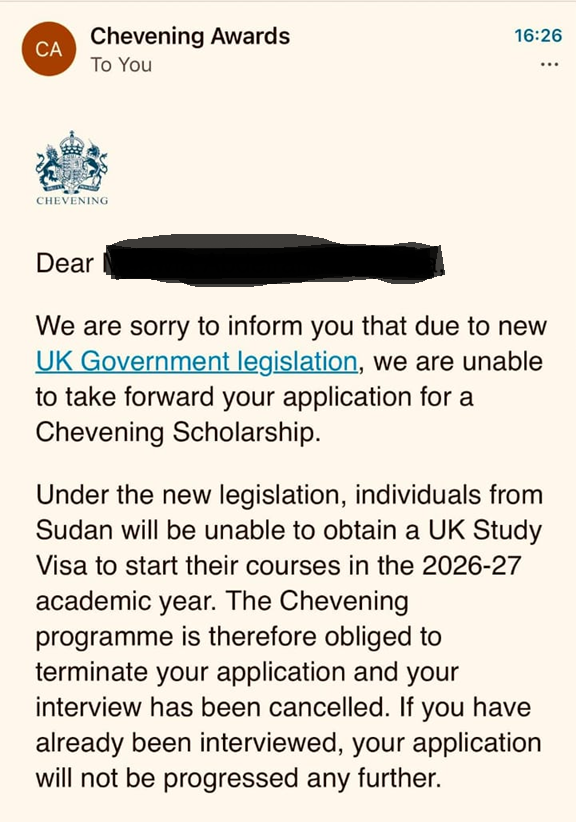
UK interior minister Mahmood cancelled all Sudanese student visas yesterday, because she thought that too many Sudanese students with UK visas have applied for asylum in 2025 (120 applications). Scholarship-winning Sudanese students are posting rejection letters online.
Looking to potentially interview international students who have had their student visas cancelled due to Mahmood's changes for a feature in The Independent. Please get in touch [email protected]#journorequest
🚨DONATE TO HELP US STOP THE GOVERNMENT TEARING FAMILIES APART
Last year, Refugee Family Reunion - the main safe route for children to reunite with family - was suspended. We’re taking legal action to challenge it.
Chip in now: https://t.co/2AFysBo3l7
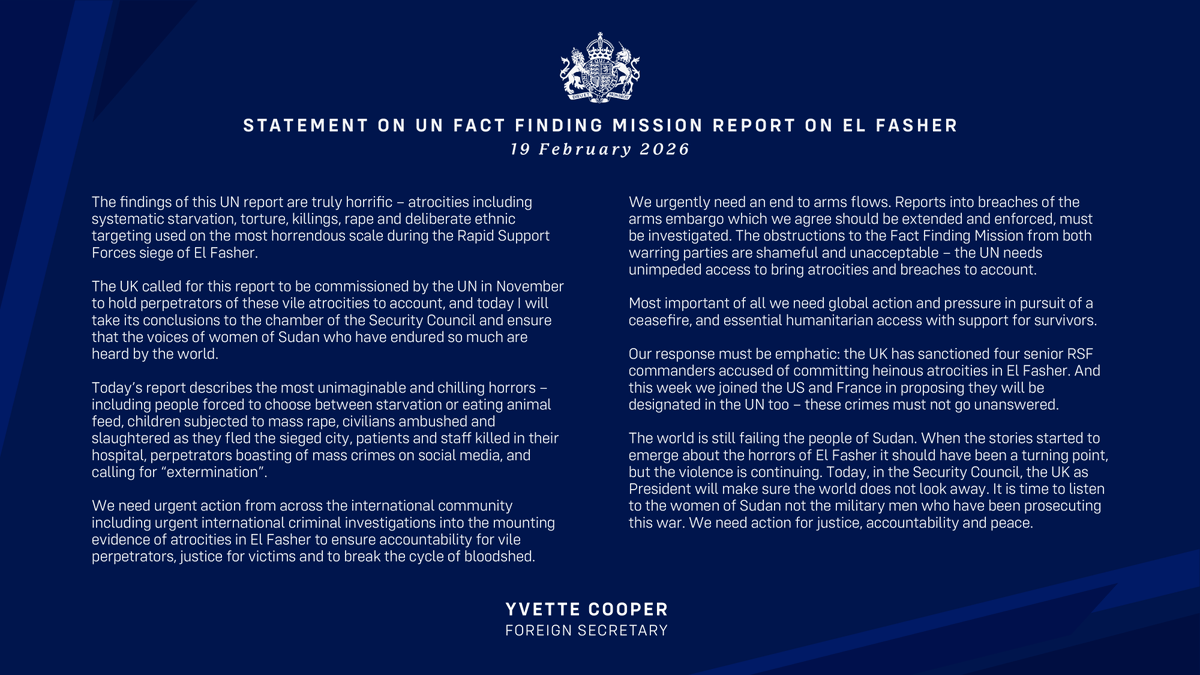
إن نتائج هذا التقرير الصادر عن الأمم المتحدة مروّعة حقًا. نحن بحاجة إلى إتخاذ إجراءات لتحقيق العدالة والمساءلة والسلام.
إطلع على البيان الكامل لوزيرة الخارجية البريطانية بشأن تقرير بعثة تقصّي الحقائق التابعة للأمم المتحدة حول الفاشر هنا
The world must not look away from Sudan.
The @UN Fact-Finding Mission’s report from El Fasher is chilling. Starvation used as a weapon of war. Systematic sexual violence.
We need accountability for the perpetrators and justice for victims. We need a ceasefire.
Privilege to have a one-to-one meeting with exiled Sudanese Prime Minister Dr.Abdalla Hamdok and his SOMOUTH delegation in @UKParliament . As @YvetteCooperMP has seen first hand, during her welcome visit to the region, Sudan's war is crucifying the country and causing mass displacement. Civil society and pro democracy groups must form a united alliance committed to ending the war and the suffering. There must be consequences for those responsible for atrocity crimes - including appalling violations of women. Dr. Hamdok is central to rebuilding a great country which has been subjected to unspeakable war crimes, crimes against humanity, and genocide. @APPGSudans@MarsdenRosalind@AnnelieseDodds https://t.co/FPAN17wa1B
🇸🇩 | We were delighted to welcome Dr Abdalla Hamdok (@SudanPMHamdok) and representatives from the Civil Democratic Alliance for Revolutionary Forces (Somoud) to @ChathamHouse to discuss their plan for pursuing peace in Sudan and efforts to strengthen civilian collaboration to achieve this.
Our extensive work on Sudan explores the underlying drivers of the ongoing war, sustained efforts towards peace, and the longer-term political and governance transition. Read more: https://t.co/cjpJOfdCAK