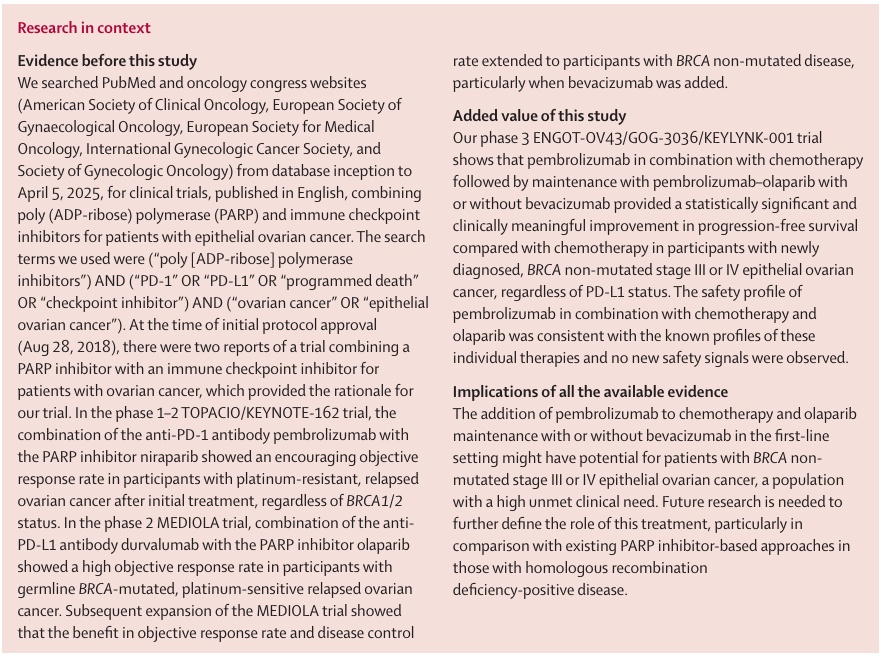
🚨Online today: Chemotherapy +/- pembro followed by maintenance pembro +/- olaparib as first-line treatment in advanced BRCA non-mutated epithelial ovarian cancer: a phase 3 trial
From the ENGOT-OV43/GOG-3036/KEYLYNK-001 investigators
Read here: https://t.co/vgLua3ZHMR
ESMO Clinical Practice Guideline Express Update on daraxonrasib in the treatment of metastatic pancreatic cancer
@Annals_Oncology
https://t.co/YzKDr6M392
👉pan-RAS(ON) inhibitor daraxonrasib included in second-line therapy
@myESMO
Pleased to share the design of the phase 3 LUCERNA trial of zolbetuximab + pembrolizumab + chemotherapy in CLDN18.2+, HER2-, PD-L1+ gastric/GEJ cancer. Enrollment is nearly complete. Looking forward to the results! @myESMO@OncoAlert https://t.co/0YI1wKLNxK
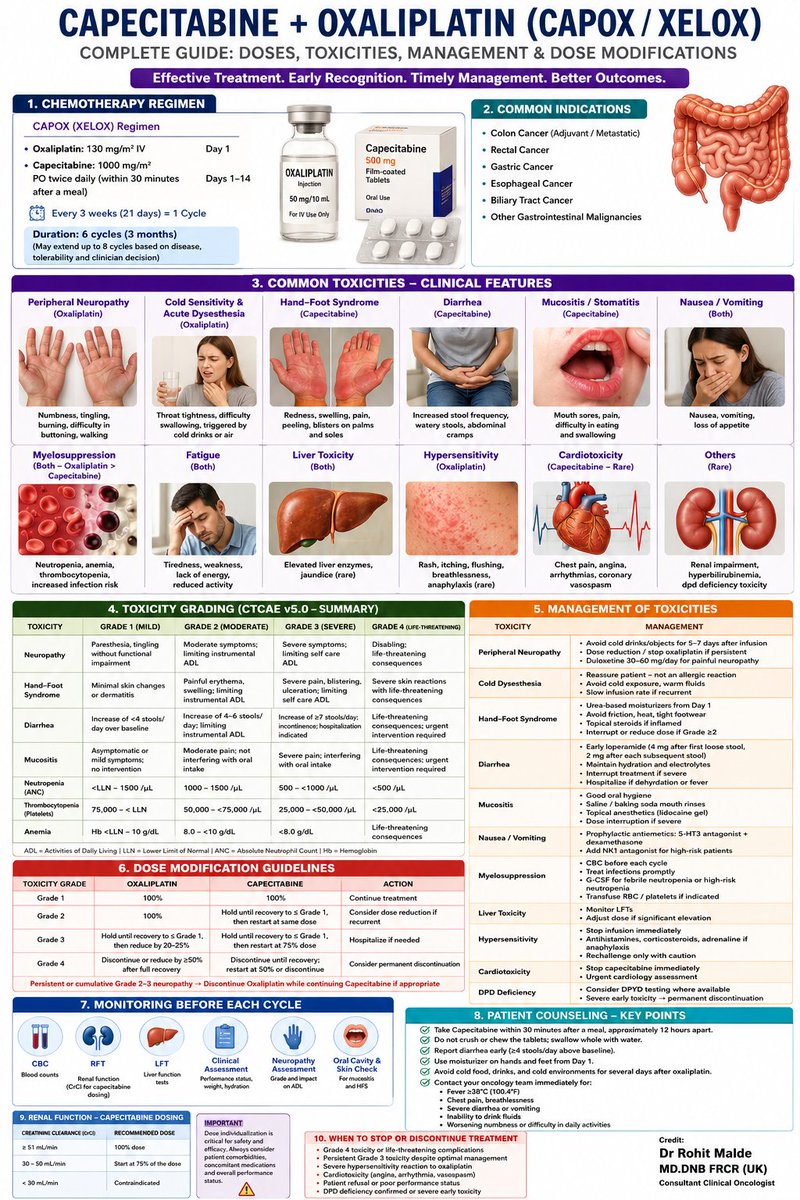
Capecitabine + Oxaliplatin
Chemo Regimen
COLORECTAL cancers
Doses
Indications
Toxicity and Grading
Dose Reductions and Stopping Rules
A simple Glance for Oncologists in Clinics
Can postoperative chemotherapy be omitted in PD-L1–positive resectable gastric cancer?
ASTRUM-006 suggests the answer may be yes.
In patients with PD-L1 CPS ≥5 gastric/GEJ adenocarcinoma, perioperative serplulimab + SOX followed by adjuvant serplulimab (without postoperative chemotherapy) improved EFS compared with standard perioperative SOX.
Key findings:
• CPS ≥10: EFS HR 0.65
• CPS ≥5: EFS HR 0.73
• 2-year EFS: 70% vs 54%
• Grade ≥3 toxicity: 47% vs 59%
A biomarker-selected, chemotherapy-sparing strategy delivered better outcomes with less toxicity.
The most intriguing question:
Is the benefit driven by PD-L1 selection, serplulimab, or elimination of postoperative chemotherapy?
#ASTRUM006 #ASCO2026 #GastricCancer #GIOncology #Immunotherapy #PDL1 #Oncology #MVOnco
What do you do when a patient with metastatic nasopharyngeal carcinoma has already failed chemotherapy and immunotherapy? 🤔
Options are limited.
Outcomes are poor.
The phase IIb MAGIC-M001 trial suggests an EGFR-ADC may offer a new path. 🧬
🔹 Becotatug vedotin
vs
🔸 Capecitabine or docetaxel
Study population:
📌 Recurrent/metastatic NPC
📌 Prior PD-1/PD-L1 inhibitor exposure
📌 ≥2 prior lines of systemic therapy
📌 ECOG 0-1
Results:
🎯 ORR
30.2% vs 11.5%
P=0.003
⏳ Median PFS
5.82 vs 2.83 months
HR 0.63
📉 37% lower risk of progression or death
❤️ Median OS
17.1 vs 12.0 months
HR 0.73
(Not statistically significant yet)
🩸 Grade ≥3 TRAEs
45.3% vs 50.6%
💡 Clinical takeaway:
For heavily pretreated, immunotherapy-exposed NPC, becotatug vedotin delivered meaningful improvements in response rate and PFS with manageable toxicity.
ADCs are rapidly reshaping the treatment landscape across solid tumors, and NPC may be next. 🚀
Full paper in comment.
@OncoAlert@myESMO@ASCO
#Oncology #NPC #HeadAndNeckCancer #ADC
PTEN loss is associated with worse outcomes in prostate cancer. Now there's a way to act on it in the hormone-sensitive setting.
🎯 CAPItello-281: capivasertib + abiraterone improved rPFS in PTEN-deficient mHSPC, 33.2 vs 25.7 mo, HR 0.81. FDA approved this month, PTEN by IHC.
⚠️ The AKT inhibitor adds hyperglycemia, diarrhea, and rash, including grade 3 rash.
🏥 Plan for it: check glucose at baseline and on treatment with metformin ready, antihistamine prophylaxis for rash, loperamide early for diarrhea (onset around day 9).
Why this matters for your practice: 💡 The supportive care and counseling need to be set up early before the first dose.
What are you recommendations for handling glucose and skin monitoring for these patients? 🩺
👉CAPItello-281 full results: https://t.co/FRpQO9hmJO
#ProstateCancer #GUOnc
🆕The addition of carboplatin to (neo)adjuvant chemotherapy (i.e., doxorubicin and cyclophosphamide followed by taxane) significantly ⬆️ event-free survival in patients with early TNBC
https://t.co/UGJo0sh930