What we found:
🇪🇺 Layer systems: 52.7% lower NH₃ EF than North America 🇪🇺 Broiler systems: 43% lower 📉 Post-2010 systems: 54% lower EF than pre-2010
Post-2010 systems: 54% lower EF than pre-2010
Emission factors evolve with housing design and manure management.
How can we choose today the best solutions for tomorrow’s livestock systems?
The NUTRITIVE project assesses the environmental, economic and social impacts of innovative technologies to support more sustainable and resilient management.
https://t.co/DdT9S4zOXN
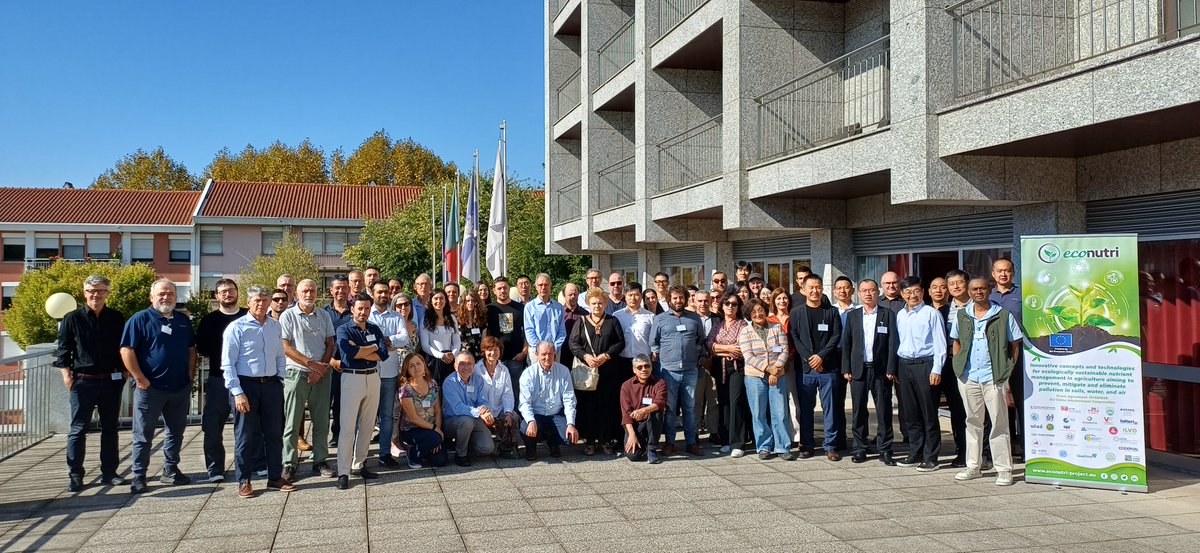
The @Econutri30 consortium gathered in Braga 🇵🇹 for a productive General Assembly reviewing progress, sharing results, and planning next steps toward more #sustainable#nutrientmanagement in #agriculture.
💡Great outcomes, strong collaboration & shared vision!
#AgriInnovation
We are four research groups launching a large-scale ag experiment in Negev and Jezreel Valley, 7crops rotation. The project will measure NP biogeo and microbial dynamics. Лooking for a postdocto lead data integration (large data), starting January/ summer 26, for 3 years. repost
🌍 Livestock housing isn’t just about animal comfort — it’s a key battleground for cutting farm emissions.
Our new Biosystems Engineering study uses the global DATAMAN-Housing database to reveal which barn practices can curb CH₄, N₂O & NH₃.
https://t.co/WKRtSDU28z
#NH3#GHG
POSTDOC JOB ALERT!!!
My lab is currently looking for two postdocs in the areas of soil health and agroecology. To learn more about the positions and to apply, please follow the link below:
https://t.co/SvrplhGCJ2
Please share this announcement with qualified candidates.
Everything is ready in Turin!
#NUTRITIVE project assembly is about to start
Over the next two days, partners from across Europe will share progress and challenges on how to improve manure management, protect biodiversity, and meet the 2030 climate goals
#ZeroPollution
💨 Slurry stinks... and it pollutes. But what if we could flip the script?
🚜 Just published:
“Acidification of animal slurry in housing & storage to reduce NH₃ & GHG emissions — recent advances & future perspectives”
@Sajjad_Razza -Visualize the different parameters or combinations of parameters in the form of jitter plots/scatter plots.
-Check if the data makes sense keeping in mind the field knowledge. Remove outliers if any.
-Check the data distribution
@Sajjad_Razza make it normalized using different transformation approaches i.e., log, etc.
I usually fit the model first and then ANOVA.
for mean and confidence intervals I follow the bootstrap approach
@Sajjad_Razza What I generally do:
Import data
Descriptive statistics:
use the summary() or describe() function to get an overview of data
Check if there are missing values. If yes, we need to see if removing them will impact the result. If yes, we should do the imputation.