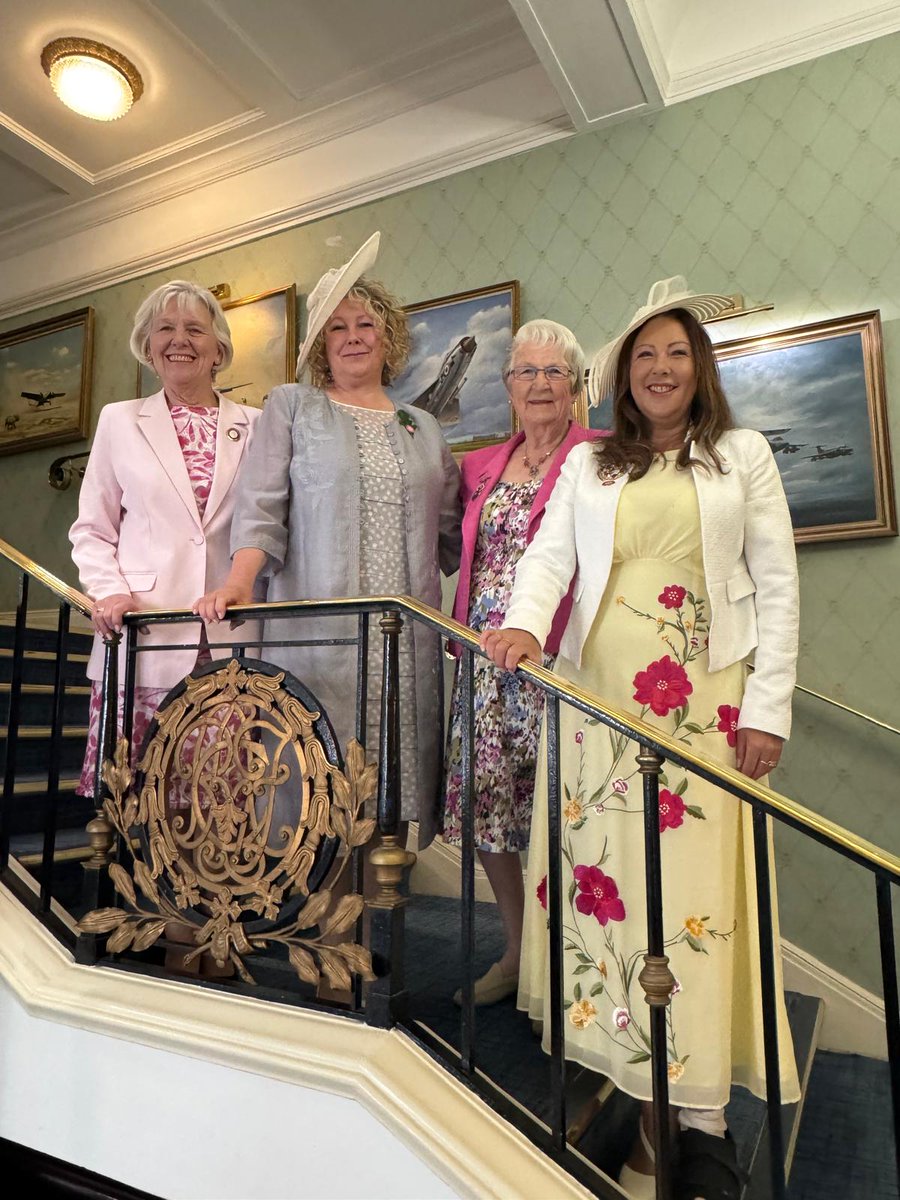
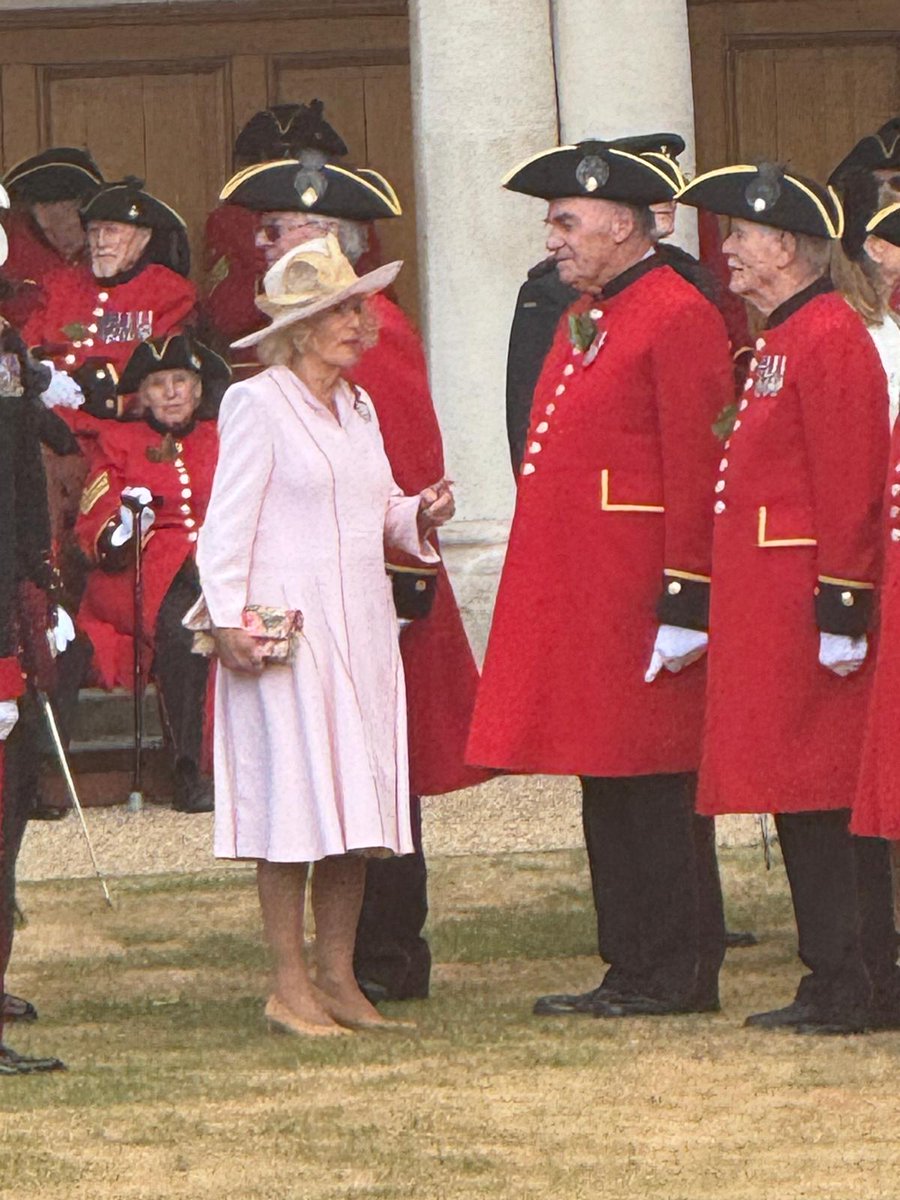
Our very own Betty Brown, receiving the OBE from our Patron, His Majesty. Betty is a victim of the Post Office scandal and has been at the forefront of the fight for justice. Go Betty ❤️👏
His date of birth is 17 Dec 2005. Please retweet this. If you know him, please tell him to remain anonymous. He just needs to contact DKMS, even if it’s to say ‘no’. That would give us closure.
I’m not going to amplify Reform’s ad by sharing it, but the wilful misrepresentation of Kemi Badenoch - selectively quoting what she said about ‘white lives matter’ - is disgraceful and dangerous.
It needs to be challenged, including by those of us who are not Conservatives.
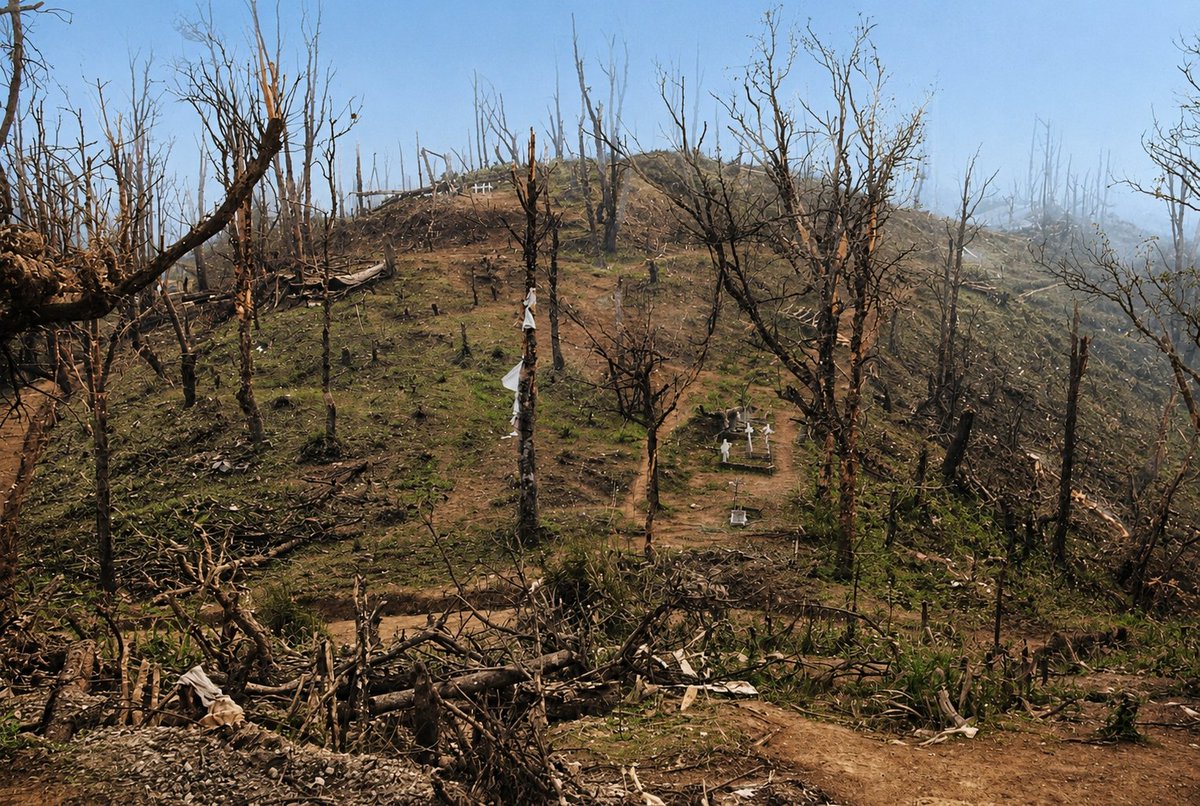
On this day in 1944, the Japanese Imperial Army's greatest defeat in history was reaching its peak in a forgotten corner of India.
By nightfall on May 26, 1944, the battle that ended Japan's last offensive of the Second World War was effectively won.
Almost nobody outside the Burma campaign knows the story.
The Japanese 15th Army, 85,000 men under Lieutenant General Renya Mutaguchi, had launched Operation U-Go in March. The plan was ambitious to the point of fantasy. Three Japanese divisions would cross the Chindwin river out of Burma, climb 7,000 feet through monsoon-soaked jungle into India, capture the British supply bases at Imphal and Kohima, and trigger the collapse of British rule in South Asia.
Mutaguchi told his officers they would feast on captured British rations within weeks. He ordered them to bring only three weeks of food. After that, they would live off the enemy.
The British, under Lieutenant General William Slim, fell back into prepared positions on the Imphal plain and at a hill station 80 miles to the north called Kohima. They dug in. They waited.
What followed was 81 days of fighting in conditions that veterans on every other front of the war refused to compare to their own.
At Kohima, the centre of gravity of the entire battle compressed onto a single tennis court behind the District Commissioner's bungalow. British and Indian troops, mostly the 4th Battalion Royal West Kents and the 1st Assam Regiment, held one side of the tennis court. Japanese soldiers held the other. They fought across it for 16 days with rifles, grenades, and bayonets, at distances of less than 30 yards. Officers threw grenades back and forth like cricket balls. The clay court was churned into a graveyard.
The monsoon arrived in mid-May. Trenches flooded waist-deep. Wounded men drowned in their own foxholes. The dead were left where they fell because no one could reach them under Japanese fire. Bodies bloated in the heat. Disease killed almost as many men as bullets did. Typhus. Dysentery. Cerebral malaria.
By mid-May, the 2nd British Division had broken through to Kohima and begun counter-attacking south down the road toward Imphal.
By May 26, 1944, the Japanese 31st Division, which had attacked Kohima, was disintegrating. Out of food. Out of ammunition. Out of medical supplies. The men were eating roots, bamboo shoots, leaves, and in some documented cases, their own dead. Soldiers too weak to walk were left behind in the jungle with a single grenade and instructions to use it on themselves before the British arrived.
By that date, virtually every Japanese position in and around Kohima had been overrun. The road south to Imphal was open.
Mutaguchi refused to authorize a retreat. To withdraw was to admit failure, and Japanese military culture treated admitting failure as worse than annihilation. His subordinate divisional commanders, watching their men starve to death, began retreating anyway, in direct defiance of explicit written orders. Major General Kotuku Sato of the 31st Division simply marched his survivors back toward Burma without authorization and dared Mutaguchi to court-martial him. Mutaguchi did not.
When the Japanese 15th Army finally fell back across the Chindwin in July, of the 85,000 men who had started Operation U-Go in March, 53,000 were dead, missing, or so broken by starvation and disease that they were no longer combatants.
Most of those casualties were not from combat. They were from hunger, dysentery, malaria, exhaustion, and despair. The trail back to Burma was lined with skeletons in tattered uniforms. Indian villagers along the route remembered finding them for years afterward.
Mutaguchi was relieved of command, recalled to Tokyo, and forced into retirement. No Japanese ground offensive of comparable size was ever launched again in the Second World War. The defeat at Kohima and Imphal broke the offensive capacity of the Imperial Japanese Army in mainland Asia.
The British and Indian troops who held the tennis court are commemorated today by a small stone memorial at Kohima War Cemetery. The inscription on it has become one of the most famous epitaphs of the Second World War:
"When you go home, tell them of us and say,
For your tomorrow, we gave our today."
In 2013, British veterans and military historians voted Imphal-Kohima the greatest battle in British military history. Greater than Agincourt. Greater than Waterloo. Greater than D-Day.
Most people in Britain have never heard of it.
Tonight my train was delayed between Bolton and Westhoughton. Why? Because of a drunken male. When located him. We stopped the train. Me, my driver and another member of staff. We got our hi-viz vests on, climbed down and walked to him. This bloke was at such a low point
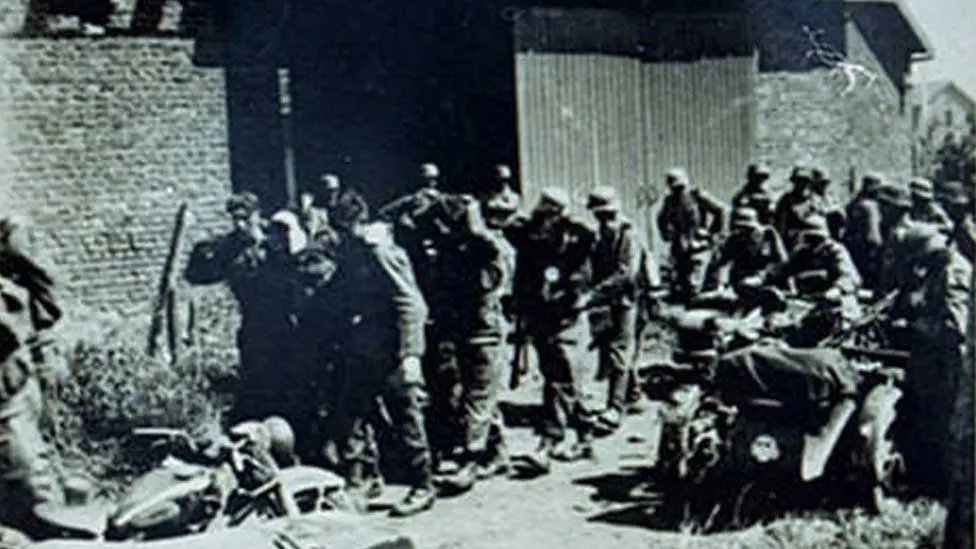
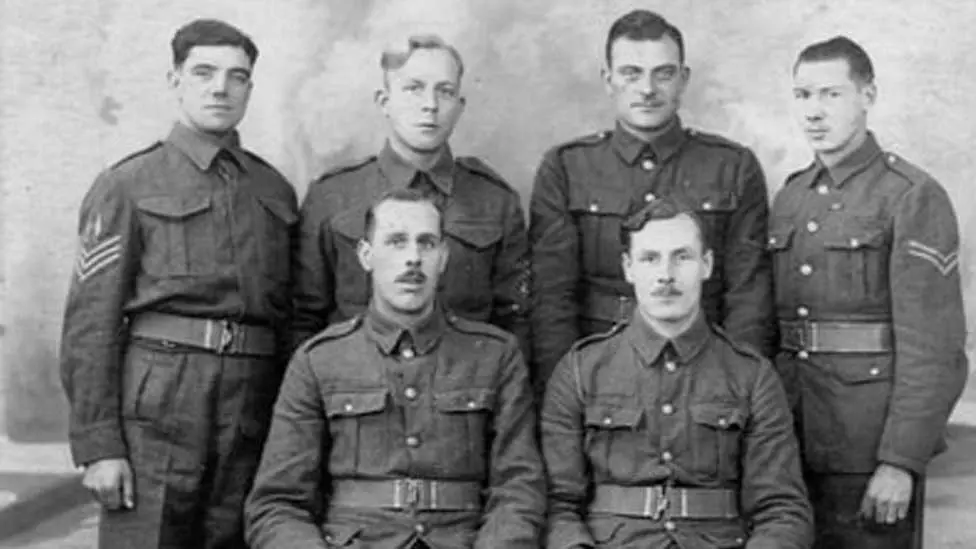
Remembering the 27th May 1940: The Le Paradis Massacre and all those who lost their lives
During the Battle of France, as British Expeditionary Force (BEF) troops fought desperate rear-guard actions to enable the evacuation from Dunkirk, members of the 14th Company, SS Division Totenkopf (under Hauptsturmführer Fritz Knöchlein) committed a war crime in the hamlet of Le Paradis, near Lestrem in the Pas-de-Calais region of northern France.
Soldiers from the 2nd Battalion, The Royal Norfolk Regiment (with some from the 1st Battalion, The Royal Scots and other BEF units) became isolated while holding a defensive line. They occupied and fiercely defended Cornet Farm (also referred to as a farmhouse or barn area) against repeated German attacks involving mortars, artillery, tanks, and infantry.
After running out of ammunition around 17:15, the defenders (approximately 99 men, many wounded) surrendered under a white flag, led by Major Lisle Ryder. They were disarmed, marched a short distance across the road to a barn wall/paddock area on a nearby farm, lined up, and murdered by machine-gun fire from two heavy machine guns. SS troops then used bayonets and pistols to finish off any apparent survivors.
97 British soldiers were killed. The Germans forced local French civilians to bury the bodies in a shallow mass grave the next day.
Two men; Private William "Bill" O'Callaghan (from Dereham, Norfolk) and Private Albert "Bert" Pooley (from Southall, London) survived their wounds by feigning death, hiding among the bodies, and later in a pigsty for three days. They were aided by brave French civilians (Madame Duquenne-Creton and her son Victor) before being recaptured by regular German Army troops (251st Infantry Division) and taken to hospital. Their accounts were initially met with scepticism in Britain but were later corroborated.
After the war, Knöchlein (by then an Obersturmbannführer) was tracked down, tried by a British military court in Hamburg in 1948, and convicted on the testimony of the two survivors and other evidence. He was sentenced to death and hanged on the 21st January 1949 in Hamelin Prison. No other German personnel were prosecuted for the massacre.
We Will Remember Them.
"𝕲𝖗𝖊𝖆𝖙𝖊𝖗 𝖑𝖔𝖛𝖊 𝖍𝖆𝖙𝖍 𝖓𝖔 𝖒𝖆𝖓 𝖙𝖍𝖆𝖓 𝖙𝖍𝖎𝖘, 𝖙𝖍𝖆𝖙 𝖆 𝖒𝖆𝖓 𝖑𝖆𝖞 𝖉𝖔𝖜𝖓 𝖍𝖎𝖘 𝖑𝖎𝖋𝖊 𝖋𝖔𝖗 𝖍𝖎𝖘 𝖋𝖗𝖎𝖊𝖓𝖉𝖘."
#WeWillRememberThem #LestWeForget
An historic night at the Tower of London! 🏰
Last week, history was made with the first all-women military and operational lineup for the ancient Ceremony of the Keys 🗝️
The Escort to the Keys, Watch Keeper, Yeoman Warder, and Deputy Governor at the Tower led the charge.
44 years ago today, HMS Coventry made herself bait.
She was a Type 42 destroyer, paired with the frigate HMS Broadsword, stationed alone north of Pebble Island in the freezing South Atlantic. Their job had a name. "The missile trap." Stand off the coast. Light up the radar. Pull Argentine jets away from the amphibious force unloading at San Carlos Water. Shoot them down if you can. Take the hits if you can't.
It was May 25, 1982. Argentina's national day.
By late afternoon Coventry had already killed. Her Sea Dart missiles had brought down two Skyhawks earlier in the day. Captain David Hart-Dyke could feel the pattern. The Argentines knew where they were. They would come again before sunset.
They came at 1815.
Four A-4 Skyhawks from Grupo 5, flying so low across West Falkland that sheep scattered in front of them. They had crossed the islands at fifty feet, threading the valleys, climbing only at the last second to see the ships. Below the radar horizon. Invisible until they were already on top of you.
The first pair attacked Broadsword. A 1,000-pound bomb struck the sea, skipped like a stone, smashed up through the frigate's flight deck, and took the nose off her Lynx helicopter without exploding. It punched out the other side and into the water beyond.
Broadsword survived. Sea Wolf locked onto the second pair as they ran in on Coventry.
Then Coventry turned to port.
She turned to bring her own Sea Dart launcher onto the incoming jets. The maneuver took seconds. In those seconds, her hull crossed directly into Broadsword's line of fire. The Sea Wolf system, looking at two fast targets behind her and a friendly ship between, went into confusion and dumped the tracks.
The Skyhawks pressed the attack home unmolested.
Three bombs hit. All three detonated.
The forward engine room went first. Then the computer room. Then the operations room, where most of the air defence crew were standing watch. The lights died. The ship lurched. The captain, on the bridge above, felt his face on fire and could not see.
Coventry began to list within a minute.
Within five minutes she was at thirty degrees.
Within twenty minutes she had rolled completely onto her side, and the men still climbing up through the dark were climbing sideways, then upward, then through hatches that had become ceilings.
Nineteen sailors died. Several were teenagers.
Hart-Dyke kept giving orders with his face burned. He was among the last men off, sliding down the upturned hull into a life raft while his ship slipped under the water behind him. He would survive. (His daughter, decades later, would become the comedian Miranda Hart. She has spoken about growing up with the scars on her father's hands.)
The same afternoon, twelve miles north, four Exocet missiles found the container ship Atlantic Conveyor. She was carrying the Chinook helicopters that were supposed to fly the British army across East Falkland. Three Chinooks went to the bottom. The fourth, "Bravo November," flew off the deck minutes before the missiles arrived. It carried the war on its back to the end.
May 25, 1982 was the worst day of the war for the Royal Navy.
It was also the day the trap worked.
While Coventry was burning, the troopships at San Carlos finished unloading. The bridgehead held. The men got ashore. Three weeks later, Argentine forces surrendered at Port Stanley.
Hart-Dyke wrote, years afterward, that he sometimes thought about the young sailors who never came home, and what they would have made of the lives the rest of them got to live. He could not quite reconcile it. He did not try to.
Today, 44 years on, a wreath goes into the water above her grave.
The online vote for the British Army Photographic Competition 2026 is now live 📸
Voting is open for two weeks so don’t miss your chance to have your say.
Cast your vote below and help choose this year’s winning images ⬇️
https://t.co/ELoZuGoztb
(Image below shows winner from a previous year)
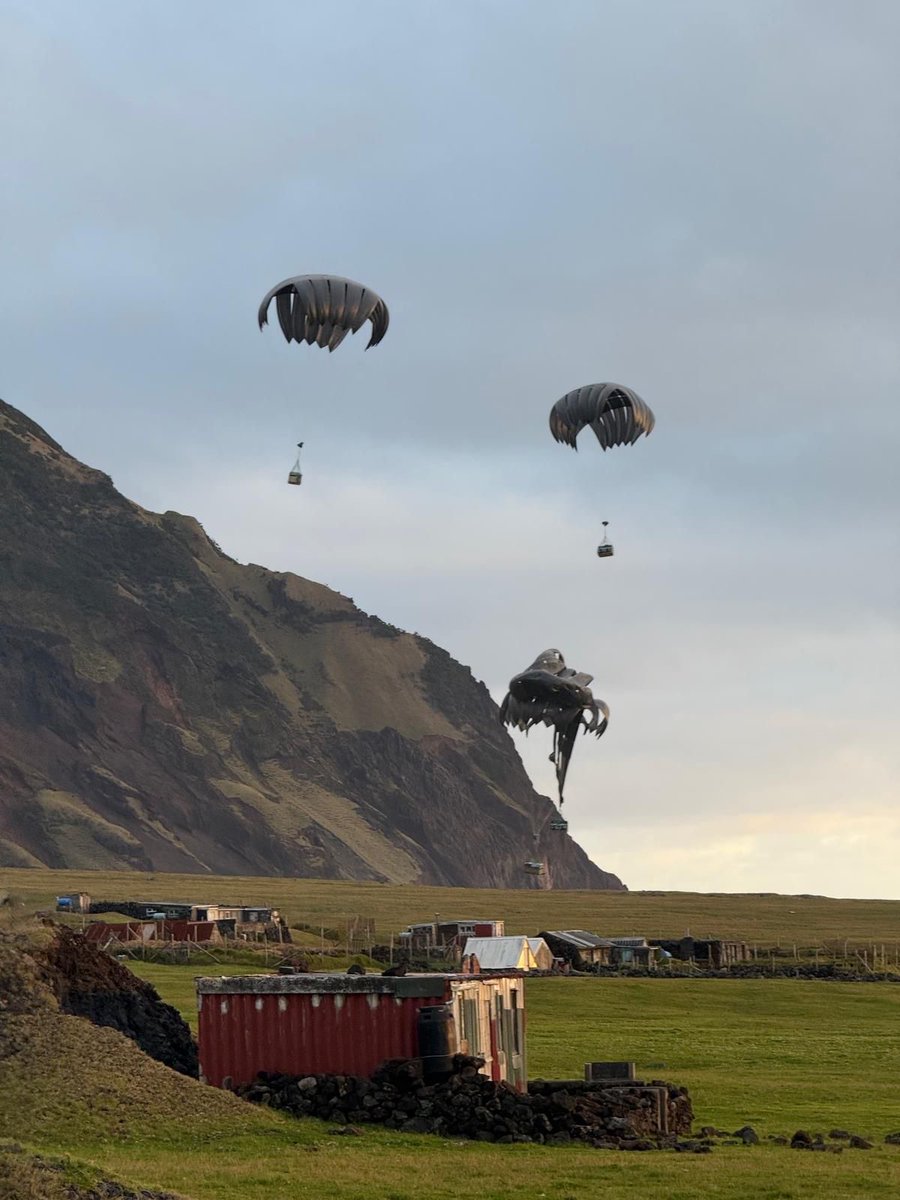
🚨 When you need to get the world's most remote inhabited island fast
British Army medics & pathfinders jumped into Tristan da Cunha last night with emergency medical supplies to treat a suspected case of Hantavirus