0 / Introducing Split Mint, an open source tool to split the funds raised on an initial #SolanaNFTs mint between various creators on @solana
https://t.co/xhVkFkuXtG
We track all of this in real time at https://t.co/XfkP2AIrSp — suspicious activity flags, validator rewards, stake sources, and much more.
This is exactly the kind of nefarious validator behavior that MCP will help mitigate. When multiple proposers compete to fill a block, no single validator can guarantee transaction ordering such that their bait trades land first such as in this case.
https://t.co/hY47LvhH8i
Some Solana validators are quietly extracting value from MEV bots using fake sandwich attacks.
No users get hurt directly — but the market is being manipulated for validator profit. Here's how it works, and why MCP can't come soon enough 🧵
We've flagged 6 validators running this strategy, backed by 1.49M staked SOL. Who's delegating to them?
@MarinadeFinance : ~991K SOL
@SolanaFndn: ~190K SOL
@jito_sol: ~73.5K SOL
That's over $100M in delegated stake supporting validators engaged in market manipulation.
Introducing Arbitrage DB. The first public searchable arbitrage database on Solana.
Tens of millions of transactions, all free to explore.
Slice the data by:
→ DEX, landing service, validator, leader location
→ specific slot or slot range
→ tx send type (priority fee vs tip)
→ user / program lookup
→ time range from 1 minute to 7 days
Whether you're scouting competition, analyzing your own flow, or just curious what's being left on the table — the data's there.
Watch the video to see what's possible — then try it yourself.
We'd love your help to make this tool even better. Let us know what you find, what's good, what's missing, and what you want to see next.
https://t.co/vKBs9MZZhn
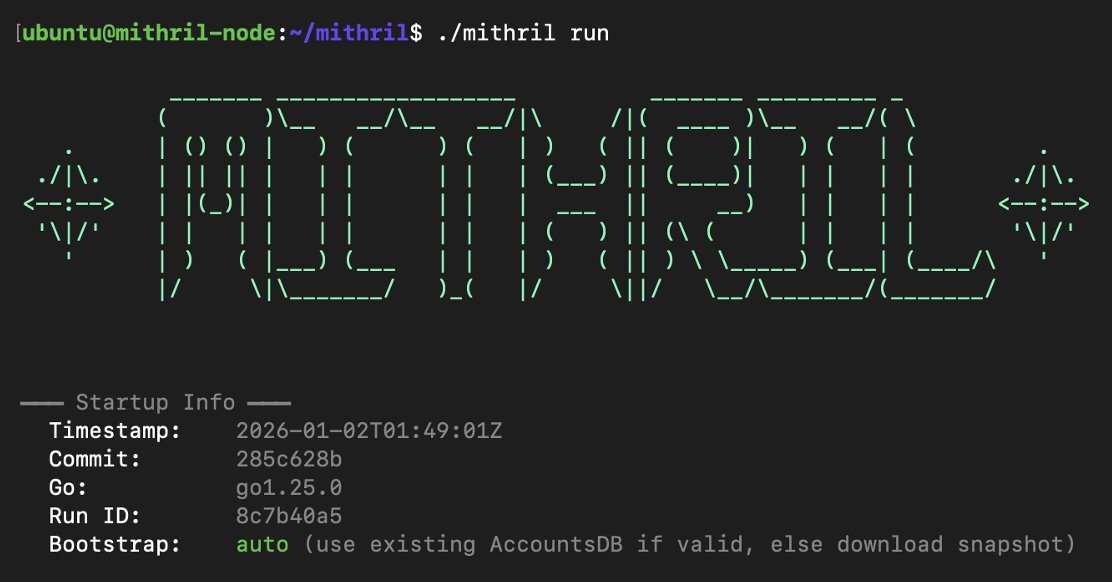
1/ Two years ago, we set out to build a full node that could verify Solana Mainnet on modest hardware and home internet, making decentralization accessible.
Today we're releasing the Alpha version of Mithril, our Solana full node client in @golang, and it can do exactly that.
@wedtm Yeah that makes sense. The less sure you are that you are up to date with the tip of network the more likely you are to send to the next leader as well just in case, so that would result in the scenario you described
Definitely understand that it would be more accurate with the first shred method for determining current slot, but even if you used a slower method, say like a pubsub client slot sub, couldn't you achieve very similar results and just assume say you might be 400ms behind or so from the tip of the network and hence send to the next leader as well as current leader when you are 2 slots away from the next leader?
Or did you find some irregularities when using slower methods?
I didn't want to imply extra priority, but in times of high demand for blockspace a staked connection will be able to send transactions successfully while unstaked node may struggle to establish a connection.
I last looked at the streaming / quic connection management code a few months ago so I naturally defer to you on any new changes! Good to hear
@defido@alessandrod@Onanaroghene@trentdotsol@jacobvcreech Yeah for the use case of simply landing a transaction regardless of when it lands then this would all work great. When you want the transaction to land fast and there is higher competition for blockspace things start to get a bit more complicated
@alessandrod@Onanaroghene@defido@trentdotsol@jacobvcreech In times of high blockspace demand though, you might not be able to establish a conn to the current leader from an unstaked / low-staked source.
And maybe not a priority feature, but there would still be overhead for an unstaked node to create a conn vs an establish staked conn
7/ Shining light here so the community and @SolanaFndn can review. Validators with public delegations should uphold high standards. Thoughts? Should this qualify for Foundation support?
0/ Some on-chain analysis has uncovered a recurring pattern of value extraction on the leader slots of the Solana validator Bs19Z9SokV1s46jutN9tqqaCgYf1GsVyyytVfkzwn9qK (Empyrial Validator). It involves strategic trades that boost slot rewards at minimal cost. Let's dive in
6/ Is this upstanding? It extracts value indirectly by manipulating slot dynamics, potentially at the expense of fair network operation. Maybe not outright malicious and extractive to direct users like sandwich attacks, but it bends the spirit of decentralized validation.