Senior Fellow @HudsonInstitute | Non-Res Senior Fellow @globaltaiwan | シンクタンク研究員 | Indo-Pac + econ | fika enthusiast | a dose of reality, one tweet at a time
Check out this essay in @NikkeiAsia with @HudsonInstitute's @augama and ME! - By not being at the table consistently, #Taiwan finds itself often on the menu. It is past time for Taiwan's companies to step forward and claim the seat at the table they have already earned. https://t.co/iCt2te0Zri
Since the beginning of the year, Taiwan's stock market has surpassed the United Kingdom, Canada, and India to become the world's fifth-largest exchange by total market capitalization.
But stocks are only a snapshot of economic activity, not a comprehensive measure of economic health.
@RileyWalters argues that unless the gains from the AI boom become more evenly distributed, Taiwan still faces fundamental economic challenges.
Read in @GlobalTaiwanInst: https://t.co/GSUKb9F1mE
🚨Taiwan energy watch 👀
LNG imports in May were normal
⚖️Quantity (measured in cubic meters) was consistent with imports this time last year
📈However, the price per MTQ is up 50% from this time last year, and from the beginning of the year
#Taiwan#LNG#energysecurity
For nearly a century, the United States has prohibited the importation of goods made with forced labor. It is time for our trading partners to follow suit.
Today, Ambassador Greer determined that the acts, policies, and practices of 60 economies related to the failure to prohibit the importation of goods produced with forced labor is unreasonable and burdens or restricts U.S. commerce.
Learn more about submitting public comments regarding the proposed responsive action: https://t.co/8Su5baWqA1
The Trump Administration is establishing a U.S.-China Board of Trade to optimize bilateral trade in non-sensitive products and deliver results for American farmers, ranchers, fisherman, small businesses, manufacturers, and workers.
While robust tariffs remain in place to combat China’s unfair trading practices and defend U.S. interests, going forward, seeking balanced trade with China in key sectors and products can bring stability to this economic relationship.
Learn more about submitting public comments regarding the development of the U.S.-China Board of Trade and this new phase of U.S.-China trade relations: https://t.co/BDa7i5IpKw
China has just released new State Council regulations on outbound investment (《国务院关于对外投资的规定》), significantly tightening controls on Chinese investors investing abroad. The new rules expand the scope of state oversight and further integrate outbound investment into China’s broader national security, export control, and data governance framework.
Key provisions include:
1. The definition of “investor” has been broadened. Previously, the rules mainly applied to domestic enterprises and organizations (中国境内的企业、其他组织). The new regulations explicitly include individual residents (居民个人). Article 27 also states that investors who fail to complete required approval or filing procedures for overseas investment may face fines and confiscation of illegal income. This likely explains last week’s draconian restrictions on Chinese individuals investing through foreign stock brokers.
2. Article 13 directly links outbound investment to China’s export control regime. Investors are prohibited from exporting or using banned goods, technologies, services, or related data abroad, and restricted items require prior authorization. The provision also covers indirect technology transfer through cross-border deployment of personnel, technical guidance, overseas work arrangements, or training programs. In effect, outbound investment is now explicitly tied to China’s controls over technology, data, and talent flows.
3. Article 15 incorporates outbound investment into China’s national security review system. Relevant State Council departments may review overseas investments, asset transfers, or disposals that affect or may affect national security. Organizations and individuals are required to cooperate fully and comply with review decisions. This provision is particularly noteworthy when read alongside the recent ban involving Manus.
4. Article 22 further restricts cooperation with foreign legal and regulatory authorities. Chinese organizations or individuals involved in overseas litigation, arbitration, or foreign investigations must comply with China’s laws on state secrets, data security, personal information protection, export controls, and judicial assistance before providing evidence or materials abroad. Where approval is legally required, the relevant procedures must be followed first. In practice, this makes it extremely difficult for foreign governments to obtain data from Chinese firms — a point illustrated by China’s recent first finding of improper foreign extraterritorial jurisdiction in the Nuctech case.
5. Article 32 extends these rules to investments in Hong Kong, Macau, and Taiwan unless separate rules apply. This means the new outbound investment controls also affect the Hong Kong market, potentially dealing another blow to Hong Kong’s role as an international financial center.
Overall, the new regulations mark another major step in China’s tightening control over cross-border capital flows, technology transfer, and overseas economic activity. It is becoming increasingly difficult for Chinese investors to invest abroad independently of state oversight. The move also suggests growing concern in Beijing over capital outflows and pressure on China’s foreign exchange reserves.
https://t.co/DBR9u1L9H0
Japanese Defense Minister Koizumi Shinjiro, a graduate of Columbia University, spoke in English at the Shangri-La Dialogue in Singapore.
He told Pete Hegseth that he feels US security commitments to the region are "unwavering."
The Trump administration will not turn a blind eye to foreign trade practices undermining American innovators and creators.
Today, Ambassador Greer initiated a Section 301 investigation to examine Vietnam’s acts, policies, and practices related to IP protection and enforcement.
https://t.co/gONR5HgmUR
The US announced preferential tariff treatment for certain Taiwanese exports, fulfilling a part of a bilateral investment MOU signed earlier this year.
"The US side is moving ahead with implementing its part of the agreement," @WalteRiley said.
"This reflects an expectation that Taiwan will also commit to its part of the agreement once the Section 301 adjustments are made later this year."
Read in @Focus_Taiwan: https://t.co/Xfp5fsuWLh
The United States on Thursday formally announced preferential tariff treatment for certain Taiwanese exports under Section 232 tariffs, fulfilling a part of a bilateral investment memorandum of understanding signed earlier this year.
https://t.co/PKWahfeW74
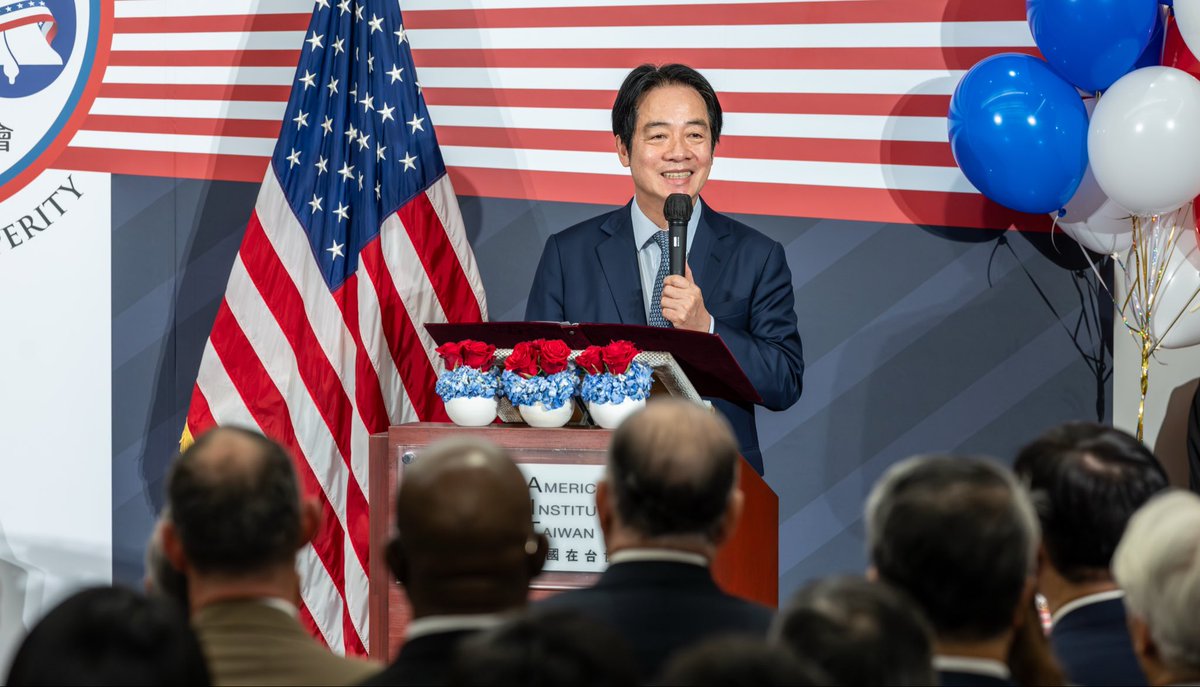
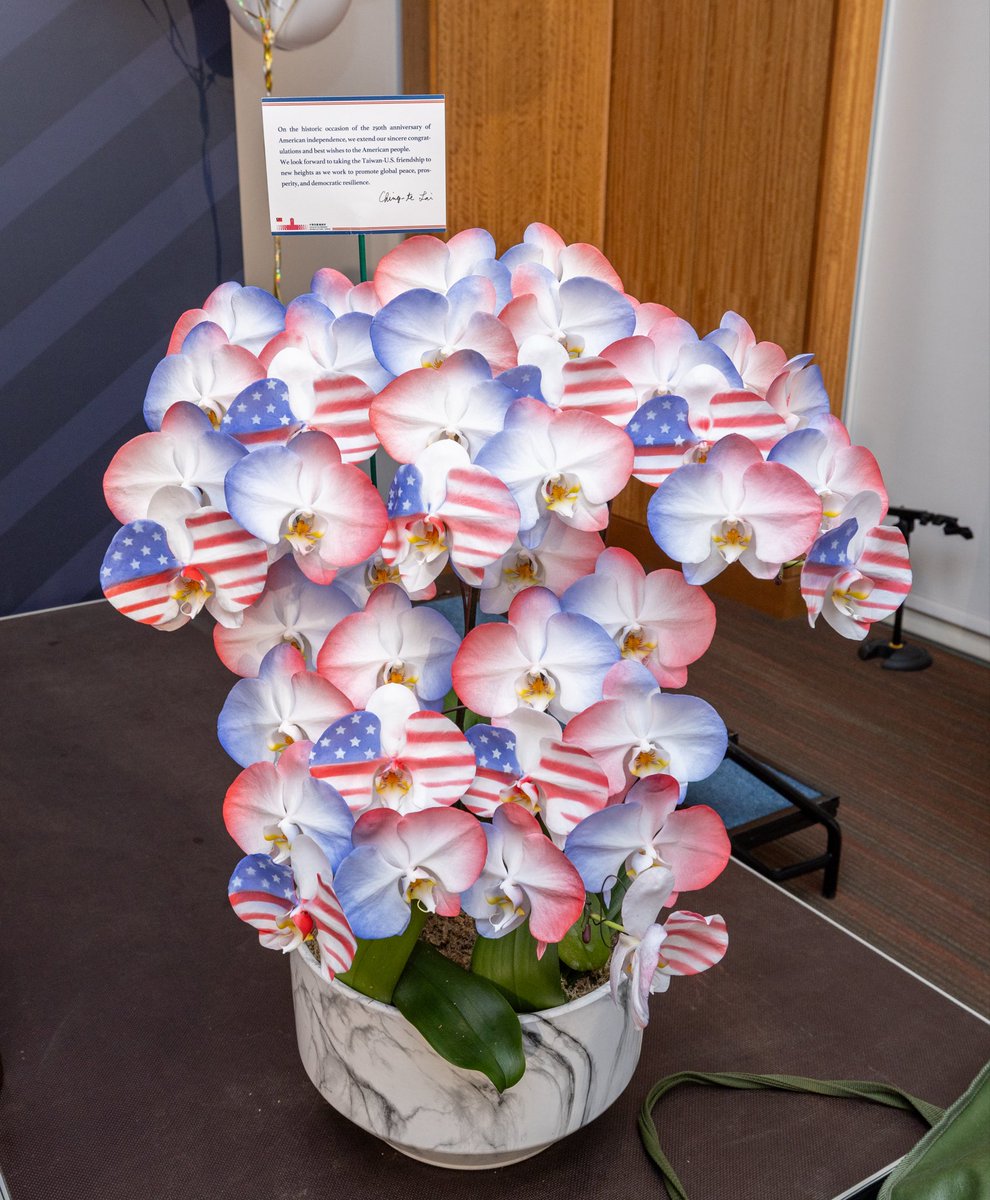
Celebrating 250 years of American independence & the #Taiwan-#US friendship with #AIT. Rooted in freedom, our partnership has continued to grow through stronger economic ties & a shared commitment to preserving the status quo of peace and stability across the Taiwan Strait.
The Trump administration is removing some tariffs on imports from Taiwan to implement parts of a previously agreed trade deal with the US. https://t.co/fOUBCZWMyY