1/ Can Large Language Models (LLMs) truly reason? Or are they just sophisticated pattern matchers? In our latest preprint, we explore this key question through a large-scale study of both open-source like Llama, Phi, Gemma, and Mistral and leading closed models, including the recent OpenAI GPT-4o and o1-series.
https://t.co/2tv8Pp9MSz
Work done with @i_mirzadeh, @KeivanAlizadeh2, Hooman Shahrokhi, Samy Bengio, @OncelTuzel.
#LLM #Reasoning #Mathematics #AGI #Research #Apple
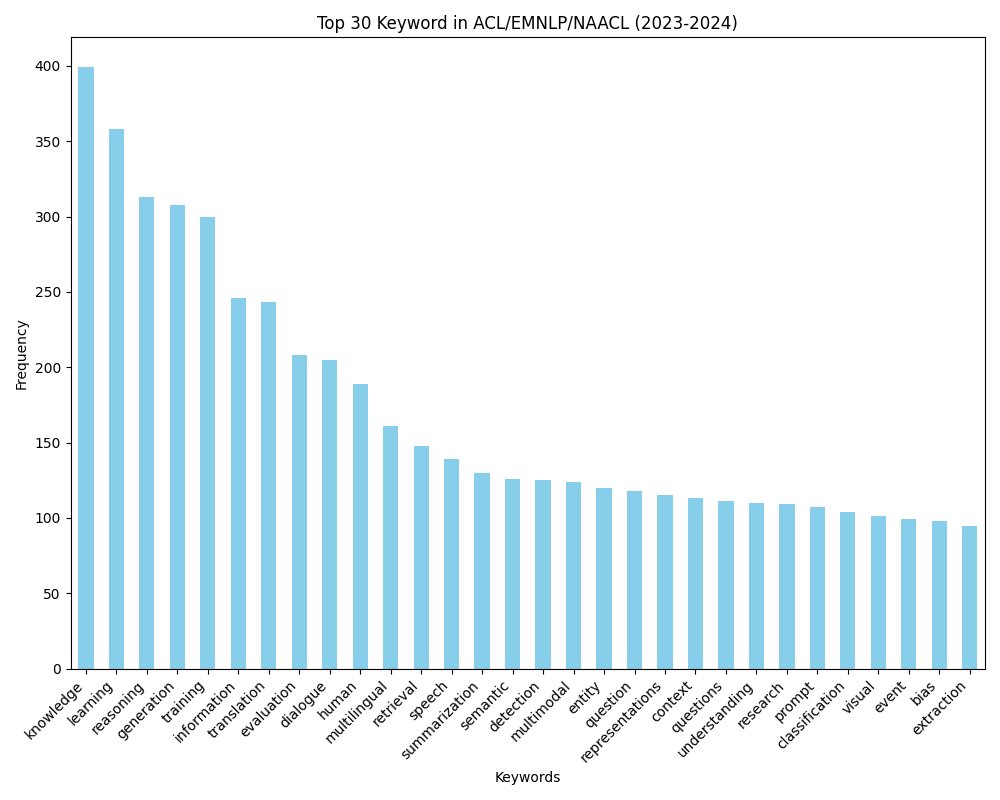
Some high-frequency words parsed from paper abstracts in ACL/EMNLP/NAACL from 2023 to 2024, "knowledge", "reasoning" and "generation" are becoming the most popular topics.
The Conference on Language Modeling 🦙 (https://t.co/KTadrsQxFA) has the mission of "creating a community of researchers with expertise in different disciplines, focused on understanding, improving, and critiquing the development of LM technology." 🧵
Here are 17 papers from 17 "venues" representing the COLM CFP (https://t.co/eTEpaomB7S). These are meant to illustrate the broad range of communities thinking about LMs.
I am very excited to announce I have been successful in installing and operating a full ChatGPT knowledge set and interface fully trained on my local computer and it needs no Internet once installed.
There are no editors and there is no censorship.
I am using Alpaca (https://t.co/tJeAa5jYxN) from Stanford and Dalai Lama.
The training model cost about $530 to build locally yet has the abilities of GPT 3.5.
The software is free and open source and I am working on preconfigured packages for anyone to have local training and access to a LLM GPT AI.
This model is now in a live connect with all of my other AI systems and the results have been absolutely stunning.
I will be writing more about this soon.
But today know, you will own your own AI and it will only answer to you.
Great appreciation to my amazing collaborators for their help and guidance @hanjie_chen@yangfeng_ji@UVA_ILP ❤️
Paper: https://t.co/6RZmqTOJgn
Code: https://t.co/ejjCXesKGw
🥳Excited to share our work at #EMNLP2022 Findings! We propose a two-phase self-training framework for few-shot MR-to-Text generation.
Fig.1 shows examples of our pseudo-labeled data.
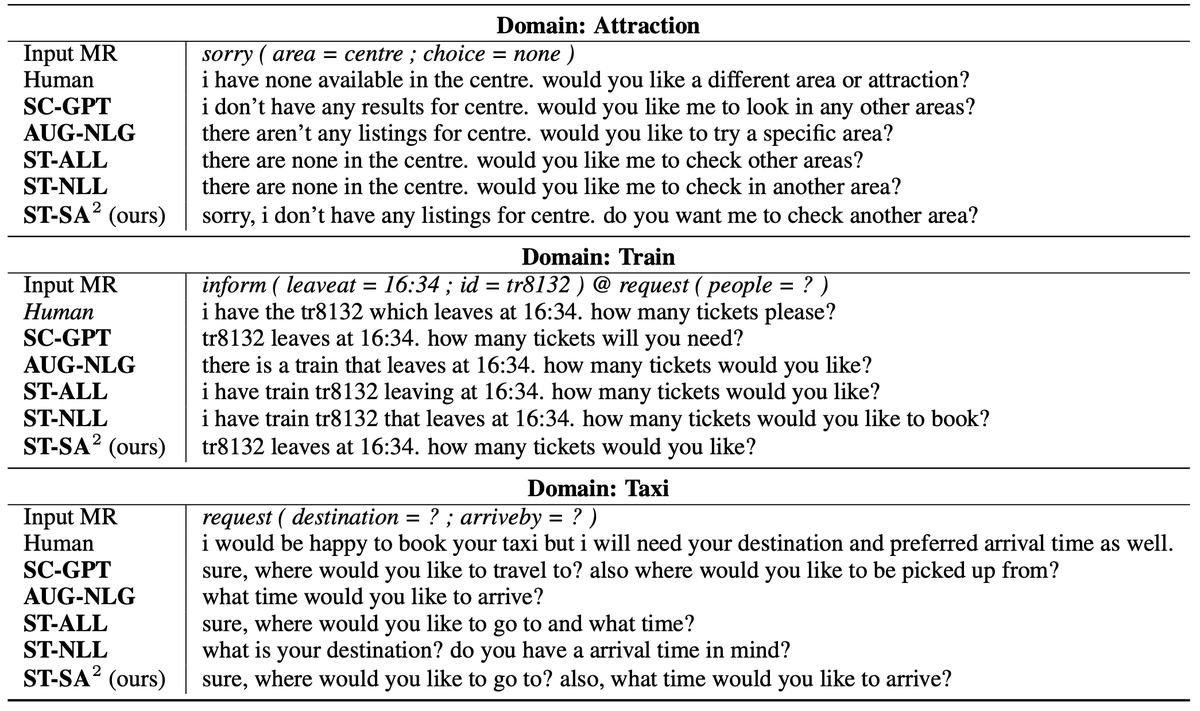
Fig.2 is our framework and Fig.3 compares our model outputs with other models.
Experiments on FewShotWOZ and FewShotSGD datasets suggest our self-training algorithm can effectively filter out the "too noisy" and "uninformative" augmented data, which helps the NLG model achieve improved performance in the low-data setting.
We are excited to present our recent improvements on the iterative text revision task at #EMNLP2022!
Come check it out in Poster Session 2 at 11:00AM on Dec. 9, 2022.
Paper: https://t.co/WjeaaYdkeq
Code: https://t.co/YC8ZWLhXdh
#EMNLP2022#nlpproc
Hi #NLProc friends, Grammarly Applied Research Team is looking for Ph.D. student interns for summer 2023. We will work on some really interesting problems in controllable text editing and generation, working toward our focus on improving communication! #research#internship
The secret to aligning LMs to human preferences is reinforcement learning. But Why&How is it used? Announcing
💻RL4LMs: library to train any @huggingface LM w/ RL
https://t.co/73rpjTWxfc
👾GRUE: benchmark of 6 NLP tasks+rewards
📈NLPO: new RL alg 4 LMs
🌐https://t.co/7uPL0KD8G4
💥New ACL Paper Alert💥
#acl2022nlp#nlpproc
Iteratively revising a text is a crucial part of writing, and in our paper, we find the text quality keeps increasing as humans “iteratively” revise the text. To foster future research, we construct the IteraTeR dataset (first figure).
If you are interested in human-machine interactive text revision, please check out our paper, which won 🎉the best paper award🎉 at #In2Writing workshop at #ACL2022! We attach more details below.
Paper: https://t.co/rC5AyF9Jhu
Demo: https://t.co/vxtkvSeYbO
We found that R3 can generate revisions with a comparable acceptance rate to human writers at early revision depths, and the human-machine interaction can get higher quality revisions with fewer iterations and edits.