Here are three English articles versions of my recent series exploring the impact of change in Somalia
1. Somalis try to embrace alternative energies as climate change wreaks havoc
https://t.co/hfIEQlpV6B
2. Former charcoal trader in Somalia turns environmentalist
https://t.co/0Qe5OXEtZf
3. Al-Shabab ‘bans’ tree-cutting — but not to save the environment
https://t.co/ieBsJyBBpV
Check out my latest opinion piece on @devex delving into the pitfalls of climate finance misuse and proposing practical guardrails.
A must-read for donors, policy makers, civil societies, and environment enthusiasts worldwide!
https://t.co/m68kfJSgrx
@JustAwHirsi @devex Good point, as climate become a new way to lost the money that the world allocated to environmental and climate crisis, its much needed to shed the light this irresponsibility.
“In 1980, over 60% of Somalia's land was covered with grassland and forest. However, today, in 2024, it is estimated that less than 10% of the land is still forested. This drastic reduction is primarily attributed to the adverse effects of climate change.” @HassanEeley, @MoLFR_SO
"...In Somalia, the education system is often outdated and does not meet the current job market needs, exacerbating the issue of underemployment..."
https://t.co/ipwxMp11rn
We held our monthly 𝐃𝐚𝐚𝐧𝐠𝐨 𝐢𝐲𝐨 𝐃𝐞𝐠𝐚𝐚𝐧 this afternoon. We talked about how environmental & climate education is crucial for primary schools. @AbdilatifHaye was our speaker.
Participants exchanged views on how to successfully increase env. awareness in schools.
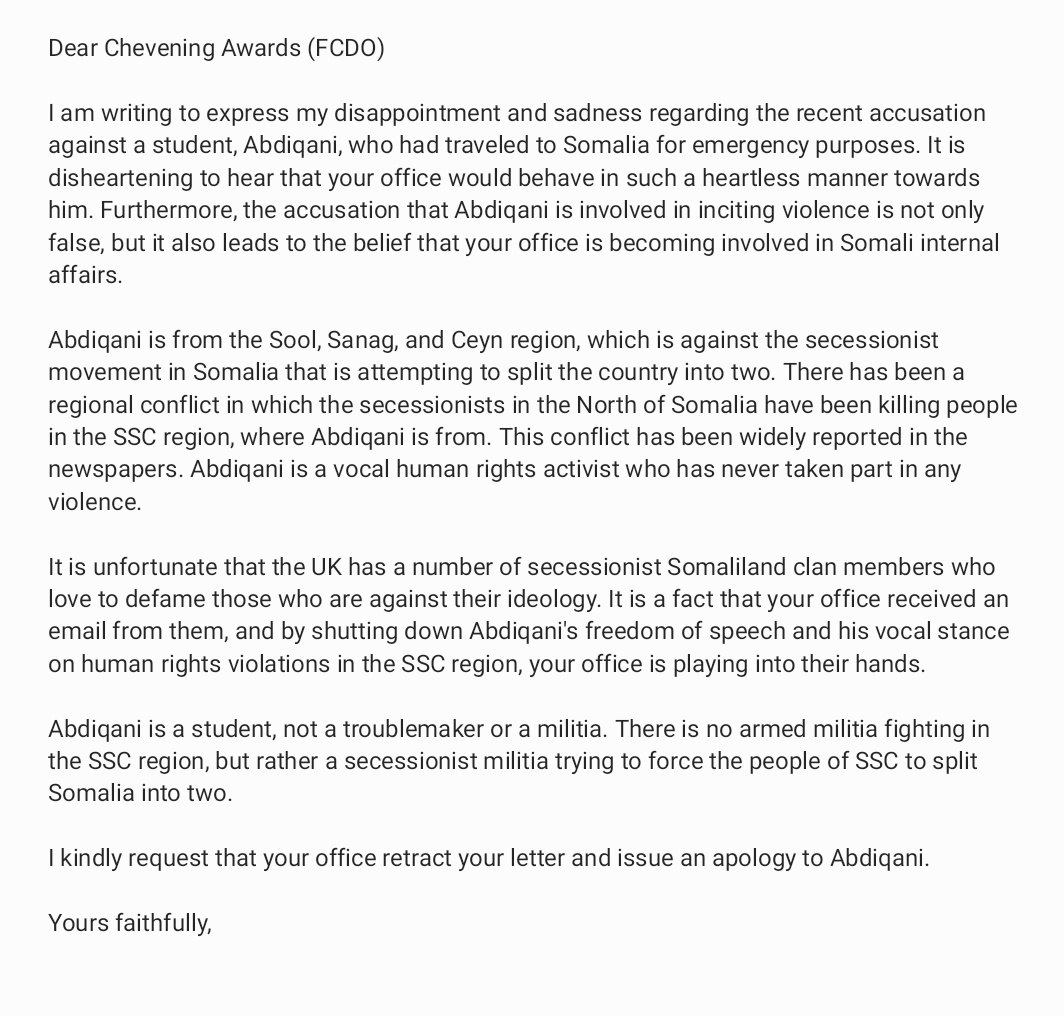
Pretty shocking that Chevening is listening to secessionist propganda and accusing innocent students for inciting violence.
@CheveningFCDO @CheveningAA
@AxmedJeeyte The reason is because Africans need only some money and they run for funds that the world donate to fight Climate change, such as Adaptation fund, mitigation fund, loss and damage fund..so on. That is why Africans became number one in Climate change activists