inquisitive flutterby & eclectic spirit ~ if we don't believe in freedom of expression for people we despise, we don't believe in it at all - noam chomsky 🪶 🖤
"She wasn't doing a thing that I could see, except standing there leaning on the balcony railing, holding the universe together."
~ j.d. salinger ~ A Girl I Knew
Filmmaker David Lynch's Diagram for Transcendental Consciousness is one of the greatest, easiest to understand explanations for how our reality is made of MIND first, MATTER second.
I promise this is genuinely worth your time.
It's fantastic.
Polish 26 year old guitar master Marcin Patrzałek respond to those who have made public comments claiming that his music is fake.
He made this video in a tutorial form showing how he manages to play so extraordinarily well in response. And yes, it's all played on one guitar.
The Peter Principle is the satirical theory that employees are generally promoted to their level of incompetence.
In 1974, the author of the Peter a principle, Dr. Laurence J. Peter, explained how he first got the idea and what can be done about it
In 2008, Malcolm Gladwell explained why some people succeed & some don't.
This talk reveals:
• Why ability is overrated
• Why effort alone isn’t enough
• How systems quietly decide outcomes
12 lessons from Gladwell that'll permanently change how you think about success:
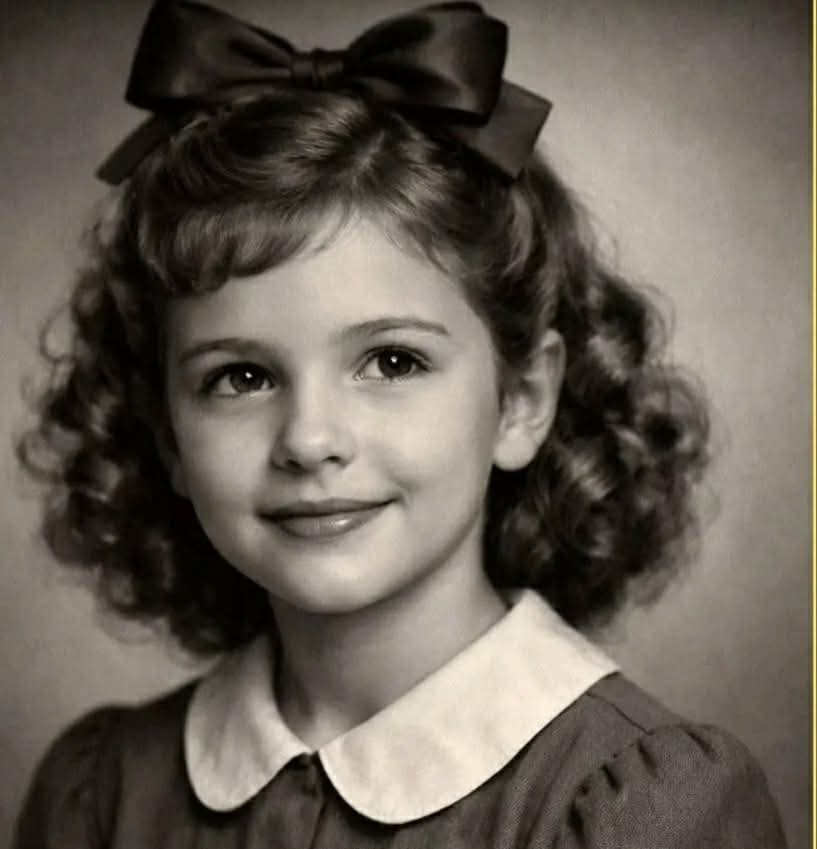
In 1933, in Paris, a baby girl was born into a loving Jewish family. Her name was Francine. At the time, there was nothing to suggest that her childhood would be devoured by history.
Seven years later, the world she knew vanished.
In 1940, her father, Robert, was captured by the Germans and sent to a prisoner-of-war camp in Austria. From behind barbed wire and watchtowers, he found a way to send a message home. It wasn’t sentimental. It wasn’t long.
It was urgent.
Run. Leave immediately. Don’t wait.
Francine’s mother, Marcelle, listened. In the summer of 1942, she took her nine-year-old daughter by the hand and fled toward the border, hoping speed might save them. It didn’t.
They were arrested.
Because Robert was a French POW, mother and child were spared immediate deportation. Instead, they were labeled “hostages”—a word that sounded almost merciful until you learned what it meant. Over the next two years, they were moved again and again through France’s transit camps: Poitiers. Drancy. Pithiviers. Beaune-la-Rolande. Each stop was colder, hungrier, closer to disappearance.
On May 4, 1944, that fragile protection ended.
They were ordered onto a train bound for Bergen-Belsen.
Each prisoner was allowed one small bag. Marcelle chose carefully. Hidden among the essentials were two pieces of chocolate—a luxury beyond measure, meant for moments when despair or starvation might otherwise win.
Bergen-Belsen was not a place of sudden death. It was worse. It was decay stretched over time. Hunger gnawed constantly. Disease spread unchecked. Corpses were stacked like discarded objects. Hope thinned by the day.
Francine was ten years old.
One day, in the middle of that nightmare, she noticed a woman lying apart from the others. Pregnant. Alone. In labor. So weak she could barely breathe, let alone survive childbirth. Francine reached into her pocket. She felt the chocolate.
It was her last piece. Her mother’s insurance against collapse. Something that might have meant one more day of survival. She hesitated. Then she gave it away. That single act—small, almost invisible—changed everything.
The sugar gave the woman enough strength. Enough energy to endure the pain. A baby girl was born in a place designed to erase life. Against all logic, both mother and child survived.
Weeks later, Allied troops liberated the camp.
Francine lived. Her mother lived. And somehow, unbelievably, they found Robert again. A family scarred beyond repair—but alive.
Time moved forward.
Francine grew up. She became a teacher. Then something more: a witness. She devoted her life to Holocaust education, traveling, speaking, refusing to allow memory to fade into abstraction.
Decades passed.
At a conference many years later, a woman stood up before speaking and said she needed to do something first.
“My name is Yvonne,” she said. “I’m a psychiatrist from Marseille.” She walked toward the audience.
“I’m looking for Francine Christophe.” Francine raised her hand. Yvonne placed something gently into it.
A piece of chocolate.
“I’m the baby,” she said quietly. For a moment, no one spoke. Because everyone understood: this was not coincidence. This was history closing a circle.
Fifty years earlier, a starving child had chosen compassion over self-preservation. That choice had grown into a life—a doctor who now helped others heal. A life that existed because kindness had appeared in the darkest possible place.
Francine Christophe is now in her nineties. She has children, grandchildren, great-grandchildren. She still tells her story. Still insists on remembrance.
That piece of chocolate was never just food.
It was proof that the Nazis failed.
They tried to destroy empathy. They didn’t. They tried to erase human worth. They couldn’t. In a camp built to strip people of their souls, a ten-year-old girl proved that love can survive even there.
Some acts of kindness echo for generations.
Thomas Sowell: “Slavery was not confined by race. It was not defined or created by race. It existed for thousands of years.
A history professor once had a student come up to him and ask, ‘When did slavery begin?’ The real question is: when did freedom begin? Slavery existed as long as we have records. From archaeological findings, we know that people were enslaving other people before they could read or write. It has always existed and has existed all over the world.
The number of White people enslaved by pirates in North Africa was greater than the number of Africans brought to the United States.
And yet, that’s not even mentioned.”