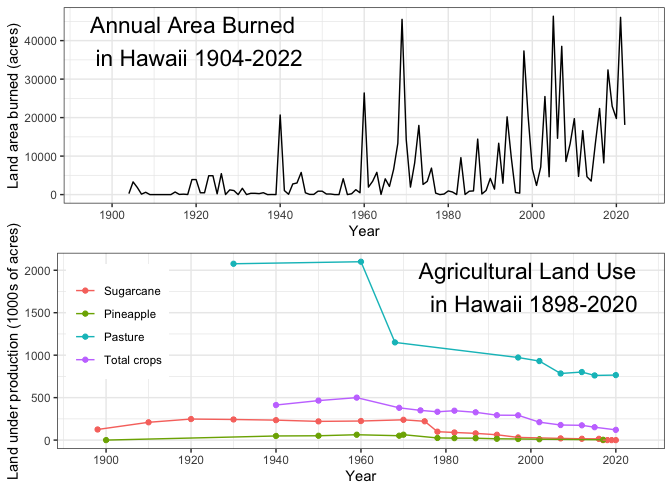
Hawai'i firefighters have been telling me for several years they're seeing fires burn hotter and faster than in the past - and I trust their knowledge. But fire and land use histories tell us fallow lands and grassy fuels are the key issue - and one we can deal with locally
DO interview your potential advisor if you apply for a PhD or postdoc.
This can save you years of pain, lost dreams and wasted time.
❗ Most students are focused on receiving the offer. But this is the biggest mistake one can make when looking for a position.
▫️
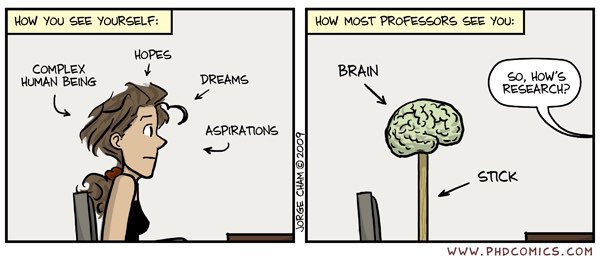
NOT every lab is friendly and has a good mentor in charge. In fact, most professors don’t know how to mentor (as mentorship is not prioritized in academia).
AFTER you get an offer, you can avoid possible problems during your PhD/postdoc through this:
1️⃣ Interview your advisor about the approaches and opinion on:
1. Research advising (how your advisor understands it and how it’s done in the group).
2. Mentoring and personal development during PhD/postdoc.
3. Collaboration - how they do it and what role students/postdocs play in it.
4. Development of your independence and confidence in research.
5. Your participation in conferences and workshops (how often and which types of conferences).
6. How they prepare research publications – authorship, quality, time per manuscript, contributions, etc.
.
2️⃣ Make sure you can talk to the current students one on one (online or in person):
1. Ask about the group culture and support from the advisor
2. Hear their opinion on publication practices and conferences
Ultimately, don’t leave until you understand how you can fit in this group.
.
3️⃣ Talk to alumni (at least 3-4 people):
1. Check out the advisor’s website and find a list of alumni.
2. Google the names of those who went into academia and industry (to hear both sides).
3. Reach out via email or LinkedIn, explain your intentions and politely ask for a quick call.
.
🔴 Why is it important?
Because your advisor is the ONE who can shape your professional skills, motivation and perception of science.
Because the right mentor FORGES your critical thinking and vision.
And a careful search of such an advisor is the starting point.
#AcademicTwitter #AcademicChatter #phdvoice
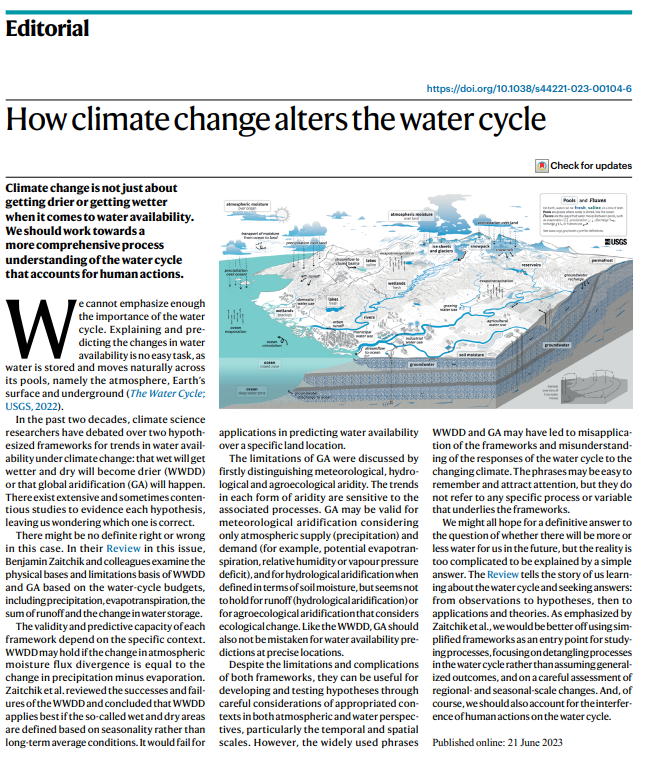
Check out our latest editorial https://t.co/an8DunpTjL,
courtesy of our associate editor Yanhua Chen, highlighting the content of the review by @BenZaitchik and colleagues https://t.co/lMrdwV8Zry
We are #hiring! @NREM_UH@uhmanoa invites applications for a tenure-track faculty position in Biocultural Resource Stewardship. 9-month tenure track position 50% teaching 50% research. https://t.co/iJVsc4MxHX… Position #83740 #Indigenous
Peeking the stream in Alaska - two different water sources cause different color, temperature, pH and so on - precip vs. glacier. Thanks @streamyinphan and PI-AK giving me this amazing chance to learn about glacier streams and estuaries, fish and fishing. 🛥 🎣 🐟🧊 🍣 🌮 🐻
I've just learned about Research Rabbit (https://t.co/bQnFtZmfZX), an awesome online app helping me to discover more related research papers! I wish I know @RsrchRabbit earlier.
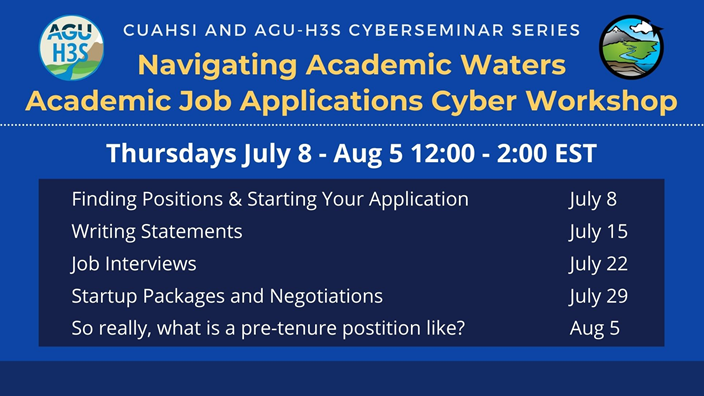
Are you a graduate student, recent grad, or post doc? Are you looking to land a job in academia? Join @AGU_H3S and @CUAHSI Thursdays this summer July 8 -August 5 at 12 - 2 pm ET for a free virtual career development workshop: Navigating Academic Waters: Academic Job Applications.
A return of an old friend? A La Niña Watch has been issued by the @NWSCPC in the latest ENSO outlook as scientists see La Niña likely emerging (~55%) during the September-November period and lasting through winter. Learn more in the latest ENSO Blog.
https://t.co/TuiTHw715A
Registration for the CUAHSI Biennial closes in one week on July 15th! do not miss out on this opportunity to mentorship, networking, and engagement with the water science community! https://t.co/1IyUCwN16S
#WaterScience#CUAHSIBiennial#CUAHSI20
The hurricane/typhoon category is defined by the wind speed, so it only indicates the potential damage from winds and excludes rainfall-driven damages, such as flooding.
Hurricane categories don’t tell the whole story: https://t.co/XoUBYwAees 來自 @NatGeo
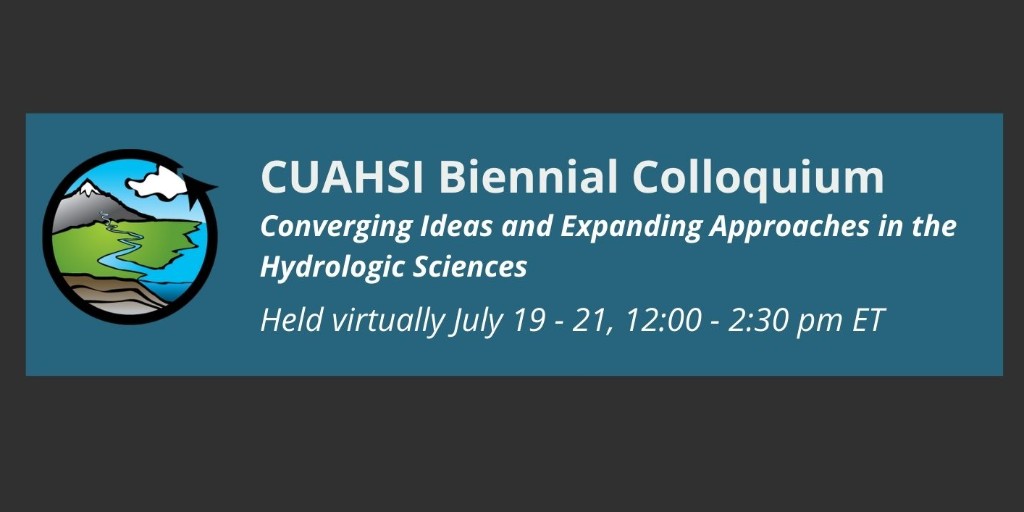
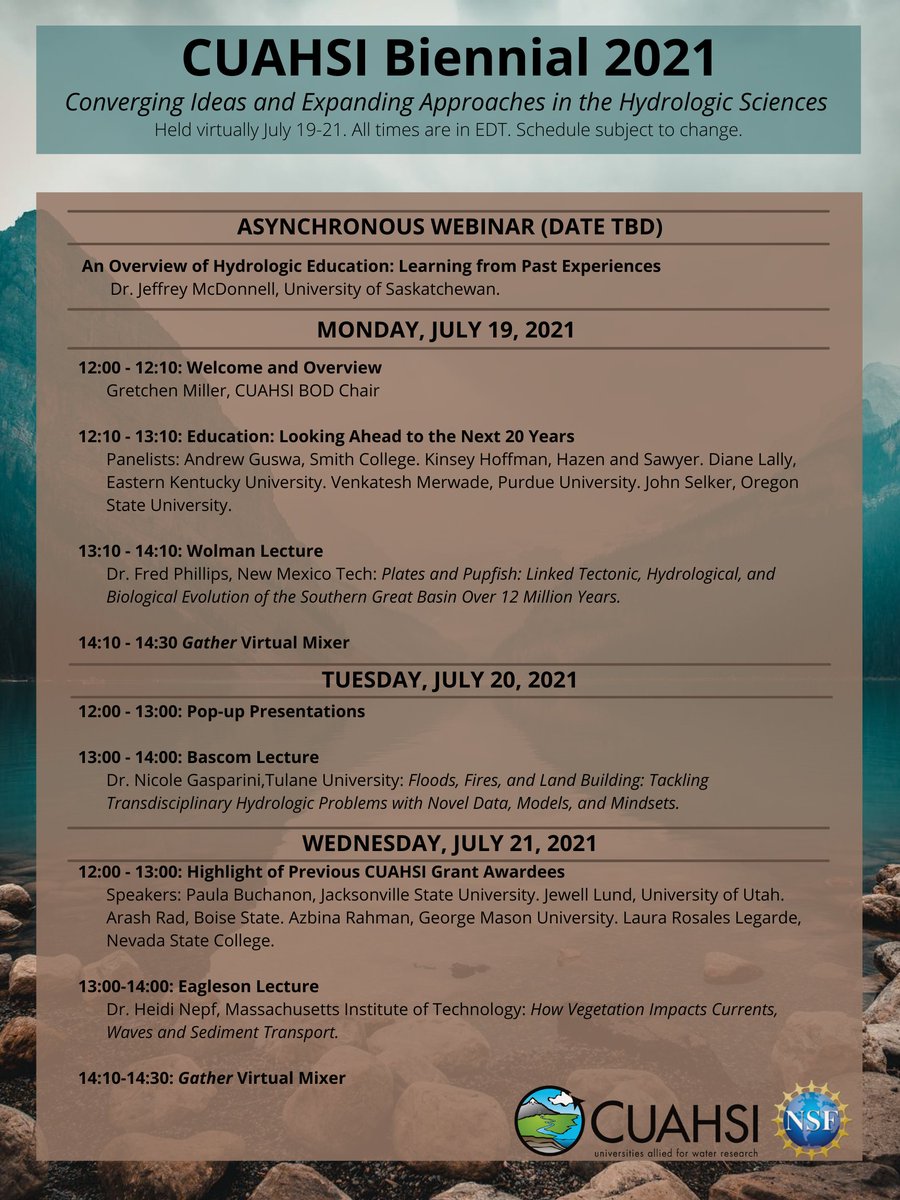
Registration is now open for the 2021 CUAHSI Biennial Colloquium: Emerging Ideas and Expanding Approaches in the Hydrologic Sciences. The meeting is virtual this year.
We can't wait to see you there! Learn more here https://t.co/1IyUCwN16S
#CUAHSI20#Water#Hydrology