“Encoding is not simply a step to writing; it is a vital but underappreciated route to reading. It requires a deeper and more consistent practice of identifying the individual speech sounds in words and linking those sounds to letters. It engages children from the beginning with meaningful words, not isolated skills.
The segmentation and construction of spoken words build essential neural networks and provide a meaningful route to phoneme awareness and phonics, as children learn to master the ingenious code of letters that makes spoken words visible.” ( Herron & Gillis, 2020).
Read this do-not-miss article, Encoding as a Route to Phoneme Awareness and Phonics: A Shift in Literacy Instruction, by Jeannine Herron and Margie Gillis, here:
https://t.co/mtEbLCHaFj
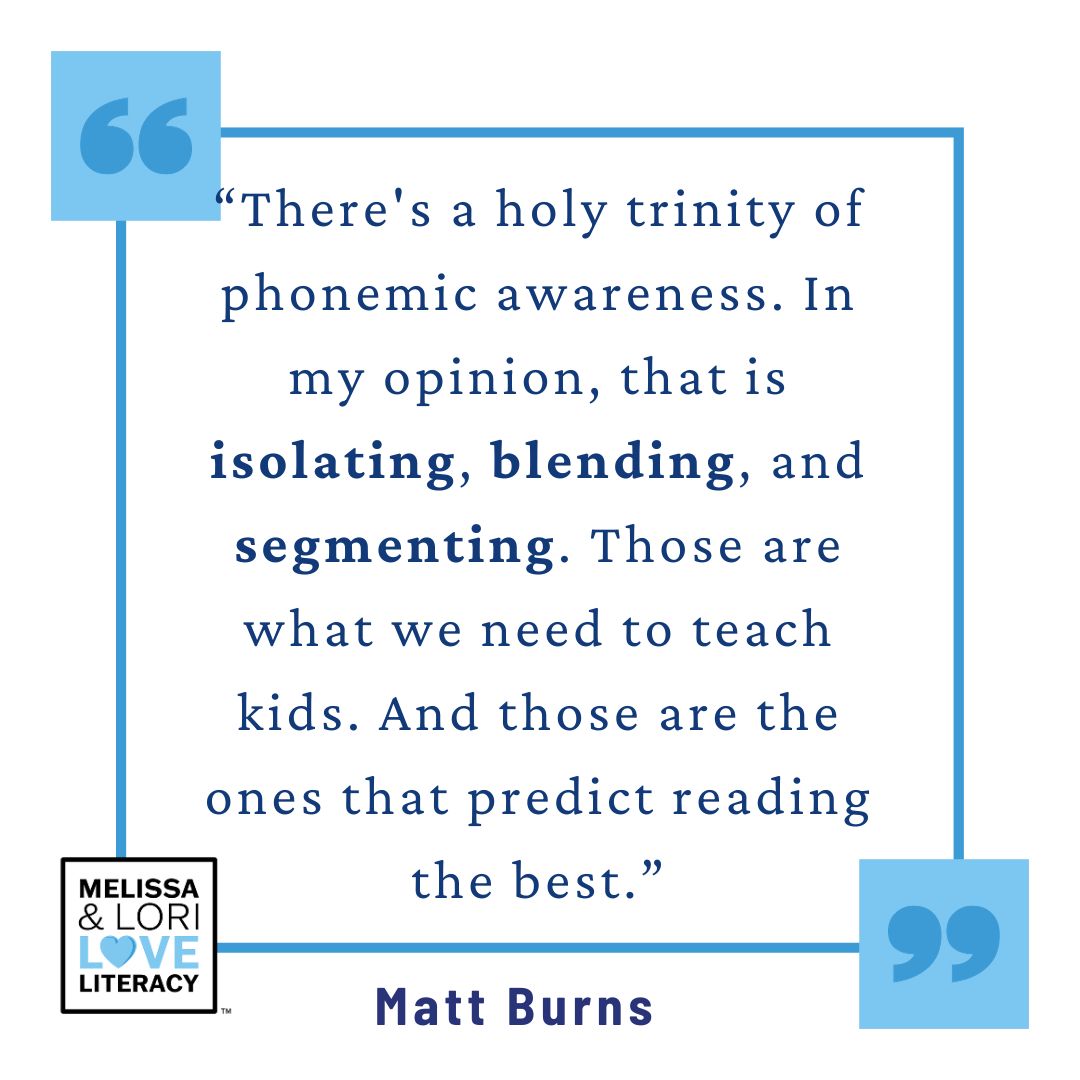
Wondering where to spend most of your time when teaching phonemic awareness? Research supports focusing on three skills: isolating sounds, blending sounds, and segmenting sounds.
🎧 Listen Now! What Research Says About Phonemic Awareness with Matt Burns
https://t.co/nE2wuYBSgi
@PamelaSnow2 That I understand. But could you lead me to some research, please? There has been some brain research completed that defines areas of the brain that perform different functions hence the entire left/right brain theories due to tendencies in people.
@Orchidoptera@thismomloves@UFLiteracy I created the French version. https://t.co/dKrxG5NYV8
While this is great news, Ts need to remember this is for determining the starting point for those identified for intervention. This is not a screener. I just would like others not to miss that point. 😊
@janhasbrouck I took my readers from the min requirement in the beginning of the year to double in most cases at the end of the year. Team foundational skills built upon and my methodology worked like a charm. #lifeafterdecoding#fluency
@MrZachG I have been teaching explicit learning forever. Give them the tools and they will thrive no matter where you meet them on their learning journey. #enfrançais