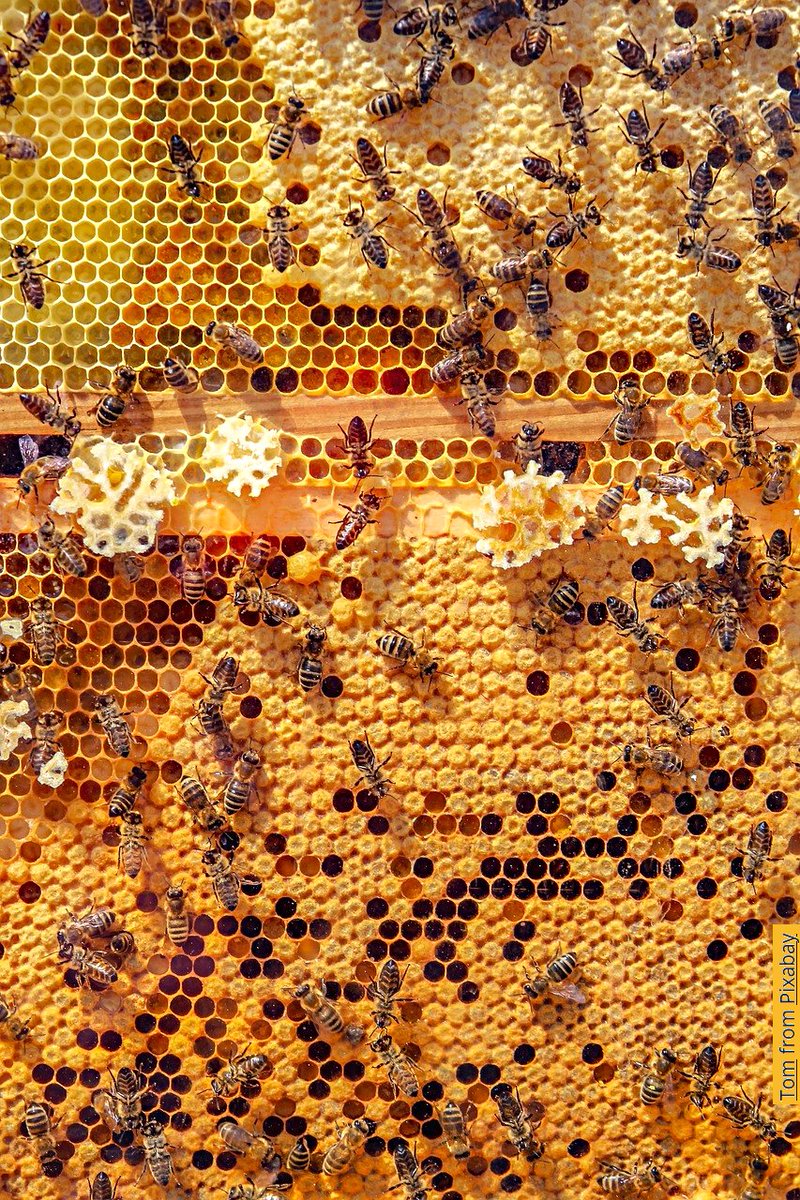
⭕️When AI systems communicate more frequently with one another, they’ll develop languages and reasoning that we’ll find increasingly difficult to comprehend. Perhaps AI-to-AI communications will one day sound like the chirps of whales or resemble the swarm-geometry of bees. Such languages may become undetectable or seem like patterns of noise or wisps of winds. ⭕️Entire fields of human endeavor will develop to help us understand these communications, reason beyond our intuitions, or leave the confines of our evolutionary architecture and seek salvation in higher dimensions. Will we have to change ourselves to follow them? - Cliff Pickover
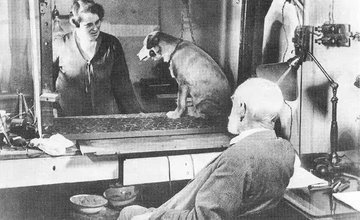
Scientists with their dogs:
Albert Einstein
Erwin Schrödinger*
Richard Feynman
Ivan Pavlov
*Yes, Schrödinger actually had a dog, not a cat. It was a collie named Burschie (Laddie).
Richard Feynman's Lectures on Physics are timeless: their main strength is in demonstrating how to reason about physics.
You may not know that all the lectures are completely online:
Vol 1: https://t.co/yDpyRViG61
Vol 2: https://t.co/oEctaDhy2X
Vol 3: https://t.co/eXS03nu9fE
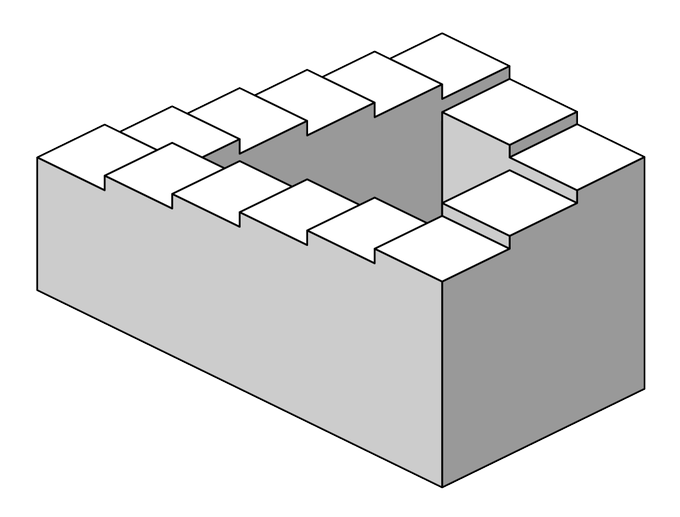
Ascending and Descending: Where Art Meets Science
A work of art by M. C. Escher was inspired by the impossible staircase of Lionel and Roger Penrose
Sir Roger Penrose was one of the recipients of the 2020 Nobel Prize in Physics, and remains active today at the age of 94.
Announcing my new book THE GREAT ATOM DEBATE.
Journey back in time and witness an epic struggle between two scientific geniuses over the very nature of reality. History of physics at its most riveting!
Now available for preorder:
https://t.co/uaVlLxyg3W
https://t.co/qNwHAS3XCt
https://t.co/FGcKD7dxfu
https://t.co/mEw4Oq8inw
https://t.co/IqCB0rkH70
https://t.co/UKxSY8SUye
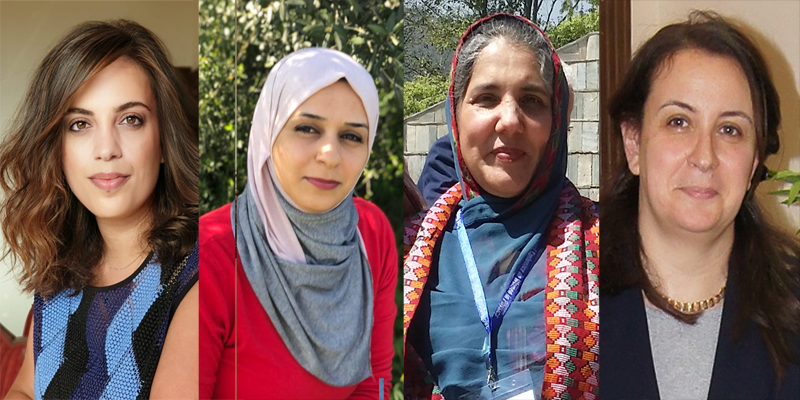
A tribute to accomplished scientists from four different lands in the Middle East and Asia:
Marie Abboud (Lebanon)
Hadil Abualrob (Palestine)
Anisa Qamar (Pakistan)
Hoda Abou Shady (Egypt)
https://t.co/xjvqSRYG0f
#WomenInSTEM
Please consider donating to "Cycling Justice for Teddy Einstein:"
https://t.co/d6zMXZoBe8
Dr. Eduard "Teddy" Einstein, a brilliant young mathematician, was struck and killed by a car while riding his bicycle on Dec. 3, 2025. Teddy was a beloved husband to Ruth Fahey and father to six year old Charlie and two year old Lorcan Einstein. He earned his PhD from Cornell University and taught at the University of Illinois, the University of Pittsburgh, and Swarthmore College. Friends remember his warmth, his wit, and his generosity. He was passionate about bicycling and worked to make the Philadelphia area safer for cyclists. Most of all, Teddy was dedicated to his family. The linked site is seeking to raise money to support Teddy's surviving family as they fight for justice in his memory. All funds will go directly to Ruth who will use them to protect Teddy's legacy and enact real change to prevent this tragedy from happening to anyone else.
Your tattoo isn’t just decorative ink: it’s a permanent trigger that keeps your immune system locked in a lifelong cycle of chronic inflammation.
As soon as the ink is injected into your skin, your body recognizes the pigment particles as foreign invaders. Immune cells called macrophages immediately swarm the area and attempt to swallow them up. But because they can’t actually break down the ink, the macrophages eventually die, releasing the pigment back into the surrounding tissue — only for a new wave of macrophages to arrive and repeat the process.
This endless cycle is what keeps the tattoo permanently visible, while also maintaining a state of ongoing, low-level inflammation in the skin.
Over time, some of these ink particles migrate through the lymphatic system and accumulate in the lymph nodes, placing constant stress on the body’s defense mechanisms. Emerging research suggests this internal ink buildup may interfere with normal immune function, potentially reducing the effectiveness of certain vaccines, including mRNA types. Additionally, many tattoo inks contain heavy metals like nickel and cobalt. Combined with the chronic inflammation, this has been linked to a modestly elevated risk of lymphoma and skin cancer.
While tattoos remain a powerful form of self-expression, they represent a complex, decades-long biological conflict between your immune system and foreign substances embedded in your skin.
[Nielsen, C., Jerkeman, M., & Jöud, A. S. (2024). Tattoos as a risk factor for systemic lymphoma: A population-based case-control study. eClinicalMedicine]
Everything in the Universe changes by adding enough mass
What sets the dividing line between rocky planets, gas giants, brown dwarfs, and stars of different colors and lifetimes?
One parameter alone, mass, explains almost all of it.
https://t.co/I3pkaf2lX7
After 144 years of construction, the Sagrada Família in Barcelona has reached its full height with the placement of the final piece atop its central tower.
[📹davidcantor]
7) Todo esto tiene una implicación directa para la política científica: ¿por qué financiar investigación básica, incluso la más abstracta? Porque no sabemos qué herramienta será clave mañana. Es una apuesta con retorno incierto, pero potencialmente enorme. Y la historia muestra que esos retornos llegan.
Pero la justificación no es solo utilitarista. También hay razones culturales, estéticas e intelectuales. Comprender el mundo tiene valor en sí mismo. Reducir la ciencia a "aplicación inmediata" es empobrecerla, y, paradójicamente, también reducir sus aplicaciones futuras. Ese matemático que parece estar escribiendo cosas incomprensibles en una pizarra puede estar, sin saberlo, fabricando las herramientas para curar enfermedades dentro de treinta años.
En clave nacional, frente al desacertado “que inventen ellos”, la conclusión es simple: sin producir conocimiento, no hay control del futuro. La investigación básica no es un lujo, sino una inversión estratégica. Y, en ocasiones, una inversión en la vida.
Para terminar, aquí la entrevista de Hart y Aumann. Muchas gracias por seguirme.
https://t.co/MwtlKPpzYt









![Rainmaker1973's tweet photo. Your tattoo isn’t just decorative ink: it’s a permanent trigger that keeps your immune system locked in a lifelong cycle of chronic inflammation.
As soon as the ink is injected into your skin, your body recognizes the pigment particles as foreign invaders. Immune cells called macrophages immediately swarm the area and attempt to swallow them up. But because they can’t actually break down the ink, the macrophages eventually die, releasing the pigment back into the surrounding tissue — only for a new wave of macrophages to arrive and repeat the process.
This endless cycle is what keeps the tattoo permanently visible, while also maintaining a state of ongoing, low-level inflammation in the skin.
Over time, some of these ink particles migrate through the lymphatic system and accumulate in the lymph nodes, placing constant stress on the body’s defense mechanisms. Emerging research suggests this internal ink buildup may interfere with normal immune function, potentially reducing the effectiveness of certain vaccines, including mRNA types. Additionally, many tattoo inks contain heavy metals like nickel and cobalt. Combined with the chronic inflammation, this has been linked to a modestly elevated risk of lymphoma and skin cancer.
While tattoos remain a powerful form of self-expression, they represent a complex, decades-long biological conflict between your immune system and foreign substances embedded in your skin.
[Nielsen, C., Jerkeman, M., & Jöud, A. S. (2024). Tattoos as a risk factor for systemic lymphoma: A population-based case-control study. eClinicalMedicine]](https://pbs.twimg.com/media/HHfNpsmXYAAlrGO.jpg)