#OnThisDay in 1938, Antarctic explorer Tom Crean died aged 61 after falling ill with suspected appendicitis. Delays in getting surgery led to infection and he died a week later. Crean was buried in the family tomb in Ballynacourty near the 'South Pole Inn', the pub which he opened in 1927.
Crean, was born 1877 at Annascaul, County Kerry, Ireland. Aged 16, he joined the Royal Navy and by age 22 was Petty Officer. He was assigned to HMS Ringarooma, and in December 1901 was in Christchurch, New Zealand, the same time Scott’s 'Discovery' expedition was preparing for the journey south. Scott was looking for crew and Crean joined as a volunteer able seaman. He gained a reputation for being one of the most effective man-haulers and was extremely well-liked and respected by the crew of 'Discovery'.
Crean returned to Antarctica as an expert sledger and pony handler for the British Antarctic 'Terra Nova' Expedition 1910-1913. He was involved in preparations and depot laying for the Polar Party, however along with William Lashly and Edward "Teddy" Evans, wasn't selected as part of the Party to make the final 160-mile push for the pole. On their return to Hut Point, Evans developed snow blindness and showed signs of scurvy. With supplies dwindling Crean went for help and Lashly stayed with Evans. Crean made the 18-hour journey to Hut Point to get help with little food or supplies and Lashly and Evans were successfully rescued. He was awarded the Polar and Albert medals for his part in the expedition and for saving Evans' life.
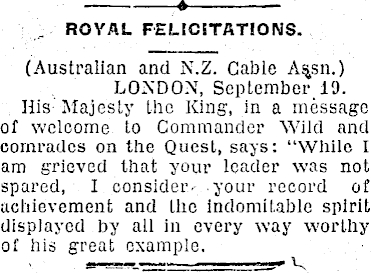
Crean’s final Antarctic expedition was Shackleton’s Imperial Trans-Antarctic 'Endurance' Expedition 1914-1917, where he was appointed Second Officer. His tough nature and resilience were demonstrated again when 'Endurance' was crushed by sea ice in the Weddell Sea and he was selected by Shackleton to sail to South Georgia on one of the greatest small-boat journeys in history! After landing on the south coast of South Georgia, Crean, Shackleton and Worsley endured 36-hours of grueling travel on foot to arrange rescue for the remaining men stranded at Elephant Island.
📸 Tom Crean 1914-16. Photographer Frank Hurley, Public Domain.
#inspire #explorer #conserve
#OnThisDay in 1882, Australian geologist and explorer Sir Douglas Mawson was born in Shipley, Yorkshire, England.
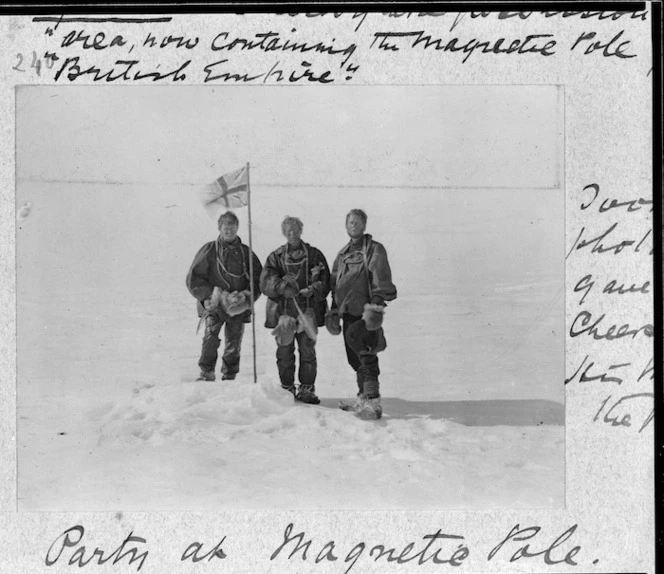
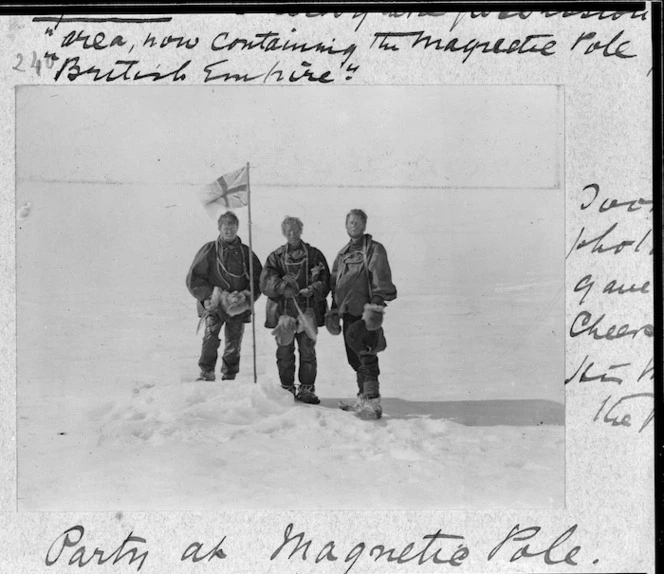
Mawson received a bachelor’s degree in mining engineering from Sydney University in 1902, and while undertaking his doctorate at Sydney University, he joined Ernest Shackleton’s British National Antarctic 'Nimrod' Expedition (1907-09) for his first Antarctic experience as a geologist. During this expedition, along with his mentor Professor T.W. Edgeworth David, Mawson completed the longest Antarctic man-hauling sledge journey of 122 days! Coping with hunger, hidden crevasses, frostbite and exhaustion, the men successfully reached the south magnetic pole on the high ice plateau of Victoria Land on 16 January 1909.
Mawson returned to Antarctica when he led the Australasian Antarctic Expedition (1911-14) during which five men set up a base at Macquarie Island, while the remainder sailed on to the Antarctic continent to establish two bases: the Main Base at Commonwealth Bay led by Mawson, and the Western Base at Queen Mary Land led by Frank Wild.
Returning South again from 1929-31, Mawson directed the combined British, Australian, and New Zealand Antarctic Expedition (BANZARE). BANZARE did not use land bases to explore the continent, instead crucial work was successfully completed on voyages along much of the Antarctic coastline, and sub-Antarctic islands.
Mawson received great recognition in the scientific community. In 1923, he was made a fellow of the Royal Society of London as well as a foundation fellow of the Australian Academy of Science, and president of the Australian and New Zealand Association for the Advancement of Science between the years 1935 to 1937.
📸 From left: Alistair Mackay, T.W. Edgeworth David and Douglas Mawson at the South Magnetic Pole. Alexander Turnbull Library.
#inspire #explore #discover #conserve #Antarctica
#OnThisDay in 1908, a party of six men from Shackleton's British Antarctic 'Nimrod' Expedition 1907-1909, reached the summit of Mount Erebus, on Ross Island, Antarctica, at 4,023m / 13,200-feet.
It took the climbing party six days to reach the top of the volcano and one day to descend. Despite the extreme temperatures, 'lava bombs' and billowing clouds of steam, all men were relatively unharmed, apart from Sir Phillip Brockelhurst who suffered frost-bitten toes.
During the journey, the expedition party carried out several meteorological experiments and Australian geologists Douglas Mawson and Edgeworth David, collected rock samples. This included pumice, a mineral specimen that was collected from the summit of Mount Erebus. The party returned to their base at Cape Royds on 11 March, before the onset of Antarctic winter.
📸 Members of Shackleton's 'Nimrod' Expedition with Mt Erebus in the background, Copyright unknown.
#erebus #shackleton #nimrod #mawson #inspire #explore #discover #conserve #Antarctica
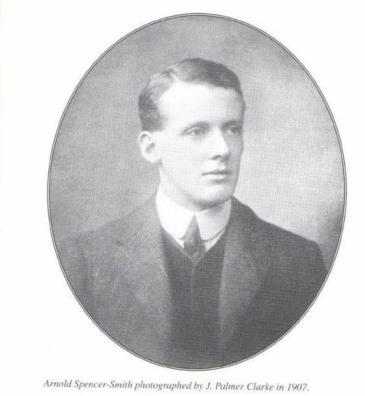
#OnThisDay in 1916, Reverend Arnold Spencer-Smith, died during a sledging expedition to lay supply depots in support of Shackleton’s Imperial Trans-Antarctic 'Endurance' Expedition 1914-1917.
Spencer-Smith served as Chaplain for the Ross Sea Party, who were tasked with laying a series of supply depots across the Ross Ice Shelf towards the Beardmore Glacier to support Shackleton's intended attempt to cross the continent. Worn down by the work of hauling stores and suffering from scurvy, Spencer-Smith collapsed before the glacier was reached and had to be carried on a sledge. Sadly, he passed away on the Barrier (now called the Ross Ice Shelf) at age 32 and only two days from the safety of Hut Point.
📸 Arnold Spencer-Smith, Queen's College, Cambridge.
#OTD #inspire #explore #discover #conserve #Antarctica
#OnThisDay in 1902, Robert Falcon Scott marked history with the first-ever flight in an aircraft of any kind in Antarctica on his British National Antarctic 'Discovery' Expedition, 1901-1904.
Using the captive hydrogen balloon, affectionately nicknamed 'Eva', Scott soared to 600 feet above the Ross Ice Barrier, taking in the never-ending whiteness below.
Third in command Ernest Shackleton, was the next to go up, taking the first aerial images of the ice shelf. After the third flight, taken by Able Seaman Heald, the wind caused further flights to be abandoned and tears in 'Eva' brought an end to this pioneering chapter in Antarctic ballooning.
📸 Balloon 'Eva'. Public domain
#OTD #inspire #explore #discover #conserve #Antarctica
#OnThisDay in 1909, the Northern Party, made up of Edgeworth David, Douglas Mawson, and Alistair Mackay, on the British Antarctic (Nimrod) Expedition 1907-1909, reached their prearranged costal rendezvous with the ‘Nimrod’ after facing a journey of 290 nautical miles from the South Magnetic Pole. Unfortunately, heavy drifting snow meant that the ‘Nimrod’ did not see their camp when passing by. It wasn’t until two days later that the ‘Nimrod’ turned south again eventually seeing the Northern Party, successfully picking them up.
📸 McKay, Mawson and David at the South Magnetic Pole, 1909, Alexander Turnbull Library.
#inspire #explore #discover #conserve #Antarctica #OTD
#OnThisDay in 1908, Shackleton, as part of the British Antarctic 'Nimrod' Expedition 1907-09, established his base at Cape Royds on Ross Island.
Cape Royds was first discovered during Captain Robert Falcon Scott's British National 'Discovery' Expedition 1901-04, to which Shackleton was appointed third officer. It was named after Royal Navy Lieutenant Charles Royds, who acted as meteorologist on the expedition.
The 'Nimrod' expedition was the third British expedition to the Ross Sea region within 10 years. Aboard the 200 ton 'Nimrod' was a shore party of 14 men, 15 Manchurian ponies, nine dogs, an air-cooled four-cylinder 11kW (15 hp) motorcar, the new Arrol-Johnston and a specially designed hut prefabricated by Humphreys Limited of Knightsbridge in London in 1907. It was first assembled in London and the parts were marked for re-erection on site. The fact that the main part of the hut is still standing today is testament to their efforts and the skill of the designers.
📸 Shackleton's base at Cape Royds, Canterbury Museum.
#OTD #inspire #explore #discover #conserve #Antarctica
#OnThisDay in 1886, Apsley George Benet Cherry-Garrard, Assistant Zoologist on Scott's British Antarctic 'Terra Nova' Expedition (1910-1913) was born.
Known less formally as ‘Cherry’, Cherry-Garrard was introduced to Scott by Dr Edward Wilson and recommended for the expedition. He shared every duty aboard ship and took part in every major journey in the Antarctic, including accompanying Wilson and Bowers on the mid-winter journey to Cape Crozier and travelling with the Polar Party two-thirds of the way to the South Pole.
In March 1912, with experienced dog-driver Dimitri Gerov, he tried to meet Scott’s returning party. His failure to do so, though no fault of his, preyed on his mind for the rest of his life. In 1922, he published his own account of the expedition, 'The Worst Journey in the World'. Cherry-Garrard died in 1959 and is commemorated with Mount Cherry-Garrard on the north coast of Victoria Land and Cherry Icefall in the Queen Alexandra Range.
100 years later, his epic novel has been adapted by Sarah Airriess into a series of graphic novels.
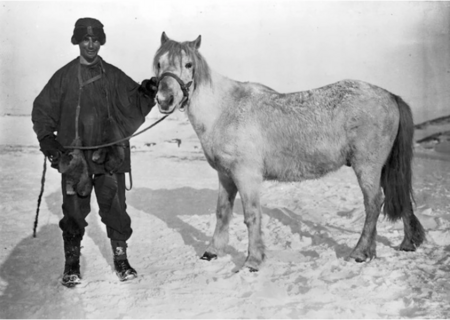
📸 Apsley Cherry-Garrard and pony, Antarctica. Photograph taken by Herbert Ponting. Kinsey, Joseph James (Sir) Collection, Alexander Turnbull Library, Wellington, New Zealand.
#heroicera #antarcticexploration #OTD #inspire #explore #discover #conserve #Antarctica
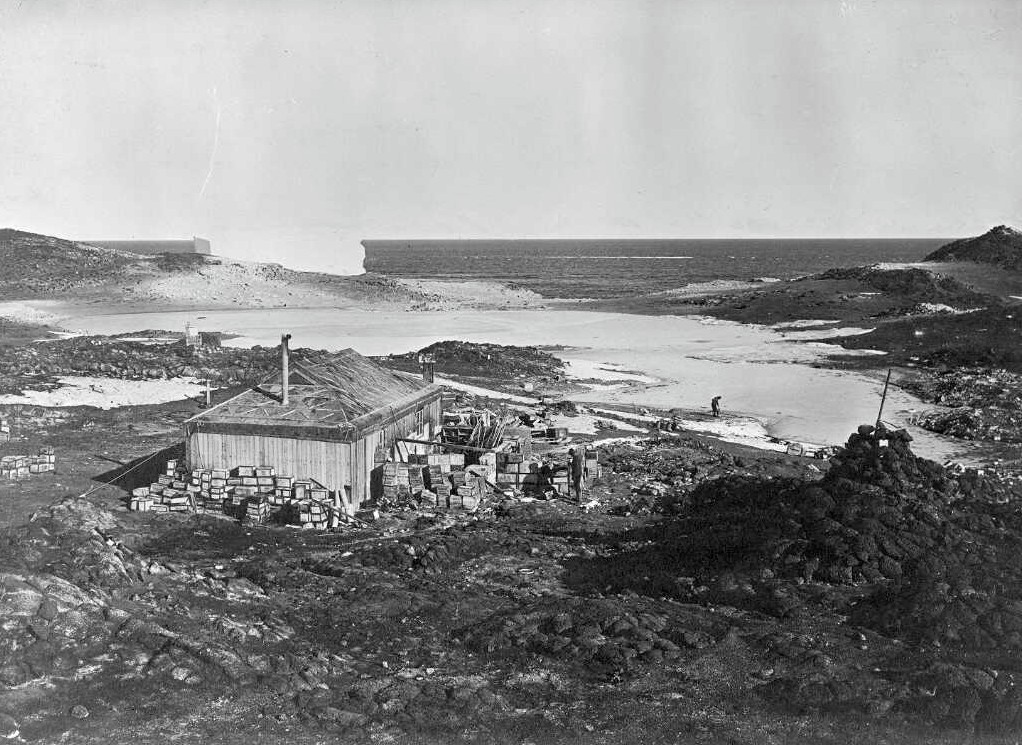
#OnThisDay in 2008, Shackleton and his men aboard 'Nimrod' left New Zealand, bound for Antarctica, for the British Antarctic Expedition 1907-09. As a means of conserving fuel, Shackleton had arranged with the New Zealand government for his ship 'Nimrod' to be towed 2,600 km to the Antarctic Circle. The costs of the tow were partly met by the government and by the Union Steam Ship Company as a contribution to the expedition. When Shackleton and his men arrived in Antarctica they established an expedition base at Cape Royds on Ross Island. Antarctic Heritage Trust is proud to care for this legacy on behalf of the international community.
📸 Shackleton's hut at Cape Royds during the British Antarctic 'Nimrod' Expedition 1907-09, Canterbury Museum.
#heroicera #antarcticexploration #OTD #inspire #explore #discover #conserve #Antarctica
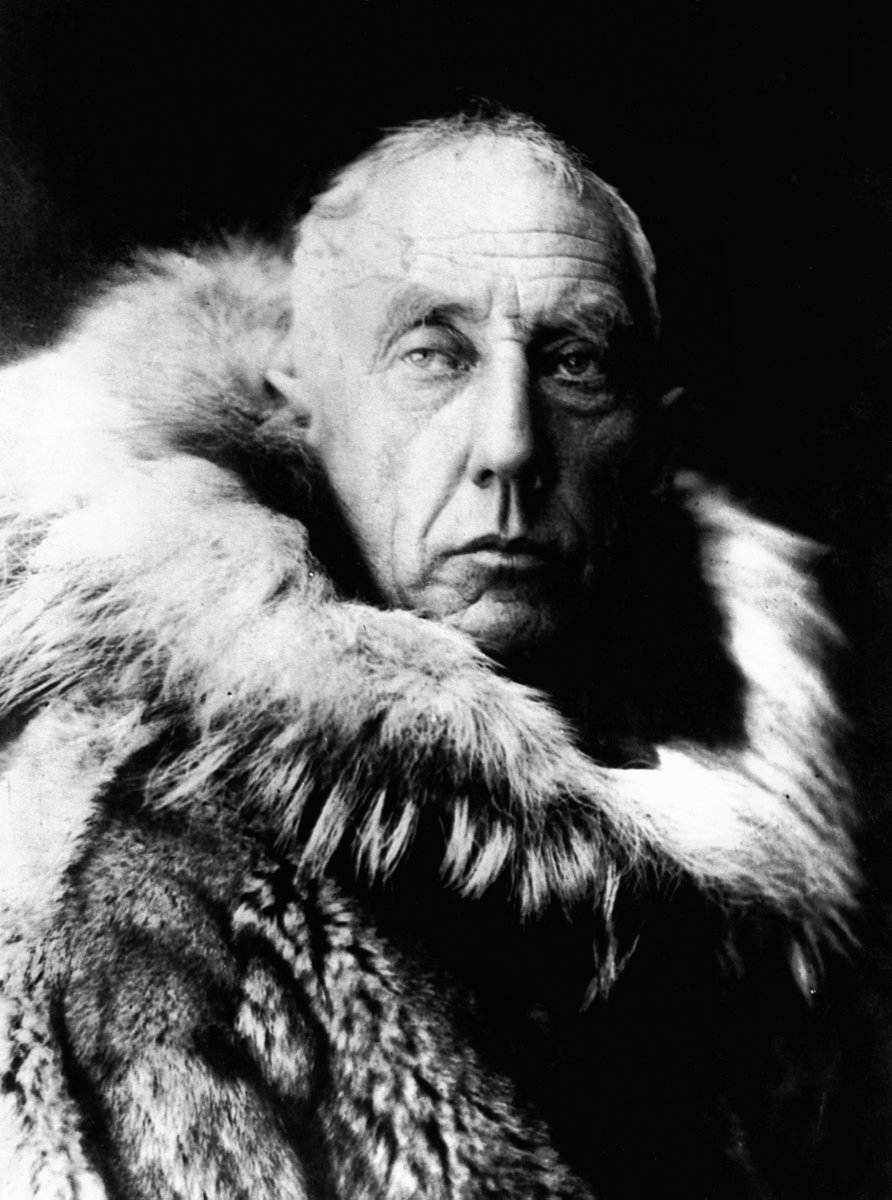
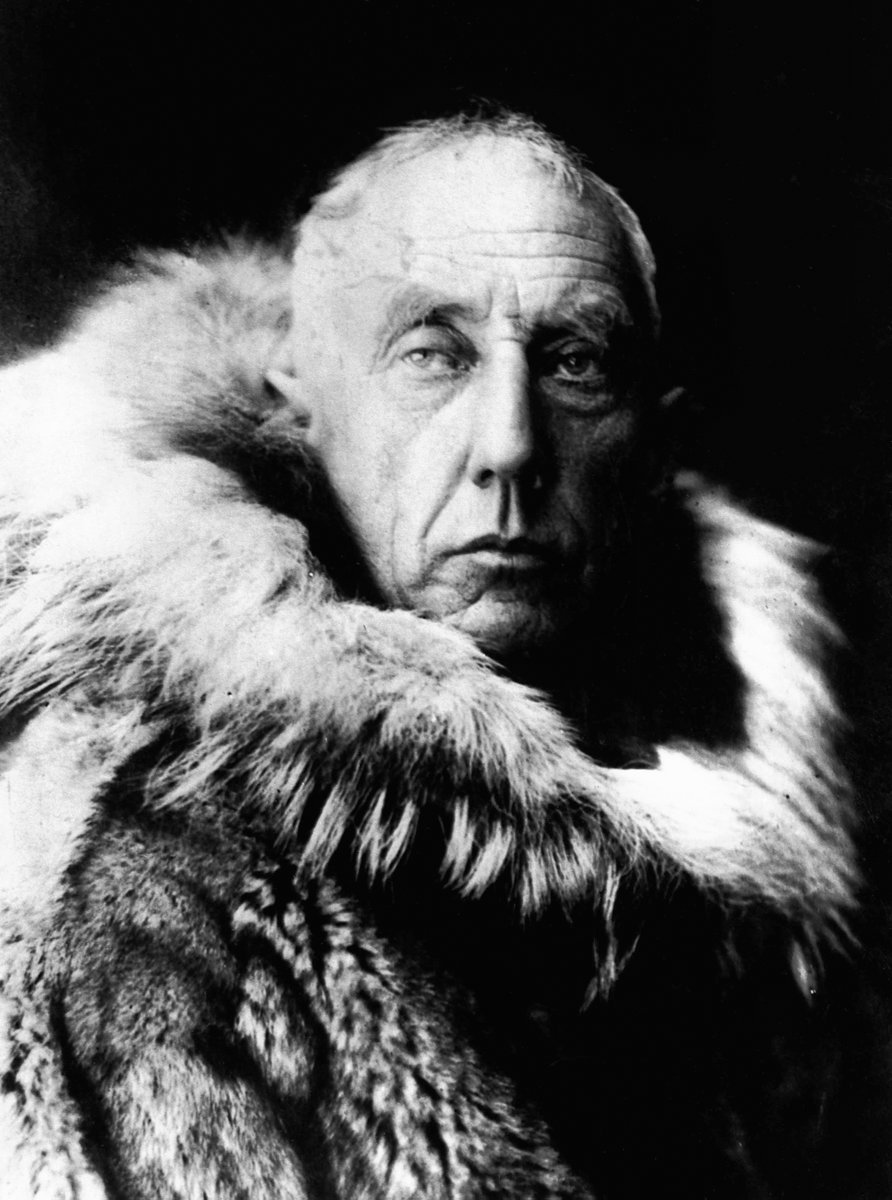
It was #OnThisDay in 1910, that Amundsen revealed to his crew that the expedition ship 'Fram' was not to sail North as they had been led to believe, but actually South!
"It is my intention to sail southwards, land a party on the southern continent, and try to reach the South Pole!"
After his success leading an expedition from 1903-1906 which successfully navigated the North-West passage by boat, Amundsen was set to lead an expedition to the North Pole. However, upon learning that Americans Frederick Cook and Robert Peary had made two separate claims to the Pole - one on 21 April 1908 and the other on 6 April 1909, he decided to change his plans. He kept these intentions quiet, with only his brother Leon and his second-in-command, Thorvald Nilsen in the loop.
📸 Roald Amundsen, Public Domain
#inspire #explore #discover #conserve #Antarctica #OTD #Amundsen #Fram
#OnThisDay in 1898, Carston Borchgrevink's 'Southern Cross' Expedition (1898-1900) set sail from London, bound for Antarctica. The 'Southern Cross' Expedition marked the beginning of the 'Heroic Era' of Antarctic exploration for the British and its goals were to explore the Antarctic continent, contribute to science and look for commercial opportunities. The 'Southern Cross' traveled south for the remainder of 1898, with one stop in Hobart for final provisioning. In December that year, the men departed Hobart saying farewell to the comforts of everyday life.
Norwegian expedition leader, Carsten Borchgrevink was joined by nine men who together, spent an entire year in Antarctica, cut off from the rest of the world. During that time, one of the men would lose his life, their hut would catch fire, arguments would fester unresolved and almost every man would regret his decision to take part. Although the first year in Antarctica was challenging for the 10-man team, their expedition established several major Antarctic firsts which influenced the course of history for decades to come!
The hut built by Borchgrevink and his crew still stands at Cape Adare and is the only example left of humanity's first building on any continent. The site is cared for by Antarctic Heritage Trust on behalf of the international community.
📸 The 'Southern Cross' leaving Hobart, 17 December 1898. Canterbury Museum.
#inspire #explore #discover #conserve #Antarctica
#OnThisDay in 1918 Antarctic explorer Alfred Cheetham died when his ship was torpedoed during the First World War. Born in Liverpool in 1867 Cheetham ran away as a teenager to work in the fishing fleet of the North Sea. He became a merchant navy boatswain and a Royal Navy Reservist. Cheetham married Eliza Sawyer and together they had 13 children.
Cheetham's first visit to Antarctica was on the relief ship 'Morning' during the 'Discovery' expedition of 1901-04. Under the command of Ernest Shackleton, he then served on the 'Nimrod' expedition where he was third officer and boatswain. He held the same roles on Robert Falcon Scott's 'Terra Nova' expedition and again with Shackleton on the 'Endurance'.
During the 'Terra Nova' expedition Cheetham volunteered to help search for Scott and the missing Polar Party but was turned down as he was a 'family man'. As Third Officer on board the 'Endurance' he was known to be cheerful and a popular member of the crew. After 'Endurance' was crushed by ice, Cheetham was part of Frank Worsley's crew on the lifeboat 'Dudley Docker'.
Cheetham returned to Hull after the 'Endurance' expedition and enlisted in the Mercantile Marine, He was serving as second officer on 'SS Prunelle' when the ship was torpedoed in the North Sea by a German U-boat. He is commemorated on the Tower Hill Memorial in London.
📸 Alfred Cheetham (left) with Tom Crean. Public domain
#inspire #explore #discover #conserve
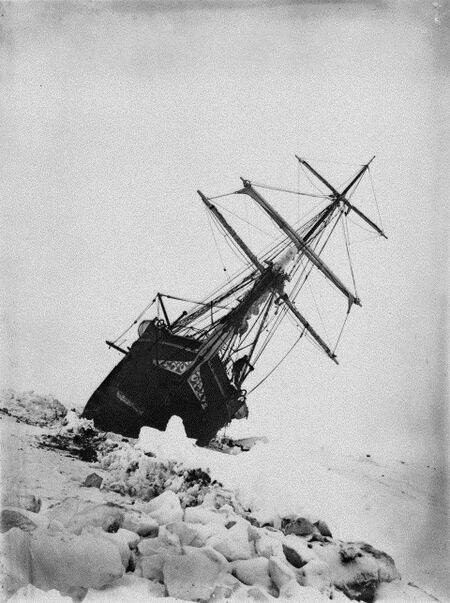
#OnThisDay in 1914, Ernest Shackleton's Imperial Trans-Antarctic 'Endurance' Expedition 1914-1917, departed for South Georgia.
Less than one week prior to his departure, on 28 July, Austria-Hungary declared war on Serbia. This quickly led to a collapse in peace between Europe’s great powers. On August 4, while anchored off Southend, he read in a daily newspaper the order for general mobilisation of troops and supplies along with calls for volunteer soldiers. Shackleton immediately returned to the 'Endurance', gathered all hands, and told his men that he would send a telegram to the Admiralty offering the ships, stores and services to the country in the event of war breaking out. Within an hour after sending the telegram, Shackleton received a reply from the Admiralty with the single word "Proceed". Within two hours, another arrived from Winston Churchill in which he thanked them for their offer but desired that the Trans-Antarctic expedition go on. That night, World War I broke out after German troops crossed the border into Belgium.
Shackleton's original plans for the expedition were to complete an 1,800 mile journey across the Antarctic continent via the South Pole. A supporting party, called the 'Ross Sea Party' were tasked to lay supply depots from the Ross Sea region of the continent to enable the journey. However, early onset ice in the Weddell Sea slowed Shackleton's progress, and eventually resulted in the 'Endurance' becoming frozen in an ice floe. These events subsequently led to one of the most famous rescue stories of all time!
📸 The 'Endurance' stuck in sea ice, Canterbury Museum.
#OTD #inspire #explore #discover #conserve #antarctica
#OnThisDay in 1872, legendary Norwegian explorer Roald Amundsen was born near Oslo. Amundsen cemented his place in the heroic era of polar exploration, famously becoming the first to reach the South Pole on 14 December 1911, beating Scott’s team by a month.