I have worked (25 years) in food processing (mainly dairy) and the (15 yr) WA Department of Agriculture and Food. Interested in Food Policy, Ecology & Fairness.
@rko2milk Yes, policy the effects will be interesting. Australia used to be a large exporter till policies changed. NZ followed the Danish model and allowed a world scale industry to develop (Fonterra) while supporting growth of competitors - eg Synlait, Open Country Cheese, and more
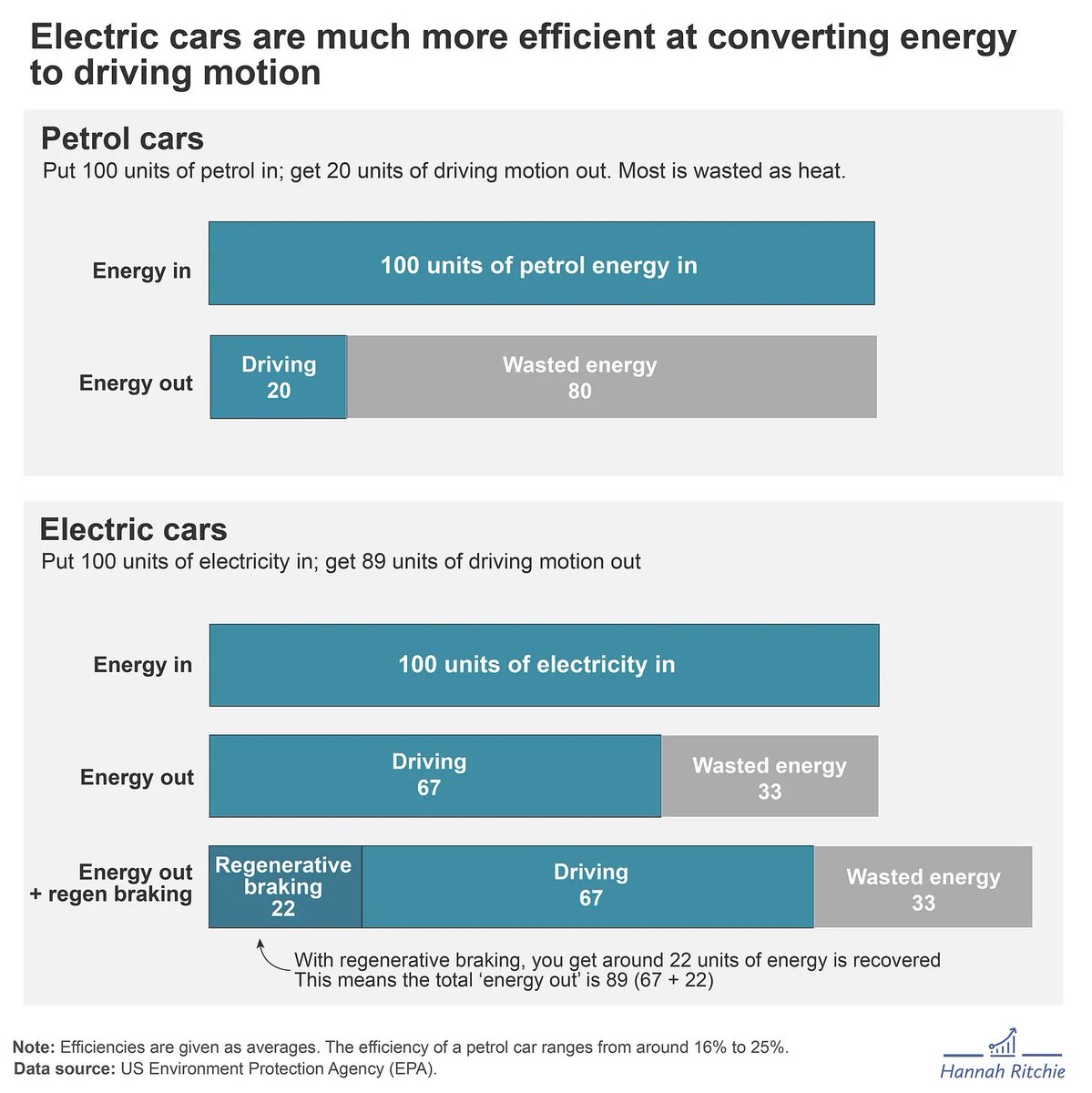
EVs slash energy demand!
Say a country burned equivalent of 1,000 TWh of gasoline for road transport.
Do you need 1,000 TWh of electricity to replace gasoline cars with electric ones? Nope!
You might need as little as 224 TWh. Four to five times less.
https://t.co/zfCnvHe06b
25% of all irrigated cropland in the US depends on it.
But without change, it may vanish.
Deep below the soils where I grew up lies one of the world's most precious resources, the Ogallala Aquifer.
The groundwater reserve covers 175,000 square miles across 8 states - most of Nebraska, and parts of Kansas, South Dakota, Wyoming, Colorado, Oklahoma, Texas and New Mexico.
Large-scale water extraction began to occur post World War II, once high powered diesel motors allowed for groundwater wells to irrigate fields.
This allowed for an increase in productivity and predictability amongst farmers to combat irregular rains.
But it also led to a rapid reduction in groundwater levels of the Ogallala Aquifer.
Since 1950, there has been a 9% in total reduction in volume across the aquifer - with certain areas having lost water altogether.
And once completely drained, it's estimated that it would take more than 6,000 years to replenish the water reserves.
Groundwater from the Ogallala Aquifer supplies drinking water to more than 2,000,000 people across the Great Plains, but has been increasing been at risk for high levels of nitrates, which are harmful to humans.
And while the aquifer itself has delivered an abundance in productivity across farmland, it has became a crutch to ignoring the ongoing erosion and decrease in soil organic matter and water infiltration rates.
All of which are crucial to capturing rainfall, allowing the water to infiltrate and recharge the aquifer.
What was once a seemingly infinite amount of water below has quickly become a diminishing resource of startling magnitude.
But farmers across the midwest who depend on the Ogallala Aquifer have the tools to create healthy soils that can regenerate the water cycles locally and recharge the groundwater below their feet for future generations.
@rko2milk No mention of the legislation that followed the Danish model to form Arla and have a world scale processor and the associated economies of scale or the regulations that allowed competitors to develop under this umbrella
@postcarbonsteve Check out what Colin Tudge thinks. Lots of human food going to animals and at very bad conversion rates.
Eg 1 kg grain (140 g protein) -> 1 litre milk (33 g protein)
https://t.co/fX8MVXnQ8p
@notadvice @katecorbyn Pasteurisation is a heat treatment, usually 73°C for 15 seconds - designed to kill tuberculosis spores. It does not change the composition of lactose. Lactose is a (disaccheride) sugar made up of Glucose and Galactose joined together. So your glucose will rise on digestion.
@notadvice @katecorbyn Milk has between 45 and 50 grams of lactose per litre and gives me a spike on a CGM. PLAIN Yoghurt where lactose has turned to lactic acid- no spike or crash
@katecorbyn @badadvice123456 Drugs with shelf life - thats how to make money 😀.
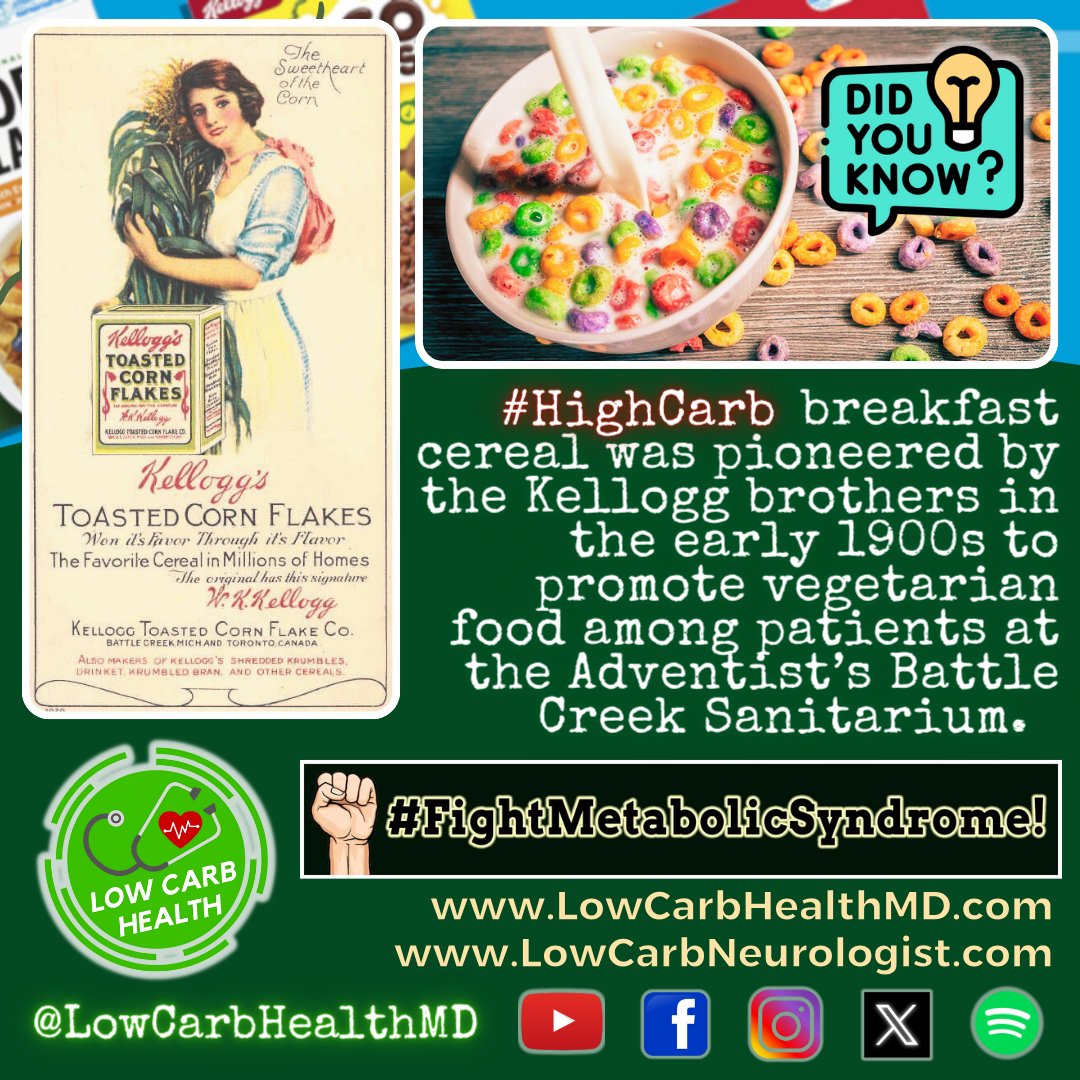
Sugar
Caffein
Alcohol
Nicotine
Opioids
Some green substances
Etc
All in some foods
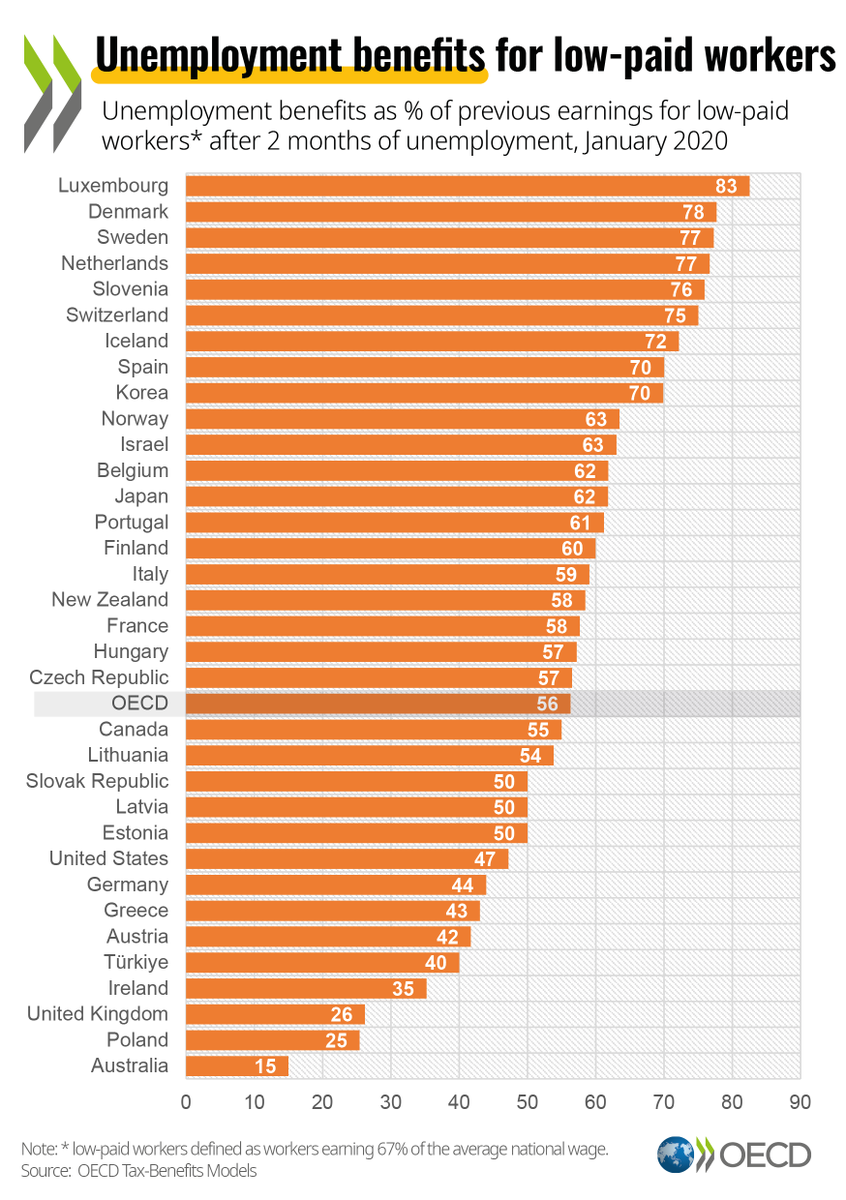
When low-paid workers lose their job, how much do they receive in #UnemploymentBenefits?
On #WorkersDay, compare rates across OECD countries as a percentage of previous earnings.
Read the analysis by @OECD_Social 👉 https://t.co/RR8eW17CG0