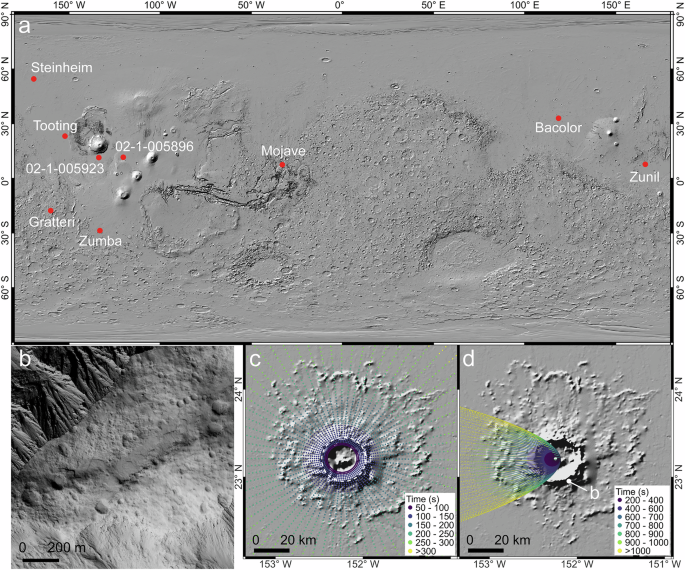
Geological investigations for self-secondary craters around fresh martian impact craters support the reliability of age determination technique using crater statistics on Mars and suggest that double layered-ejecta deposits may have been emplaced at supersonic speeds.
On 8 January, at 06:59 CET, Bepi, Mio and MTM got as close as 295 km to Mercury’s surface. This sixth flyby is the last time the #BepiColombo trio greet the planet together 👉 https://t.co/jheNFY2pQE
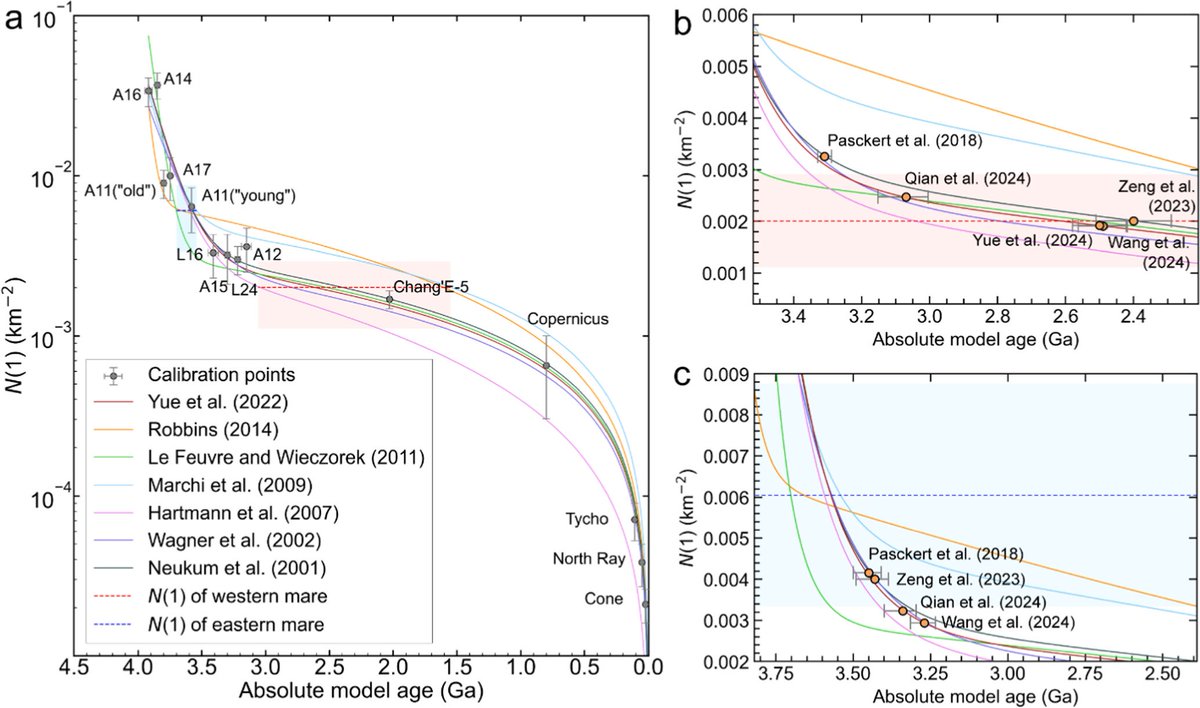
Please check our paper published in ApJL: The Production Population of Impact Craters in the Chang’E-6 Landing Mare https://t.co/vMwOooCGZV @AAS_Publishing
We investigate the geological context of the SLIM landing site at different geological scales, and the possible origins of the surface materials. Our geological analysis provides a framework for the in situ exploration of the #SLIM mission. #Moon#Lunar
https://t.co/YuTX7llNM1
A low amount of graphite (~0.7 wt%) mixed with iron can reproduce the reflectances of the various colour units on Mercury, providing important constraints on the characterisation of its magma ocean. Xu, Xiao, Wang & Cui: https://t.co/S6QRMwM7qC
Non-Thermal Escape of Sulfur and Oxygen on Io Driven by Photochemistry https://t.co/akiTVuLHo3 Photochemical escape is more important than Jeans escape for both atomic O and S for when the atmosphere is quiet but only for S during periods of volcanic activity.
What a great #ELS2023 hosted by @UniPadova. The largest ELS yet with over 250 attendees from across the globe. Can you spot yourself in the group photo below? Please RT if you attended #ELS2023 (even if you missed the group photo shoot). Thanks all for making it a success 🙏
🔥 Hot off the digital press, Issue 11 of The Mercury Newsletter! 📰
https://t.co/lLSw9rwgKL
We spotlight the open MExAG Steering Committee positions (applications due May 19!), share Mercury news, and highlight researchers, meetings, and publications.
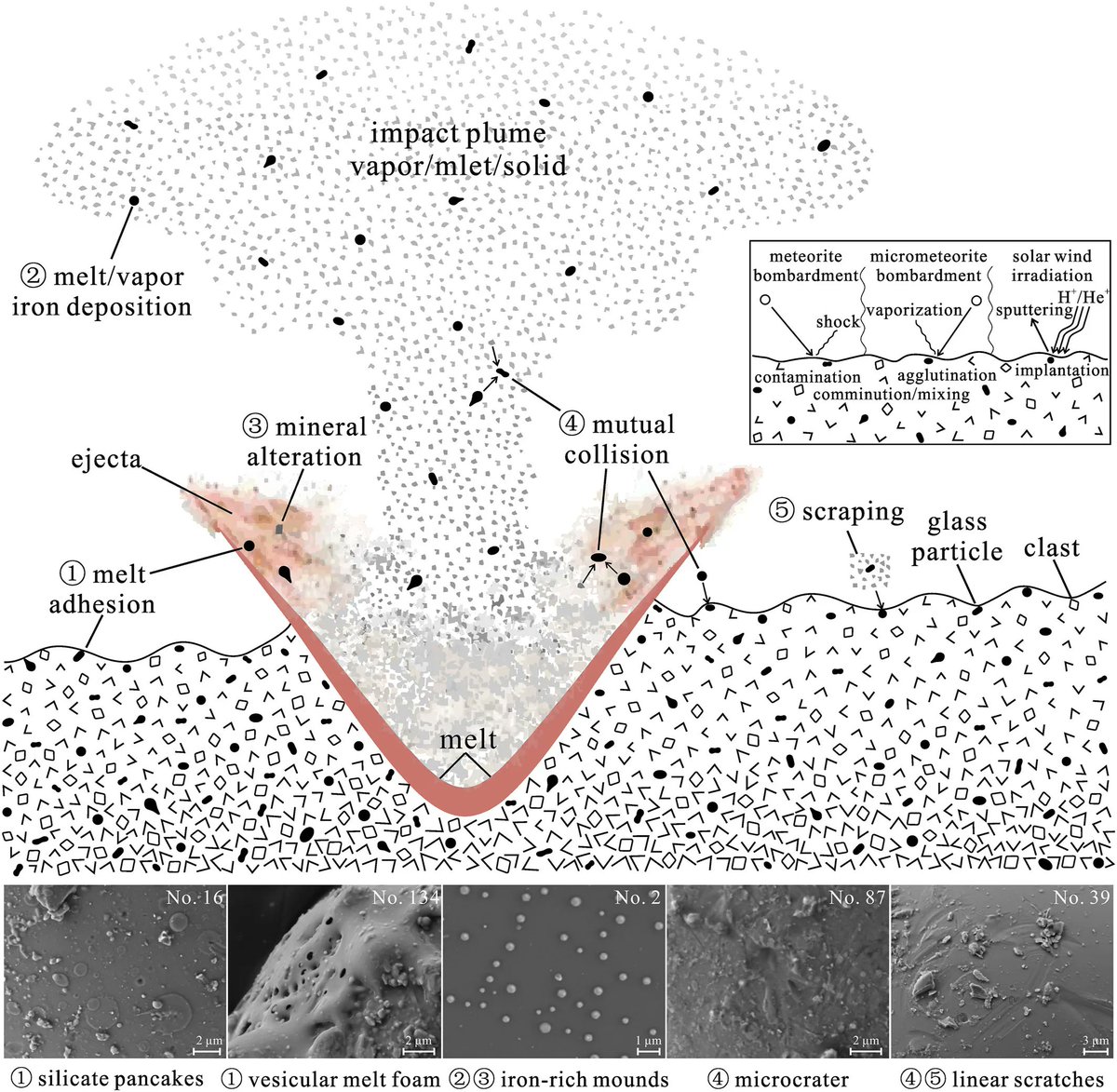
Intricate Regolith Reworking Processes Revealed by Microstructures on Lunar Impact Glasses https://t.co/rzxx9G2ePN the abundant protruded and dented microstructures on the glass particles suggest that low-speed events reworked local materials in vapor, melt, and solid phase.
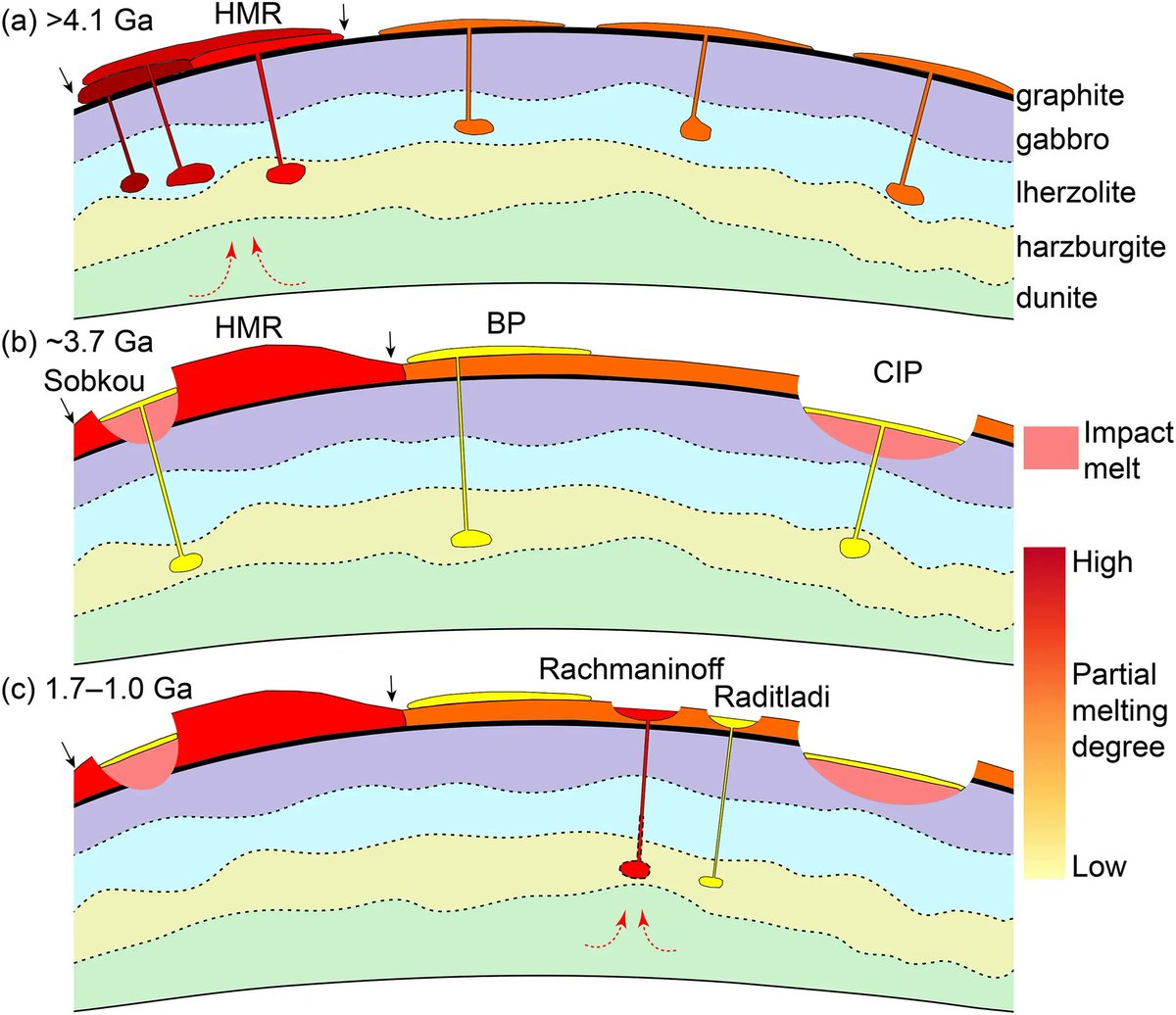
Multiple Mantle Sources of High-Magnesium Terranes on Mercury https://t.co/U3iYESDjjf The mantle beneath the high magnesium region is compositionally zoned and includes long-lived thermal anomalies while the crust has a uniform structure.
Wang et al. updated the global inventory of small smooth plains on #Mercury and present their spatial distribution, model ages, and possible origins in a new @theAGU#GRL paper: https://t.co/ZQ3Uz9KJ9e
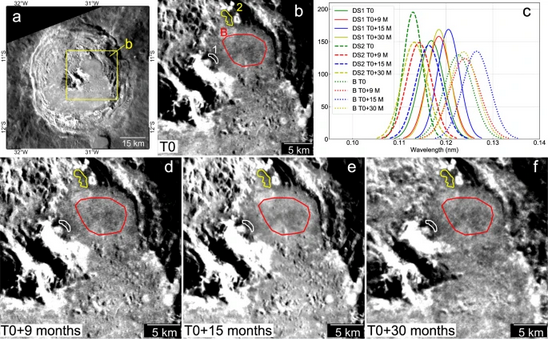
Xiao et al. present two candidate dark pyroclastic deposits that formed in Mercury’s most recent history. Read on about how reflectance spectra are used to study these deposits in #GRL: https://t.co/nm3mYYoq24
China plans to, as soon as Monday morning, launch a spacecraft to the moon’s surface. If Chang’e-5 is successful, China will be only the third nation to bring lunar rocks back to Earth. https://t.co/rcBO0K6V3j
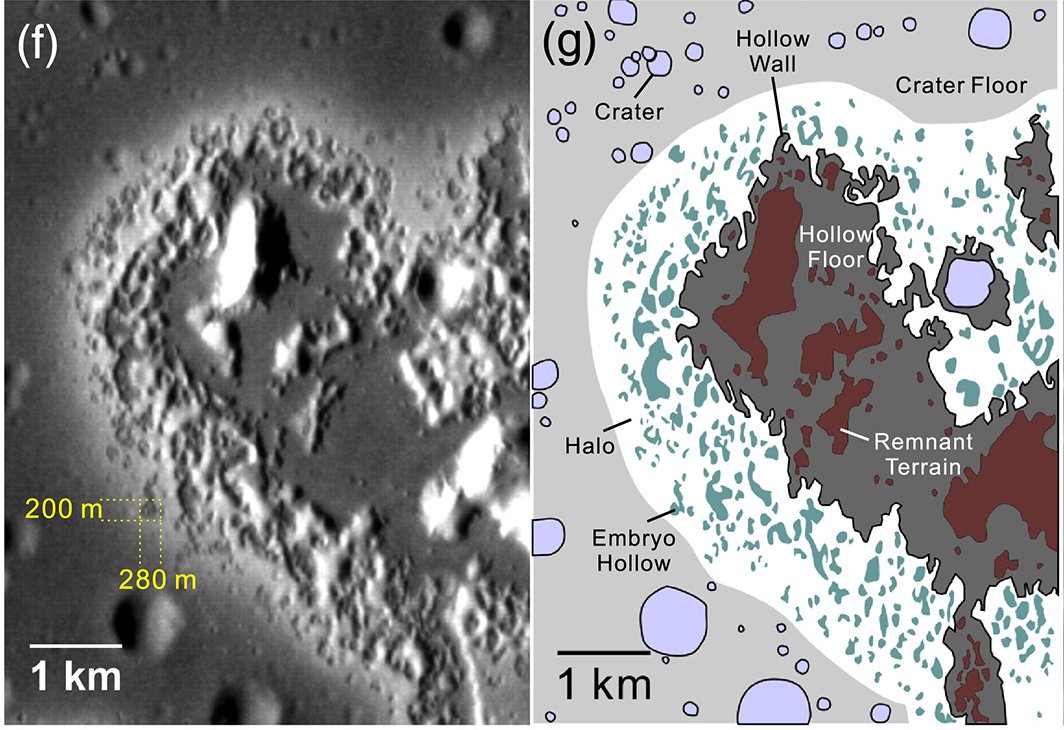
Lost Volatiles During the Formation of Hollows on Mercury https://t.co/YymwkPGNCH The thickness of halo materials makes a substantial portion of the global budget of C and S in the shallow crust of Mercury, implying ongoing rejuvenation of volatiles in Mercury's recent history.