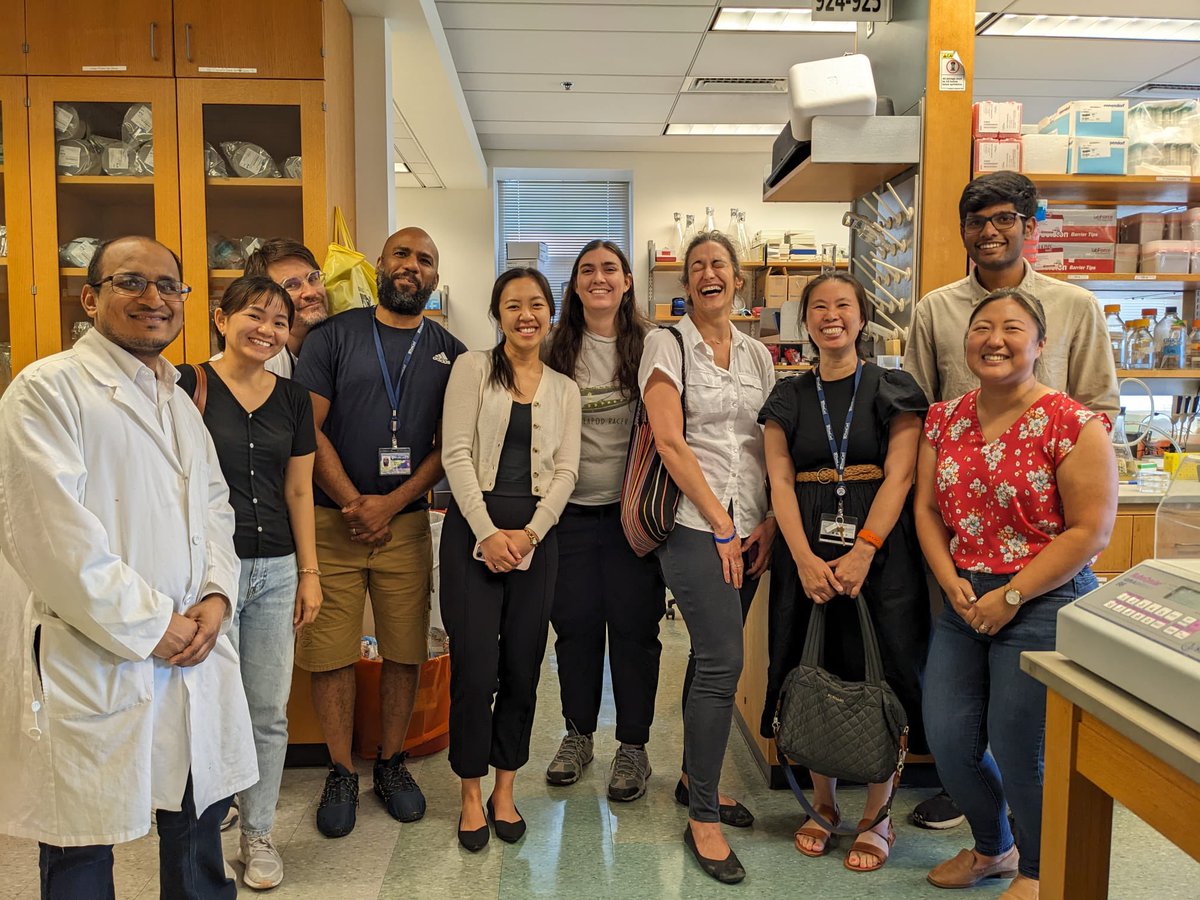
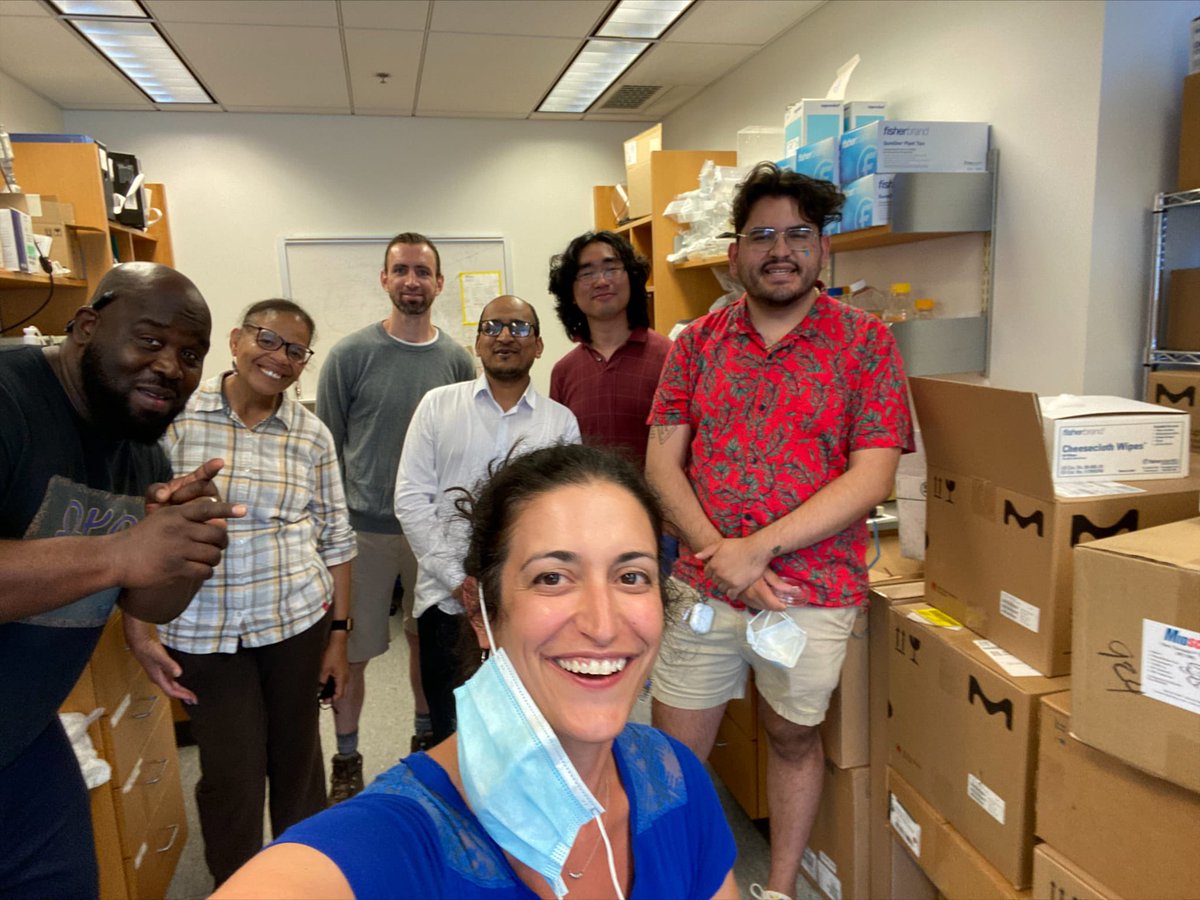
Wells lab postdoc @Kapish16 was happy to welcome local Philly teachers from the @CEMB_STC RET program to the lab today for a hands on session about microfabrication and microfluidics. We hope they will take what they’ve learned back to the classroom to inspire their students!
Our collaborators in the @ShenoyLab developed two mathematical models that indicate that physical interactions between lipid droplets and other cell components can explain our experimental findings.
We show that lipid droplets indent the nucleus, reducing HNF4alpha expression proportionally to the deformation, that the accumulation of lipid shrinks nuclear volume and condenses chromatin, and that lipid droplets prevent alignment of actin and reduce cell traction forces.
From grad student @AbigailLoneker, experimental and modelling work showing that lipid droplets mechanically indent the hepatocyte nucleus, disrupt cytoskeletal organization, and promote dedifferentiation. https://t.co/do1Ilc0D2q
From postdoc #DavidLi, a new method to quantify bulk and local tissue stiffness in the same region that shows local fat accumulation leads to softening in fatty livers. https://t.co/6WIPZOhO2Z
Had a great time this week introducing @CEMB_STC RET teachers to the soft lithography and microcontact printing. Post docs @Kapish16 & David Li really enjoyed working with them!
Excited to share our new preprint on the role of versican in regulating the mechanics and organization of collagen matrices. @DongningChen https://t.co/TMSRDq0ATn
Keep your eyes peeled for his mini-review entitled “A Modular Analysis of Bile Canalicular Function and its Implications for Liver Cholestasis.” @penngihep
Potential role for EFEMP1 in biliary atresia?
Efemp1 modulates elastic fiber formation and mechanics of the extrahepatic bile duct https://t.co/9hMTLhU8kC
@Wells_Lab
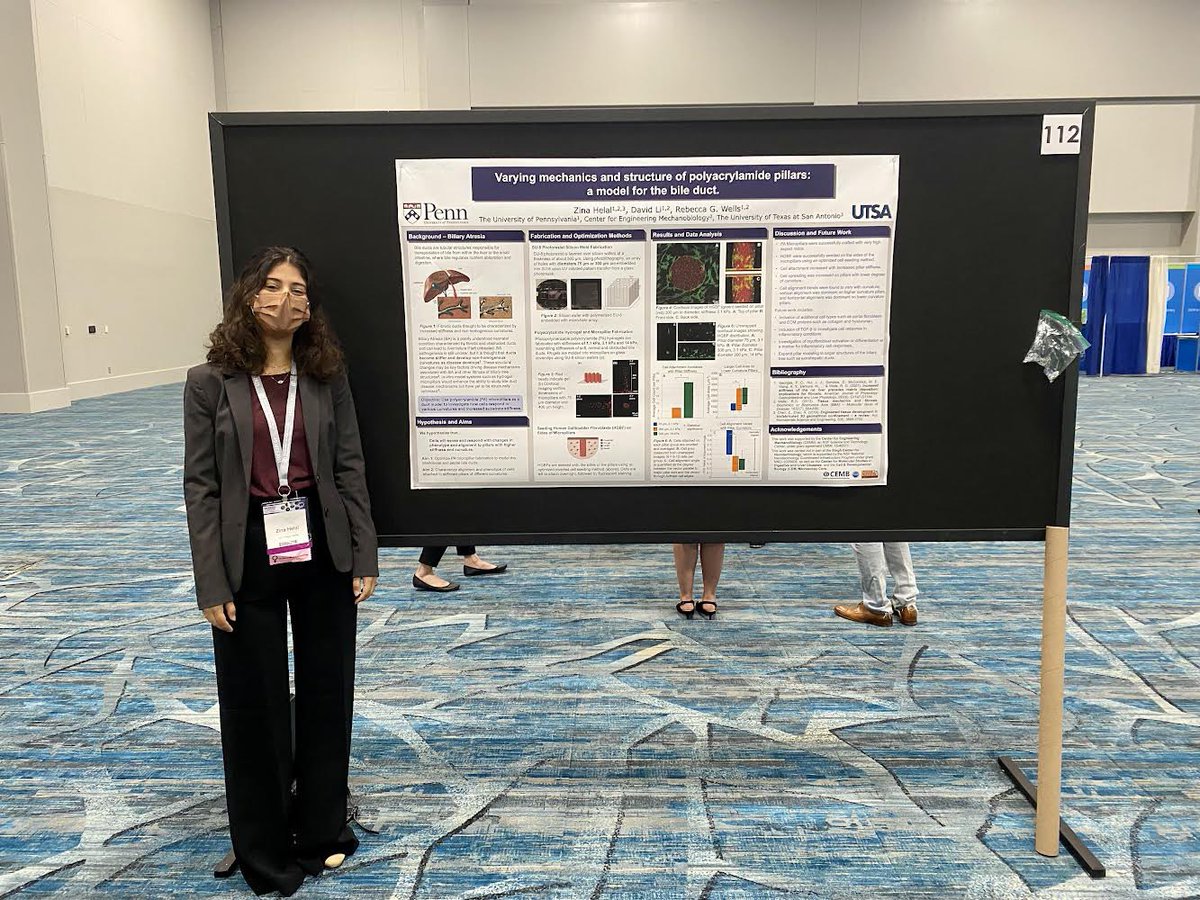
Congratulations to Zina Helal and Elaine Nagahara, our two undergraduates from the NSF Center for Engineering MechanoBiology UExB summer program, for their fantastic posters at the Biomedical Engineering Society Annual Meeting in Orlando!
New work from @CEMB_STC! In collaboration with the @ShenoyLab and Paul Janmey, Graduate Student Dongning Chen investigated the impact of GAGs on cell-matrix interactions in a collagen rich environment
Happy to share a new preprint led by Xingyu Chen. We theoretically and experimentally show GAGs significantly affect the mechanical interactions between cells in tissues by altering the organization and alignment of the collagenous extracellular matrix. https://t.co/1X5xzZwGER
Congratulations to postdoc @JessLlewellyn89, who won a poster presentation award at the Extracellular Matrix in Rare Disease meeting of the British Society for Matrix Biology
Check out the latest from visiting Fulbright Scholar Iris deJong: a beautiful graphical overview on the heterogeneity of the biliary tree. https://t.co/ltvmQyd2nf
We welcome manuscripts and reviews for a new special issue in @FrontiersIn MechEng, Physics, Physiology, MolecBiosci, "The Mechanobiology of Collagen Remodeling in Health and Disease". Please submit today! https://t.co/WjXcdRTqLc
Specifically, she found that versican promotes collagen fibrillogenesis, increases the diameter of collagen fibers and the porosity of collagen fibrous
networks, and enhances cell-mediated collagen reorganization (w/o altering fibroblast contractility), in contrast to other PGs
Excited to share our latest preprint investigating the role of matrix proteoglycans on collagen fibrillogenesis and cell-mediated ECM reorganization. https://t.co/thw2CncHvd @CEMB_STC@Pennbioeng
Bioengineering graduate student Dongning Chen and collaborators focused on comparing the impact of small leucine-rich and large matrix proteoglycans, and found that specific proteogylcans have distinct effects on collagen fibrillogenesis and cell-mediated compaction.