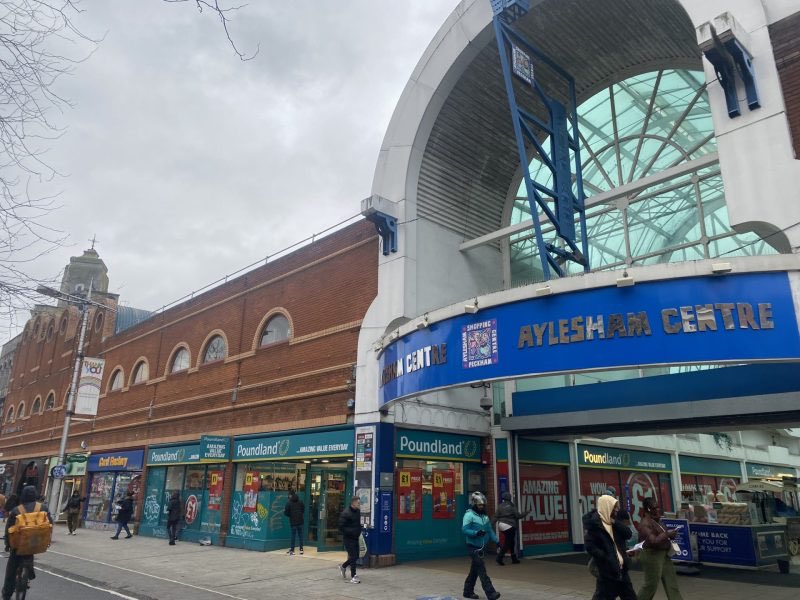
Housebuilding has collapsed in London.
And Southwark Council are celebrating having blocked 850+ homes.
You can’t afford to live in London because of thousands of decisions like this over decades.
Most people don’t realise where the £180 million actually went at the A303 Stonehenge tunnel project.
It wasn’t construction.
It was years of:
• Environmental impact assessments
• Heritage & archaeological studies
• Legal challenges and consultations
• Design, engineering and traffic modelling
• Public inquiries and revisions
All before a single shovel hit the ground.
This is the real problem in Britain:
We don’t just waste money, we build systems that guarantee it.
£180 million to build nothing.
Thread of highlights from @Michael_J_Hil's excellent piece on Hackney Planning Dept's rationale for rejecting the hugely popular densification scheme 'Shoreditch Works', which would create space for 4,000 jobs on brownfield sites in central London.
This huge scheme in Shoreditch is one of London's best – so good that visual preference surveying found a huge majority of the public backing drastic densification. Unfortunately, it appears that officers at Hackney Council are recommending that it be rejected.
This is nuts.
It will cost Chris £15,000 to replace two rotting windows.
The windows themselves only cost £5,000. So, why so expensive?
Answer: Chris needs to get approval from Westminster Council and the Building Safety Regulator.
The government's Renters' Rights Bill looks like it will be a catastrophe, inadvertently introducing rent controls and reducing the supply of housing even more. It is the clearest evidence that the whole British state that has brought it about is completely broken:
• Written by the civil service
• Introduced by the Tories
• Passed by Labour and the Lib Dems
• Cheered on by the mainstream media
The bill's core provision is to eliminate "no-fault evictions". Many understand this to mean evictions during a rental lease. In fact, this is already impossible. What the new bill does is to stop landlords from being able to regain their property after a lease has expired.
This means that renting a property to someone now means that they get to live in that property indefinitely. A landlord can only evict them if they are selling the property, or plan to move into it themselves, or if a tribunal gives them permission after ruling against the tenant for bad behaviour.
Within these indefinite contracts, rent increases will be capped at whatever the 'market rate' is determined to be by a tribunal. Tribunals will not be able to *raise* rents, as they currently can and often do – only lower them or keep them where they are. The only risk to a tenant is that their challenge is deemed "vexatious".
Not only will rent increases *within* contracts be controlled by courts, rents for *new* contracts will also be controlled by them. Tenants will be entitled to agree a rent, move in, and then immediately take their landlord to a rent tribunal on the grounds that the rent they have just agreed to is "too high".
Rent tribunals will thus have the power to control all rents. All rents will be set under the threat of a tribunal intervening. There will be no "market rate", so the tribunal will have no independent "market rate" to refer to.
A tenant who challenges a rent increase will have their rent frozen at the old, lower rate while their challenge is ongoing (which could take over a year). Like the Building Safety Regulator right now, tribunals are likely to be extremely backlogged, creating huge delays where tenants do not have to pay their new higher rents, if they ever do. Tenants will have huge incentives to challenge nearly all rent increases.
We have already seen how bad courts are at ruling on prices, eg in cases where Next's shop workers have been given the same pay as factory floor workers, and in Birmingham where the council was forced to pay £760m to care workers and teaching assistants because a court decided that these roles were equivalent to jobs like rubbish collectors.
All this amounts to rent controls. These are terrible for many reasons.
1. They will cause landlords to sell up and leave the market. This is both to avoid the risk of being stuck with a bad tenant, and because once the rent has been kept artificially low by a rent tribunal, landlords will be losing money compared to just selling into private owner-occupation.
Rental properties allow for easy doubling up (housesharing) which is much messier under owner-occupation. The effective supply of housing is about to drop. In Ireland, postwar rent controls shrunk the rental market from 26% to 8% of the total housing stock in 40 years. In Britain, 1916–88, the share of properties available for rent went from 75% of the market to 10%.
2. They cause landlords to neglect their properties. Landlords receiving artificially-depressed rents for their properties have no incentive to maintain them. Rent controlled properties, famously, become neglected and fall into decay, as leaks, cracked plaster and broken windows are left unaddressed. The country's housing stock that remains in renting will decay. Our cities will become more decrepit.
3. They stop people from moving around for better jobs. We already have this effect with social housing, where huge amounts of inner London housing (30–40%!) are held by tenants in low wage jobs, or who have no job at all, instead of by people who could move to London to earn and produce more. This will happen to large swathes of the rental market too, stopping people from moving into prosperous cities where they could get better jobs.
4. They stop the supply of new homes for rent. Under rent controls, there is no incentive to build new homes for renting. Britain built essentially no private flats for rent between 1945 and the end of rent controls in 1988. The same was true in France between WWI when it introduced rent controls and the slow end of rent controls in the postwar era.
5. They push renters into the black market. To actually get a place to live, a lot of people will sidestep these new rules and rent informally, with none of the protections we currently have for renters like the deposit protection scheme. This is the sort of scenario that allows landlords to *really* exploit and steal from their tenants.
–
Do not assume that anyone involved with this knows what they're doing. We have already seen, in the case of the Building Safety Regulator and the second staircase regulations (brought in by the same Housing Secretary who designed this bill), how disastrous the consequences of well-intended but misconceived interventions in the housing market can be.
London building has already ground to a halt. And things are about to get even worse.
In 1937, London built 80,000 homes. Last year, it built less than half that.
To find out why, I looked at two different planning applications for a four-storey block of flats from now and back then.
1937: 3 pages long.
2025: 1,250 pages long.
Every aspect of this story is a disgusting state failure.
Convicted for beating someone with a metal spike and stamping on their head repeatedly.
He only got 22 months.
He was out in just 3 months.
The day he left prison, he killed someone.
How can anyone defend this?
In his latest book, Politics on the Edge, Rory Stewart writes about his time at the Department for International Development.
He tells a story in this passage about his difficulties in preventing funds from reaching jihadis in Syria — and obstruction by the civil service:
I’m not quite sure how to explain what’s happened tonight, because it’s still happening - but here goes…
At 4:40pm I jumped on a train from London to Edinburgh..
It was comfy, it was quiet
In hindsight, too good to last…
I think this article officially marks Ultra-Processed Foods™️ graduation into full-blown pseudoscience.
Not sure if my fave is
“A red flag for UPF is if it’s made by a multinational company”
or
“Plain salted crisps are not UPFs but flavoured ones are”
https://t.co/mfBGQppyvw
The #BuildingSafetyAct is causing chaos by creating a whole class of excluded leaseholders and a three tier flat market.
Excluded leaseholder Amanda Walker explains this chaos and how the Earl of Lytton's amendment offers her and all in her situation hope.
To watch the full conference click here: https://t.co/vVb0JrA5d1
#consumerprotection #buildingsafetycrisis @TedBaillieu
I've returned to my parents' home in West Oxfordshire this Christmas to find people angry and worried about the future of the village.
Why? Because they say "Europe's biggest solar farm" is about to be built on their doorstep.
🌞a festive thread🌞
1/
Below is a list of talented Iranian artists working + surviving from Blockchain
They need our support more than ever. This decentralised space belongs to all of us
Pls explore their work..retweet/share to raise awareness + i will give away this @zolfaqqari 1/1 to a winner 🧵👇
Long and fascinating read from a former Russian diplomat who quit/defected after Ukraine invasion, with some warnings that the west needs to heed https://t.co/EgQw9a8InW
Intercepted phone calls made by Russian soldiers during the first days of the Ukraine invasion, obtained by @nytimes, provide damning accounts of battlefield failures, contempt for leadership and the execution of civilians. Our new investigation: https://t.co/B6s4rA6BAA
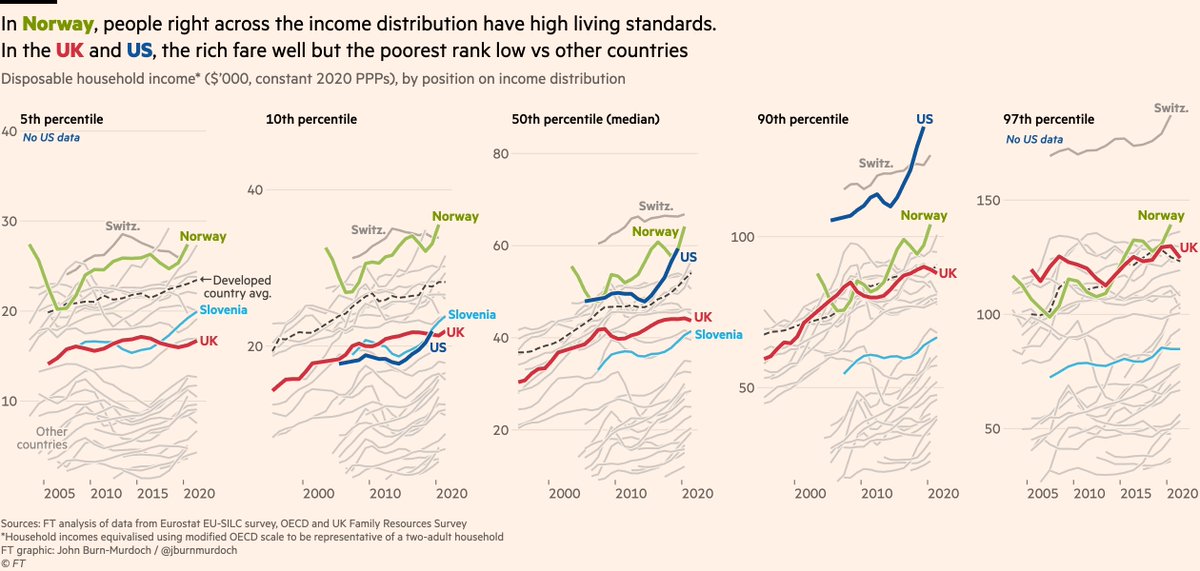
NEW: income inequality in US & UK is so wide that while the richest are very well off, the poorest have a worse standard of living than the poorest in countries like Slovenia https://t.co/gtHvhNsnuT
Essentially, US & UK are poor societies with some very rich people.
A thread: