Collecting relevant papers for literature review takes time — a lot of time.
Try Iris, an AI-powered app that will help you collect relevant papers in minutes.
Here's how to use it:
This is one of the more interesting IR articles on Africa I've read in a while. It builds on Herbst and Tilly to focus on the central role slavery played in state formation in African history and has broad implications for understanding the origins of modern states in Africa.
@rgpark_rio Maybe Sekhon/ Titiunik 2012 APSR is useful? And I think Dunning 's book discussions on typologies of natural experiments and on a continuum of credibility are helpful ideas to teach what are/aren't nat exps
https://t.co/eK2rJUlotN
𝗖𝗮𝘂𝘀𝗮𝘁𝗶𝗼𝗻 & 𝗠𝗲𝘁𝗵𝗼𝗱𝘀. Explaining social phenomenon, by conjecturing & testing causal explanations, is central to the social sciences
Here are 4 books on causation & how to develop causal theories (top row) & 4 books on how to test such theories (bottom row)
𝗖𝗮𝘂𝘀𝗮𝘁𝗶𝗼𝗻 & 𝗖𝗮𝘂𝘀𝗮𝗹 𝗠𝗼𝗱𝗲𝗹𝘀. 10 key concepts & conceptual distinction used in discussions about causation & causal models in the social sciences. They are complex but central to much of the current social sciences.
References in 🧵
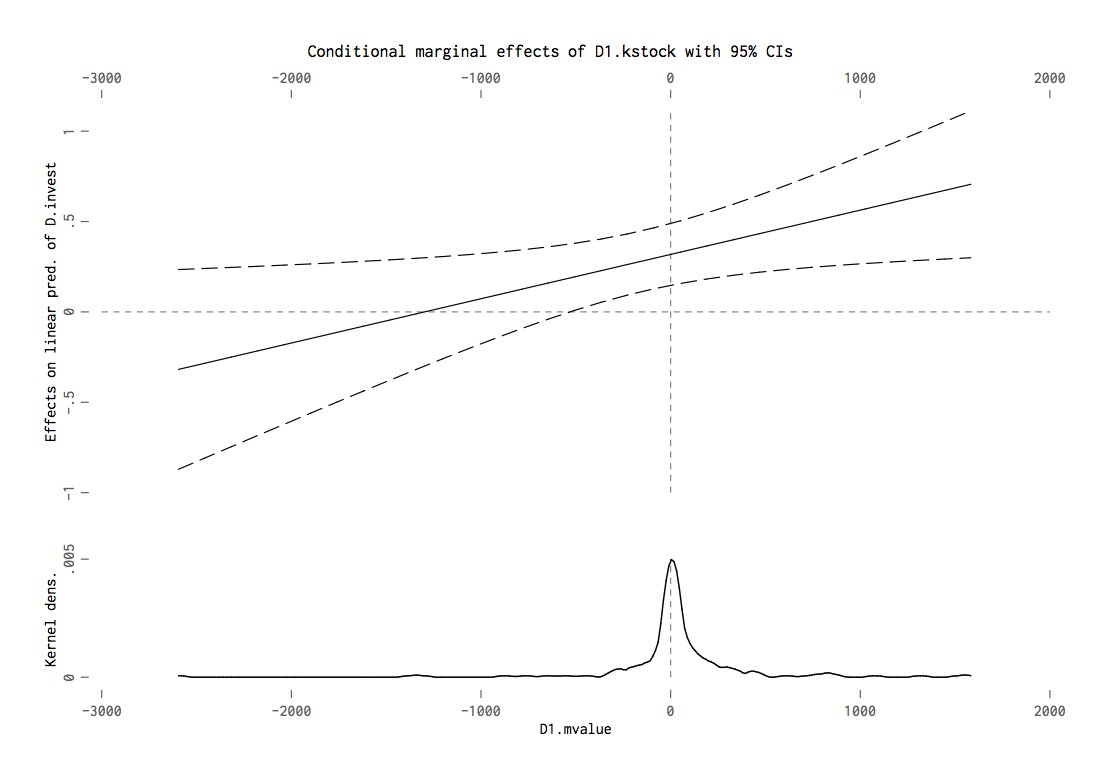
Every now and then people ask me how to easily produce marginal effect plots in Stata. Well, I've written an ado for that and it's called interactplot.
STUDENTS
The most effective way to cheat on an exam is to READ THE BOOK and then MEMORIZE THE KEY POINTS. Then use that information to answer the questions. SOFTWARE CAN'T DETECT THIS CHEATING METHOD.
New article in GEP! We argue that Big Oil's economic motive for supporting a moderate carbon price is to realize a slow, Gray Transition, in which Big Gas can expand market share at the expense of coal, and become a major bridge fuel to RE. Open access!
https://t.co/QsPU3XoSI4
"If dozens of countries simultaneously upgraded their interaction with Taiwan, Chinese attempts to “punish” them all could instead leave Beijing isolated." https://t.co/GmcotExPOe via @financialtimes