🟦 "The Constitution of Zimbabwe is not a party manifesto, nor is it merely a government program. It is the supreme covenant between the people and those entrusted with authority."
The constitution exists to limit and distribute power, ensuring accountability and safeguarding the rights of all citizens.
Thank you, Hon. @agencygumbo , for your leadership and commitment to upholding the rule of law.
#DefendTheConstitution #RuleOfLaw #Zimbabwe #RejectCAB3 #2030Musipo❌
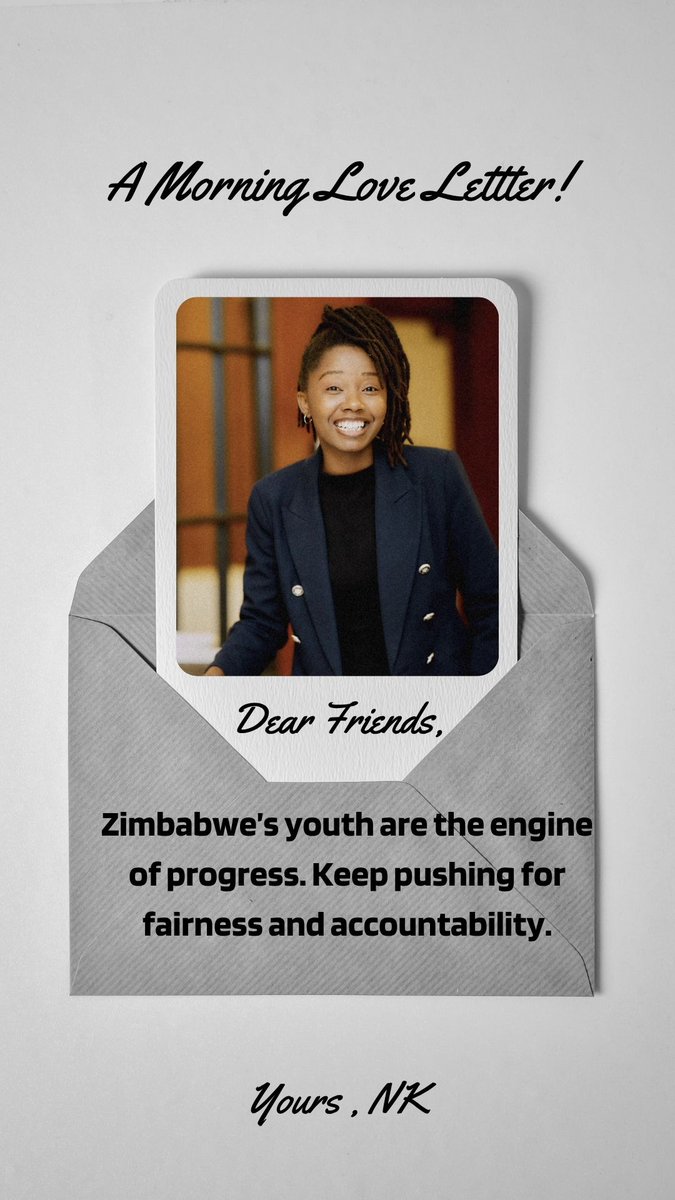
💌 Good morning, young people. Always remember that you are the engine of progress. Keep pushing for fairness and accountability. #DefendTheConstitution
Day before Workers’ Day celebrations_
The North Eastern Region Young Workers, Harare, conducted a roadshow around Harare to mobilize support for the May Day celebrations.
The exercise was highly successful. Well done, Young Workers. We are proud of your efforts.
📌📝Extend democracy not the presidency
Youths continue to register their agitation towards the 2030 agenda. Its now more clear than before, youths are not retreating.
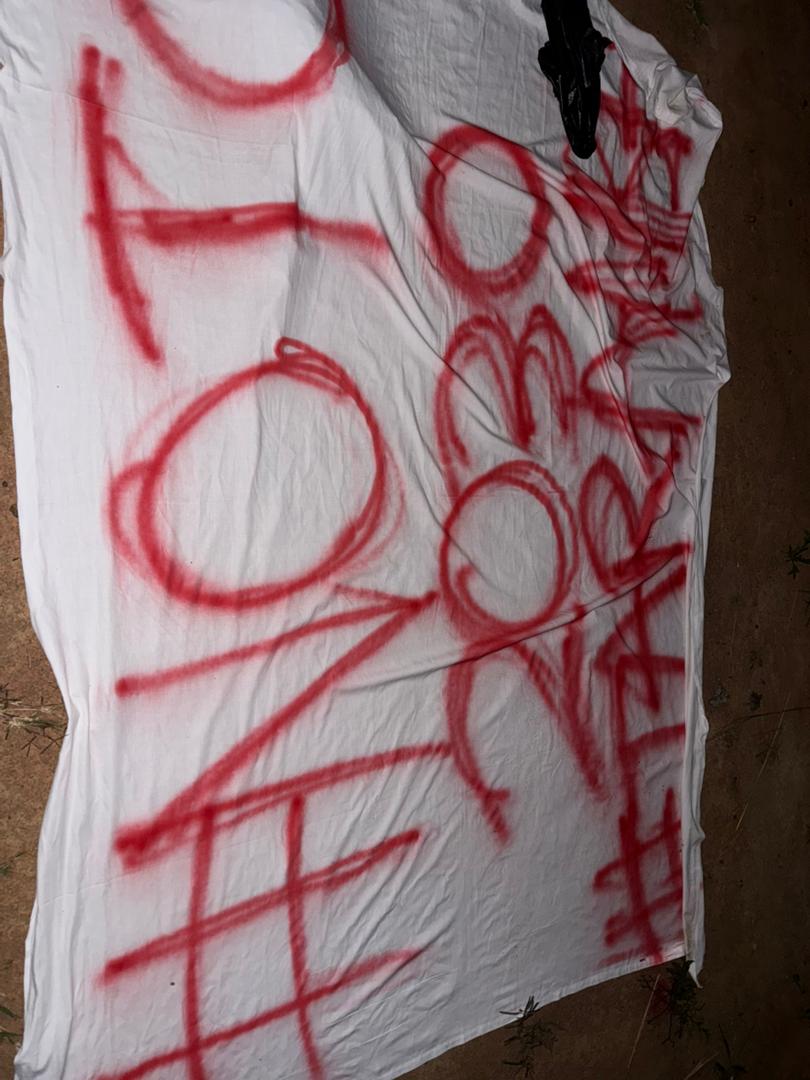
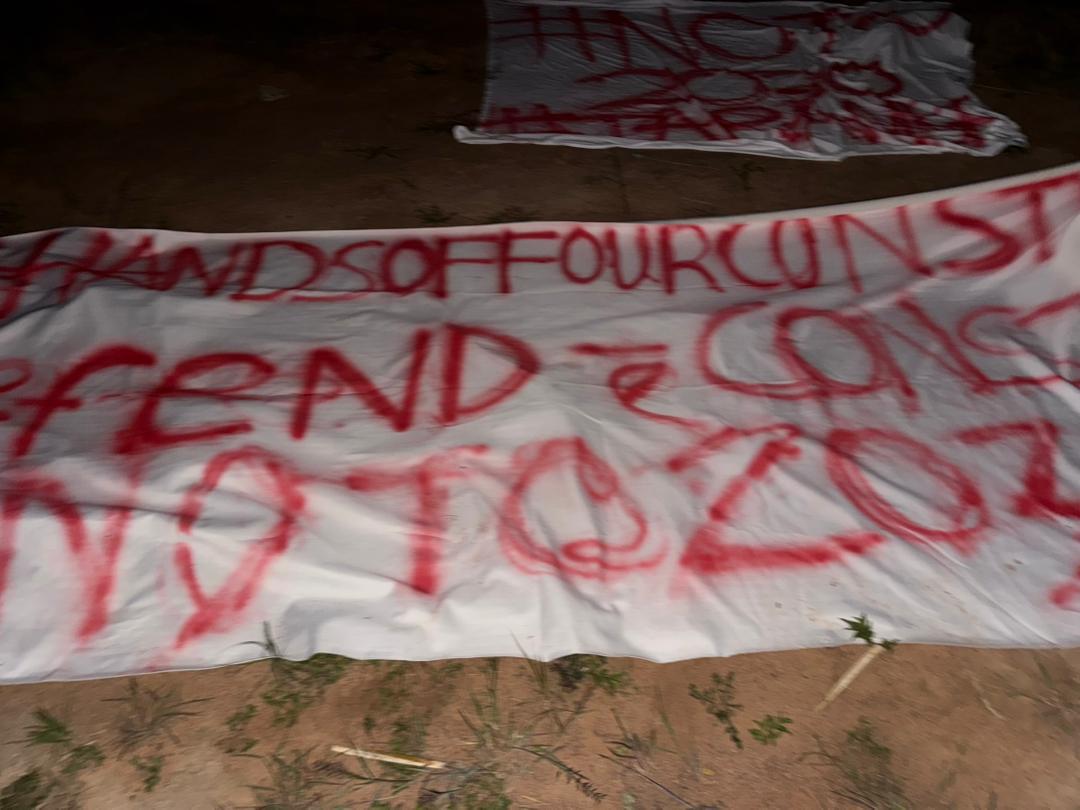
Our future is not for sale. HANDS OFF OUR CONSTITUTION‼️
When you seek to mutilate the Constitution not for the benefit of the people, the people will always rise. As students we remain infuriated by the failure of the government to push for free and quality education as mandated by our Constitution. #AttendPublicHearings#StopBill3
DIDIER DROGBA: "It was February. I told Juan Mata, who had arrived that season at just 23 years old: 'Maestro, help me win the Champions League. He told me: 'What are you talking about? Are you asking me that? You are Didier Drogba.'
To which I replied:
'Yes, but I've been trying to win it for 8 years and haven't managed to'
'I know you can help me.' Three months later, we were in the Final in Munich. With 8 minutes left, Bayern scored to make it 1-0. When I was about to kick off from the center, Mata told me: 'Come on Didi. You have to believe. Come on!' Almost crying, I said: 'Believe in what? This is over.' I thought I was going to lose in the last minute, just like it happened to me with Ivory Coast. Last play of the match, last corner kick. The first one for us in the entire game, against 18 corners from Bayern. Goal. Guess who took that corner kick... JUAN MATA.
🚨📌No referendum = No legitimacy.
The Constitution belongs to us, not the politicians. If they want to change it, they must face the people.
We call upon all progressive youths to resist any backroom deals that bypass your vote. #DefendTheConstitution
Help us to congratulate the newly elected ZEHSSCWU National Young Workers leadership!
Precious Sagiya-Chairperson
Tendai Nyarambi -Secretary
Brian Mutisi- VChairperson
Faith Kasaira- VSecretary
Perseverance Masiyandima -Treasurer
Kuda Tayengwa Committee
Evans Kwenzi - Committee
2/
The criticism now emerging even from some European quarters, including Italy’s prime minister describing the campaign as part of a dangerous trend of unilaterally interventions violating international law, shows that concerns about legality and precedent are not marginal. Africa should not wait for others to define the moral language of international order.
The sixth lesson concerns information warfare and political narrative. Every intervention is sold through a story: a story of necessity of civilization, defence and preemption. Yet the people of the Global South know too well that powerful states often control not only bombs but also the language used to justify them. Africa must invest in independent media, Pan-African research institutions, strategic communications, and political education so that our people are not trained to applaud violations of sovereignty simply because they are packaged as security operations. A continent that can not interpret global events for itself will always think with borrowed minds.
The seventh lesson is the urgency of continental unity. A fragmented Africa is easy to manipulate. A divided continent can be pushed into taking sides in conflicts that do not serve its people. Some governments will be pressured diplomatically, others financially, others militarily. The answer is not blind alignment with any bloc, East or West. The answer is principled non-subordination. Africa must build a foreign policy tradition rooted in self-respect, non-domination, peace, mutual development, and strategic autonomy. Pan-Africanism is not poetry for conferences; it is a survival doctrine for a world still governed by unequal power.
The eighth lesson is that the doctrine of regime change, whether openly declared or quietly implied, is always dangerous. When states normalize the idea that governments can be militarily weakened or politically re-engineered from outside, no weaker region is safe. Reuters has reported Israeli officials acknowledging uncertainty over whether the war can force political collapse in Iran, while other reporting shows the conflict has instead hardened repression, mass arrests, and instability. Africa has suffered enough from externally influenced destabilization, proxy politics, and forced transitions. We must never endorse norms that may later be used against African states.
Ultimately, the lesson is simple. Africa must stop admiring power from afar and start building power at home. We need sovereign economies, sovereign security systems, sovereign ideas, and sovereign political confidence. We need fewer comprador elites seeking approval abroad and more leadership committed to continental dignity. We need stronger regional defence cooperation, food systems, energy systems, and financial systems. We need to understand that in the modern world, dependence is vulnerability.
The intervention in Iran is not only about Iran. It is a mirror held up before the Global South. Africa must look carefully into that mirror and decide whether it wants to remain exposed, reactive, and divided, or whether it is finally ready to become self-respecting, strategic, and united. That is the real lesson before us.
1/
Africa must study the American and Israeli intervention in Iran not as a distant Middle Eastern conflict but as a living lesson in how global power operates. What is happening is not merely a dispute between states. It is an example of how military force, strategic narratives, and geopolitical alliances can be used to reshape entire regions without the consent of the people who bear the consequences. Since the current phase of war intensified on February 28, 2026, the conflict has expanded rapidly, with joint U.S.-Israeli attacks on Iran, retaliatory Iranian strikes across the Gulf, and severe disruption to global energy flows.
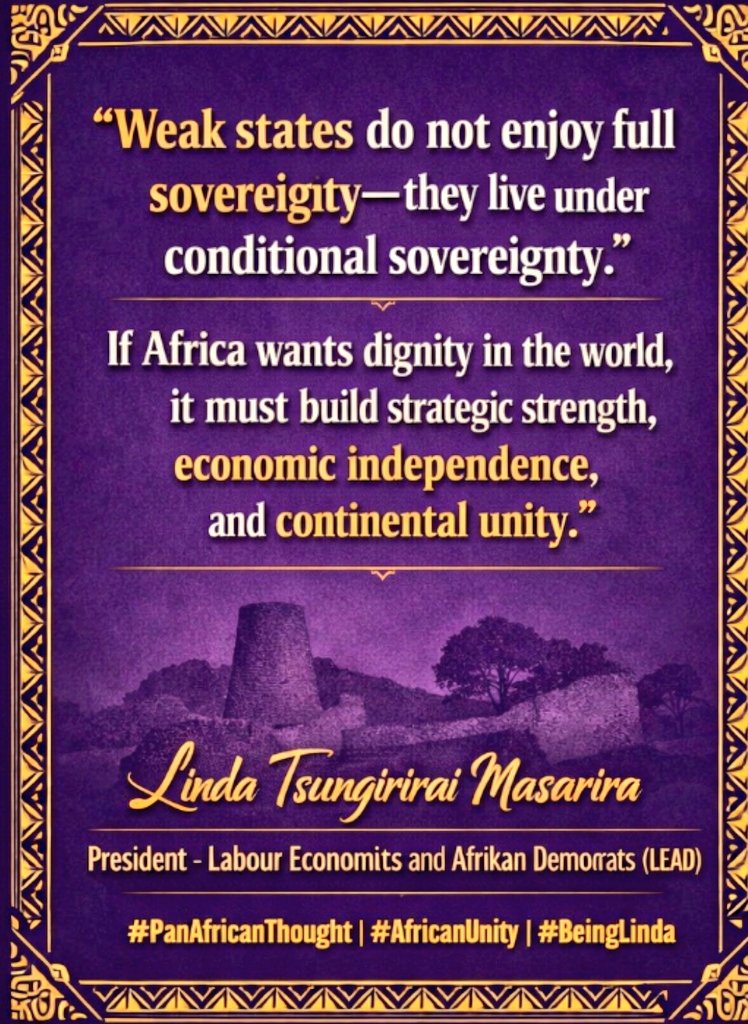
The first lesson for Africa is that sovereignty means very little if it is not backed by strategic capacity. Many smaller or developing nations believe formal independence is enough protection. It is not. A country may have a flag, a seat at the United Nations, and constitutional institutions, yet still remain exposed if it lacks military deterrence, economic resilience, technological independence, and strong regional alliances. Iran, despite having substantial internal capacity compared with many countries in the Global South, has still faced devastating attacks, including strikes near Tehran’s oil and refinery infrastructure that created toxic clouds and raised fears for civilians and the environment. Africa must understand that weak states do not enjoy full sovereignty; they merely hold conditional sovereignty.
The second lesson is that dependence on foreign powers is a dangerous illusion. Too many African governments continue to imagine that proximity to Western power guarantees safety, investment, or diplomatic protection. But recent reporting shows that even Gulf states allied with Washington have paid a high price in the current war, with attacks, insecurity, and economic disruption spilling into their territories because of their hosting of U.S. military assets. The message is clear: when external powers fight their wars, local regions pay the immediate price. Africa must stop building security models that depend on external patrons and instead strengthen continental self-reliance.
The third lesson is that war is rarely confined to its stated objectives. We are often told that interventions are limited, targeted, and necessary but the pattern of “mission creep” is now visible again. Reuters has reported that U.S. lawmakers are already warning about the possibility of American ground deployment, even as Israeli officials privately admit there is no certainty that the war will achieve regime collapse in Iran. This means the conflict may continue without clear success, while its human, economic, and political costs keep rising. Africa must reject the seductive language of “surgical intervention” and “quick operations,” because history shows that foreign wars often expand beyond their advertised limits.
The fourth lesson is economic. Africa remains deeply vulnerable to external shocks because too many of our economies are import-dependent, commodity-fragile, and energy-insecure. The Iran war has already threatened a large share of global oil and gas flows, prompted warnings of oil prices reaching $200 a barrel, and triggered discussions of emergency strategic reserve releases. For Africa, this means inflation, transport cost spikes, food insecurity, electricity instability, and pressure on already fragile currencies. The continent must finally treat energy sovereignty, regional value chains and industrialization as urgent security matters, not mere development slogans.
The fifth lesson is institutional. Africa must stop being passive in global crises and start speaking with one principled voice. If the African Union can not articulate a coherent doctrine on sovereignty, unlawful intervention, civilian protection, and peaceful dispute resolution, then Africa will remain a spectator in world affairs rather than a shaper of them.
To the next page...