@IoanaBiomarkers@cwhitlockMSU@WyClimate Thanks Ioana! I was a small part of a BIG undertaking from all the authors and contributing voices from Greater Yellowstone.
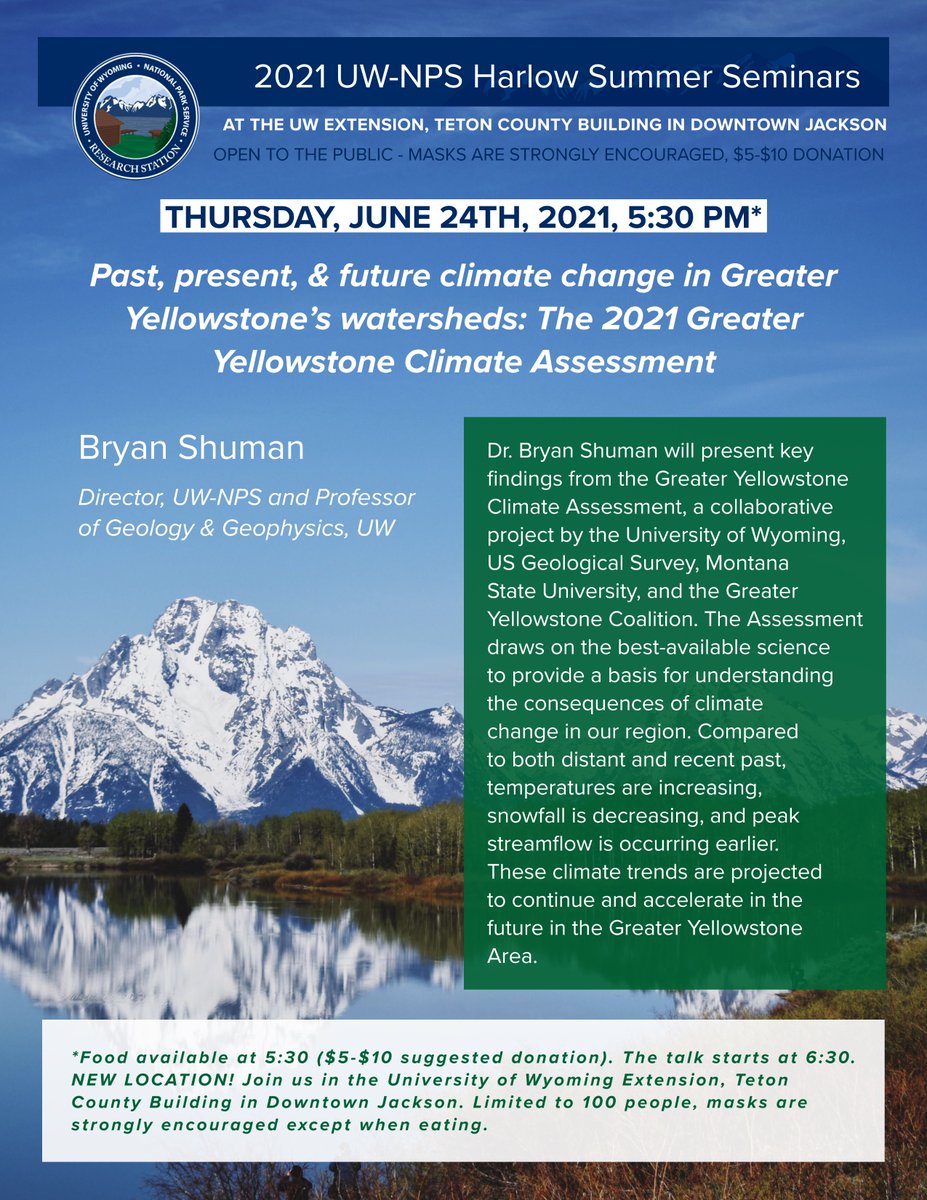
Three years in the making, the #GreaterYellowstoneClimateAssessment is now available at https://t.co/r9vY1q7DS7!
Huge thanks to @cwhitlockMSU, Steve Hostetler, @WyClimate for inviting me to contribute to this exploration of climate change in Greater Yellowstone.
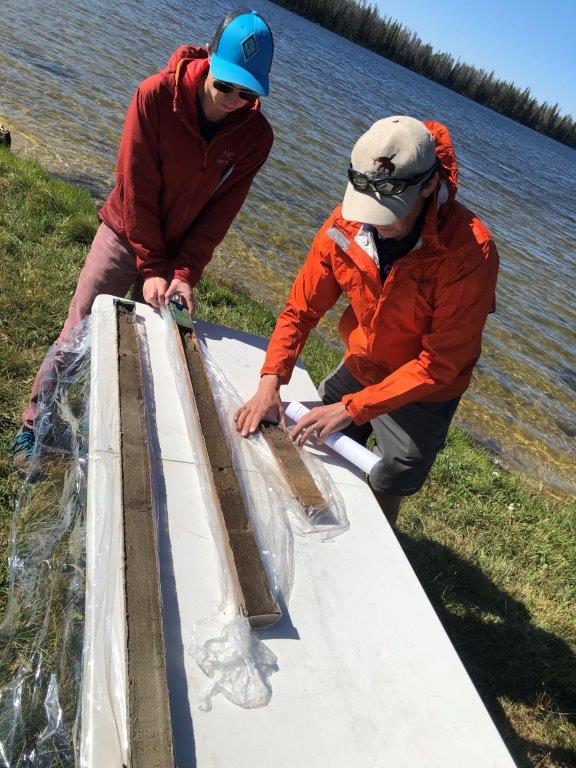
When I traveled to Wyoming, I had the pleasure of meeting Dr. Bryan Shuman, one of the authors of this research. It's amazing what you can learn from the mud at the bottom of a lake. I hope elected officials are listening to their state's scientists!
https://t.co/3ueUr3evLp
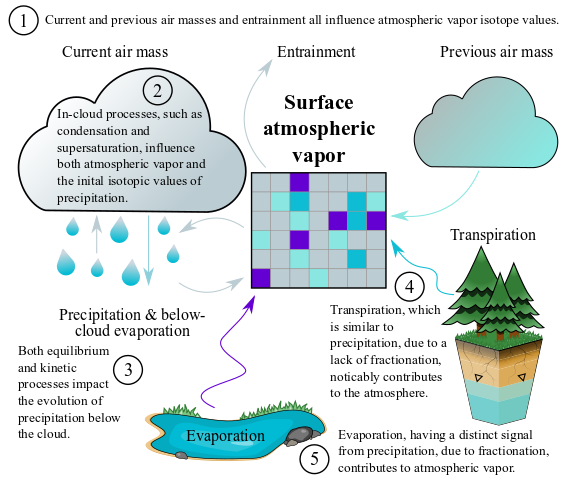
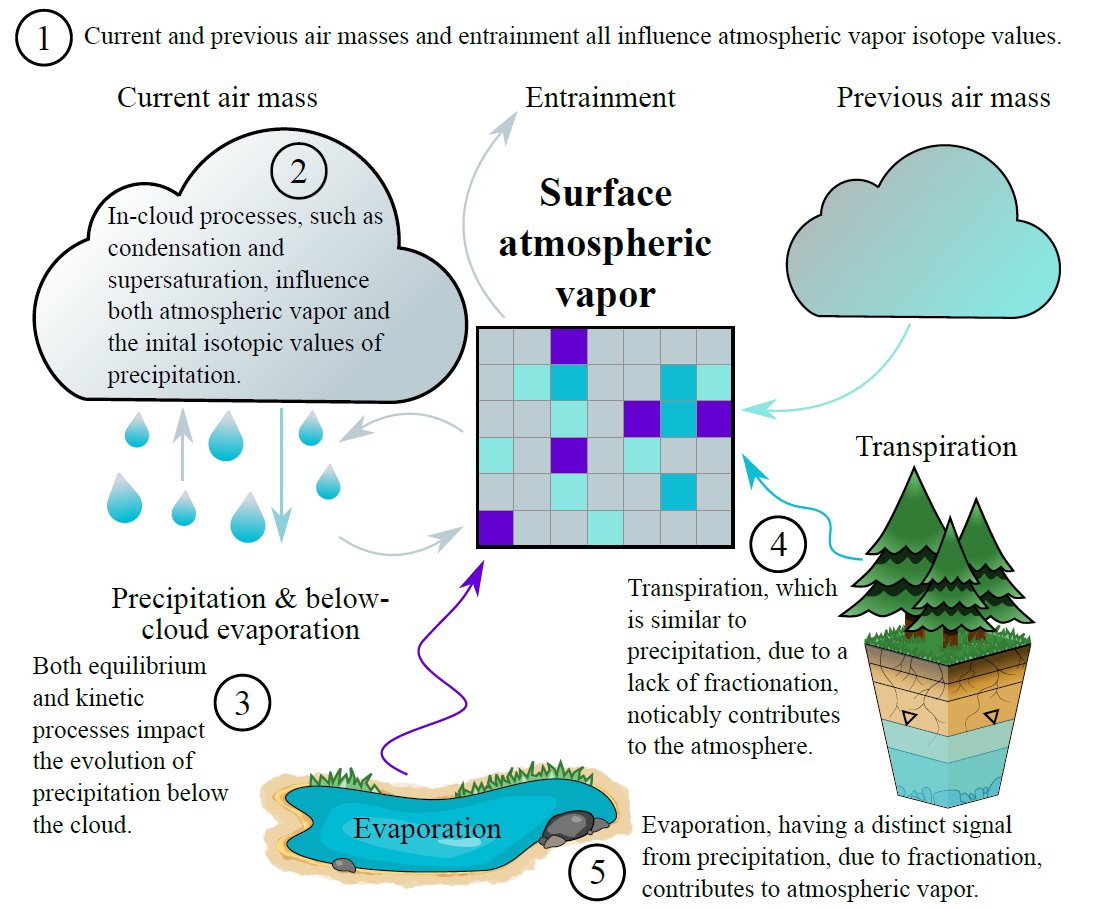
Published! The assumption that vapor and precipitation are in isotopic equilibrium is very common in studies of (paleo)climate, hydrology, and ecology. We evaluate and quantify (Bayesian alert!) uncertainties in the assumption. https://t.co/fCPrKOBPu0
Accepted preprint alert! https://t.co/UBDx3kWFhW You know that assumption we usually make about precipitation and vapor being in equilibrium? Yeah, we know it's probably wrong, but _how_ wrong? And are there mitigating factors? Read on and find out! #HydrologicalProcesses
@danigeos It doesn’t affect the regional pattern of late-Pleistocene drying, but moving forward with the data set we should consider basing the averaging scheme on the number of records within a region to accommodate for cases like this.
Our synthesis of N. American lake-level data shows the major late-Quaternary hydrologic trends. Shifts in storm tracks and distribution of moisture reveal the novelty of the modern hydroclimate. Currently humid or snowy areas were the driest since 21 ka.
https://t.co/dvS6kg6PhW
@danigeos This is a great point. We controlled for site-specific (non-climatic) factors like this by focusing on the regional patterns of change shared among lakes but, in this case, the Bonneville basin is as large as the 3°x3° grid over which we averaged the records for the GIF.
Data set available on NOAA Paleoclimate archive:
https://t.co/mp84Ym5FPT
The N-S moisture gradient of western N. America shifted in response to deglaciation and established the modern hydroclimates of western Canada and the Rockies.
@WyClimate
Paleo-folks, in addition to postdocs, I am searching for potential grad students interested in Holocene hydroclimates and either organic geochemistry or sedimentary records of lake-level changes. Please share with anyone interested.
I am excited to search for a pair of postdocs. One to work on GDGTs and Holocene paleoclimates in the Rocky Mountains and one to model microbial biogeography. Part of a larger postdoc search and project. Email me for more info. https://t.co/RsctIWq0Q0
Op-ed in the Wyoming Eagle Tribune today, trying to further the discussion about climate change and the future of our fossil-fuel rich state: https://t.co/4ttslZfEo6